
Kirjahaku
Etsi kirjoja tekijän nimen, kirjan nimen tai ISBN:n perusteella.
1000 tulosta hakusanalla Schelling Hans
Schelling's positive Philosophie
Antigonos Verlag
2025
sidottu
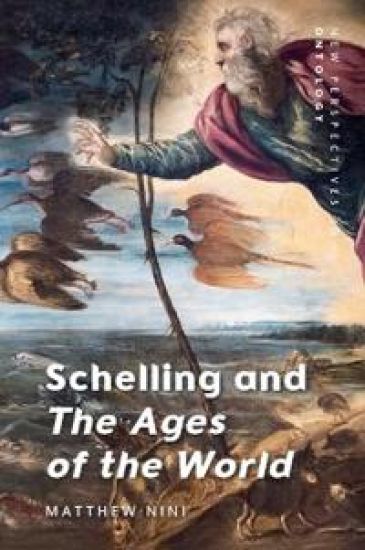
What does it mean for something new to begin? Since antiquity, philosophy has struggled to think about real beginnings without reducing them to continuations, repetitions, or hidden necessities. In Schelling’s Ages of the World, Matthew Nini engages with Friedrich Wilhelm Joseph Schelling’s writings from 1809 to 1821, showing how this problem of beginning is both enacted and called into question in Schelling’s unfinished project The Ages of the World. Often dismissed as an abandoned or failed work, The Ages of the World presents a speculative and mythological account of creation that unfolds across past, present and future, simultaneously reflecting on the temporal structure of human existence. Nini argues that the text’s fragmentary, repetitive and esoteric form is not a weakness, but a philosophical achievement. Precisely by resisting completion, Schelling exposes the limits of conceptual thinking when confronted with the emergence of the new. By reinterpreting The Ages of the World as a sustained meditation on beginning itself, Nini shows how Schelling transforms failure, incompletion and secrecy into tools for ontological questioning. In doing so, he proposes a new way to think through beginnings and a new, unique approach to philosophy.
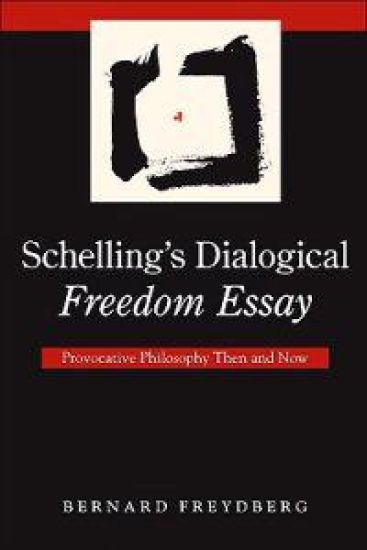
Schelling's Dialogical Freedom Essay
Bernard Freydberg
State University of New York Press
2008
sidottu
Explores Schelling's Essay on Human Freedom, focusing on the themes of freedom, evil, and love, and the relationship between his ideas and those of Plato and Kant. With clarity and liveliness, Bernard Freydberg explores the major themes treated in Schelling's final public work: freedom, imagination, the nature of God, indifference, and love. Freydberg also examines Schelling's engagement with philosophy's history, including the relationship between his ideas and those of Plato and Kant, his oracular and mythical languages, and his relevance to contemporary thought.
Schelling's Dialogical Freedom Essay
Bernard Freydberg
State University of New York Press
2009
pokkari
Explores Schelling's Essay on Human Freedom, focusing on the themes of freedom, evil, and love, and the relationship between his ideas and those of Plato and Kant. With clarity and liveliness, Bernard Freydberg explores the major themes treated in Schelling's final public work: freedom, imagination, the nature of God, indifference, and love. Freydberg also examines Schelling's engagement with philosophy's history, including the relationship between his ideas and those of Plato and Kant, his oracular and mythical languages, and his relevance to contemporary thought.
Schelling's Organic Form of Philosophy
Bruce Matthews
State University of New York Press
2012
pokkari
Locates in Schelling a new understanding of our relation to nature in philosophy. The life and ideas of F.W.J. Schelling are often overlooked in favor of the more familiar Kant, Fichte, or Hegel. What these three lack, however, is Schelling's evolving view of philosophy. Where others saw the possibility for a single, unflinching system of thought, Schelling was unafraid to question the foundations of his own ideas. In this book, Bruce Matthews argues that the organic view of philosophy is the fundamental idea behind Schelling's thought. Focusing in particular on Schelling's early writings, especially on Plato and Kant, Matthews explores Schelling's idea that any philosophical system must be perspectival and formed by each individual student of philosophy, providing a unique new understanding to an important and often overlooked figure in the history of philosophy.

Schelling's Organic Form of Philosophy
Bruce Matthews
State University of New York Press
2011
sidottu
Locates in Schelling a new understanding of our relation to nature in philosophy. The life and ideas of F.W.J. Schelling are often overlooked in favor of the more familiar Kant, Fichte, or Hegel. What these three lack, however, is Schelling's evolving view of philosophy. Where others saw the possibility for a single, unflinching system of thought, Schelling was unafraid to question the foundations of his own ideas. In this book, Bruce Matthews argues that the organic view of philosophy is the fundamental idea behind Schelling's thought. Focusing in particular on Schelling's early writings, especially on Plato and Kant, Matthews explores Schelling's idea that any philosophical system must be perspectival and formed by each individual student of philosophy, providing a unique new understanding to an important and often overlooked figure in the history of philosophy.
Schelling Entre Temps Et Eternite: Histoire Et Prehistoire de La Conscience
Jean-Francois Courtine
Librarie Philosophique J. Vrin
2012
nidottu
English summary: This volume presents an analysis of time and space in the works of Schelling. French text. French description: Prendre enfin le temps au serieux Telle sera pour Schelling, a partir de 1809 et des Recherches sur l'essence de la liberte humaine, la premiere et principale consigne, celle qu'auront entendue et reprise a leur compte, chaque fois differemment, Ravaisson, Rosenzweig, Heidegger, Scholem ou Levinas. La singularite schellingienne dans cette entreprise est double: il lui appartient en effet d'avoir tente audacieusement d'explorer non seulement la profondeur de l'espace, mais bien la profondeur du temps , evoquee par Baudelaire dans Le poeme du hachisch, et au-dela, en direction cette fois du passe qui dort sous la cendre , d'avoir voulu creuser jusqu'a la nuit des temps , l'immemorial ou l' impossible , s'il est permis de mentionner ici un non-concept fort peu schellingien en apparence (Bataille). Il s'agira, dans tous les cas, d'ouvrir la pensee classique--metaphysique d'entendement--a une historicite radicale a laquelle seul peut repondre le recit, qu'il se decline en mythologie ou revelation, dont le theatre--nonobstant la factualite dramatique de ces deux regimes, sur laquelle Schelling ne cesse d'insister -, se joue sur la scene de la conscience, en interrogeant non seulement la diachronie qui decide de son etre-hors-de-soi (extase), mais aussi les couches inconscientes (assises et sujet) toujours pretes a relancer le sombre remuement des profondeurs. Voila qui peut preter aujourd'hui encore a tels efforts de relecture qu'on voit poindre outre-Atlantique au titre d'un New Schelling ou d'un Schelling now.

Schelling : art et mythologie
Ellipses
2004
pokkari

An illuminating insight into the work of Thomas Schelling, one of the most influential strategic thinkers of the nuclear age. By the time of the Cuban Missile Crisis and the United States' early forays into Vietnam, he had become one of the most distinctive voices in Western strategy. This book shows how Schelling's thinking is much more than a reaction to the tensions of the Cold War. In a demonstration that ideas can be just as significant as superpower politics, Robert Ayson traces the way this Harvard University professor built a unique intellectual framework using a mix of social-scientific reasoning, from economics to social theory and psychology. As such, this volume offers a rare glimpse into the intellectual history which underpins classical thinking on nuclear strategy and arms control - thinking which still has an enormous influence in the early twenty-first century.
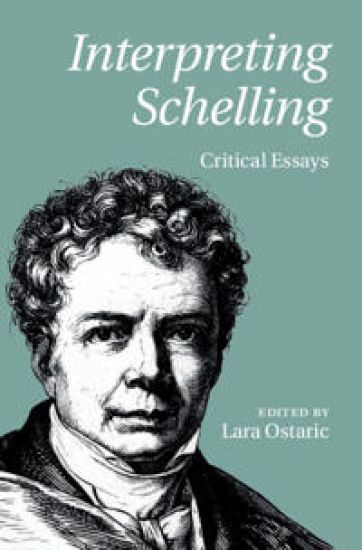
Interpreting Schelling
Cambridge University Press
2014
sidottu
This book is the first collection of essays on Schelling in English that systematically explores the historical development of his philosophy. It addresses all four periods of Schelling's thought: his Transcendental Philosophy and Philosophy of Nature, his System of Identity [Identitätsphilosophie], his System of Freedom, and his Positive Philosophy. The essays examine the constellation of philosophical ideas that motivated the formation of Schelling's thought, as well as those later ones for which his philosophy laid the foundation. They therefore relate Schelling's philosophy to a broad range of systematic issues that are of importance to us today: metaphysics, epistemology, aesthetics, ethics, our modern conceptions of individual autonomy, philosophy of history, philosophy of religion, political philosophy, and theology. The result is a new interpretation of Schelling's place in the history of German Idealism as an inventive and productive thinker.
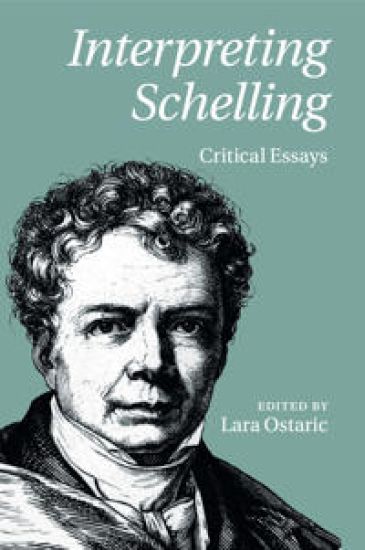
Interpreting Schelling
Cambridge University Press
2018
pokkari
This book is the first collection of essays on Schelling in English that systematically explores the historical development of his philosophy. It addresses all four periods of Schelling's thought: his Transcendental Philosophy and Philosophy of Nature, his System of Identity [Identitätsphilosophie], his System of Freedom, and his Positive Philosophy. The essays examine the constellation of philosophical ideas that motivated the formation of Schelling's thought, as well as those later ones for which his philosophy laid the foundation. They therefore relate Schelling's philosophy to a broad range of systematic issues that are of importance to us today: metaphysics, epistemology, aesthetics, ethics, our modern conceptions of individual autonomy, philosophy of history, philosophy of religion, political philosophy, and theology. The result is a new interpretation of Schelling's place in the history of German Idealism as an inventive and productive thinker.

F. W. J. Schelling's Denkmal Der Schrift Von Den Go Ttlichen Dingen, Andc. Des Herrn F. H. Jacobi, Und Der Ihm in Derselben Gemachten Beschuldigung Eines Absichtlich Ta Uschenden Lu GE Redenden Atheismus.
Friedrich Schelling; Samuel Coleridge
British Library, Historical Print Editions
2011
pokkari
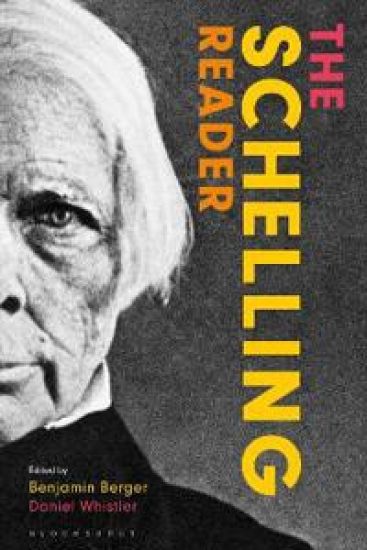
The Schelling Reader
Bloomsbury Academic
2020
sidottu
F.W.J. Schelling (1775-1854) stands alongside J.G. Fichte and G.W.F. Hegel as one of the great philosophers of the German idealist tradition. The Schelling Reader introduces students to Schelling’s philosophy by guiding them through the first ever English-language anthology of his key texts—an anthology which showcases the vast array of his interests and concerns (metaphysics, epistemology, philosophy of nature, ethics, aesthetics, philosophy of religion and mythology, and political philosophy). The reader includes the most important passages from all of Schelling’s major works as well as lesser-known yet illuminating lectures and essays, revealing a philosopher rigorously and boldly grappling with some of the most difficult philosophical problems for over six decades, and constantly modifying and correcting his earlier thought in light of new insights.Schelling’s evolving philosophies have often presented formidable challenges to the teaching of his thought. For the first time, The Schelling Reader arranges readings from his work thematically, so as to bring to the fore the basic continuity in his trajectory, as well as the varied ways he tackles perennial problems. Each of the twelve chapters includes sustained readings that span the whole of Schelling’s career, along with explanatory notes and an editorial introduction that introduces the main themes, arguments, and questions at stake in the text. The Editors’ Introduction to the volume as a whole also provides important details on the context of Schelling’s life and work to help students effectively engage with the material.

The Schelling Reader
Bloomsbury Academic
2020
nidottu
F.W.J. Schelling (1775-1854) stands alongside J.G. Fichte and G.W.F. Hegel as one of the great philosophers of the German idealist tradition. The Schelling Reader introduces students to Schelling’s philosophy by guiding them through the first ever English-language anthology of his key texts—an anthology which showcases the vast array of his interests and concerns (metaphysics, epistemology, philosophy of nature, ethics, aesthetics, philosophy of religion and mythology, and political philosophy). The reader includes the most important passages from all of Schelling’s major works as well as lesser-known yet illuminating lectures and essays, revealing a philosopher rigorously and boldly grappling with some of the most difficult philosophical problems for over six decades, and constantly modifying and correcting his earlier thought in light of new insights.Schelling’s evolving philosophies have often presented formidable challenges to the teaching of his thought. For the first time, The Schelling Reader arranges readings from his work thematically, so as to bring to the fore the basic continuity in his trajectory, as well as the varied ways he tackles perennial problems. Each of the twelve chapters includes sustained readings that span the whole of Schelling’s career, along with explanatory notes and an editorial introduction that introduces the main themes, arguments, and questions at stake in the text. The Editors’ Introduction to the volume as a whole also provides important details on the context of Schelling’s life and work to help students effectively engage with the material.
The Schelling-Eschenmayer Controversy, 1801
Benjamin Berger; Daniel Whistler
EDINBURGH UNIVERSITY PRESS
2022
nidottu
During the first decade of the nineteenth century, F. W. J. Schelling was involved in three distinct controversies with one of his most perceptive and provocative critics, A. C. A. Eschenmayer. The first of these controversies took place in 1801 and focused on the philosophy of nature.Berger and Whistler provide a ground-breaking account of this moment in the history of philosophy. They argue that key Schellingian concepts, such as identity, potency and abstraction, were first forged in his early debate with Eschenmayer. Through a series of translations and commentaries, they show that the 1801 controversy is an essential resource for understanding Schelling's thought, the philosophy of nature and the origins of absolute idealism.Additionally, Berger and Whistler demonstrate how the Schelling-Eschenmayer controversy raises important issues for the philosophy of nature today, including questions about the relation between identity and difference and the possibility of explaining sensible qualities in terms of quantity. This ultimately leads to the formulation of the most basic methodological question for the philosophy of nature: must this philosophy be based upon a prior consideration of consciousness as Eschenmayer insists or might it simply begin with nature itself? By arguing for the latter position, Schelling challenges us to entertain the possibility that the philosophy of nature is first philosophy.



Fichte's Und Schelling's Neueste Lehren Von Gott Und Der Welt, Beurtheilt Von J. Fries
Wentworth Press
2018
sidottu
Romantic Metasubjectivity Through Schelling and Jung: Rethinking the Romantic Subject explores the remarkable intellectual isomorphism between the philosophy of Friedrich Schelling and Carl Jung’s analytical psychology in order to offer a crucial and original corrective to the "reflection theory" of subjectivity.Arguing that the reflection theory of the subject does not do justice to the full compass of Romantic thinking about the human being, Romantic Metasubjectivity sees human identity as neither discursive aftereffect nor centred around a self-transparent "I" but rather as constellated around the centripetal force of what Novalis calls "The Self of one’s self." The author begins with a unique reading of Schelling’s early Naturphilosophie as primal site rather than Freudian scene, thinking this site through his Philosophical Inquiries Into the Nature of Human Freedom to The Ages of the World. Reading Jungian metapsychology and its core concepts as therapeutic amplifications of Schelling, the author articulates an intellectual counter-transference in which Schelling and Jung contemporise each other. The book then demonstrates how Romantic metasubjectivity operates in the libidinal matrix of Romantic poetry through readings of William Wordsworth’s The Prelude and Percy Shelley’s Prometheus Unbound. The book concludes with a discussion of the hit TV series Breaking Bad as a "case study" of the challenges Romantic metasubjectivity raises for fundamental ethical dilemmas which confront us in the twenty-first century.Romantic Metasubjectivity is a highly original work of scholarship and will appeal to students and scholars in German Idealism, Romanticism, philosophy, psychoanalysis, theory, Jung studies, and those with an interest in contemporary theories of the subject.