Kirjojen hintavertailu. Mukana 12 390 323 kirjaa ja 12 kauppaa.

Kirjahaku

Etsi kirjoja tekijän nimen, kirjan nimen tai ISBN:n perusteella.

1000 tulosta hakusanalla Scott Howard

What's Wrong With The Rorschach

What's Wrong With The Rorschach

James M. Wood; M. Teresa Nezworski; Scott O. Lilienfeld; Howard N. Garb

John Wiley Sons Inc
2011
nidottu
Since its creation more than eighty years ago, the famous Rorschach inkblot test has become an icon of clinical psychology and popular culture. Administered over one million times world-wide each year, the Rorschach is used to assess personality and mental illness across a wide range of circumstances: child custody disputes, educational placement decisions, employment and termination proceedings, parole determinations, and even investigations of child abuse allegations. The test's enormous power shapes the lives of hundreds of thousands of people -- often without their knowledge. In the 1970s, this notoriously subjective test was supposedly systematized and improved. But is the Rorschach more than a modern variant on tea leaf reading? What's Wrong With the Rorschach? challenges the validity and utility of the Rorschach and explains why psychologists continue to judge people by their reactions to ink blots, in spite of a half century of largely negative scientific evidence. What's Wrong With the Rorschach? offers a provocative critique of one of the most widely applied and influential - and still intensely controversial - psychological tests in the world today. Surveying more than fifty years of clinical and scholarly research, the authors provide compelling scientific evidence that the Rorschach has relatively little value for diagnosing mental illness, assessing personality, predicting behavior, or uncovering sexual abuse or other trauma. In this highly engaging, novelistic account of the Rorschach's origins and history, the authors detail the wealth of scientific evidence that the test is of questionable utility for real-world decision making. What's Wrong With the Rorschach? presents a powerfully reasoned case against using the test in the courtroom or consulting room - and reveals the strong psychological, economic, and political forces that continue to support the Rorschach despite the research that has exposed its shortcomings and dangers. James M. Wood (El Paso, TX) is Associate Professor, Department of Psychology, at the University of Texas at El Paso. M. Teresa Nezworski (Dallas, TX) is Associate Professor, Department of Psychology, University of Texas at Dallas. Scott O. Lilienfeld (Atlanta, GA) is an Associate Professor of Psychology at Emory University in Atlanta. Howard N. Garb (Pittsburgh, PA) is on the faculty at the University of Pittsburgh and the author of Studying the Clinician: Judgement Research and Psychological Assessment.
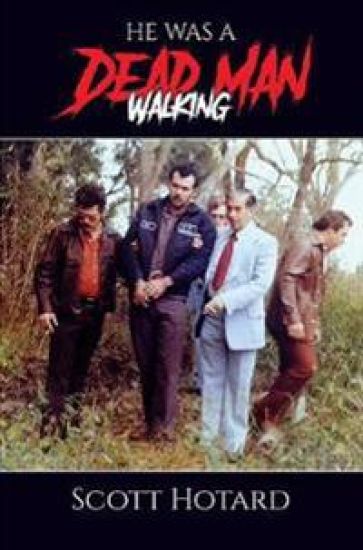
He Was a Dead Man Walking

He Was a Dead Man Walking

Scott Hotard

Austin Macauley Publishers
2020
nidottu
A case that captured a nation and crippled a community. This is the true story of a double homicide of two teenagers as told by Detective Russell Duplantis. Little did Detective Duplantis know how close to home this case would become. The year was 1977. The location was Iberia Parish Louisiana. The suspects were Elmo Patrick Sonnier and Eddie James Sonnier, two brothers that were serial rapists who one night became murderers. This was the first case to test the new death penalty laws established in the United States. Detective Duplantis has been haunted by this case for over forty years. It is only now that he decided to tell his story. A case that saw Eddie James Sonnier get life in prison and Elmo Patrick Sonnier get the death penalty and ultimately executed in the electric chair in 1984.
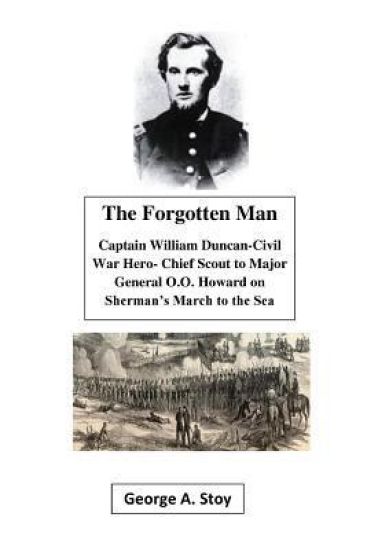
The Forgotten Man: Captain William Duncan- Chief Scout for Major General O.O. Howard During Shermans' March to the Sea
This is the fascinating story of Captain William Duncan, who was born 07/20/1840 in Scotland, near Edinburgh. He came to North America by way of Canada, then settled in Elgin, Illinois. In 1860 he graduated from Elgin Academy and shortly thereafter enlisted to serve in the Thirty Sixth Illinois Infantry of the Union Army. During the war he distinguished himself for valor on many occasions, most notably while serving under General O.O. Howard during Sherman's March to the Sea. When the Union Army reached Savannah, Georgia they found themselves cut -off from their supplies. When ordered by Sherman to locate the supply ships, Howard dispatched Captain Duncan and two others to contact the Union fleet. The journey took three days and at one point Captain Duncan floated by an armed blockade in a hollowed log. Captain Duncan located a Union gunboat that carried him to Hilton Head Island. Supply ships were sent to Savannah, Georgia and Duncan continued on to Washington to deliver news of the successful "March to the Sea" to Secretary of War, Edwin M. Stanton. After the war, Duncan returned to Elgin, Illinois to marry Lucy Harwood before moving to the Dakota Territory where his brothers had already settled. In 1876, he was elected to the legislature of the Dakota Territory and re-elected once again in 1884. Duncan and his wife, Lucy, passed away on the same day, February 4th, 1925. This book has a fascinating story to tell about this "Forgotten Man" who gave so much to his country and received little recognition for his valor. This book is volume one of a series of upcoming books the author, George Stoy plans to write in the near future about other "Forgotten M
The Hoarders

The Hoarders

Scott Herring

University of Chicago Press
2014
sidottu
The verb "declutter" has not yet made it into the Oxford English Dictionary, but its ever-increasing usage suggests that it's only a matter of time. Articles containing tips and tricks on how to get organized cover magazine pages and pop up in TV programs and commercials, while clutter professionals and specialists referred to as "clutterologists" are just a phone call away. Everywhere the sentiment is the same: clutter is bad. In The Hoarders, Scott Herring provides an in-depth examination of how modern hoarders came into being, from their onset in the late 1930s to the present day. He finds that both the idea of organization and the role of the clutterologist are deeply ingrained in our culture, and that there is a fine line between clutter and deviance in America. Herring introduces us to Jill, whose countertops are piled high with decaying food and whose cabinets are overrun with purchases, while the fly strips hanging from her ceiling are arguably more fly than strip. When Jill spots a decomposing pumpkin about to be jettisoned, she stops, seeing in the rotting, squalid vegetable a special treasure. "I've never seen one quite like this before," she says, and looks to see if any seeds remain. It is from moments like these that Herring builds his questions: What counts as an acceptable material life - and who decides? Is hoarding some sort of inherent deviation of the mind, or a recent historical phenomenon grounded in changing material cultures? Herring opts for the latter, explaining that hoarders attract attention not because they are mentally ill but because they challenge normal modes of material relations. Piled high with detailed and, at times, disturbing descriptions of uncleanliness, The Hoarders delivers a sweeping and fascinating history of hoarding that will cause us all to reconsider how we view these accumulators of clutter.
The Hoarders

The Hoarders

Scott Herring

University of Chicago Press
2014
nidottu
The verb "declutter" has not yet made it into the Oxford English Dictionary, but its ever-increasing usage suggests that it's only a matter of time. Articles containing tips and tricks on how to get organized cover magazine pages and pop up in TV programs and commercials, while clutter professionals and specialists referred to as "clutterologists" are just a phone call away. Everywhere the sentiment is the same: clutter is bad. In The Hoarders, Scott Herring provides an in-depth examination of how modern hoarders came into being, from their onset in the late 1930s to the present day. He finds that both the idea of organization and the role of the clutterologist are deeply ingrained in our culture, and that there is a fine line between clutter and deviance in America. Herring introduces us to Jill, whose countertops are piled high with decaying food and whose cabinets are overrun with purchases, while the fly strips hanging from her ceiling are arguably more fly than strip. When Jill spots a decomposing pumpkin about to be jettisoned, she stops, seeing in the rotting, squalid vegetable a special treasure. "I've never seen one quite like this before," she says, and looks to see if any seeds remain. It is from moments like these that Herring builds his questions: What counts as an acceptable material life - and who decides? Is hoarding some sort of inherent deviation of the mind, or a recent historical phenomenon grounded in changing material cultures? Herring opts for the latter, explaining that hoarders attract attention not because they are mentally ill but because they challenge normal modes of material relations. Piled high with detailed and, at times, disturbing descriptions of uncleanliness, The Hoarders delivers a sweeping and fascinating history of hoarding that will cause us all to reconsider how we view these accumulators of clutter.
Atahualpa's Hoard

Atahualpa's Hoard

Andrew Scott MacDonald

Createspace Independent Publishing Platform
2011
nidottu
In Panama 1524, a plot was hatched by Spanish conquistadors to relieve a South American empire of its wealth. Three men had become aware of letters which described a civilisation of enormous riches in the inaccessible, undiscovered south. This epic journey of discovery eventually led to the founding of Lima and the country of Peru. Jack Stone, a former archaeology student and ex-member of the armed services specialises in finding lost artefacts, normally on behalf of the wealthy business classes. A telephone call from an old friend plunges Jack into a race to find an enormous hoard which the Spanish conquistadors had plundered and subsequently hidden. This unfathomable wealth has been hidden for nearly five hundred years and is all but forgotten. Deus Victum Totus are a sect of the Roman Catholic Church headed up by Gianfranco Alberto. Gianfranco is working with shady global business "elites" to discover the hoard and secure massive wealth. This wealth coupled with the globalists ambitions of population reduction and control will give the elitists enough wealth to control world governments, and to subjugate and cull the global population. Two opposed teams trying to out-manoeuvre each other in unravelling an age old mystery. Can Jack Stone solve the mystery to prevent the influential cult from promoting its sinister plans?
A Boy Scout's Courage

A Boy Scout's Courage

Edward Howard Griggs

ALPHA EDITION
2022
pokkari
This book has been considered important throughout the human history, and so that this work is never forgotten we have made efforts in its preservation by republishing this book in a modern format for present and future generations. This whole book has been reformatted, retyped and designed. These books are not made of scanned copies and hence the text is clear and readable.
The Savage Scot amid the Redskins and Redcoats: Two novels about Levi McGregor

The Savage Scot amid the Redskins and Redcoats: Two novels about Levi McGregor

Howard Denson

Createspace Independent Publishing Platform
2018
nidottu
HOWARD DENSON (a.k.a. William Howard Denson III) was born in Jasper, Alabama, but also resided in Florence and Birmingham, in Jackson and Hattiesburg, Mississippi; Vidalia, Georgia; Norfolk, Virginia, and Key West, Pensacola, Marianna, and Tallahassee in Florida. Since 1969, he has been a resident of Jacksonville, where he taught English and humanities courses at what is now Florida State College. He spent most of his life thinking that the Stephenson and Blevins allied families featured one or two great-great-grandmothers who were Creek or Cherokees. Recent DNA testing, however, has not confirmed that (although 9 percent is still up in the air). Most of the lineage can be traced to the British Isles and Scandinavia, with 2 percent coming from sub-Sahara Africa (Mali, Senegal, etc.) and 1 percent from Southern Asia. He says he hasn't traveled extensively but likes to quote Emily Dickinson: "I never saw a moor, / I never saw the sea; / Yet know I how the heather looks, / And what a wave must be." In the early Seventies, he visited Edinburgh and at Waverly Station saw faces that he had grown up with in Walker, Winston, and Cullman counties of his home state. He has been married to She Who Knows All a/k/a/ Michele Boyette for forty-two years. Their children include barkers and meowers: Miss Daphne and Mr. Darcy (dogs) and Miss Peepers, Billy, Mercutio, Amber, Wally, and Frieda (cats). http: //howarddenson.webs.co
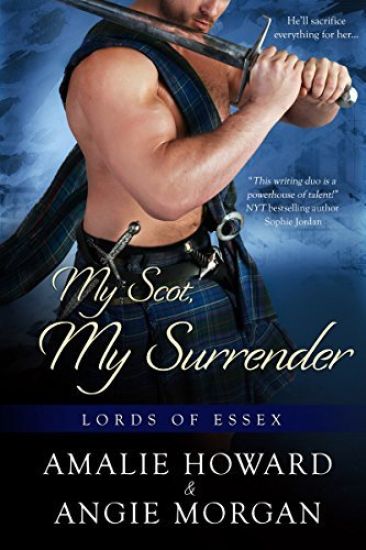
My Scot, My Surrender

My Scot, My Surrender

Angie Morgan; Amalie Howard

Createspace Independent Publishing Platform
2018
nidottu
SCOTLAND, 1819. Brandt Montgomery Pierce is a bastard-and proud of it. Raised by the Duke of Bradburne, Brandt enjoys an uncommon life of privilege. Despite the mystery surrounding his birth, he has wealth and opportunity, and wants nothing more. Especially not a wife. Lady Sorcha Maclaren, the fiery and scarred daughter of Laird Maclaren, the Duke of Dunrannoch, is desperate to avoid marriage to a loathsome marquess at any cost...even if it means risking a kiss with a handsome stranger at a Scottish border festival. But after an innocent kiss turns into a scandalously public embrace, Sorcha and Brandt get more than they bargained for-a swift trip to the altar. When danger chases them into the Highlands, and deceit threatens to tear them apart, their only hope will be to surrender...to each other.
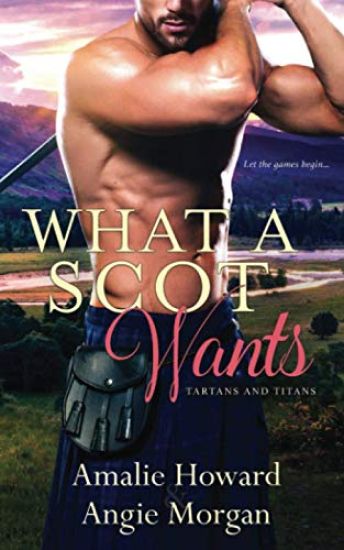
What a Scot Wants

What a Scot Wants

Angie Morgan; Amalie Howard

Independently Published
2019
nidottu
Highlander Ronan Maclaren must marry, but he's in no particular hurry. He's perfectly happy as the laird of his clan, running the Maclaren Whisky Distillery, and besides, he just hasn't found the right woman.Lady Imogen Kinley has cleverly avoided wedlock for years. Men, she has learned from painful experience, are not to be trusted. Determined to remain independent, she takes an indecent amount of pleasure in making herself as unattractive to potential suitors as possible.When desperate measures are taken by their parents and a betrothal contract is signed, it's loathing at first sight. They each vow to make the other cry off-by any means necessary. But what starts out as a battle of wits...quickly dissolves into a battle of wills.
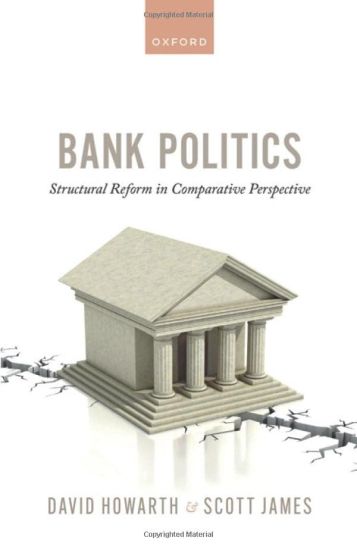
Bank Politics

Bank Politics

David Howarth; Scott James

Oxford University Press
2022
sidottu
The problem of banks being 'too big to fail' was the defining regulatory issue of the global financial crisis. However, attempts to tackle the problem by separating retail banking from higher risk trading activities - known as structural reform - proved to be highly divisive and contributed to significant regulatory divergence. In this book, David Howarth and Scott James explain this variation by examining the politics of bank structural reform across six key jurisdictions: the United States, the European Union, the United Kingdom, France, Germany, and the Netherlands. Integrating political economy and public policy approaches, they develop a novel 'comparative financial power' framework to analyse how financial industry influence is mediated by two factors: first, whether bank lobbying is unified and centralized (cooperative financial power) or divided and fragmented (competitive financial power); and second, policy makers' use of venue shifting to depoliticize contentious policy issues. The book explains that the US and UK governments implemented major reforms because the banking industry was divided and faced significant opposition. However, venue shifting to an independent committee led to durable reform in the UK, while political polarization in the US contributed to contested reform. By contrast, the French and German governments balanced unified bank lobbying and political pressures to act by pursuing limited symbolic reforms; the Dutch government deflected the issue through delegation to multiple commissions (no reform); while political stalemate at the EU level resulted from early venue shifting and concerted pan-European bank lobbying. The book makes a major contribution to scholarship on the political economy of finance and business power.
Success with STEM

Success with STEM

Sue Howarth; Linda Scott

Routledge
2013
sidottu
Success with STEM is an essential resource, packed with advice and ideas to support and enthuse all those involved in the planning and delivery of STEM in the secondary school. It offers guidance on current issues and priority areas to help you make informed judgements about your own practice and argue for further support for your subject in school. It explains current initiatives to enhance STEM teaching and offers a wide range of practical activities to support exciting teaching and learning in and beyond the classroom. Illustrated with examples of successful projects in real schools, this friendly, inspiring book explores: Innovative teaching ideas to make lessons buzz Activities for successful practical work Sourcing additional funding Finding and making the most of the best resources STEM outside the classroom Setting-up and enhancing your own STEM club Getting involved in STEM competitions, fairs and festivals Promoting STEM careers and tackling stereotypes Health, safety and legal issues Examples of international projects An wide-ranging list of project and activity titlesEnriched by the authors’ extensive experience and work with schools, Success with STEM is a rich compendium for all those who want to develop outstanding lessons and infuse a life-long interest in STEM learning in their students. The advice and guidance will be invaluable for all teachers, subject leaders, trainee teachers and NQTs.
Success with STEM

Success with STEM

Sue Howarth; Linda Scott

Routledge
2013
nidottu
Success with STEM is an essential resource, packed with advice and ideas to support and enthuse all those involved in the planning and delivery of STEM in the secondary school. It offers guidance on current issues and priority areas to help you make informed judgements about your own practice and argue for further support for your subject in school. It explains current initiatives to enhance STEM teaching and offers a wide range of practical activities to support exciting teaching and learning in and beyond the classroom. Illustrated with examples of successful projects in real schools, this friendly, inspiring book explores: Innovative teaching ideas to make lessons buzz Activities for successful practical work Sourcing additional funding Finding and making the most of the best resources STEM outside the classroom Setting-up and enhancing your own STEM club Getting involved in STEM competitions, fairs and festivals Promoting STEM careers and tackling stereotypes Health, safety and legal issues Examples of international projects An wide-ranging list of project and activity titlesEnriched by the authors’ extensive experience and work with schools, Success with STEM is a rich compendium for all those who want to develop outstanding lessons and infuse a life-long interest in STEM learning in their students. The advice and guidance will be invaluable for all teachers, subject leaders, trainee teachers and NQTs.