rom her early depictions of individual objects to her later works featuring complex interiors, American artist Lynn Shaler's works are distinctive, characterised by a colourful aquatint technique combined with carefully etched lines. Over a forty-year career, she has created more than two hundred aquatint etchings and has been included in major museum collections, including the Metropolitan Museum of Art, the Library of Congress, and the Victoria and Albert Museum in London. Lynn Shaler: Fine Prints, 1972-2017 is the first catalogue to spotlight this important American artist's entire body of work. Many of the etchings have been inspired by locations in Paris, where Shaler has lived for three decades. The book reproduces nearly all of her works, alongside accompanying essays which examine recurring themes and motifs in Shaler's work, such as architectural details or intimate interior views opening onto an exterior scene.
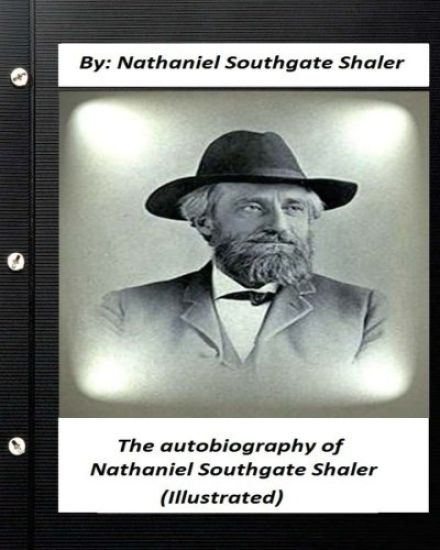
Nathaniel Southgate Shaler and the Culture of American Science is the first book-length study of the man who served a Harvard’s Professor of Geology and Paleontology during the Darwinian era. Shaler was a student of Louis Agassiz and went on to a successful, multifaceted career as a geologist, geographer, educator, humanist, and poet. Livingstone employs a thematic approach to chart Shaler’s career against the broader intellectual currents of America’s Gilded Age. After tracing Shaler’s life story from his boyhood in Kentucky through his student years at Harvard, his service with the Geological Survey, and eventually his years as Dean of Harvard’s Lawrence Scientific School, the author examines Shaler’s evolutionary vision and portrays his strategic efforts to reconcile the nineteenth century’s scientific and religious world views.Livingstone assesses Shaler’s prolific writings, including those on race, which demonstrate a typical concern to provide a “scientific” perspective on the political questions of immigration restriction and eugenic control. IN addition, the book explores his efforts to interweave geography and history, particularly in relation to the American frontier; and his contributions to geology and geomorphology. The portrait of Shaler is completed with a review of his educational thinking and his role in establishing the American Summer School and in furthering scientific and technological education.Nathaniel Southgate Shaler emerges from Livingstone’s work as a distinctive figure in the development of the new scientific culture, a figure who provides a focal point for assessing the impact of evolutionary naturalism on late-nineteenth-century American thought.
Reprint of the original. The publishing house Anatiposi publishes historical books as reprints. Due to their age, these books may have missing pages or inferior quality. Our aim is to preserve these books and make them available to the public so that they do not get lost.
Reprint of the original. The publishing house Anatiposi publishes historical books as reprints. Due to their age, these books may have missing pages or inferior quality. Our aim is to preserve these books and make them available to the public so that they do not get lost.
Johann Michael Sailer, Bischof von Regensburg - Ein biographischer Versuch ist ein unver nderter, hochwertiger Nachdruck der Originalausgabe aus dem Jahr 1865. Hansebooks ist Herausgeber von Literatur zu unterschiedlichen Themengebieten wie Forschung und Wissenschaft, Reisen und Expeditionen, Kochen und Ern hrung, Medizin und weiteren Genres. Der Schwerpunkt des Verlages liegt auf dem Erhalt historischer Literatur. Viele Werke historischer Schriftsteller und Wissenschaftler sind heute nur noch als Antiquit ten erh ltlich. Hansebooks verlegt diese B cher neu und tr gt damit zum Erhalt selten gewordener Literatur und historischem Wissen auch f r die Zukunft bei.
Briefe von Johann Michael Sailer, Melchior Diepenbrock und Joh. K. Passavants Nachlass ist ein unver nderter, hochwertiger Nachdruck der Originalausgabe aus dem Jahr 1860. Hansebooks ist Herausgeber von Literatur zu unterschiedlichen Themengebieten wie Forschung und Wissenschaft, Reisen und Expeditionen, Kochen und Ern hrung, Medizin und weiteren Genres. Der Schwerpunkt des Verlages liegt auf dem Erhalt historischer Literatur. Viele Werke historischer Schriftsteller und Wissenschaftler sind heute nur noch als Antiquit ten erh ltlich. Hansebooks verlegt diese B cher neu und tr gt damit zum Erhalt selten gewordener Literatur und historischem Wissen auch f r die Zukunft bei.
Mounting pressure in the early 1960s from the National Academy of Sciences (NAS) to study ways of expanding the role of astronauts to conduct science on future space missions led to NASA’s conclusion that flying scientifically trained crewmembers would generate greater returns from each mission. NASA and industry studies continued investigating possibilities that could lead to the eventual creation of the first space stations using surplus Apollo hardware, through the Apollo Applications Programme (AAP). There was also a growing interest within the military to create their own manned space station programme, conducting on-orbit experiments and research with strategic advantages for national security. In October 1964 the Soviets launched Voskhod 1 whose 3-man crew were identified as the first ‘scientific passengers’ in space. A few days later NASA and the NAS had completed joint studies into the possibility of using scientists in the manned space programme, and invited scientists to apply for astronaut training. In selecting the first group of scientist-astronauts, NASA had one firm requirement; any person accepted into the programme would have to qualify as a military jet pilot. While the second group of scientists were completing their academic, survival and flight training programme, the remaining members of the first scientist-astronaut group were involved in supporting the developing Apollo Applications programme and the Apollo lunar programme.