Simone de Beauvoir continues to dominate twentieth century feminist theory, yet her work is the focus of inflamed debate amongst theorists of feminism. This accessible introduction to de Beauvoir's life and ideas considers the themes and tensions which inform her work. Mary Evans shows how de Beauvoir's writings resist simplistic interpretations and cannot be reduced to simple oppositions between masculine and feminine, rational and irrational, or social and natural. Highlighting the autobiographical aspects in de Beauvoir's work, Evans presents a new and important analysis of the complex relationship between fact, fiction and autobiography.
Over fifty years after her death, Simone Weil (1909-1943) remains one of the most searching religious inquirers and political thinkers of the twentieth century. Albert Camus said she had a ""madness for truth."" She rejected her Jewishness and developed a strong interest in Catholicism, although she never joined the Catholic church. Both an activist and a scholar, she constantly spoke out against injustice and aligned herself with workers, with the colonial poor in France, and with the opressed everywhere. She came to believe that suffering itself could be a way to unity with God, and her death at thirty-four has been recorded as suicide by starvation.This extraordinary study is primarily a topography of Weil's mind, but Thomas Nevin is persuaded that her thought is inextricably bound to her life and dramatic times. Thus, he not only addresses her thoughts and her prejudices but examines her reasons for entertaining them and gives them a historical focus. He claims that to Weil's generation the Spanish War, the Popular Front, the ascendance of Hitlerism, and the Vichy years were not mere backdrops but definitive events.Nevin explores in detail not only matters of continuing interest, such as Weil's leftist politics and her attempt to embrace Christianity, but also hitherto unexamined aspects of her life and work which permit a deeper understanding of her: her writings on science, her work as a poet and dramatist, and her selective friendships. The thread uniting these topics is her struggle to maintain her independence as a free thinker while resisting community such as Judaism could have offered her. Her intellectual struggles eloquently reveal the desperate isolation of Jews torn between the lure of assimilation and the tormented dignity of their communal history.Nevin's massive research draws on the full range of essays, notebooks, and fragments from the Simone Weil archives in Paris, many of which have never been translated or published.Originally published in 1991. A UNC Press Enduring Edition -- UNC Press Enduring Editions use the latest in digital technology to make available again books from our distinguished backlist that were previously out of print. These editions are published unaltered from the original, and are presented in affordable paperback formats, bringing readers both historical and cultural value.
First critical biography of this visionary artist written by a dance scholar. Simone Forti, groundbreaking improvisor, has spent a lifetime weaving together the movement of her mind with the movement of her body to create a unique oeuvre situated at the intersection of dancing and art practices. Her seminal Dance Constructions from the 1960s crafted a new approach to dance composition and helped inspire the investigations of Judson Dance Theater. In the 1970s, Forti's explorations of animal movements expanded that legacy to launch improvisation as a valuable artform in its own right. From her early forays into vocal accompaniment to her News Animations, Forti has long integrated gesture and text into compelling performances that consistently stretched the boundaries of dance to layer abstract movement with story-telling and political commentary. Her "Land Portraits" series brought an immersive ecological experience to New York City stages in the 1980s, and she is a beloved teacher and mentor whose Body, Mind, World workshops have inspired dancers around the world. In this beautifully written book, author Ann Cooper Albright braids archival research, extensive interviews, and detailed movement analyses of Forti's performances to provide the first kinesthetically-informed and critically-nuanced history of Forti's multifaceted and extensive career.
New in paperback edition of the first critical biography of this visionary artist written by a dance scholar. Simone Forti, groundbreaking improvisor, has spent a lifetime weaving together the movement of her mind with the movement of her body to create a unique oeuvre situated at the intersection of dancing and art practices. Her seminal Dance Constructions from the 1960s crafted a new approach to dance composition and helped inspire the investigations of Judson Dance Theater. In the 1970s, Forti's explorations of animal movements expanded that legacy to launch improvisation as a valuable artform in its own right. From her early forays into vocal accompaniment to her News Animations, Forti has long integrated gesture and text into compelling performances that consistently stretched the boundaries of dance to layer abstract movement with story-telling and political commentary. Her "Land Portraits" series brought an immersive ecological experience to New York City stages in the 1980s, and she is a beloved teacher and mentor whose Body, Mind, World workshops have inspired dancers around the world. In this beautifully written book, author Ann Cooper Albright braids archival research, extensive interviews, and detailed movement analyses of Forti's performances to provide the first kinesthetically-informed and critically-nuanced history of Forti's multifaceted and extensive career.
Susan Hayward charts the career of Simone Signoret, one of the great French actresses of the 20th century. Signoret - who won an Oscar in 1960 for her performance in "Room at the Top" - was a key figure in French cinema for 40 years. But it is not so much her longevity that impresses, as it is the quality of work she produced as her career progressed. She started out as a stunningly beautiful woman, winning major international awards five times for her roles, and yet was only moderately in demand during those years. From the 1960s onwards, when her looks began to decline significantly, Signoret was in greater demand, and produced most of her output. She insisted on playing roles consonant with her real age, and often chose to play roles that portrayed her as even more ugly than she had become.
Richard H. Bell analyzes the social and political thought of Simone Weil, paying particular attention to Weil's concept of justice as compassion. Bell describes the ways in which Weil's concept of justice stands in contrast with liberal 'rights-based' views of justice, and focuses upon central aspects of Weil's thought, including 'attention,' human suffering and 'affliction,' and the importance of 'a spiritual way of life' in reshaping the individual's role in civic life. Simone Weil: The Way of Justice as Compassion is a valuable addition to the scholarship on this important thinker and a necessary book for students and scholars of political theory and philosophical moral thought.
Rocha graduated from the prestigious Central Saint Martins M.A. program and, upon the presentation of her first collection in 2010, quickly garnered an instant following among fashion insiders and taste-makers; Adrian Joffe of Dover Street Market was an early fan. Born from the deep and lush nature of her native home in Ireland as well as the dynamism of her upbringing in Hong Kong, her designs are highly feminine, captivating, and infinitely provocative. Her vision is one that seems to have no bounds her highly singular designs have since reached a new set of followers that have grown to include stylishly rebellious A-listers like FKA twigs, Billie Eilish, and Chloe Sevigny along with a devoted set of fashion darlings who don Rocha s platform brogues, voluminous, almost gothic dresses, and egg-shaped pearl handbags handbags in cities across the globe. This book is a long, pensive gaze into Rocha s subversive world, one heavily inspired by art, nature, and her dual heritage. A natural bookmaker (Rocha has published an impressive number of collectible zines), this tome is insightfully edited, designed, and crafted, gathering catwalk images, shadowy editorials, and backstage documentation in a manner that stays true to the nature of the world she s created. An absolute essential for any fashion-lover s bookshelf, this monograph is highly anticipated and set to follow in the footsteps of successful authors Rizzoli has published in the past including Ann Demeulemeester, Rick Owens, Jun Takahashi, and Maison Martin Margiela.
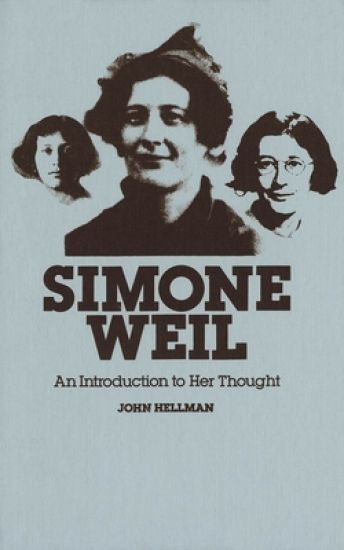
"The generation of 1930 in French intellectual life was unique in the gravity of the challenges they faced." Simone Weil--the brilliant social and political theorist, activist, and spiritual writer--was one of an eminent company in the France of the 1930s who responded to these challenges. In her brief, remarkable life she wrote a host of essays and letters and filled several notebooks with reflections. Hellman's volume sets out the single world view--with its paradoxes and its logic--which appears behind her disparate writings but which she never lived to set out formally herself. Hellman extracts the key themes in Weil's writings on Marxism, Hitlerism, factory work, history, and religion, in an effort to examine the seeming contradictions and inconsistencies in her fusion of deep spirituality and commitment to the poor and oppressed and her love-hate relationship with Roman Catholicism and Israel. The result is a synthesis of her thought as a whole, drawn principally from her varied, fragmentary writings, and seen in relation to her life and personality.
The rising cases of rejection and ostracism suffered by LGBT persons in Barbados made Simone's Place a timely production when it was first performed there in 2014. The play is a story of love, acceptance and the need for connection and belonging. Though it focuses on issues of gender identity, the question of class is ever present. The central character is a transgender owner of the club/bar, Simone's Place, where she performs Nina Simone jazz standards as Lady Simone. Despite her upper-class roots, the deeply spiritual Lady Simone has become advisor and healer to many of the broken souls who drink in and hang around the bar; at the same time she is most in need of love and healing herself. The central figure's paradox binds and balances the play as each character struggles with the dilemma of trying to be free in a society where keeping secrets and 'acting right' is the key to survival.
Simone Visits the Museum introduces readers to Simone, an inquisitive and vibrant young African-American girl growing up in a neighborhood in Southeast, Washington, DC. This book follows Simone through an exciting day spent with her mother. The highlight of their day is a visit to the Smithsonian National Museum of African American History and Culture (NMAAHC) where Simone misplaces something she values. In this story, she learns lessons about responsibility, paying attention to surroundings, and the importance of family.Simone is relatable to young readers and is a solid role model who wants to learn and strives to do the right thing. Like most children's books, the illustrations in Simone Visits the Museum play a critical role in conveying the story and maintaining the interest of readers ages 7-10. The illustrations also provide a phenomenal opportunity to highlight Washington, DC and the Hillcrest Neighborhood that Simone lives in with authenticity and intention.
A lovely children's book about Simone, an inquisitive and vibrant African-American girl, and the day she spends with her mother. Tanto si buscas un regalo original para tu peque o o peque a como si s lo quieres una lectura ligera para antes de ir a la cama, Simone visita el museo es sin duda el regalo justo. Este libro encantador nos presenta a Simone, una ni a muy especial, y nos cuenta la historia del emocionante d a que pasa con su madre. Madre e hija visitan el Museo Nacional Smithsonian de Historia y Cultura Afroamericana donde Simone pierde algo muy importante para ella. Esta experiencia le supone a Simone una gran oportunidad para aprender sobre la importancia de prestar atenci n a lo que nos rodea, aprender a ser responsables y valorar la familia. Con un estilo f cil de leer, esta historia permite que los peque os lectores se puedan sentir identificados. Del mismo modo, las maravillosas ilustraciones muestran aut nticas escenasde Washington D.C. y de todo cuanto la ciudad tiene por ofrecer.
Simone Visits the Museum is an award-winning and beautifully illustrated children's book.Join her on this adventure full of wonder and curiosity.A lovely children's book about Simone, an inquisitive and vibrant African-American girl, and the day she spends with her mother. With beautiful illustrations, it's the perfect book for bi-lingual children since they can also buy the Spanish edition and practice their Spanish. Perfect for children as young as three to ten years of age.Simone always wants to go, get out, and explore It's Saturday, and she is about to get her wish. Her mother takes her to the Smithsonian National Museum of African American History and Culture. While at the museum, Simone misplaces something she values, making it a great opportunity for her to learn about responsibility, paying attention to surroundings, and the importance of family.Charming and genuine, Simone Visits the Museum showcases the joy of visiting a museum, portrays the excitement of city living, and celebrates the bond between mothers and daughters. It's a gorgeously illustrated picture book about family, love, and pride. A wonderful book for a bedtime story that the whole family can share.Order your copy today.A 2019 International Afro-American Historical and Genealogical Society (AAHGS) Best Children's Book Award winner