
Kirjahaku
Etsi kirjoja tekijän nimen, kirjan nimen tai ISBN:n perusteella.
1000 tulosta hakusanalla Sinclair Lewis


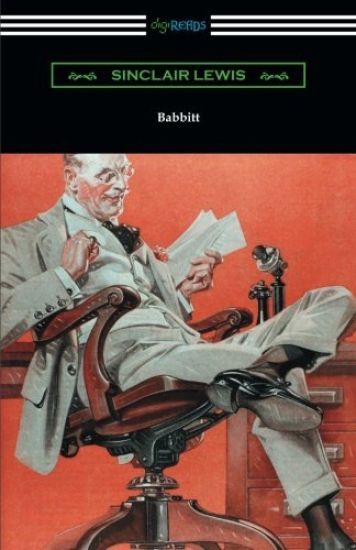
First published in 1922, "Babbitt" is Sinclair Lewis' satire of American culture in the early part of the 20th century. In the years following World War I Americans began to idealize the middle-class lifestyle as a symbol of success, one crucial to the American identity. The successful self-made family man living in a Midwestern town began to symbolize the "American Dream". The titular character of this novel, George F. Babbitt, is one such man. Babbitt is a successful middle-aged partner in a real estate firm who is married with three kids living in the fictional Midwestern town of Zenith. While having achieved the "American Dream" Babbitt gradually begins to feel a lack of fulfillment with how his life has turned out. He is a man unaware of the contemporary social and economic conditions that exist outside his own small circle. This lack of awareness begins to become increasingly apparent to him and a feeling of consternation sets in. Controversial upon its first publication for its criticism of what many Americans believed to be the ideal life, "Babbitt" is at once the tale of a middle-life crisis and a satirical critique of the vacuity of middle-class American life. This edition is printed on premium acid-free paper and includes an introduction by Hugh Walpole.
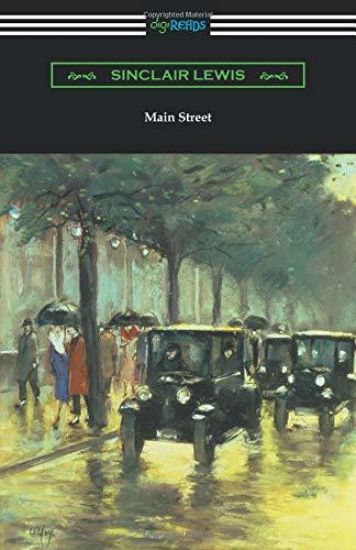
First published in 1920, "Main Street" is a biting and satirical look at small town America. Set in the 1910s it follows the struggles of its heroine, Carol Milford, to adapt to small town life. Carol, a young and progressive librarian living in St Paul, Minnesota, falls in love with and marries Will Kennicott, a doctor who dreams of returning to the small town of his childhood. Carol agrees and they move to Gopher Prairie, Minnesota, a town modeled on Sinclair's own hometown of Sauk Centre, Minnesota. Carol is disappointed by the town's drab appearance and it's provincial, small-minded inhabitants. Brimming with optimism and tenacity, she sets out to convince the town to modernize and embrace her progressive values. Her ideas are not received as she hoped and instead she is resisted at every turn and derided by her fellow townsfolk. For all its seeming bleakness, Carol is ever optimistic and refuses to give up or believe the fight isn't worth fighting. "Main Street" exemplifies Lewis' "vigorous and graphic art of description and his ability to create, with wit and humour, new types of characters", which was cited by the Nobel Prize for Literature committee when he was awarded the prize in 1930. This edition is printed on premium acid-free paper.

First published in 1925, Sinclair Lewis' "Arrowsmith" is the fascinating tale of a man torn between the pursuit of scientific knowledge and the demands of everyday domestic life. "Arrowsmith" was published to great critical acclaim, being awarded the Pulitzer Prize in 1926, and has endured as the author's most popular novel. It is the story of Martin Arrowsmith, an intelligent and scientific young man who leaves his small Midwestern hometown to attend medical school and become a doctor. Along the way he lives his personal life haphazardly while he struggles to devote more of his time and attention to his scientific endeavors. The tension between his family and his life of rigorous and exacting scientific pursuit come to a dramatic head during an outbreak of bubonic plague on a tropical island. Martin must make difficult decisions between his principles, his research, and his ethical obligations. "Arrowsmith" is a well-researched and detailed description of medical training and practice, as well as an intense character study and thought-provoking examination of the tension that exists between everyday life and the rigorous pursuit of scientific inquiry. This edition is printed on premium acid-free paper.

This book is a novel of husbands and wives, being a meditation on marriage. It was written late in the career of Sinclair Lewis, and explores themes of love, marriage, heartache, trust, and redemption in a small Minnesota town. Along with the courtship and marriage of the main characters, Lewis presents mini-portraits of other couples in the community: some delightful, others wildly dysfunctional and destructive. Harry Sinclair Lewis (1885 - 1951) was an American novelist, playwright, and short-story writer. In 1930 he became the first author from the United States to receive the Nobel Prize in Literature, which he was awarded "for his vigorous and graphic art of description and his ability to create, with wit and humor, new types of characters." We are republishing this antiquarian book now complete with a new prefatory biography of the author.
This early work by Sinclair Lewis was originally published in 1917 and we are now republishing it with a brand new introductory biography. Sinclair Lewis was born in Sauk Centre, Minnesota, USA in 1885. A lonely and socially awkward child, Lewis tried unsuccessfully to run away from home, before entering Yale University in 1903. It was here that, in the Yale Courant and the Yale Literary Magazine, Lewis had his first works - mostly romantic poetry and short sketches - published. In 1920, while living in Washington D.C., Lewis had his first major success with the novel Main Street. Selling around two million copies within a few years, it catapulted Lewis into fame and riches, and he followed it with the critically acclaimed Babbitt (1922), and Arrowsmith (1925) - for which he received, but refused, the Pulitzer Prize.