

Kirjahaku
Etsi kirjoja tekijän nimen, kirjan nimen tai ISBN:n perusteella.
103 tulosta hakusanalla Slavitt David R.

A detailed analysis of the occurrence of disease and the quality of medical care in antebellum Virginia focuses on the treatment of Black slaves and freemen

Buffalo Bill: Wild West Showman
Mary Richmond Davidson; Sam Savitt
Literary Licensing, LLC
2011
nidottu

Fawn in the Forest: And Other Wild Animal Stories
Jim Kjelgaard; Sam Savitt
Literary Licensing, LLC
2012
sidottu

Fawn in the Forest: And Other Wild Animal Stories
Jim Kjelgaard; Sam Savitt
Literary Licensing, LLC
2012
nidottu

Vintage Smoking Stands - Uncovering an American Folk Art Treasure
Cheryl Alpert; Claire Savitt; Joel Neuschatz
Xlibris
2008
pokkari

Academic Language in Diverse Classrooms: English Language Arts, Grades K-2
Margo Gottlieb; Ernst-Slavit Gisela
Corwin Press Inc
2013
nidottu
Increasingly as important to educators as the Common Core State Standards, the new national anchor for curriculum, instruction and assessment have set a high bar of rigorous and challenging content. While most educational researchers and practitioners agree that that mastery of academic language is the key to students' academic success, many teachers are not well-versed in its major components and need to learn how to integrate them into curriculum and instructional assessment. One of a seven book series, this text gives guidance to educators in how to target academic language in planning for student learning. It provides a concise, logical, and practical approach to identifying grade-level academic language associated with the Common Core State Standards for English Language Arts, academic content standards, as well as English Language Proficiency Standard, to readily incorporate into teaching and learning.

Academic Language in Diverse Classrooms: Definitions and Contexts
Margo Gottlieb; Ernst-Slavit Gisela
Corwin Press Inc
2014
nidottu
This companion (foundational) book to the six-book series, Academic Language Demands for Language Learners: From Text to Context, encapsulates the broad ideas of the series by presenting the evolving theory behind the construct of academic language, a definition and examples of each of its components, and a template for direct classroom applicability. Each of the six books in the series is a more detailed, comprehensive treatment of text-based academic language at each grade level and describes the process by which teachers can incorporate academic language into their instructional assessment practices. This foundations book is suitable for use with any (or all) of the six volumes or can be used separately.

Academic Language in Diverse Classrooms: English Language Arts, Grades 3-5
Margo Gottlieb; Ernst-Slavit Gisela
Corwin Press Inc
2013
nidottu
Increasingly as important to educators as the Common Core State Standards, the new national anchor for curriculum, instruction and assessment have set a high bar of rigorous and challenging content. While most educational researchers and practitioners agree that that mastery of academic language is the key to students' academic success, many teachers are not well-versed in its major components and need to learn how to integrate them into curriculum and instructional assessment. One of a seven book series, this text gives guidance to educators in how to target academic language in planning for student learning for grades 3-5. It provides a concise, logical, and practical approach to identifying grade-level academic language associated with the Common Core State Standards for English Language Arts, academic content standards, as well as English Language Proficiency Standard, to readily incorporate into teaching and learning.

Academic Language in Diverse Classrooms: English Language Arts, Grades 6-8
Margo Gottlieb; Ernst-Slavit Gisela
Corwin Press Inc
2013
nidottu
Increasingly as important to educators as the Common Core State Standards, the new national anchor for curriculum, instruction and assessment have set a high bar of rigorous and challenging content. While most educational researchers and practitioners agree that that mastery of academic language is the key to students' academic success, many teachers are not well-versed in its major components and need to learn how to integrate them into curriculum and instructional assessment. One of a seven book series, this text gives guidance to educators in how to target academic language in planning for student learning for grades 6-8. It provides a concise, logical, and practical approach to identifying grade-level academic language associated with the Common Core State Standards for English Language Arts, academic content standards, as well as English Language Proficiency Standard, to readily incorporate into teaching and learning.

Academic Language in Diverse Classrooms: Mathematics, Grades K–2
Margo Gottlieb; Ernst-Slavit Gisela
Corwin Press Inc
2013
nidottu
While most educational researchers and practitioners agree that that mastery of academic language is the key to students' academic success, many teachers are not well-versed in its major components and would benefit by learning how to integrate these components into curriculum and instructional assessment. The construct of academic language is of increasing importance to educators as the Common Core State Standards, the new national anchor for curriculum, instruction, and assessment, have set a high bar of rigorous and challenging content, especially for ELs and SELs. This title -- one of a seven book series -- will offer guidance to educators in how to target academic language in planning for student learning as states undergo the implementation of the Common Core and corresponding English language proficiency standards in preparation for the upcoming consortia-led assessments.

Academic Language in Diverse Classrooms: Mathematics, Grades 3–5
Margo Gottlieb; Ernst-Slavit Gisela
Corwin Press Inc
2013
nidottu
While most educational researchers and practitioners agree that that mastery of academic language is the key to students' academic success, many teachers are not well-versed in its major components and would benefit by learning how to integrate these components into curriculum and instructional assessment. The construct of academic language is of increasing importance to educators as the Common Core State Standards, the new national anchor for curriculum, instruction, and assessment, have set a high bar of rigorous and challenging content, especially for ELs and SELs. This title -- one of a seven book series -- will offer guidance to educators in how to target academic language in planning for student learning as states undergo the implementation of the Common Core and corresponding English language proficiency standards in preparation for the upcoming consortia-led assessments. The series consists of six separate volumes for English Language Arts and Mathematics segmented according to grade band (K-2; 3-5; 6-8).

Academic Language in Diverse Classrooms: Mathematics, Grades 6–8
Margo Gottlieb; Ernst-Slavit Gisela
Corwin Press Inc
2013
nidottu
While most educational researchers and practitioners agree that that mastery of academic language is the key to students' academic success, many teachers are not well-versed in its major components and would benefit by learning how to integrate these components into curriculum and instructional assessment. The construct of academic language is of increasing importance to educators as the Common Core State Standards, the new national anchor for curriculum, instruction, and assessment, have set a high bar of rigorous and challenging content, especially for ELs and SELs. This title -- one of a seven book series -- will offer guidance to educators in how to target academic language in planning for student learning as states undergo the implementation of the Common Core and corresponding English language proficiency standards in preparation for the upcoming consortia-led assessments.

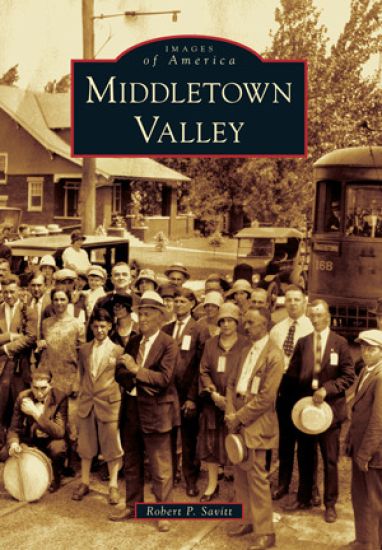
The 200-year-old National Road is often referred to as "The Main Street of America. It was the nation's first federally funded highway and eventually passed through more than 25 cities and towns in Maryland. The 33-mile Maryland portion of the original road was linked with privately constructed turnpikes to extend it to 170 miles in the state. In its early days, the National Road thrived as it helped to open the American West to settlement and commerce.With the rise of railroad transportation in the 1850s, the turnpike became almost obsolete and deteriorated significantly. But the road was rescued in the early 1900s as the increasing popularity of automobile travel led to its revival. In recent years, some of the original structures along the road have been restored, including restaurants, inns, and other commercial establishments. Hostelries and eateries such as the Casselman Inn in Grantsville, the South Mountain Inn between Middletown and Boonsboro, and the Vintage restaurant in New Market draw on their links to the old National Road to attract travelers. Through exhibits and lectures, local civic groups and historical societies continue to memorialize and celebrate the rich history of America's main street--the National Road.Robert P. Savitt lectures and writes on a variety of historical subjects. He holds a doctoral degree from Georgetown University, has served in the Departments of Defense and State, and was legislative director for a US senator. Savitt has authored two previous Arcadia titles.


The 200-year-old National Road is often referred to as "The Main Street of America." It was the nation's first federally funded highway and eventually passed through more than 25 cities and towns in Maryland. The 33-mile Maryland portion of the original road was linked with privately constructed turnpikes to extend it to 170 miles in the state. In its early days, the National Road thrived as it helped to open the American West to settlement and commerce. With the rise of railroad transportation in the 1850s, the turnpike became almost obsolete and deteriorated significantly. But the road was rescued in the early 1900s as the increasing popularity of automobile travel led to its revival. In recent years, some of the original structures along the road have been restored, including restaurants, inns, and other commercial establishments. Hostelries and eateries such as the Casselman Inn in Grantsville, the South Mountain Inn between Middletown and Boonsboro, and the Vintage restaurant in New Market draw on their links to the old National Road to attract travelers. Through exhibits and lectures, local civic groups and historical societies continue to memorialize and celebrate the rich history of America's main street--the National Road.

Science and Medicine in the Old South
Ronald Numbers; Todd L. Savitt
Louisiana State University Press
1999
nidottu
With a few notable exceptions, historians have tended to ignore the role that science and medicine played in the antebellum South. The fourteen essays in Science and Medicine in the Old South help to redress that neglect by considering scientific and medical developments in the early nineteenth-century South and by showing the ways in which the South's scientific and medical activities differed from those of other regions. The book is divided into two sections. The essays in the first section examine the broad background of science in the South between 1830 and 1860; the second section addresses medicine specifically.The essays frequently counterpoint each other. In the first section, Ronald Numbers and Janet Numbers argue that he South's failure to ""keep pace"" with the North in scientific areas resulted from demographic factors. William Scarborough asserts that slavery produced a social structure that encouraged agricultural and political careers rather than scientific and industrial ones. Charles Dew offers a strong indictment of slavery, suggesting that the conservative influence of the institution severely discouraged the adoption of modern technologies. Other essays examine institutions of higher learning in the South, southern scientific societies, and the relationship between science and theology.The section on medicine in the Old South also examines the ways in which the medical needs and practices of the Old South were both similar to and distinct from those of other regions. K. David Patterson argues that slavery in effect imported African diseases into the Southeast and created a ""modified West African disease environment."" James H. Cassedy points out that land-management policies determined by slavery- land clearing, soil exhaustion- also helped created a distinctive disease environment. Other contributors discuss southern public health problems, domestic medicine, slave folk beliefs, and the special medical needs of blacks.Science and Medicine in the Old South is a long-overdue examination of these segments of the southern cultural milieu. These essays will do much to clarify misconceptions about the time and the region; moreover, they suggest directions for future research.

Trails of Adventure: A Collection of Stories by Members of Western Writers of America
Emmie D. Mygatt; Sam Savitt
Literary Licensing, LLC
2012
nidottu