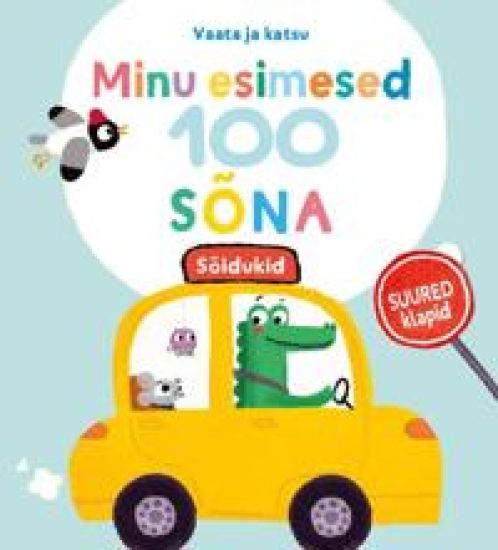
Lennuk, buss ja auto - naljakate piltide, mänguliste klappide ning suurte katsutavate pindadega raamat aitab arendada lapse sõnavara. Avastamist ootab üle 100 sõiduki ja liiklusega seotud sõna.
Raamatut vaadates ja uurides tutvub laps 100 sõna ja pildiga tema kõige lähemast ümbrusest. Maailma avastamine ja värviliste piltide paitamine arendab väikelapse erinevaid meeli.
Kas oled juba kuulnud, mis häält teevad loomad talus? Tahaksid näha tiigrit dzhunglis varitsemas või karu metsas urisemas? Vahvas heliraamatus saad kuulata loomade häält ning uurida, mis või kes on peidus klappide all.
Raamatus on teemade kaupa 100 lapsele tuttavat pilti ja sõna, mida ära tunda ja järele öelda. Lapse tajusid ergutavad viltmaterjalile kleebitud paberil olevad sisselõiked.
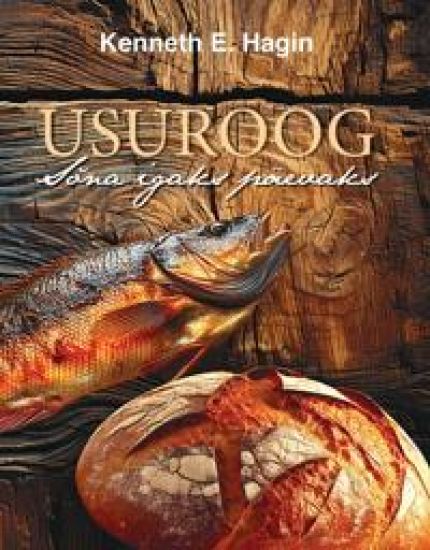
Kas toidad oma usku iga päev Jumala Sõnaga?Jumala Sõna on toit näljasele vaimule, mis virgutab usklikku Jumala küllusliku eluga. Sellepärast annab Opetussõnad 4:21 meile nõu hoida Jumala sõnu oma südames ja anda Talle esimene koht igal elupäeval. Usuroog aitab sul rahuldada nälga Jumala eluleiva järele. Käesolev Kenneth E. Hagini päevasõna raamat on hõrk segu inspireerivatest suutäitest, mis toovad väe su argiellu, kui sa toitud Jumala Sõnast.
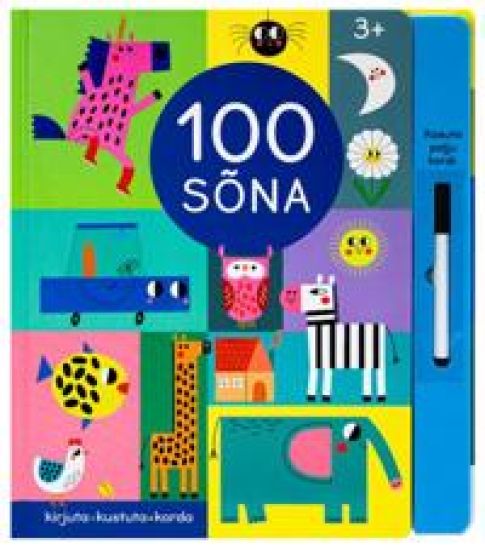
Selle raamatu abil õpib laps veerima ja ära tundma 100 igapäevaelust tuttavat sõna. Harjutused suunavad last korrektset pliiatsihoidu omandama ja ärgitavad silma-käe koostööd. Lamineeritud lehed ja kaasasolev vildikas võimaldavad korduvalt harjutada.
Now a Netflix TV show Featuring a diverse cast of characters, plenty of gossip, lies, and scandal, Shiny Broken Pieces continues with the soapy drama readers loved in Tiny Pretty Things.June, Bette, and Gigi are competing one final time for a spot at the prestigious American Ballet Company. With the stakes higher than ever, these girls have everything to lose...and no one is playing nice.June is starting to finally see herself as a prima ballerina. But being the best could mean sacrificing the love of her life. Legacy dancer Bette is determined to clear her name after she was suspended and accused of hurting her rival, Gigi. And Gigi is not going to let Bette--or the other dancers who bullied her--go unpunished.It all comes down to this last dance. Who will make the cut? And who will lose her dream forever?
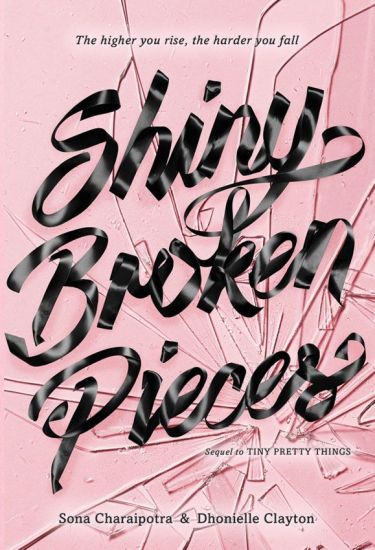
Featuring a diverse cast of characters, plenty of gossip, lies, and scandal, Shiny Broken Pieces continues with the soapy drama readers loved in Tiny Pretty Things and is now in paperback. June, Bette, and Gigi are competing one final time for a spot at the prestigious American Ballet Company. With the stakes higher than ever, these girls have everything to lose...and no one is playing nice. June is starting to finally see herself as a prima ballerina. But being the best could mean sacrificing the love of her life. Legacy dancer Bette is determined to clear her name after she was suspended and accused of hurting her rival, Gigi. And Gigi is not going to let Bette-or the other dancers who bullied her-go unpunished. It all comes down to this last dance. Who will make the cut? And who will lose her dream forever?
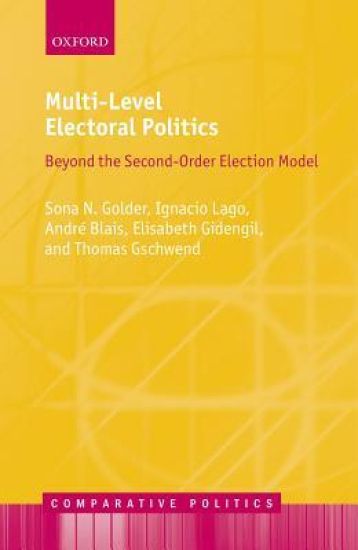
National-level elections receive more attention from scholars and the media than elections at other levels, even though in many European countries the importance of both regional and European levels of government has grown in recent years. The growing importance of multiple electoral arenas suggests that scholars should be cautious about examining single levels in isolation. Taking the multilevel structure of electoral politics seriously requires a re-examination of how the incentives created by electoral institutions affect the behaviour of voters and party elites. The standard approach to analysing multilevel elections is the second-order election (SOE) model, in which national elections are considered to be first-order elections while other elections are second order. However, this model does not provide micro mechanisms that determine how elections in one arena affect those in another, or explain variations in individual voting behaviour. The objective of this book is to explain how party and voter behaviour in a given election is affected by the existence of multiple electoral arenas. It provides original qualitative and quantitative data to examine European, national, and subnational elections in France, Germany, and Spain from 2011-2015. The volume examines party mobilization efforts across multiple electoral arenas, as well as decisions by individual voters with respect to turnout, strategic voting, and accountability. This book provides the first systematic analysis of multilevel electoral politics at three different levels across multiple countries. Comparative Politics is a series for researchers, teachers, and students of political science that deals with contemporary government and politics. Global in scope, books in the series are characterised by a stress on comparative analysis and strong methodological rigour. The series is published in association with the European Consortium for Political Research. For more information visit: www.ecprnet.eu. The series is edited by Emilie van Haute, Professor of Political Science, Université libre de Bruxelles; Ferdinand Müller-Rommel, Director of the Center for the Study of Democracy, Leuphana University; and Susan Scarrow, Chair of the Department of Political Science, University of Houston.
The Top 50 Management Dilemmas provides help on the most common hurdles that managers face. It will help you understand every situation better so you know exactly what to do, fast.
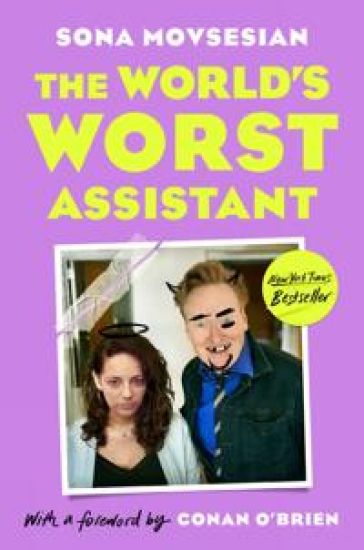
***An Instant New York Times Bestseller***From Conan O’Brien’s longtime assistant and cohost of his podcast, Conan O'Brien Needs a Friend, a completely hilarious and irreverent how-to guide for becoming a terrible, yet unfireable employee, spilling her trade secrets for minimizing effort while maximizing the rewards. Sona Movsesian didn’t wake up one day and decide to become the World’s Worst Assistant. Achieving such greatness is a gradual process--one that starts with long hours and hard work before it eventually descends into sneaking low-dosage edibles into your lunch and napping on your boss’s couch. With a foreword from Conan O’Brien, The World’s Worst Assistant is populated with hysterical black-and-white illustrations, comics, and more. It’s a mixture of how-tos (like How to Nap at Work and How to Watch TV at Your Desk), tips for becoming untouchable (like memorizing social security and credit card numbers and endearing yourself to friends and family), and incredible personal stories from Sona’s twelve years spent working for Conan that put their adorable closeness and professional dysfunction on display. In these pages, Sona will explain her descent from eager, hard-working, ambitious, detail-orientated assistant to self-awarded title-holder for the worst in history. This book is irresistible fun you’ll want to give to every young professional in your life. For readers of heartfelt humor like that of Phoebe Robinson and Colin Jost, The World’s Worst Assistant is a chance for fans, viewers, and listeners of Conan’s shows and podcast to fall in love with Sona and Conan all over again.
Why do some parties coordinate their electoral strategies as part of a pre-electoral coalition, while others choose to compete independently at election time? Scholars have long ignored pre-electoral coalitions in favor of focusing on the government coalitions that form after parliamentary elections. Yet electoral coalitions are common, they affect electoral outcomes, and they have important implications for democratic policy-making itself. The Logic of Pre-Electoral Coalition Formation by Sona Nadenichek Golder includes a combination of methodological approaches (game theoretic, statistical, and historical) to explain why pre-electoral coalitions form in some instances but not in others. The results indicate that pre-electoral coalitions are more likely to form between ideologically compatible parties. They are also more likely to form when the expected coalition size is large (but not too large) and when the potential coalition partners are similar in size. Ideologically polarized party systems and disproportional electoral rules in combination also increase the likelihood of electoral coalition formation. Golder links the analysis of pre-electoral coalition formation to the larger government coalition literature by showing that pre-electoral agreements increase (a) the likelihood that a party will enter government, (b) the ideological compatibility of governments, and (c) the speed with which governments take office. In addition, pre-electoral coalitions provide an opportunity for combining the best elements of the majoritarian vision of democracy with the best elements of the proportional vision of democracy.