Kirjojen hintavertailu. Mukana 11 244 527 kirjaa ja 12 kauppaa.

Kirjahaku

Etsi kirjoja tekijän nimen, kirjan nimen tai ISBN:n perusteella.

1000 tulosta hakusanalla Stephen G Perry

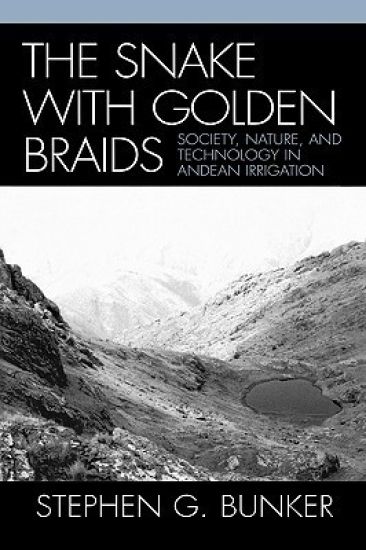
The Snake with Golden Braids

The Snake with Golden Braids

Stephen G. Bunker

Lexington Books
2006
sidottu
The Snake With Golden Braids seeks to understand how local inhabitants of the extraordinarily rugged Andean topography of Huanoquite, Peru came to understand their landscape and then build and maintain a system of irrigation ditches across it. The Huanoquiteno's original solution, a conceptually and architecturally complex irrigation system, was abandoned after the Spanish conquest of Peru, and replaced by a simpler, yet still complex, system, which is still in place today. Stephen G. Bunker combines a history of these systems with a rethinking of the local myths, legends, and environment to help make sense of the land and its uses. This book follows his intellectual and spiritual journey to learn not just about building and managing irrigation ditches, but about the very different ways of knowing the environment and the spirits of the earth that informed and empowered the original builders. Bunker's first-hand experience and research will prove an invaluable asset to sociologists, anthropologists, and environmentalists.
Barns of the Berkshires

Barns of the Berkshires

Stephen G. Donaldson

Schiffer Publishing Ltd
2009
sidottu
Over 120 full-page color photographs and a detailed text trace the rich visual tapestry created in the bucolic countryside of the Berkshire hills and its many historic barns. Explore a rich visual tapestry created by the bucolic countryside of the Berkshire hills and Berkshire County, Massachusetts, through many historic barns that tie the scenery together. 123 full-page color photographs and a detailed, in-depth text trace the history of barn building and subsequent development of barn architecture in the Berkshires over the last 250 years. As you page through the book you will come to understand the vital role that barns have had in shaping, and ultimately preserving, the region as a quintessential example of rural New England. The photographs, taken in all seasons, present barns both in detail and in the distance, always capturing their rustic beauty as iconic symbols of the undulating landscape that surrounds them. This unique book focuses entirely on barns and is a must read for those who share the author's love of history and the peaceful beauty of rural America.
Along Route 7

Along Route 7

Stephen G. Donaldson

Schiffer Publishing Ltd
2009
sidottu
Over 300 miles of eye-catching scenery along scenic Route 7 has been captured in more than 330 stunning color photos. This visual story reveals the broad scope of activities to see and experience along one of America's most storied roadways. Travel through Connecticut, Massachusetts, and Vermont, lingering over the sites in Norwalk, Danbury, Lime Rock, Ashley Falls, Great Barrington, Lenox, Williamstown, Pownal, Shaftsbury, Wallingford, Burlington, and Highgate Springs. Visit historical homes, including Ethan Allen's, the Colonel John Ashley House, and Norman Rockwell's studio, farms, barns, churches, universities, stores, and public buildings. Public parades and memorial services are also captured. For all who enjoy stunning landscapes and small town Americana, this book will be a personal treasure.
The Moral Challenge of Alzheimer Disease

The Moral Challenge of Alzheimer Disease

Stephen G. Post

Johns Hopkins University Press
2000
pokkari
Society today, writes Stephen Post, is "hypercognitive": it places inordinate emphasis on people's powers of rational thinking and memory. Thus, Alzheimer disease and other dementias, which over an extended period incrementally rob patients of exactly those functions, raise many dilemmas. How are we to view-and value-persons deprived of what some consider the most important human capacities? In the second edition of The Moral Challenge of Alzheimer Disease, Post updates his highly praised account of the major ethical issues relating to dementia care. With chapters organized to follow the progression from mild to severe and then terminal stages of dementia, Post discusses topics including the experience of dementia, family caregiving, genetic testing for Alzheimer disease, quality of life, and assisted suicide and euthanasia. New to this edition are sections dealing with end-of-life issues (especially artificial nutrition and hydration), the emerging cognitive-enhancing drugs, distributive justice, spirituality, and hospice, as well as a critique of rationalistic definitions of personhood. The last chapter is a new summary of practical solutions useful to family members and professionals.
Darwinism and the Linguistic Image

Darwinism and the Linguistic Image

Stephen G. Alter

Johns Hopkins University Press
2003
pokkari
In the nineteenth century, philology-especially comparative philology-made impressive gains as a discipline, thus laying the foundation for the modern field of linguistics. In Darwinism and the Linguistic Image, Stephen G. Alter examines how comparative philology provided a genealogical model of language that Darwin, as well as other scientists and language scholars, used to construct rhetorical parallels with the common-descent theory of evolution.
William Dwight Whitney and the Science of Language

William Dwight Whitney and the Science of Language

Stephen G. Alter

Johns Hopkins University Press
2005
sidottu
Linguistics, or the science of language, emerged as an independent field of study in the nineteenth century, amid the religious and scientific ferment of the Victorian era. William Dwight Whitney, one of that period's most eminent language scholars, argued that his field should be classed among the social sciences, thus laying a theoretical foundation for modern sociolinguistics. William Dwight Whitney and the Science of Language offers a full-length study of America's pioneer professional linguist, the founder and first president of the American Philological Association and a renowned Orientalist. In recounting Whitney's remarkable career, Stephen G. Alter examines the intricate linguistic debates of that period as well as the politics of establishing language study as a full-fledged science. Whitney's influence, Alter argues, extended to the German Neogrammarian movement and the semiotic theory of Ferdinand de Saussure. This exploration of an early phase of scientific language study provides readers with a unique perspective on Victorian intellectual life as well as on the transatlantic roots of modern linguistic theory.
Globalization and the Race for Resources

Globalization and the Race for Resources

Stephen G. Bunker; Paul S. Ciccantell

Johns Hopkins University Press
2005
sidottu
Globalization and the Race for Resources explores how five nations-Portugal, the Netherlands, Britain, the United States, and Japan-achieved trade dominance by devising technologies, social and financial institutions, and markets to enhance their access to raw materials. Through ecological and economic explanation of resource extraction and production, Stephen G. Bunker and Paul S. Ciccantell reveal globalization as the result of the progressive extension of systematically integrated material processes across cumulatively greater space. Drawing from extensive historical research into how economic and environmental dynamics interacted in the extraction of different materials in the Amazon, especially in the development of the iron mine of Carajas, the authors also illustrate the profound connection between global dominance and control of natural resources.
Globalization and the Race for Resources

Globalization and the Race for Resources

Stephen G. Bunker; Paul S. Ciccantell

Johns Hopkins University Press
2006
pokkari
Globalization and the Race for Resources explores how five nations-Portugal, the Netherlands, Britain, the United States, and Japan-achieved trade dominance by devising technologies, social and financial institutions, and markets to enhance their access to raw materials. Through ecological and economic explanation of resource extraction and production, Stephen G. Bunker and Paul S. Ciccantell reveal globalization as the result of the progressive extension of systematically integrated material processes across cumulatively greater space. Drawing from extensive historical research into how economic and environmental dynamics interacted in the extraction of different materials in the Amazon, especially in the development of the iron mine of Carajas, the authors also illustrate the profound connection between global dominance and control of natural resources.
East Asia and the Global Economy

East Asia and the Global Economy

Stephen G. Bunker; Paul S. Ciccantell

Johns Hopkins University Press
2007
sidottu
After World War II, Japan reinvented itself as a shipbuilding powerhouse and began its rapid ascent in the global economy. Its expansion strategy integrated raw material procurement, the redesign of global transportation infrastructure, and domestic industrialization. In this authoritative and engaging study, Stephen G. Bunker and Paul S. Ciccantell identify the key factors in Japan's economic growth and the effects this growth had on the reorganization of significant sectors of the global economy. Bunker and Ciccantell discuss what drove Japan's economic expansion, how Japan globalized the work economy to support it, and why this spectacular growth came to a dramatic halt in the 1990s. Drawing on studies of ore mining, steel making, corporate sector reorganization, and port/rail development, they provide valuable insight into technical processes as well as specific patterns of corporate investment. East Asia and the Global Economy introduces a theory of "new historical materialism" that explains the success of Japan and other world industrial powers. Here, the authors assert that the pattern of Japan's ascent is essential for understanding China's recent path of economic growth and dominance and anticipating what the future may hold.
Pictorial Anatomy of the Cat

Pictorial Anatomy of the Cat

Stephen G. Gilbert

University of Toronto Press
1976
pokkari
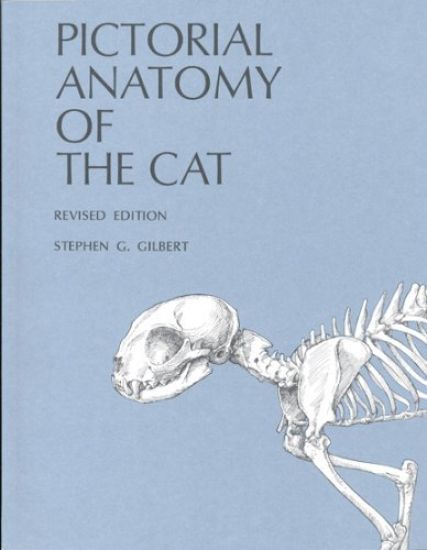
The cat has been used as a subject for dissection in the study of mammalian anatomy for almost two centuries. The very popular Pictorial Anatomy of the Cat, by Strephen Gilbert, originally published in 1968 and now its twelfth printing has been used in countless laboratories as a guide to dissection and supplement to introductory textbooks.
More Lasting Unions

More Lasting Unions

Stephen G. Post

William B Eerdmans Publishing Co
2000
pokkari
A powerful reassertion of the social and spiritual significance of marriage and the family. Many recent social theorists maintain that marriage and the nuclear family are not particularly important to the fabric of our culture. In this powerful refutation, grounded in both Christian teaching and social-science data, Stephen G. Post asserts that the bonds of marriage and family are fundamental to our social and spiritual well-being. Unique in the field for its wide treatment of relevant issues, More Lasting Unions also takes up these important topics: the special needs of children and of aging parents; adoption as an alternative way of family building; the perils of family self-indulgence and consumerism; balancing family commitments and concern for neighbors.
U.S. Presidents and Foreign Policy Mistakes

U.S. Presidents and Foreign Policy Mistakes

Stephen G. Walker; Akan Malici

Stanford University Press
2011
sidottu
Mistakes, in the form of bad decisions, are a common feature of every presidential administration, and their consequences run the gamut from unnecessary military spending, to missed opportunities for foreign policy advantage, to needless bloodshed. This book analyzes a range of presidential decisions made in the realm of US foreign policy—with a special focus on national security—over the past half century in order to create a roadmap of the decision process and a guide to better foreign policy decision-making in the increasingly complex context of 21st century international relations. Mistakes are analyzed in two general categories—ones of omission and ones of commission within the context of perceived threats and opportunities. Within this framework, the authors discuss how past scholarship has addressed these questions and argue that this research has not explicitly identified a vantage point around which the answers to these questions revolve. They propose game theory models of complex adaptive systems for minimizing bad decisions and apply them to test cases in the Middle East and Asia.
U.S. Presidents and Foreign Policy Mistakes

U.S. Presidents and Foreign Policy Mistakes

Stephen G. Walker; Akan Malici

Stanford University Press
2011
pokkari
Mistakes, in the form of bad decisions, are a common feature of every presidential administration, and their consequences run the gamut from unnecessary military spending, to missed opportunities for foreign policy advantage, to needless bloodshed. This book analyzes a range of presidential decisions made in the realm of US foreign policy—with a special focus on national security—over the past half century in order to create a roadmap of the decision process and a guide to better foreign policy decision-making in the increasingly complex context of 21st century international relations. Mistakes are analyzed in two general categories—ones of omission and ones of commission within the context of perceived threats and opportunities. Within this framework, the authors discuss how past scholarship has addressed these questions and argue that this research has not explicitly identified a vantage point around which the answers to these questions revolve. They propose game theory models of complex adaptive systems for minimizing bad decisions and apply them to test cases in the Middle East and Asia.
Bound for Santa Fe

Bound for Santa Fe

Stephen G. Hyslop

University of Oklahoma Press
2010
nidottu
Draws on eyewitness accounts to tell the story of the fabled Santa Fe TrailFor nearly half a century, the Santa Fe Trail served as an avenue of exchange, where transactions ranged from friendly give-and-take to guarded trade to lethal attempts to settle scores. In 1846, the trail became the means for American seizure of Mexican territory - yet the economic and cultural exchanges continued even in the midst of war. In Bound for Santa Fe, Stephen G. Hyslop draws on eyewitness accounts to retrace the journey from Missouri to New Mexico, weaving together nearly one hundred accounts by scores of people who traveled the trail.
Contest for California

Contest for California

Stephen G. Hyslop

University of Oklahoma Press
2019
nidottu
California's early history was both colorful and turbulent. After Europeans first explored the region in the sixteenth century, it was conquered and colonized by successive waves of adventurers and settlers. In Contest for California, award-winning author Stephen G. Hyslop draws on a wide array of primary sources to weave an elegant narrative of this epic struggle for control of the territory that many saw as a beautiful, sprawling land of promise.In vivid detail, Hyslop traces the story of early California from its founding in 1769 by Spanish colonists to its annexation in 1848 by the United States. He describes the motivations and activities of colonizers and colonized alike. Using eyewitness accounts, he allows all participants - Native American, Spanish, Mexican, and Anglo-American - to have their say. Soldiers, settlers, missionaries, and merchants testify to the heroic and commonplace, the colorful and tragic, in California's pre-American history.Even as he acknowledges the dark side of this story, Hyslop avoids a simplistic perspective. Moving beyond the polarities that have marked late-twentieth-century California historiography, he offers nuanced portraits of such controversial figures as Junípero Serra and treats the Californios and their distinctive Hispanic culture with a respect lacking in earlier histories. Attentive to tensions within the invading groups - priests and the military during the Spanish era, merchants and settlers during the American era - he also never loses sight of their impact on the original inhabitants of the region: California's Native peoples. He also recounts the journeys of colonists from Russia, England, and other countries who influenced the development of California as it passed from the hands of Spaniards and Mexicans to Americans.Exhaustively researched yet concise, this book offers a much-needed alternative history of early California and its evolution from Spanish colony to American territory.
Building a House Divided

Building a House Divided

Stephen G. Hyslop

UNIVERSITY OF OKLAHOMA PRESS
2023
sidottu
By the time Abraham Lincoln asserted in 1858 that the nation could not “endure permanently half slave and half free,” the rift that would split the country in civil war was well defined. The origins and evolution of the coming conflict between North and South can in fact be traced back to the early years of the American Republic, as Stephen G. Hyslop demonstrates in Building a House Divided, an exploration of how the incipient fissure between the Union’s initial slave states and free states—or those where slaves were gradually being emancipated—lengthened and deepened as the nation advanced westward. Hyslop focuses on four prominent slaveholding expansionists who were intent on preserving the Union but nonetheless helped build what Lincoln called a house divided: Presidents Thomas Jefferson, Andrew Jackson, and James K. Polk and Senator Stephen A. Douglas of Illinois, who managed a plantation in Mississippi bequeathed by his father-in-law. Hyslop examines what these men did, collectively and individually, to further what Jefferson called an “empire of liberty,” though it kept millions of Black people in bondage. Along with these major figures, in all their conflicts and contradictions, he considers other American expansionists who engaged in and helped extend slavery—among them William Clark, Stephen Austin, and President John Tyler—as well as examples of principled opposition to the extension of slavery by northerners such as John Quincy Adams and southerners like Henry Clay and Thomas Hart Benton, who held slaves but placed preserving the Union above extending slavery across the continent. The long view of the path to the Civil War, as charted through the Jeffersonian and Jacksonian eras in this book, reveals the critical fault in the nation’s foundation, exacerbated by slaveholding expansionists like Jefferson, Jackson, Polk, and Douglas, until the house they built upon it could no longer stand for two opposite ideas at once.