Wider World Exam Practice: Pearson Test of English General Level 2 offers students intensive exam practice and support, and works alongside the Students' Book. Powered by Practice Tests Plus, it combines realistic exam practice with guidance and strategies for dealing with each exam paper.
The Pearson Test of English General Skills Boosters are a series of practice tests with guidance that offers complete preparation for PTE General. Pearson Test of English Skills Boosters are written by the developers of the test. The Skills Booster provides five complete practice tests which follow the format of the exam.
With photographs, track layouts, operating instructions and timetables brought to life by the reminiscences of people who worked in the area, "Railway Memories No 15" recalls the busy railway network serving the West Yorkshire towns of Pontefract, Castleford and Knottingley in the 1950s and 60s.
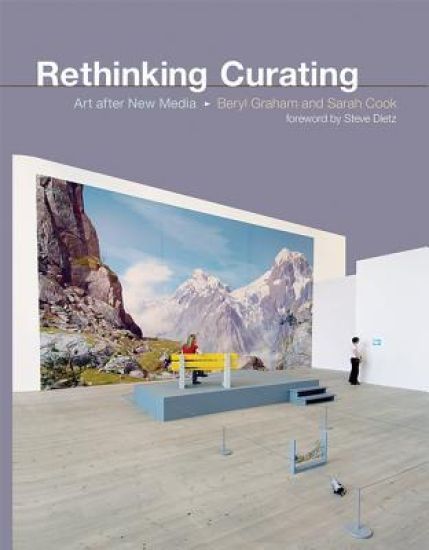
Redefining curatorial practice for those working with new kinds of art.As curator Steve Dietz has observed, new media art is like contemporary art-but different. New media art involves interactivity, networks, and computation and is often about process rather than objects. New media artworks are difficult to classify according to the traditional art museum categories determined by medium, geography, and chronology and present the curator with novel challenges involving interpretation, exhibition, and dissemination. This book views these challenges as opportunities to rethink curatorial practice. It helps curators of new media art develop a set of flexible tools for working in this fast-moving field, and it offers useful lessons from curators and artists for those working in such other areas of art as distributive and participatory systems.The authors, both of whom have extensive experience as curators, offer numerous examples of artworks and exhibitions to illustrate how the roles of curators and audiences can be redefined in light of new media art's characteristics. Rethinking Curating offers curators a route through the hype around platforms and autonomous zones by following the lead of current artists' practice.
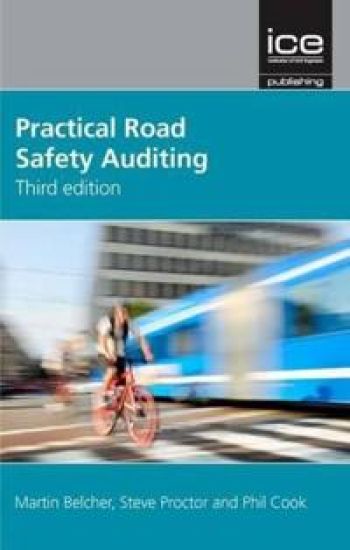
Practical Road Safety Auditing explores the systematic process for checking the safety of new and improved road schemes for the benefit of future road users. An effective Road Safety Audit ensures that all highways schemes operate as safely as is practicable by minimising the chance of future collisions and reducing the risk in their severity. The third edition of Practical Road Safety Auditing provides engineers with clear and comprehensive guidance regarding the new Certificate of Competency, launched by the Highways Agency as part of the new Safety Audit Standard in the Design Manual for Roads and Bridges. Not only will a successful Audit help road users such as pedestrians, cyclists, motorcyclists, bus users, equestrians and those with visual and mobility impairments, but an understanding and appreciation of an efficient Road Safety Audit will also improve design and evaluation processes for both new and existing road schemes across the world. This new edition shares the latest theory and practice from regions such as Europe, South East Asia, Australasia, the Middle East, Canada and the Americas, using real-life examples and case studies of successes and failures to enable the reader to apply best practice to their own road scheme. Key features include: Up-to-date new research and control data from the industry to help readers carry out a successful Road Safety AuditNew Certificate of Competency requirements for engineers in the UK and a brief discussion of practice in other countriesCoverage of other types of design audits, including technical, cycle, pedestrian, mobility, Non-Motorised User Audit and Quality AuditCurrent issues and legal implications of the Road Safety Audit process Written by practising Road Safety Auditors, who between them have carried out over 2,000 Road Safety Audits, this book will teach, inform and guide all practitioners commissioning audits, those carrying them out, and those whose schemes are being audited.
In the 1980s there was growing interest in the topic of ageing and learning disabilities, for two principal reasons. First, the life expectancy of people with learning disabilities had risen significantly over the previous decades and many, once infancy had been survived, could expect a life span similar to that of non-disabled people. Secondly, a growing commitment on the part of the government and service providers to make provision for people with disabilities in the community rather than in institutions, had focused attention on this group.Originally published in 1988, reissued here with a new foreword, this book was one of the first on this subject. It examines epidemiology and mortality, and medical and psychiatric issues compared with non-disabled older people. It considers how people with learning disabilities change in intellectual and adaptive function with age, the nature of family relationships relevant therapeutic programmes, and policy and the development of services. The book represented a major review of a hitherto neglected topic and would interest gerontologists, psychologists and professional health, social and educational staff concerned with the welfare of older people with learning disabilities.This book is a re-issue originally published in 1988. The language used is a reflection of its era and no offence is meant by the Publishers to any reader by this re-publication.
In the 1980s there was growing interest in the topic of ageing and learning disabilities, for two principal reasons. First, the life expectancy of people with learning disabilities had risen significantly over the previous decades and many, once infancy had been survived, could expect a life span similar to that of non-disabled people. Secondly, a growing commitment on the part of the government and service providers to make provision for people with disabilities in the community rather than in institutions, had focused attention on this group.Originally published in 1988, reissued here with a new foreword, this book was one of the first on this subject. It examines epidemiology and mortality, and medical and psychiatric issues compared with non-disabled older people. It considers how people with learning disabilities change in intellectual and adaptive function with age, the nature of family relationships relevant therapeutic programmes, and policy and the development of services. The book represented a major review of a hitherto neglected topic and would interest gerontologists, psychologists and professional health, social and educational staff concerned with the welfare of older people with learning disabilities.This book is a re-issue originally published in 1988. The language used is a reflection of its era and no offence is meant by the Publishers to any reader by this re-publication.
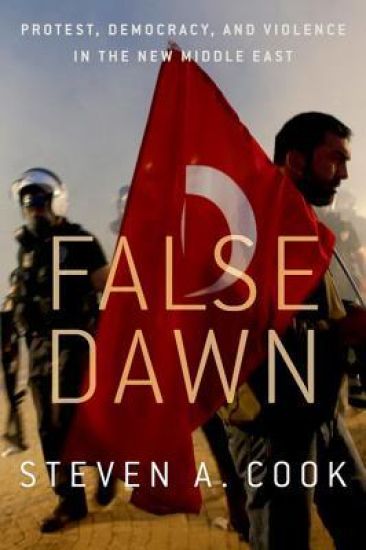
Half a decade after Arabs across the Middle East poured into the streets to demand change, hopes for democracy have disappeared in a maelstrom of violence and renewed state repression. Egypt remains an authoritarian state, Syria and Yemen are in the midst of devastating civil wars, Libya has descended into anarchy, and the self-declared Islamic State rules a large swath of territory. Even Turkey, which also experienced large-scale protests, has abandoned its earlier shift toward openness and democracy and now more closely resembles an autocracy. How did things go so wrong so quickly across a wide range of regimes? In False Dawn, noted Middle East regional expert Steven A. Cook looks at the trajectory of events across the region from the initial uprising in Tunisia to the failed coup in Turkey to explain why the Arab Spring did not succeed. Despite appearances, there were no true revolutions in the Middle East five years ago: none of the affected societies underwent social revolutions, and the old structures of power were never eliminated. Even supposed successes like Tunisia still face significant barriers to democracy because of the continued strength of old regime players. Libya, the state that came closest to revolution, has fragmented into chaos, and Turkey's president, Recep Tayyip Erdogan, has used the recent coup against him as grounds for a widespread crackdown on his opponents, reinforcing the Turkish leader's personal power. After taking stock of how and why the uprisings failed to produce lasting change, Cook considers the role of the United States in the region. What Washington cannot do, Cook argues, is shape the politics of the Middle East going forward. While many in the policymaking community believe that the United States must "get the Middle East right," American influence is actually quite limited; the future of the region lies in the hands of the people who live there. Authoritative and powerfully argued, False Dawn promises to be a major work on one of the most important historical events of the past quarter century.
New Brunswick Landing is a collection of poetry spanning 30-years by Steven Cook. It is the story of an American life at the sparkling of the 21st Century. Born in New York City in 1962, Steven Robert Cook grew up in the woods and playgrounds of New Jersey. Here, a lifelong fascination with words was kindled and nurtured. In his mid-twenties, Cook began what would become a 25-year cross-country odyssey - working, traveling, performing on stages - all the while recording and documenting what he witnessed. From the coast of New Hampshire to the Rio Grande, from the Everglades to the California redwoods, these pages detail the life of friends and lovers, cities and towns, strangers and passers-by in the struggle and passions of night. Nearly 30 years ago, along New Brunswick Landing the journey began. Coming home is both celebration and a circle complete.
New Brunswick Landing is the story of an American life at the sparkling of the 21st Century. Born in 1962 in New York City, Steven Robert Cook grew up in the woods, streets and playgrounds of New Jersey. Here a lifelong fascination with words and poetry was kindled and nurtured. In his mid-twenties, Cook began what would become a 25-year cross-country odyssey, working, traveling, performing on stages - all the while recording and documenting what he witnessed. From the coast of New Hampshire to the Everglades, from the Rio Grande to the California redwoods, these pages and poems detail the life of friends and lovers, strangers and passers-by, cities and towns engaged in the struggle and passion of life.
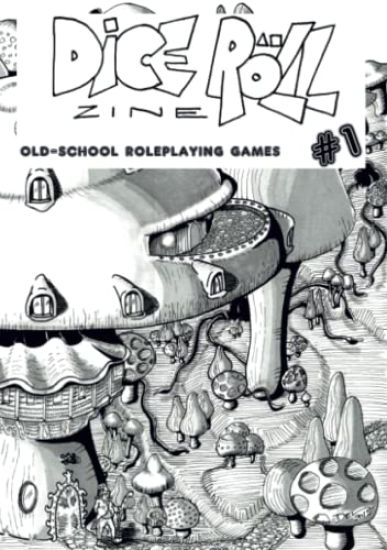
Get your old-school gaming fix on! Dice Roll Zine is a 36-page A5-size zine for OSR RPGs written by Steven A. Cook and illustrated by some of the best OSR-influenced artists around.The premiere issue includes a barbarian class for B/X games, a saving throw-based method for turning undead in B/X games, a trippy sci-fantasy adventure location called The Purple Mushroom Inn, a chaos mutation die drop table, a collection of random 'dungeon stuff' tables, and other optional rules for old-school games.
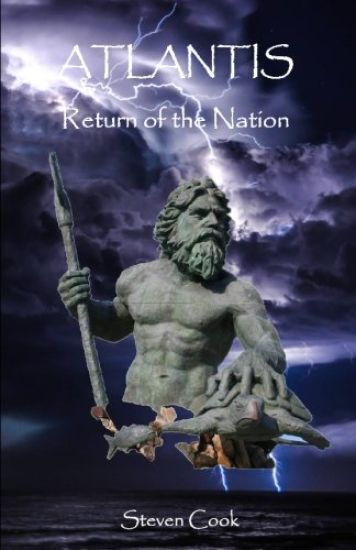
After a joint US and British Naval exercise in the North Atlantic the Nuclear Submarine the USS Boise is returning to the mainland US for a refit when it is caught in a catastrophe as the Lost City of Atlantis returns from several millennia of exile from the rest of the world.With a handful of survivors stranded on the island a rescue is launched by HMS Daring, en route to the Falklands. The rescue team is also trapped and become prisoners of Atlantis. Unbeknownst to the modern world, Atlantis is in the midst of a power struggle for domination of the nation and the rest of the world.As the world watches ineffectually, the factions within Atlantis battle against each other, with an army of outcast monsters waiting to destroy the winners. The only hope for the world to avoid falling back into a medieval state is for the few survivors from the ships to ally themselves with one of the factions and petition the Gods of Atlantis to save the Twenty First Century.
Ever since he opened Zahav in 2008, chef Michael Solomonov has been turning heads with his original interpretations of modern lsraeli cuisine, attracting notice from the New York Times, Bon Appetit, ("an utter and total revelation"), and Eater ("Zahav defines lsraeli cooking in America"). Zahav showcases the melting-pot cooking of Israel, especially the influences of the Middle East, North Africa, the Mediterranean, and Eastern Europe. Solomonov's food includes little dishes called mezze, such as the restaurant's insanely popular fried cauliflower; a hummus so ethereal that it put Zahav on the culinary map; and a pink lentil soup with lamb meatballs that one critic called "Jerusalem in a bowl." It also includes a majestic dome of Persian wedding rice and a whole roasted lamb shoulder with pomegranate and chickpeas that's a celebration in itself. All Solomonov's dishes are brilliantly adapted to local and seasonal ingredients. Zahav tells an authoritative and personal story of how Solomonov embraced the food of his birthplace. With its blend of technique and passion, this book shows readers how to make his food their own.
A zany chronicle of the rise of America's hottest donut mini empire--with recipes--by the authors of Zahav, the James Beard 2016 Book of the Year"We knew absolutely nothing about making donuts." So begins this quirky story of how two James Beard Award winners hatched a harebrained idea that resulted in a mini empire and turned Philadelphia into a donut destination. Federal Donuts is at once an ode to an American passion and a collection of recipes for the cult-favorite hits.With a wad of cash in hand and a dream, Solomonov and Cook meet a Craigslist stranger in a parking lot and buy a used "donut robot." It would do all the rest, right? Regrets, partially raw donuts, and long lines ensue, but soon the partners work out the kinks and develop an exquisite dough delicately spiced with Middle Eastern aromatics. Strawberry lavender, guava poppy, pomegranate Nutella, and salted tehina are just a few of the imaginative flavors featured in this book. Also included are all the tips needed for making foolproof donuts at home. There is even a bonus recipe for the other specialty of "Fednuts" shatteringly crisp Korean-style fried chicken.
For their first major book since the trailblazing Zahav, Michael Solomonov and Steven Cook go straight to the food of the people--the great dishes that are the soul of Israeli cuisine. Usually served from tiny eateries, hole-in-the-wall restaurants, or market stalls, these specialties have passed from father to son or mother to daughter for generations. To find the best versions, the authors scoured bustling cities like Tel Aviv, Jerusalem, and Haifa, and sleepy towns on mountaintops. They visited bakeries, juice carts, beaches, even weddings. Their finds include meals in the hand like falafel and pita; juicy, grilled and roasted spice-rubbed meats; stuffed vegetables; a wealth of chopped vegetable salads; a five-minute fluffy hummus with more than two dozen toppings; pastries, ice creams, and shakes. Solomonov has perfected and adapted every recipe for the home kitchen. Each chapter weaves history with contemporary portrayals of the food. Striking photographs capture all its flavor and vitality, while step-by-step how-tos and closeups of finished dishes make everything simple and accessible.
This work has been selected by scholars as being culturally important and is part of the knowledge base of civilization as we know it.This work is in the public domain in the United States of America, and possibly other nations. Within the United States, you may freely copy and distribute this work, as no entity (individual or corporate) has a copyright on the body of the work.Scholars believe, and we concur, that this work is important enough to be preserved, reproduced, and made generally available to the public. To ensure a quality reading experience, this work has been proofread and republished using a format that seamlessly blends the original graphical elements with text in an easy-to-read typeface.We appreciate your support of the preservation process, and thank you for being an important part of keeping this knowledge alive and relevant.