Kirjojen hintavertailu. Mukana 11 342 296 kirjaa ja 12 kauppaa.

Kirjahaku

Etsi kirjoja tekijän nimen, kirjan nimen tai ISBN:n perusteella.

1000 tulosta hakusanalla Steven C Harbert

Understanding Human Rights Violations

Understanding Human Rights Violations

Steven C. Poe

CRC Press Inc
2019
sidottu
Originally published in 2004. This excellent volume presents a systematic analysis of various human rights violations around the globe, focusing on security and subsistence rights. The book collects important contributions to the theoretical development of the human rights phenomenon, covering a wide range of human rights issues and research approaches. The research presented combines a variety of qualitative and quantitative approaches and brings together both theoretical and empirical work. It places particular emphasis on making the advanced statistical methods that are used to test the arguments accessible to a wider readership. Understanding Human Rights Violations will prove a useful tool for all in the fields of international human rights, peace studies, political violence and international law, and offers a valuable introduction into the literature on human rights violations.
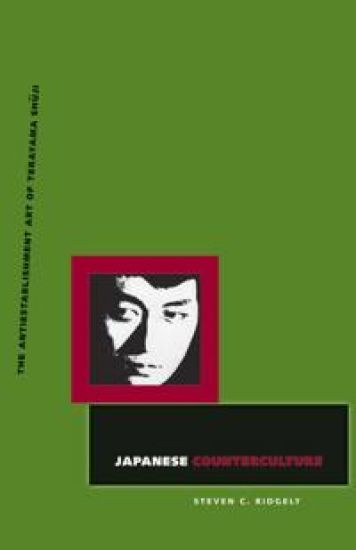
Japanese Counterculture

Japanese Counterculture

Steven C. Ridgely

University of Minnesota Press
2011
nidottu
Terayama Shuji (1935-1983) was an avant-garde Japanese poet, dramatist, film director, and photographer known for his highly provocative work. In this inventive and revealing work, Steven Ridgely examines Terayama's life and art to show that a conventional notion of him does not do full justice to the meaning and importance of his wide-ranging, often playful body of work.Ridgely places Terayama at the center of Japanese and global counterculture and finds in his work a larger story about the history of postwar Japanese art and culture. He sees Terayama as reflecting the most significant events of his day: young poets seizing control of haiku and tanka in the 1950s, radio drama experimenting with form and content after the cultural shift to television around 1960, young assistant directors given free rein in the New Wave as cinema combated television, underground theatre in the politicized late 1960s, and experimental short film through the 1970s after both the studio system and art house cinema had collapsed.Featuring close readings of Terayama's art, Ridgely demonstrates how across his oeuvre there are patterns that sidestep existing power structures, never offering direct opposition but nevertheless making the opposition plain. And, he claims, there is always in Terayama's work a broad call for seeking out or creating pockets of fiction-where we are made aware that things are not what they seem-and to use otherness in those spaces to take a clearer view of reality.
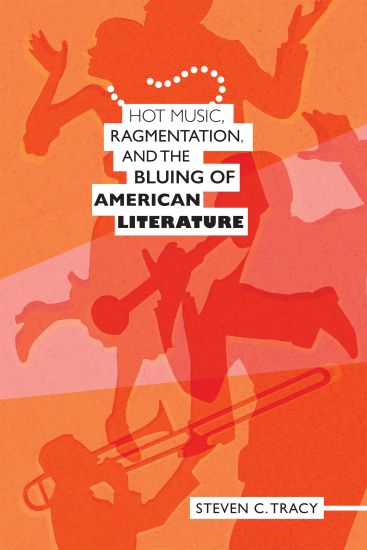
Hot Music, Ragmentation, and the Blung of American Literature

Hot Music, Ragmentation, and the Blung of American Literature

Steven C. Tracy

The University of Alabama Press
2015
sidottu
Hot Music, Ragmentation, and the Bluing of American Literature is a multidisciplinary exploration of the ways that African American “hot” music—minstrelsy, ragtime, jazz, and especially blues—emerged into the American cultural mainstream in the nineteenth century and ulti­mately dominated American music and literature from 1920 to 1929.Exploring the deep and enduring relationship between music and literature, Hot Music, Ragmentation, and the Bluing of American Literature examines the diverse ways in which African American “hot” music in­fluenced American culture—particularly literature—in early twentieth century America. Steven C. Tracy provides a history of the fusion of Afri­can and European elements that formed African American “hot” music, and considers how terms like ragtime, jazz, and blues developed their own particular meanings for American music and society. He draws from the fields of literature, literary criticism, cultural anthropology, American studies, and folklore to demonstrate how blues as a musical and poetic form has been a critical influence on American literature.Hot Music, Ragmentation, and the Bluing of American Literature begins by highlighting instances in which American writers, including Herman Melville, Stephen Crane, and Gertrude Stein, use African American cul­ture and music in their work, and then characterizes the social context of the Jazz Age, discussing how African American music reflected the wild abandon of the time. Tracy focuses on how a variety of schools of early twentieth century writers, from modernists to members of the Harlem Renaissance to dramatists and more, used their connections with “hot” music to give their own work meaning.Tracy’s extensive and detailed understanding of how African American “hot” music operates has produced a fresh and original perspective on its influence on mainstream American literature and culture. An experienced blues musician himself, Tracy draws on his performance background to offer an added dimension to his analysis. Where an­other blues scholar might only analyse blues language, Tracy shows how the language is actually performed.Hot Music, Ragmentation, and the Bluing of American Literature is the first book to offer such a refreshingly broad interdisciplinary vision of the influence of African American “hot” music on American literature. It is an essential addition to the library of serious scholars of American and African American literature and culture and blues aficionados alike.
Hot Music, Ragmentation, and the Bluing of American Literature

Hot Music, Ragmentation, and the Bluing of American Literature

Steven C. Tracy

The University of Alabama Press
2016
nidottu
Exploring the deep and enduring relationship between music and literature, Hot Music, Ragmentation, and the Bluing of American Literature examines the diverse ways in which African American ?hot” music influenced American culture?particularly literature?in early twentieth century America. Steven C. Tracy provides a history of the fusion of African and European elements that formed African American ?hot” music, and considers how terms like ragtime, jazz, and blues developed their own particular meanings for American music and society. He draws from the fields of literature, literary criticism, cultural anthropology, American studies, and folklore to demonstrate how blues as a musical and poetic form has been a critical influence on American literature. Hot Music, Ragmentation, and the Bluing of American Literature begins by highlighting instances in which American writers, including Herman Melville, Stephen Crane, and Gertrude Stein, use African American culture and music in their work, and then characterizes the social context of the Jazz Age, discussing how African American music reflected the wild abandon of the time. Tracy focuses on how a variety of schools of early twentieth century writers, from modernists to members of the Harlem Renaissance to dramatists and more, used their connections with ?hot” music to give their own work meaning. Tracy’s extensive and detailed understanding of how African American ?hot” music operates has produced a fresh and original perspective on its influence on mainstream American literature and culture. An experienced blues musician himself, Tracy draws on his performance background to offer an added dimension to his analysis. Where another blues scholar might only analyze blues language, Tracy shows how the language is actually performed. Hot Music, Ragmentation, and the Bluing of American Literature is the first book to offer such a refreshingly broad interdisciplinary vision of the influence of African American ?hot” music on American literature. It is an essential addition to the library of serious scholars of American and African American literature and culture and blues aficionados alike.
The State of the Nation

The State of the Nation

Steven C. Munson

University Press of America
1984
sidottu
These essays address the condition of our country and the capacity or incapacity of our institutions to respond to that condition. The opening address by Irving Kristol describes how the media and the opinion polls tend to distort our view of the political landscape. Contributors: Vladimir Bukovsky, Lucy S. Dawidowicz, Chester E. Finn, Jr., Suzanne Garment, Owen Harries, Penn Kemble, Neal Kozodoy, Irving Kristol, Michael Novak, Norman Podhoretz, Nelson W. Polsby, Austin Ranney, Eugene V. Rostow, Laurence H. Silberman, Thomas Sowell, Ben J. Wattenberg, and James Q. Wilson. Co-published with the Committee for the Free World.
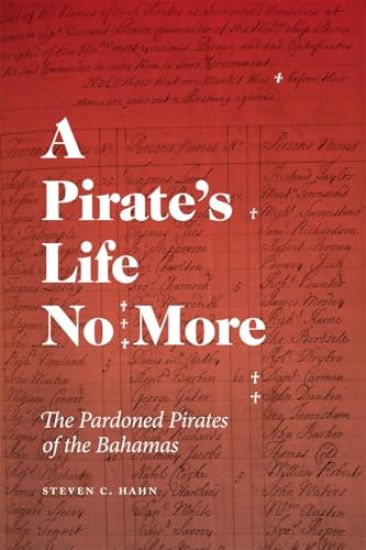
A Pirate's Life No More

A Pirate's Life No More

Steven C. Hahn

UNIVERSITY OF GEORGIA PRESS
2025
sidottu
In 1718 the British crown in the Bahamas pardoned 209 mariners accused of piracy. In A Pirate's Life No More, Steven C. Hahn explores the lives of these "retired” pirates. While there are a number of "famous" names on that list—Benjamin Hornigold, Charles Vane, and Palsgrave Williams, for example—the vast majority of the pardoned are "mostly nobodies." By focusing holistically on pirates—and on the pirates who aren’t famous—the book reclaims their humanity, connects the story of piracy at sea with the land-based communities that sometimes supported it, and illuminates the entangled histories of far-flung places in the Atlantic world. This study reveals that, for most individuals, forays into piracy were fleeting and opportunistic. Moreover, class, age, and regional divisions beset the pirate community, thereby precluding adherence to any single ideology justifying their actions. The pardon was most attractive to mariners possessing greater social and economic capital, which explains why so many of them were able to return to their homes and quickly return to honest maritime work.In addition to the standard sources employed by maritime historians, Hahn utilizes local administrative records from Britain and its American colonies, such as property, court, and church records. In so doing, he sheds new light on the ordinary activities in which the sailors were engaged when not involved in piracy and explores how they coped in the Bahamas and elsewhere after being pardoned. What emerges in this collective biography, then, are pirates who were mariners—of course—but also husbands, fathers, parishioners, and property owners.
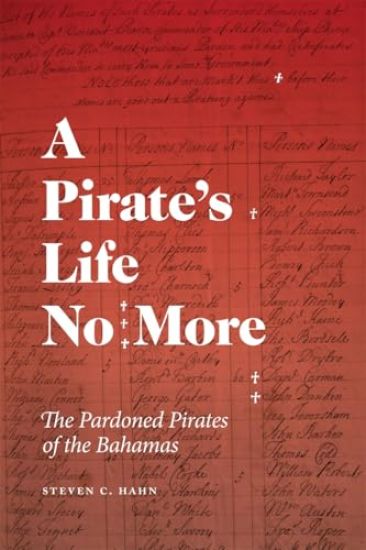
A Pirate's Life No More

A Pirate's Life No More

Steven C. Hahn

UNIVERSITY OF GEORGIA PRESS
2025
pokkari
In 1718 the British crown in the Bahamas pardoned 209 mariners accused of piracy. In A Pirate's Life No More, Steven C. Hahn explores the lives of these "retired” pirates. While there are a number of "famous" names on that list—Benjamin Hornigold, Charles Vane, and Palsgrave Williams, for example—the vast majority of the pardoned are "mostly nobodies." By focusing holistically on pirates—and on the pirates who aren’t famous—the book reclaims their humanity, connects the story of piracy at sea with the land-based communities that sometimes supported it, and illuminates the entangled histories of far-flung places in the Atlantic world. This study reveals that, for most individuals, forays into piracy were fleeting and opportunistic. Moreover, class, age, and regional divisions beset the pirate community, thereby precluding adherence to any single ideology justifying their actions. The pardon was most attractive to mariners possessing greater social and economic capital, which explains why so many of them were able to return to their homes and quickly return to honest maritime work.In addition to the standard sources employed by maritime historians, Hahn utilizes local administrative records from Britain and its American colonies, such as property, court, and church records. In so doing, he sheds new light on the ordinary activities in which the sailors were engaged when not involved in piracy and explores how they coped in the Bahamas and elsewhere after being pardoned. What emerges in this collective biography, then, are pirates who were mariners—of course—but also husbands, fathers, parishioners, and property owners.
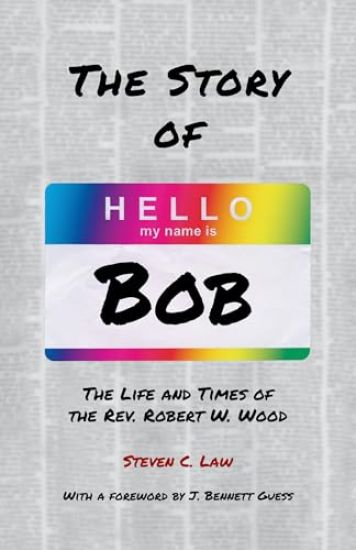
The Story of Bob

The Story of Bob

Steven C. Law

United Church Press
2026
nidottu
From "the greatest generation" comes the true story of a World War II veteran and ordained minister whose public advocacy for social justice was segmented from his private life as a gay man. Steven C. Law's biography of the Rev. Robert W. Wood, The Story of Bob, is the story of a man before his time, who strove to live and love authentically and advocated for the gay community in church and society. The Rev. Robert W. Wood was a trailblazer in the LGBTQ rights movement. Active in the Mattachine Society, he published his book Christ and the Homosexual in 1960 under his own name at great risk. Rev. Wood participated in protests organized by Frank Kameny against the federal government's ban on gay employees. He pushed the United Church of Christ to embrace the cause of LGBTQ liberation. While he faced resistance, this struggle ultimately led to the formation of the UCC's Open and Affirming Coalition. The Story of Bob is based on interviews that the author, Steven C. Law, conducted with Rev. Wood. Law's lucid prose makes for a compelling, page-turning read.
How Much Does God Foreknow?

How Much Does God Foreknow?

Steven C. Roy

INTERVARSITY PRESS
2006
nidottu
Features in-depth studies on a vast array of key passages in both the Old and the New Testaments that relate to God's foreknowledge and responds to current debates on this issue, drawing out implications of biblical teaching for the practical matters of Christian worship, prayer, guidance, and more. Original.
Reconfiguring Truth

Reconfiguring Truth

Steven C. Ward

Rowman Littlefield
1996
nidottu
This refreshingly original book links the postmodern critique of notions such as "reality" and "truth" with approaches to knowledge found in science and technology studies (STS), a field also discontent with traditional epistemology. Exploring STS approaches to knowledge, such as actor-network theory, Ward forges a path through the impasse of the modernism vs. postmodernism debate. Reconfiguring Knowledge is an important work for social scientists and theorists, philosophers, historians, and scholars of science and technology.
Water Quality Modeling

Water Quality Modeling

Steven C. McCutcheon

CRC Press Inc
1990
sidottu
This fascinating work is divided into two main sections. Part I reviews the basic principles of water movement in channels and the mass balance approach common to most models. It also covers the practical usefulness, model peer review, and guidance on model selection and calibration. Part II discusses flow simulation and prediction of time of travel, dye tracing and mixing, heat balance and temperature modeling, and reaeration and volatilization. This interesting, easy-to-read volume includes comprehensive reviews for the use of fluorescent water tracing dyes, longitudinal dispersion, evaporation and wind speed functions, prediction of saturation concentrations of dissolved oxygen, and reaeration coefficients. This book furnishes the reader with appendices which provide a synopsis of available computer models and gives a comprehensive listing of methods used to measure flow rates in rivers, tributaries, and pipes and channels introducing wastewaters into streams. This volume is a valuable, indispensable reference for all researchers, instructors, students in advanced environmental modeling courses, and practicing engineers.
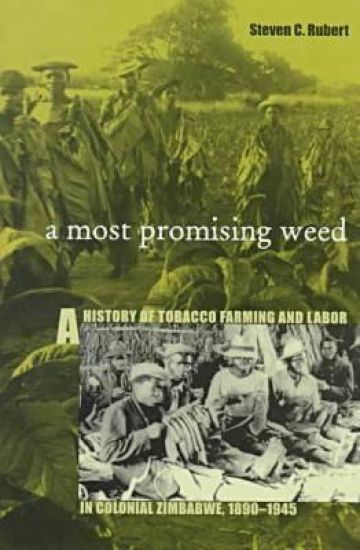
A Most Promising Weed

A Most Promising Weed

Steven C. Rubert

Ohio University Press
1998
pokkari
A Most Promising Weed examines the work experience, living conditions, and social relations of thousands of African men, women, and children on European-owned tobacco farms in colonial Zimbabwe from 1890 to 1945. Steven C. Rubert provides evidence that Africans were not passive in their responses to the penetration of European capitalism into Zimbabwe but, on the contrary, helped to shape both the work and living conditions they encountered as they entered wage employment. Beginning with a brief history of tobacco growing in Zimbabwe, this study focuses on the organization of workers' compounds and on the paid and unpaid labor performed by both women and children on those farms.
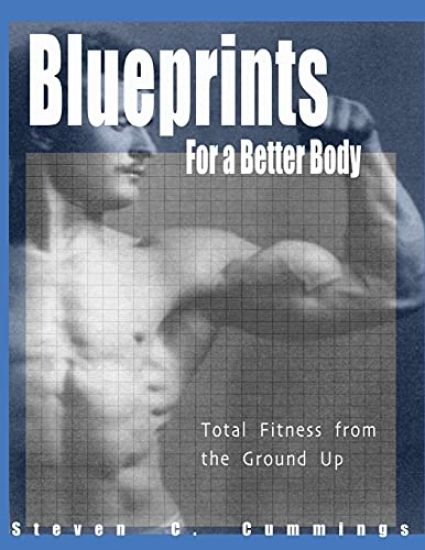
Blueprints for a Better Body: Total Fitness from the Ground Up
The only fitness book you may ever need Building a lean, strong, healthy body has never been this easy. This complete, easy-to-read, step-by-step manual will show you how to get in the best shape of your life using the latest, cutting-edge science and exercise techniques. It will show you: * How to use a little-known, natural sea-plant extract to "shut off" the enzymes in your cells that prevent muscles from growing larger.* How to use the simple but powerful technique known as "Progressive Negative Tension" for increased focus and exercise intensity, improved exercise form and enhanced muscle tone.* How to use the "30-minute window" - a natural, biological state that occurs after exercise - to your advantage.* How to design a routine around your unique "neurological efficiency". Neurological efficiency can vary greatly from individual to individual, and the wrong routine for your neurological make-up can actually make you look and feel worse * How to use the glycemic index to design the best diet for fat loss. Designing a nutrition plan around the glycemic index can be tedious and confusing, but this manual makes it simple, easy and fast And there is much, much more...
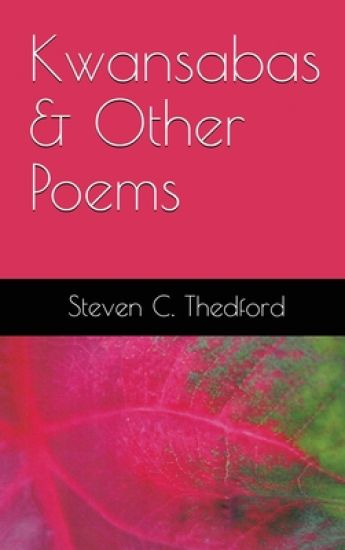
Kwansabas and Other Poems

Kwansabas and Other Poems

Steven C Thedford; Roosevelt Thedford

New World Press, Inc.
2021
sidottu
The Kwansaba is an African American verse form of praise created in 1995 by Eugene B. Redmond, East St. Louis Poet Laureate and professor of English at Southern Illinois-East St. Louis. The poems honor Kwanzaa, a celebration of family and African American culture, and praise writers such as Richard Wright and Sonia Sanchez. The poetic style of the Kwansaba utilizes the number seven, the numeric foundation of Kwanzaa. Thus, a Kwansaba is a heptastich, a poem of seven lines, with seven words in each line, and written with no word exceeding seven letters. Darline Roy talks about the strict rules of a Kwansaba. The idea was first used by Eugene B. Redmond and refined in the summer workshop of 2015. But there are exceptions to the rule of seven. He agrees that imposing some restriction makes you think about what you are writing. Another example of a kind of poem that has rules is a haiku, a very short form of Japanese poetry in which the first sentence has five syllables, the second line has seven syllables, and the last line has five syllables. In addition, the Kwansaba poetic form embraces its roots from the South African tradition of the praise poem, called the izibongo in Zulu. A praise poem offers veneration to a person, which was popular in the Middle Ages and continues to be embraced in African cultures today. However, the African praise poem is not restricted to this part of the continent and is not uniquely an African motif; it was used during the Renaissance in Europe. Moreover, the praise poem itself is the manifestation of the oral tradition of atavistic songs of the African ancestors. The "Other Poems" featured in the later part of the book are digressive; they may follow the rules of the Kwansaba but sometimes do not offer praise. The subjects of the poems range from relationships to community.Kwansabas and Other Poems represents my interpretation of the art form, and hopefully, I have contributed to this particular type of poem, expanding its purview.
The House of the Lord

The House of the Lord

Steven C. Smith; Brant Pitre

Franciscan Academic Press
2019
nidottu
The House of the Lord invites readers to participate in a unique journey: a deep exploration of the Old and New Testaments that searches out and contemplates the reality of God's presence with his people, with a particular focus on investigating God's self-revelation in and through the biblical temple. The journey represents a tour de force of biblical theology, guided by author Steven Smith, a Catholic biblical scholar, seminary professor, and expert on the temple and the Holy Land. In addition to the temple, Smith observes the centrality of priesthood in both the Old and New Testaments, exploring all four Gospels like never before, through a temple lens.From Genesis onward, Smith carefully traces the biblical mystery of the temple, including the Sanctuary of Mount Eden, the tabernacle of the wilderness, the rise and fall of Solomon's Temple, Herod's Temple in Jesus's day, and the heavenly sanctuary of Revelation. Supported by a massive array of evidence and details, from sources across two millennia of biblical theology, this book will be read and read again for its value as a reference work. The House of the Lord is for anyone who seeks to understand more deeply the message of the biblical story.
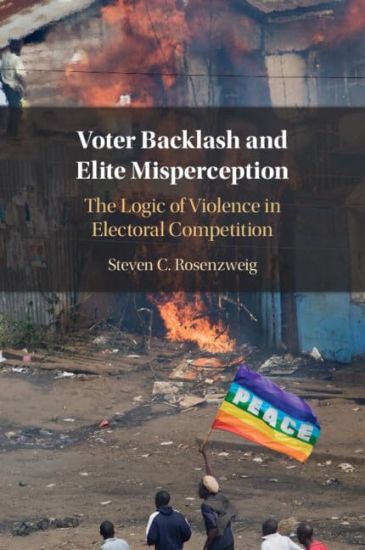
Voter Backlash and Elite Misperception

Voter Backlash and Elite Misperception

Steven C. Rosenzweig

Cambridge University Press
2023
sidottu
Existing theories of election-related violence often assume that if elites instigate violence, they must benefit electorally from doing so. With a focus on Kenya, this book employs a wide array of data and empirical methods to demonstrate that - contrary to conventional wisdom - violence can be a costly strategy resulting in significant voter backlash. The book argues that politicians often fail to perceive these costs and thus employ violence as an electoral tactic even when its efficacy is doubtful. Election-related violence can therefore be explained not solely by the electoral benefits it provides, but by politicians' misperceptions about its effectiveness as an electoral tactic. The book also shows that violence in founding elections - the first elections held under a new multiparty regime - has long-lasting effects on politicians (mis)perceptions about its usefulness, explaining why some countries' elections suffer from recurrent bouts of violence while others do not.
Voter Backlash and Elite Misperception

Voter Backlash and Elite Misperception

Steven C. Rosenzweig

Cambridge University Press
2025
pokkari
Existing theories of election-related violence often assume that if elites instigate violence, they must benefit electorally from doing so. With a focus on Kenya, this book employs a wide array of data and empirical methods to demonstrate that - contrary to conventional wisdom - violence can be a costly strategy resulting in significant voter backlash. The book argues that politicians often fail to perceive these costs and thus employ violence as an electoral tactic even when its efficacy is doubtful. Election-related violence can therefore be explained not solely by the electoral benefits it provides, but by politicians' misperceptions about its effectiveness as an electoral tactic. The book also shows that violence in founding elections - the first elections held under a new multiparty regime - has long-lasting effects on politicians (mis)perceptions about its usefulness, explaining why some countries' elections suffer from recurrent bouts of violence while others do not.