Kirjojen hintavertailu. Mukana 11 244 527 kirjaa ja 12 kauppaa.

Kirjahaku

Etsi kirjoja tekijän nimen, kirjan nimen tai ISBN:n perusteella.

1000 tulosta hakusanalla Steven J. Howell

Thoughtful Foragers

Thoughtful Foragers

Steven J. Mithen

Cambridge University Press
2009
pokkari
Thoughtful Foragers is about hunter-gatherer decision making. The author explores the implications of the human mind as a product of biological evolution for the way in which humans solve foraging problems. He draws on studies form ethology, psychology and ethnography prior to turning his attention to prehistoric hunter-gatherers. He attempts to construct explanations for patterns in the archaeological record by an explicit focus on decision making by individuals. Thoughtful Foragers will appeal to specialists in European prehistory as well as to those interested in archaeological theory and method. It makes some very significant advances, which will be of real importance for the field of evolutionary theory in relation to human evolution and the evaluation of human social systems.
The Biological Universe

The Biological Universe

Steven J. Dick

Cambridge University Press
1996
sidottu
Throughout the twentieth century, from the furor over Percival Lowell’s claim of canals on Mars to the sophisticated Search for Extraterrestrial Intelligence, otherworldly life has often intrigued and occasionally consumed science and the public. Does ‘biological law’ reign throughout the universe? Are there other histories, religions, and philosophies outside of those on Earth? Do extraterrestrial minds ponder the mysteries of the universe? The attempts to answer these often asked questions form one of the most interesting chapters in the history of science and culture, and The Biological Universe is the first book to provide a rich and colorful history of those attempts during the twentieth century. Covering a broad range of topics, including the search for life in the solar system, the origins of life, UFOs, and aliens in science fiction, Steven J. Dick shows how the concept of extraterrestrial intelligence is a world view of its own, a ‘biophysical cosmology’ that seeks confirmation no less than physical views of the universe.
Judging in Good Faith

Judging in Good Faith

Steven J. Burton

Cambridge University Press
1992
sidottu
This book offers an original theory of adjudication focused on the ethics of judging in courts of law, and proposes two main theses. One is the good faith thesis, which defends the possibility of lawful judicial decisions even when judges exercise discretion. The other is the permissible discretion thesis, which defends the compatibility of judicial discretion and legal indeterminacy with the legitimacy of adjudication in a constitutional democracy. Together these two theses oppose both conservative theories that would restrict the scope of adjudication unduly, and leftist critical theories that would liberate judges from the rule of law.
Theory of Moves

Theory of Moves

Steven J. Brams

Cambridge University Press
1993
pokkari
Steven J. Brams’ Theory of Moves, though based on the classical theory of games, proposes changes in its rules to render it a truly dynamic theory. By postulating that players think ahead not just to the immediate consequences of making moves, but also to the consequences of countermoves to these moves, counter-countermoves, and so on, it extends the strategic analysis of conflicts into the more distant future. It elucidates the role that different kinds of power - moving, order and threat - may have on conflict outcomes, and it also shows how misinformation affects player choices. Applied to a series of cases drawn from politics, economics, sociology, fiction and the Bible, the theory provides not only a parsimonious explanation of their outcomes, but also shows why they unfolded as they did. This book, which assumes no prior knowledge of game theory or special mathematical background, will be of interest to scholars and students throughout the social sciences.
Judging in Good Faith

Judging in Good Faith

Steven J. Burton

Cambridge University Press
1994
pokkari
This book offers an original theory of adjudication focused on the ethics of judging in courts of law, and proposes two main theses. One is the good faith thesis, which defends the possibility of lawful judicial decisions even when judges exercise discretion. The other is the permissible discretion thesis, which defends the compatibility of judicial discretion and legal indeterminacy with the legitimacy of adjudication in a constitutional democracy. Together these two theses oppose both conservative theories that would restrict the scope of adjudication unduly, and leftist critical theories that would liberate judges from the rule of law.
Fair Division

Fair Division

Steven J. Brams; Alan D. Taylor

Cambridge University Press
1996
pokkari
Cutting a cake, dividing up the property in an estate, determining the borders in an international dispute - such problems of fair division are ubiquitous. Fair Division treats all these problems and many more through a rigorous analysis of a variety of procedures for allocating goods (or ‘bads’ like chores), or deciding who wins on what issues, when there are disputes. Starting with an analysis of the well-known cake-cutting procedure, ‘I cut, you choose’, the authors show how it has been adapted in a number of fields and then analyze fair-division procedures applicable to situations in which there are more than two parties, or there is more than one good to be divided. In particular they focus on procedures which provide ‘envy-free’ allocations, in which everybody thinks he or she has received the largest portion and hence does not envy anybody else. They also discuss the fairness of different auction and election procedures.
Life on Other Worlds

Life on Other Worlds

Steven J. Dick

Cambridge University Press
1998
sidottu
The recent discoveries of extrasolar planets and possible microfossils in Martian meteorite ALH 84001 are only the latest developments in a debate that spans millennia, and that has been especially heated in the twentieth century. From the furore over Percival Lowell's claim of canals on Mars at the beginning of the century to the biological experiments of the Viking spacecraft, the controversial 'Mars rock', and the sophisticated Search for Extraterrestrial Intelligence (SETI) at its end, otherworldly life has often titillated and occasionally consumed science and the public. So too have crucially related areas such as the search for planetary systems, the quest for an explanation of UFOs, and inquiries into the origin of life. The theme has been elaborated in science fiction from H. G. Wells to Arthur C. Clarke, and resulted in some of the most popular films of all time, including ET, Aliens, Independence Day, and Contact. Life on Other Worlds details in a readable and non-technical manner the history of the twentieth century extraterrestrial life debate, one of the pervasive themes of our century.
The Biological Universe

The Biological Universe

Steven J. Dick

Cambridge University Press
1999
pokkari
Throughout the twentieth century, from the furor over Percival Lowell’s claim of canals on Mars to the sophisticated Search for Extraterrestrial Intelligence, otherworldly life has often intrigued and occasionally consumed science and the public. Does ‘biological law’ reign throughout the universe? Are there other histories, religions, and philosophies outside of those on Earth? Do extraterrestrial minds ponder the mysteries of the universe? The attempts to answer these often asked questions form one of the most interesting chapters in the history of science and culture, and The Biological Universe is the first book to provide a rich and colorful history of those attempts during the twentieth century. Covering a broad range of topics, including the search for life in the solar system, the origins of life, UFOs, and aliens in science fiction, Steven J. Dick shows how the concept of extraterrestrial intelligence is a world view of its own, a ‘biophysical cosmology’ that seeks confirmation no less than physical views of the universe.
Life on Other Worlds

Life on Other Worlds

Steven J. Dick

Cambridge University Press
2001
pokkari
The recent discoveries of extrasolar planets and possible microfossils in Martian meteorite ALH 84001 are only the latest developments in a debate that spans millennia, and that has been especially heated in the twentieth century. From the furore over Percival Lowell’s claim of canals on Mars at the beginning of the century to the biological experiments of the Viking spacecraft, the controversial ‘Mars rock’, and the sophisticated Search for Extraterrestrial Intelligence (SETI) at its end, otherworldly life has often titillated and occasionally consumed science and the public. So too have crucially related areas such as the search for planetary systems, the quest for an explanation of UFOs, and inquiries into the origin of life. The theme has been elaborated in science fiction from H. G. Wells to Arthur C. Clarke, and resulted in some of the most popular films of all time, including ET, Aliens, Independence Day, and Contact. Life on Other Worlds details in a readable and non-technical manner the history of the twentieth century extraterrestrial life debate, one of the pervasive themes of our century.
Sky and Ocean Joined

Sky and Ocean Joined

Steven J. Dick

Cambridge University Press
2002
sidottu
As one of the oldest scientific institutions in the United States, the U. S. Naval Observatory has a rich and colorful history. This volume is, first and foremost, a story of the relations between space, time and navigation, from the rise of the chronometer in the United States to the Global Positioning System of satellites, for which the Naval Observatory provides the time to a billionth of a second per day. It is a story of the history of technology, in the form of telescopes, lenses, detectors, calculators, clocks and computers over 170 years. It describes how one scientific institution under government and military patronage has contributed, through all the vagaries of history, to almost two centuries of unparalleled progress in astronomy. Sky and Ocean Joined will appeal to historians of science, technology, scientific institutions and American science, as well as astronomers, meteorologists and physicists.
Intellectual Property for Managers and Investors

Intellectual Property for Managers and Investors

Steven J. Frank

Cambridge University Press
2006
sidottu
This book was first published in 2006. Technologists have the ideas. Lawyers know the rules. But for business managers and investors, rules and ideas don't readily combine into a strategic vision. No longer is intellectual property (IP) just a necessary expense for large technology companies. Competing and succeeding in the marketplace requires an in-depth understanding of IP - its use as a weapon, as a shield, and as a monetizable asset. Yet in a world where fortunes can rise or founder on the strength of an IP portfolio, hesitation to enter this arcane, unfamiliar world still abounds. This book equips the business manager with a working, practical knowledge essential to creating and exploiting IP wealth. It shows investors how to evaluate IP strength and competitive value. With its results-oriented perspective and international focus, Intellectual Property for Managers and Investors is essential for those with decision making-responsibility at the interface where business and innovation meet.
Yoga and Judaism, Second Edition

Yoga and Judaism, Second Edition

Steven J. Gold

Lulu.com
2009
pokkari
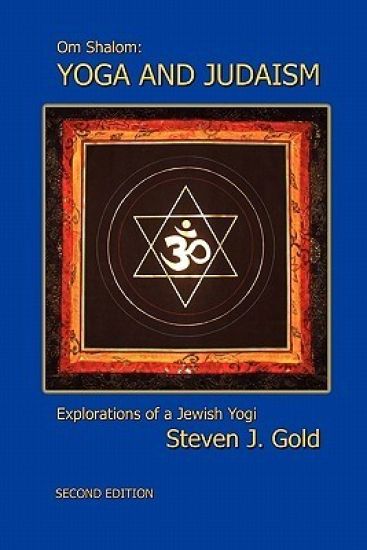
This work is subtitled, "Om Shalom: Explorations of a Jewish Yogi". It expresses insights, connections and syntheses between the traditions of Judaism, including Jewish mysticism and kabala; the Western Mystical Tradition, including Theosophy and related subjects; and the Eastern Spiritual Tradition as expressed through Indian Yoga and Vedanta. It contains a succinct summary of basic spiritual principles distilled from years of study, meditation and self-transformation. The improved and expanded second edition contains new material on Hebrew Mantras and Jewish Healing Meditation, along with other additions and revisions. Learn about aspects of Yoga beyond the mat and Judaism beyond religion, and the many connections between these two ancient spiritual traditions. Includes practical guides to basic Yoga and Jewish meditation and healing meditation and their theoretical underpinnings. This Second Edition is the same as the other one listed, just with a different ISBN for different distribution.
Ivri

Ivri

Steven J Gold

Lulu.com
2024
pokkari
This book addresses the ancient tradition of Hebrew Spirituality that is the foundation for Judaism and other religions and its relevance for today. Universal underlying themes of monotheism, monism, East-West connections, meditation, mysticism, Kabala, Yoga and Vedanta, are explored by the author/editor and guest contributors covering perspectives from Yoga, Judaism, Sufism, and Mystical Christianity. Specific topics include an overview of Kabala, Ibrahim and non-dualism in Sufism, Bibliyoga, a system for synthesizing yoga postures with biblical teachings, Victor Frankl and Logotherapy, spiritual activism and green yoga, and atheism, agnosticism and Jewish Secular Humanism.
Divine Simplicity

Divine Simplicity

Steven J. Duby

T. T.Clark Ltd
2015
sidottu
Steven J. Duby examines the doctrine of divine simplicity. This discussion is centered around the three distinguishing features: grounding in biblical exegesis, use of Thomas Aquinas and the Reformed Orthodox; and the writings of modern systematic and philosophical theologians.Duby outlines the general history of the Christian doctrine of divine simplicity and discusses the methodological traits and essential contents of the dogmatic account. He substantiates the claims of the doctrine of divine simplicity by demonstrating that they are implied and required by the scriptural account of God. Duby considers how simplicity is inferred from God's singularity and aseity, as well as how it is inferred from God's immutability and infinity, and the Christian doctrine of creation. The discussion ends with the response to major objections to simplicity, namely that the doctrine does not pay heed to the plurality of the divine attributes, that it eradicates God's freedom in creating the world and acting toward us; and that it does not cohere with the personal distinctions to be made in the doctrine of the Trinity.
Divine Simplicity

Divine Simplicity

Steven J. Duby

T. T.Clark Ltd
2018
nidottu
Steven J. Duby examines the doctrine of divine simplicity. This discussion is centered around the three distinguishing features: grounding in biblical exegesis, use of Thomas Aquinas and the Reformed Orthodox; and the writings of modern systematic and philosophical theologians.Duby outlines the general history of the Christian doctrine of divine simplicity and discusses the methodological traits and essential contents of the dogmatic account. He substantiates the claims of the doctrine of divine simplicity by demonstrating that they are implied and required by the scriptural account of God. Duby considers how simplicity is inferred from God's singularity and aseity, as well as how it is inferred from God's immutability and infinity, and the Christian doctrine of creation. The discussion ends with the response to major objections to simplicity, namely that the doctrine does not pay heed to the plurality of the divine attributes, that it eradicates God's freedom in creating the world and acting toward us; and that it does not cohere with the personal distinctions to be made in the doctrine of the Trinity.
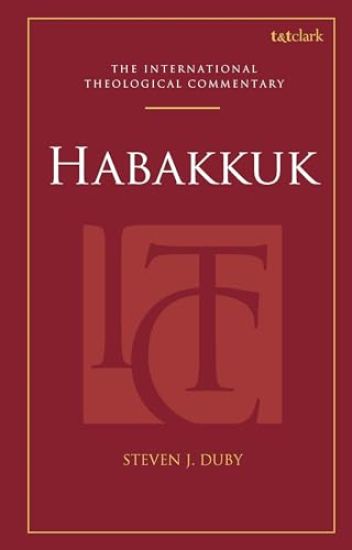
Habakkuk (ITC)

Habakkuk (ITC)

Steven J. Duby

BLOOMSBURY PUBLISHING PLC
2025
sidottu
Steven J. Duby provides a close verse-by-verse exegesis of the book of Habakkuk, setting forth the important literary and historical considerations with a view to their bearing on the theological content of the text. Duby shows how Habakkuk fits within and contributes to the larger mosaic of God’s self-revelation in redemptive history and reflects on how this intersects with important points of Christian doctrine. The work incorporates key concepts and doctrinal insights from the church’s dogmatic tradition showing how they in turn can shed light on the scriptural text. The commentary includes excurses (for example, on the doctrine of justification) elaborating on how Habakkuk’s message can inform biblical exegesis and Christian theology today.
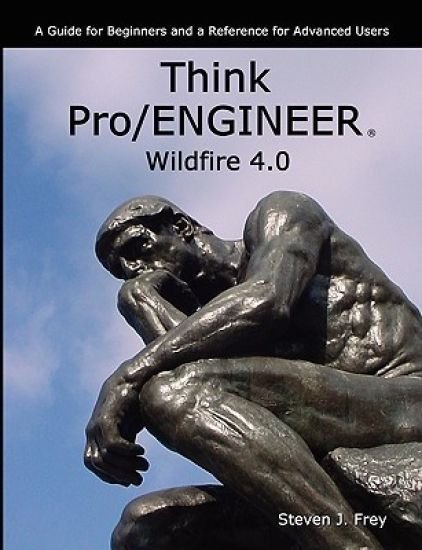
Think Pro/ENGINEER Wildfire 4.0

Think Pro/ENGINEER Wildfire 4.0

Steven J. Frey

Frey Innovations, LLC
2009
pokkari
In response to user demand for an easy to understand, straight forward approach to learning the most powerful MCAD software in the world, Think Pro/ENGINEER Wildfire 4.0 presents the material in a logical and progressive manner. Rather than rely on step by step, button click by button click exercises, Think Pro/ENGINEER Wildfire 4.0 focuses on the software features and tools available, how to access them, how to use them, and most importantly, why to use them (or not), allowing the reader to apply these techniques to their every day design tasks and goals. Primarily written for the beginning user, Think Pro/ENGINEER Wildfire 4.0 provides a well rounded and functional understanding of the software, as well as a convenient reference for the experienced user.
Yonder Mountain

Yonder Mountain

Steven J Anderson

Triple 8 Studios
2019
pokkari
A "Nature" themed collection of short stories, poems, sketches, and watercolor vignettes that capture the sentimental yearnings of the childlike heart. Comes with over twenty watercolor illustrations for vivid storytelling imagery and contains a Lakota/English word glossary to aid in the, often, Native American themed stories found within the book.
Accidental Argonaut: A Natural History of Winslow Howard
In Accidental Argonaut, Steve Cary relates the wide-ranging escapades of Winslow Howard, a renaissance man of science and culture whose life spanned the 19th Century. Howard was a trained jeweler, businessman, husband and father. He journeyed West to seek respite from deadly consumption and his ensuing adventures exemplified the fortunes of many contemporary Americans who left home and comfort on quests for freedom and new life in the largely unknown West. Like the mythical Greek Argonauts, Howard was driven to seek his fortune in gold, but the real treasure lay in his journey, during which he achieved fame and success as a self-taught assayer, naturalist, scientist and society organizer, and during which fortunes were won and lost and personal accomplishments came at tragic costs. New Hampshire-born, Howard apprenticed at Tiffany & Co. in New York City. His thirteen years of training culminated in prized, journeyman jeweler credentials and Howard seemed destined for prosperity in America's financial center, but that dream shattered when he acquired consumption. Unwilling to wither and die at age thirty, Howard rolled the dice and headed to New Mexico Territory, home of Kit Carson, ancient Spanish gold mines and a health-restoring climate. For the next forty years, Howard operated jewelry and assay shops in gold rush towns and silver mine camps around the West. Along his life's journey, Howard collected everything from clocks and coins to fossils and Indian artifacts. He was of a curious and scientific disposition, so the Smithsonian's Spencer Baird was able to lure him into the world of natural history where Howard made a name for himself collecting new species of plants and insects across the West. While American science was coalescing, gaining momentum and matching European science, Howard rode the rising tide of reason, interacting with founding scientists John Torrey, John Newberry, Asa Gray and Henry Edwards. At home in his mining towns, Howard's business ventures and scientific achievements contributed to transformation of the American West as its myth was being made.
art commerce

art commerce

Steven J Riskind

Steve Riskind Photography
2020
sidottu
Over a period of eight years, Steve Riskind photographed four small businesses located in or near Paterson, New Jersey. These "artisan businesses" are small, rely on skilled crafts people, and all are family owned. They are a specialty textile firm, jewelry manufacturer, pipe organ builder and stained glass studio. Each chapter focuses on one of these businesses. Introductions to the chapters are based largely on Riskind's interviews with owners of the firms. In some cases additional research supplements the interviews.Following each introductory essay are approximately 20 photographs taken at the business. The goal in taking the photographs was to capture the intensity of workers engaging with the materials they use. These are not posed pictures showing workers holding products and smiling at the camera. Rather they are images of skilled artisans in the process of creation.