Kirjojen hintavertailu. Mukana 11 627 220 kirjaa ja 12 kauppaa.

Kirjahaku

Etsi kirjoja tekijän nimen, kirjan nimen tai ISBN:n perusteella.

1000 tulosta hakusanalla Steven L. Kinney

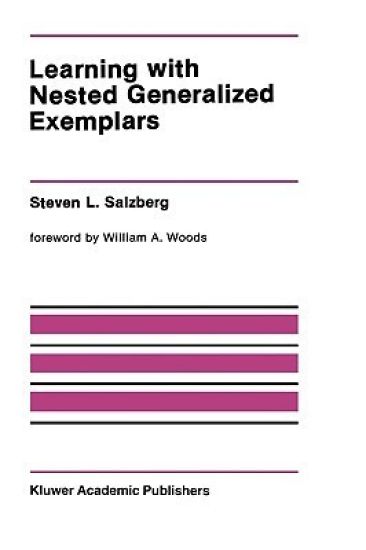
Learning with Nested Generalized Exemplars
Machine Learning is one of the oldest and most intriguing areas of Ar­ tificial Intelligence. From the moment that computer visionaries first began to conceive the potential for general-purpose symbolic computa­ tion, the concept of a machine that could learn by itself has been an ever present goal. Today, although there have been many implemented com­ puter programs that can be said to learn, we are still far from achieving the lofty visions of self-organizing automata that spring to mind when we think of machine learning. We have established some base camps and scaled some of the foothills of this epic intellectual adventure, but we are still far from the lofty peaks that the imagination conjures up. Nevertheless, a solid foundation of theory and technique has begun to develop around a variety of specialized learning tasks. Such tasks in­ clude discovery of optimal or effective parameter settings for controlling processes, automatic acquisition or refinement of rules for controlling behavior in rule-driven systems, and automatic classification and di­ agnosis of items on the basis of their features. Contributions include algorithms for optimal parameter estimation, feedback and adaptation algorithms, strategies for credit/blame assignment, techniques for rule and category acquisition, theoretical results dealing with learnability of various classes by formal automata, and empirical investigations of the abilities of many different learning algorithms in a diversity of applica­ tion areas.
Getting the Old Testament – What It Meant to Them, What It Means for Us

Getting the Old Testament – What It Meant to Them, What It Means for Us

Steven L. Bridge

Baker Academic, Div of Baker Publishing Group
2009
nidottu
As readers of texts written in antiquity we frequently find ourselves in the position of one who overhears a conversation without the benefit of its context. The likelihood of humorous (or tragic) misunderstanding is palpable. In Getting the Old Testament: What It Meant to Them, What It Means for Us, Steve Bridge examines a number of important texts and genres found in the Old Testament. By bringing what is known of their original historical and literary context to light, he clearly demonstrates how important it is to know the cultural background of those to whom a text was originally addressed. Bridge helps us as modern readers to grasp the intended significance of these ancient texts. Using modern illustrations from Bart Simpson to fortune cookies, and discussing texts from Genesis to Jonah to Ecclesiastes, Bridge succeeds in making difficult texts come alive for the reader as applying practically to modern life. Each chapter begins with a story, event, or illustration that draws the reader into the point which Bridge wishes to make with regard to the clearest understanding of a particular text or given group of texts. The most poignant of these illustrations is found at the beginning of his chapter on the book of Job, in which he starts with the story of Lou Gehrig and the disease that took his life, ALS (known more commonly as Lou Gehrig's Disease) and which ends with his own father's death from ALS. An annotated list of suggested readings as well as subject and scripture indexes make this a practical book for college classes.
Introduction to the Historical Books

Introduction to the Historical Books

Steven L. McKenzie

William B Eerdmans Publishing Co
2010
nidottu
Steven McKenzie here surveys the historical books of the Old Testament -- Joshua through Ezra-Nehemiah -- for their historical context, contents, form, and themes, communicating them clearly and succinctly for an introductory audience. / By providing a better understanding of biblical history writing in its ancient context, McKenzie helps readers come to terms with tensions between the Bible's account and modern historical analyses. Rather than denying the results of historical research or dismissing its practitioners as wrongly motivated, he suggests that the source of the perceived discrepancy may lie not with the Bible but with the way in which it has been read. He also calls into question whether the genre of the Bible's historical books has been properly understood.
Alejandro Tsakimp

Alejandro Tsakimp

Steven L. Rubenstein

University of Nebraska Press
2002
sidottu
In the heavily forested foothills of the Andes Mountains in Ecuador, a Shuar healer named Alejandro Tsakimp leads many lives. He is a peasant who sells cattle and lumber, a troubled member of the Shuar Federation, a son and brother, husband and father, student and worker, and a shaman. Being a Shuar today-and especially a healer-is both a burden and a resource, and Tsakimp must constantly negotiate varying relations of power, such as with the better educated and richer officials of the Shuar Federation, his patients, siblings, and rival shamans. The power to cure is also the power to kill, so shamans like Tsakimp are frequently in danger from accusations of witchcraft. In his own words, Alejandro Tsakimp tells of his lives and relationships, the practice of shamanism, and the many challenges and triumphs he has encountered since childhood. Born during a time when the Shuars were recovering from a devastating intertribal conflict over the trading of shrunken heads, Tsakimp was first exposed to healing practices when he was cured in the womb by a shaman. Later he actively pursued this knowledge in the hopes of curing his father-another shaman-who was ill from witchcraft. His father's death in 1990 created conflict among his heirs, who were the first generation of Shuars to inherit property. Tsakimp's family fiercely competed for the property and eventually accused each other of witchcraft and parricide. Anthropologist Steven Rubenstein, who began working with Tsakimp in 1989, provides essential background information and has skillfully edited Tsakimp's story. This book is notable for its revealing look at the relationship between anthropologist and shaman, for its insightful glimpse into the complicated lives of South American healers today, and for its compelling collection of stories told by Tsakimp. Steven L. Rubenstein is an associate professor of anthropology at Ohio University. He is the author of The Huaorani.
Alejandro Tsakimp

Alejandro Tsakimp

Steven L. Rubenstein

University of Nebraska Press
2002
pokkari
In the heavily forested foothills of the Andes Mountains in Ecuador, a Shuar healer named Alejandro Tsakimp leads many lives. He is a peasant who sells cattle and lumber, a member of the Shuar Federation, a son and a brother, a husband and a father, a student and a worker, and, finally, a troubled shaman. Being a healer has long been both a burden and a resource, for the power to cure is also the power to kill, and shamans like Tsakimp are frequently in danger from accusations of witchcraft. But the situation of the Shuar today is especially perilous, and Tsakimp must constantly negotiate relations of power not only with rival shamans and his patients, but with the better-educated and richer officials of the Shuar Federation and his own siblings as well. In his own words, Alejandro Tsakimp tells of his lives and relationships, the practice of shamanism, and the many challenges and triumphs he has encountered since childhood. He was born at the time when Shuar were first confronting the impact of Ecuadorian colonialism, which had triggered devastating intertribal conflict over the production and trade of shrunken heads and intratribal feuding fueled by accusations of witchcraft. Tsakimp was first exposed to healing practices when he was cured in the womb by a shaman. Later he actively pursued this knowledge in the hopes of curing his father, another shaman, who was ill from witchcraft. His father's death in 1990 created conflict among his heirs, who were the first generation of Shuar to inherit property. Tsakimp's family fiercely competed for the property and eventually accused one another of witchcraft and parricide.Anthropologist Steven Rubenstein, who began working with Tsakimp in 1989, has skillfully edited Tsakimp's stories and provides essential background information. Ruben-stein argues that although these stories reveal tensions between individual and collective autonomy on the colonial frontier, they also resist simplistic dichotomies such as state versus indigene and modern versus traditional.Alejandro Tsakimp provides a revealing look at the relationship between anthropologist and shaman and an insightful glimpse into the complicated lives of South American Indians today.
The Linguistics, Neurology, and Politics of Phonics

The Linguistics, Neurology, and Politics of Phonics

Steven L. Strauss

Routledge Member of the Taylor and Francis Group
2004
sidottu
This book explores the driving forces behind the current government-sponsored resurrection of phonics, and the arguments used to justify it. It examines the roles played by three key actors--corporate America, politicians, and state-supported reading researchers--in the formulation of what Strauss terms the neophonics political program. Essential for researchers, students, and teachers of literacy and reading, and for anyone seeking to understand what is happening in U.S. public schools today, The Linguistics, Neurology, and Politics of Phonics: Silent "E" Speaks Out:*analyzes the political nature of the alleged literacy crisis in the United States, through an investigation of the political and corporate motives behind the renewed focus on phonics, and media complicity in promoting the neophonics political program as the solution to the so-called crisis;*examines the scientific claims of neophonics, including methodology, linguistics, and neuroscience, and exposes the flaws in its reasoning and the weakness of its arguments;*addresses the scientific, empirical investigation of letter-sound relationships in English (of phonics itself), and demonstrates the complexity of the system and its associated benefits and limitations in the theory and practice of reading;*proposes actions to help make a return to politically undistorted science and to democratic classrooms a reality; and*introduces, in a postscript, a formal analysis of the letter-sound system, using empirically based rules to convert one finite set of elements, the alphabet, into another, the phonemes of the spoken language. Offering up-to-date information and an original critique, this book makes two important contributions. One is the policy analysis linking government agencies, policymakers, and corporate interests. The second is the neurological and linguistic treatment of why traditional phonics programs are not the solution and why the rhetoric developed to support their resurgence is so far off the mark.
The Linguistics, Neurology, and Politics of Phonics

The Linguistics, Neurology, and Politics of Phonics

Steven L. Strauss

Routledge Member of the Taylor and Francis Group
2004
nidottu
This book explores the driving forces behind the current government-sponsored resurrection of phonics, and the arguments used to justify it. It examines the roles played by three key actors--corporate America, politicians, and state-supported reading researchers--in the formulation of what Strauss terms the neophonics political program. Essential for researchers, students, and teachers of literacy and reading, and for anyone seeking to understand what is happening in U.S. public schools today, The Linguistics, Neurology, and Politics of Phonics: Silent "E" Speaks Out:*analyzes the political nature of the alleged literacy crisis in the United States, through an investigation of the political and corporate motives behind the renewed focus on phonics, and media complicity in promoting the neophonics political program as the solution to the so-called crisis;*examines the scientific claims of neophonics, including methodology, linguistics, and neuroscience, and exposes the flaws in its reasoning and the weakness of its arguments;*addresses the scientific, empirical investigation of letter-sound relationships in English (of phonics itself), and demonstrates the complexity of the system and its associated benefits and limitations in the theory and practice of reading;*proposes actions to help make a return to politically undistorted science and to democratic classrooms a reality; and*introduces, in a postscript, a formal analysis of the letter-sound system, using empirically based rules to convert one finite set of elements, the alphabet, into another, the phonemes of the spoken language. Offering up-to-date information and an original critique, this book makes two important contributions. One is the policy analysis linking government agencies, policymakers, and corporate interests. The second is the neurological and linguistic treatment of why traditional phonics programs are not the solution and why the rhetoric developed to support their resurgence is so far off the mark.
Peoples of the Plateau

Peoples of the Plateau

Steven L. Grafe; Paula Richardson Fleming

University of Oklahoma Press
2006
nidottu
The remarkable photographs in Peoples of the Plateau capture the lives of Pacific Northwest Indians at the turn of the twentieth century - and at a turning point in their own history.The Columbia River Plateau, in the interior Pacific Northwest, was populated for centuries by the Umatilla, Walla Walla, and Cayuse Indians. By the late nineteenth century, after the U.S. government had confined these peoples to a single reservation, their lives began to change irrevocably. Major Lee Moorhouse, a businessman and former militia officer, served as an Indian agent during this period. Believing that the Indians he encountered were a ""dying race,"" Moorhouse was driven to collect their artifacts and, for posterity, take their photographs.Although he was not a professional photographer, Moorhouse produced more than 9,000 glass-plate negatives, one-third with Indians as his subjects. Although his works to some degree reflect a stereotypical view, they are an invaluable aid for tribal researchers and historians because they identify their subjects by name.This book marks the first major examination of Moorhouse and his work. Featuring eighty exquisite plates, it not only showcases Moorhouse's extensive photographs but also tells the story of the man - about whom little is known - and of the world in which he lived and worked.
Twentieth-Century Countertenor Repertoire

Twentieth-Century Countertenor Repertoire

Steven L. Rickards

Scarecrow Press
2008
sidottu
In Twentieth-Century Countertenor Repertoire, Steven L. Rickards has provided a reference listing of over 600 entries, compiling and cataloging information about repertoire composed specifically for the countertenor from 1950 to 2000. Rickards collects works from 30 countries with texts in 31 languages—including early forms of Akkadian, English, Flemish, French, and Greek—representing over 350 composers. With reference numbers for easy accessibility, each entry presents significant data, including the composer's name, birth/death dates, and nationality; the title, medium, date, and duration of the composition; the instrumentation, voicing, range, and tessitura of the piece; and the author and language of the text. Rickards also provides the who, when, and where of the premier; whether the piece was commissioned or not, and, if so, by whom; and the publisher and availability of the piece. He also offers the composers' and his own observations on the work, including the difficulty and appropriateness of the work for differing levels of singers, from students to professionals. Several indexes break the material down into searchable pieces, listing compositions by title, author of text, instrumentation, medium (song cycle, chamber work, opera, cantata, etc.), and vocal arrangements (duets, trios, quartets). Addresses of music publishers and information centers are also provided. This valuable reference will help countertenors and voice teachers to identify and become more familiar with contemporary works for countertenor, as well as promote the performance of contemporary works and encourage composers to continue to write for the countertenor voice.
Contemporary Christian Religious Responses to the Shoah

Contemporary Christian Religious Responses to the Shoah

Steven L. Jacobs

University Press of America
1993
sidottu
Contemporary scholars in all disciplines have long recognized that the Shoah is a critical challenge to Christianity and Western civilization, as well as a watershed event in Jewish history. Steven L. Jacobs has completed two complementary works dealing with contemporary religious responses to the Shoah, one from the Christian perspective, the other from the Jewish perspective. This work focuses on the Christian responses to the Holocaust. Contents: Revisionism and Theology, Harry James Cargas; Evil and Existence: Karl Barth, Paul Tillich, Reinhold Niebuhr Revisited in Light of the Shoah, Alan Davies; Suffering, Theology, and the Shoah, Alice Lyons Eckardt; Mysterium Tremendum: Catholic Grapplings with the Shoah and its Theological Implications, Eugene J. Fisher; In the Presence of Burning Children: The Reformation of Christianity after the Shoah, Douglas K. Huenke; How the Shoah Affects Christian Belief, Thomas A. Idinopulos; A Contemporary Religious Response to the Shoah: The Crisis of Prayer, Michael McGarry; The Shoah: Continuing Theological Challenge for Christianity, John T. Pawlikowski; Theological and Ethical Reflections on the Shoah: Getting Beyond the Victimizer Relationship, Rosemary Radford Reuther; and Asking and Listening, Understanding and Doing: Some Conditions for Responding to the Shoah Religiously, John K Roth.
Confirmation

Confirmation

Steven L Cunningham

Morehouse Publishing
1989
nidottu
This self-study workbook helps confirmation students navigate The Book of Common Prayer to learn more about the Episcopal faith. Includes 10 study units with questions and page references corresponding to the Prayer Book. Topics cover the Old and New Testaments, church history, The Book of Common Prayer, sacramental rites, and more. Can be used for homework or classroom study to supplement any Episcopal confirmation program. Ages 10 - 13.
But Is It Garbage?

But Is It Garbage?

Steven L. Hamelman

University of Georgia Press
2004
pokkari
Trash has been blowing across the rock ’n’ roll landscape since the first amplified guitar riff tore through American mass culture. Throwaway tunes, wasted fans, crappy reviews, junk bins of remaindered albums: much of rock’s quintessence is handily conveyed in terms of disposability and impermanence.Steven L. Hamelman sums up these rubbishy affinities as rock’s “trash trope.” Trash is an obvious physical presence on the rock scene—-think of Woodstock’s littered pastures or the many hotel rooms redecorated by the Who. More intriguingly, Hamelman says, trash is the catalyst for a powerful mode of rock composition and criticism. It is, for instance, both cause and effect when performers like the Ramones or Beck at once critique junk culture and revel in it.Hamelman guides us across five decades of rock to explore the trash trope in all of its audible, visual, and emblematic power. He offers up a personal top-forty list of songs that engage the trash trope at many levels, including “Yakety-Yak,” the Coasters’ lament about taking out the trash, and Radiohead’s “No Surprises,” in which the singer’s persona likens his heart to a landfill. Drawing extensively on Lou Reed’s Berlin, Hamelman gives the “Is rock dead?” debate new meaning by pondering death themes in the music and the morbid romanticism of the best “wasted” recordings. Finally Hamelman looks at rock’s “saving” powers—-at how a medium steeped in tropes of uselessness and inconsequence can mean so much to countless people.But Is It Garbage? spills over with challenging insights into how rock’s creators, critics, and consumers transform, and are transformed by, trash as a fact and a concept. In the music’s preoccupation with its own trashiness readers will perceive a wellspring of rock innovation and inspiration—-one largely overlooked and little understood until now.
Giving Voters a Voice

Giving Voters a Voice

Steven L. Piott

University of Missouri Press
2003
sidottu
Studying the origins of direct legislation in the US, this title examines the source of the idea and early efforts to generate a national movement to expand popular democracy. It then examines the different ways in which 22 states enacted legislation allowing for statewide initiative and referenda.
Dirt, Sweat, and Diesel

Dirt, Sweat, and Diesel

Steven L. Hilty

University of Missouri Press
2016
sidottu
With very few people engaged in agriculture today, it is no surprise that most Americans have little understanding of the challenges that modern farmers face. This book provides readers a glimpse into life on a modern Missouri farm where a variety of grains, grass seed, corn, and cattle are produced. All of the conversations, events, and descriptions are drawn from the author’s experience working alongside and observing this father and son family farm operation during the course of a year. Farming today is technologically complex and requires a broad set of skills that range from soil conservation, animal husbandry, and mechanics to knowledge of financial markets and computer technology. The focus on skills, in addition to the size of the financial risks, and the number of unexpected challenges along the way provides readers with a new perspective and appreciation for modern farm life.
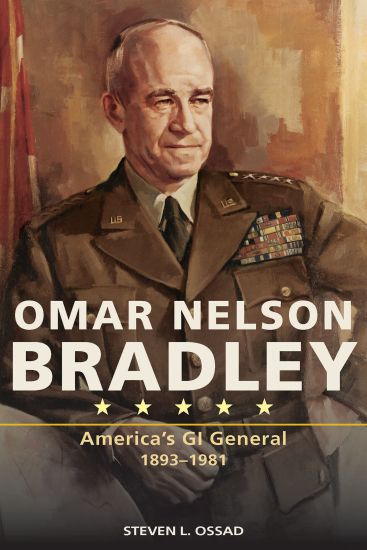
Omar Nelson Bradley

Omar Nelson Bradley

Steven L. Ossad

University of Missouri Press
2017
sidottu
When Omar Nelson Bradley began his military career more than a century ago, the army rode horses into combat and had less than 200,000 men. No one had heard of mustard gas. At the height of his career, Bradley (known as "Brad" and "The GI's General") led 1.23 million men as commander of 12 Army Group in the Western Front to bring an end to World War II.Omar Nelson Bradley was the youngest and last of nine men to earn five-star rank and the only army officer so honored after World War II. This new biography by Steven L. Ossad gives an account of Bradley's formative years, his decorated career, and his postwar life.Bradley's decisions shaped the five Northwest European Campaigns from the D-Day landings to VE Day. As the man who successfully led more Americans in battle than any other in our history, his long-term importance would seem assured. Yet his name is not discussed often in the classrooms of either civilian or military academies, either as a fount of tactical or operational lessons learned, or a source of inspiration for leadership exercised at Corps, Army, Group, Army Chief, or Joint Chiefs of Staff levels. As a business school case study in improvised organizational management under extreme pressure, the history and structure of that vast enterprise also merits study.The Bradley image was tailor-made for the quintessential homespun American heroic ideal - he was born in a cabin - and was considered by many to be a simple, humble country boy who rose to the pinnacle of power through honesty, hard work, loyalty and virtuous behavior. Even though his classmates in both high school and at West Point made remarks about his looks, and Bradley was always self-conscious about smiling because of an accident involving his teeth, he went on to command 12 Army Group, the largest body of American fighting men under a single general.Bradley's postwar career as administrator of the original GI Bill and first Chairman of the Joint Chiefs of Staff during the Korean War ensures his legacy. These latter contributions, as much as Bradley's demonstrable World War II leadership, shaped U.S. history and culture in decisive, dramatic, and previously unexamined ways.Drawing on primary sources such as those at West Point, Army War College and Imperial War Museum, this book focuses on key decisions, often through the eyes of eyewitness and diarist, British liaison officer Major Thomas Bigland. The challenges our nation faces sound familiar to his problems: fighting ideologically-driven enemies across the globe, coordinating global strategy with allies, and providing care and benefits for our veterans.
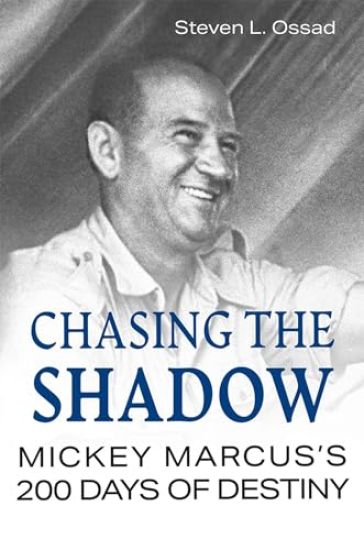
Chasing the Shadow

Chasing the Shadow

Steven L. Ossad

UNIVERSITY OF MISSOURI PRESS
2024
sidottu
The life of David “Mickey” Marcus has become the stuff of legends and myths (even fantasy), conspiracy, wild exaggeration, and untethered embellishment. The image of Marcus cast by the character portrayed by Kirk Douglas in the film version of his life still dominates most evocations of the man, for good or ill. And these days, reactions to the book or film rest mostly on the current headlines rather than the historical context of the struggle in which Marcus died, or the events that cast him as a real-life player in an event marked by destiny. Chasing the Shadow: Mickey Marcus’s 200 Days of Destiny is the first comprehensive and balanced biography of David Daniel “Mickey” Marcus, a founder of American Civil Affairs and Military Government doctrine and practice and a seminal figure in early Israeli military history. Far from merely a tribute to Mickey Marcus's legacy, Ossad’s work serves as a critical tool for understanding the realities of mid-20th-century warfare in a Postwar colonial struggle and the dynamics of U.S.-Israeli military and political relations in 1948, the critical year for Israel’s struggle for independence. Indeed, Chasing the Shadow is a valuable read for those interested in Middle East history, Jewish military history, and a fascinating character whose story is told in an engaging, informative, and insightful narrative.
Beating Heart of the World

Beating Heart of the World

Steven L. Davis

UNIVERSITY OF NEW MEXICO PRESS
2026
sidottu
The fascinating true story of how Taos Pueblo’s Indigenous people recruited members of the famous Taos art colony to help spark a movement for Native justice that reshaped the nation. When the first white artists arrived in Taos by horse-drawn wagons, centuries of military conquest and brutal government policies had pushed Indigenous people to the brink of collapse. New Mexico’s pueblos had become some of America’s last holdouts of traditional culture, resolutely preserving their sacred lands in the face of mounting pressure. Many of the free-spirited newcomers in Taos came to admire the pueblos’ peaceful, communal societies and holy regard for the natural world. To these outsiders, pueblo civilization offered a marked contrast to America’s record of endless war, hyperindividualism, and environmental destruction. Among those attracted to Taos was the “Queen of Bohemia,” a wealthy New York heiress who dabbled in peyote and personified radical chic. Mabel Dodge Luhan fell in love with Taos Pueblo leader Tony Lujan and hoped to inspire an American spiritual renaissance based on pueblo values. She brought world-famous luminaries to Taos, including D. H. Lawrence, Georgia O’Keeffe, and Carl Jung, along with the fiery social reformer John Collier. As the art colony gained international fame, the US government targeted the pueblos for extinction, moving to seize their lands and destroy their cultures. This same grim scenario had played out countless times before in US history. It seemed that nothing could stop the brutal crush of conquest. But the puebloans, who had once unleashed a fierce revolt against Spain in 1680, found a new way to fight back in the modern era. As master diplomats, they began recruiting the prominent creatives converging on Taos, shrewdly enlisting them as political allies. And these artists and writers, at a crucial moment in history, rose to join the pueblos and challenged their own culture’s prevailing genocidal policies. Beating Heart of the World is the fascinating, fast-paced chronicle of a long-shot resistance movement that grew into a powerful national campaign for Indigenous justice. While a work of history, Beating Heart of the World speaks urgently to our own era as new resistance movements percolate—and as new generations increasingly look to ancient Indigenous wisdom to help guide sustainable pathways forward.
Bread, Politics and Political Economy in the Reign of Louis XV

Bread, Politics and Political Economy in the Reign of Louis XV

Steven L. Kaplan; Sophus A. Reinert

Anthem Press
2015
sidottu
A new edition of Kaplan’s landmark study on eighteenth-century French political economy, reissued with a new Foreword by Sophus A. Reinert. Based on research in all the Parisian depots and more than fifty departmental archives and specialized and municipal libraries, Kaplan’s classic work constitutes a major contribution to the study of the subsistence problem before the French Revolution and the political economy of deregulatory reform. Anthem Press is proud to reissue this path breaking work together with a significant new historiographic companion volume by the author, “The Stakes of Regulation: Perspectives on ‘Bread, Politics and Political Economy’ Forty Years Later.”