Kirjojen hintavertailu. Mukana 11 244 527 kirjaa ja 12 kauppaa.

Kirjahaku

Etsi kirjoja tekijän nimen, kirjan nimen tai ISBN:n perusteella.

1000 tulosta hakusanalla Stuart A. Marks

Mathew Brady

Mathew Brady

Stuart A P Murray

Routledge
2009
nidottu
In a spellbinding account of her two-year teaching stint and travels in China, Woronov provides, through numerous anecdotes, insight into the everyday life of the modern Chinese people. 20 photos.
Bayesian Statistics in Actuarial Science
The debate between the proponents of "classical" and "Bayesian" statistica} methods continues unabated. It is not the purpose of the text to resolve those issues but rather to demonstrate that within the realm of actuarial science there are a number of problems that are particularly suited for Bayesian analysis. This has been apparent to actuaries for a long time, but the lack of adequate computing power and appropriate algorithms had led to the use of various approximations. The two greatest advantages to the actuary of the Bayesian approach are that the method is independent of the model and that interval estimates are as easy to obtain as point estimates. The former attribute means that once one learns how to analyze one problem, the solution to similar, but more complex, problems will be no more difficult. The second one takes on added significance as the actuary of today is expected to provide evidence concerning the quality of any estimates. While the examples are all actuarial in nature, the methods discussed are applicable to any structured estimation problem. In particular, statisticians will recognize that the basic credibility problem has the same setting as the random effects model from analysis of variance.
Something to Believe in

Something to Believe in

Stuart A. Scheingold; Austin Sarat

Stanford University Press
2004
sidottu
Lawyers in the United States are frequently described as "hired guns," willing to fight for any client and advance any interest. Claiming that their own beliefs are irrelevant to their work, they view lawyering as a technical activity, not a moral or political one. But there are others, those the authors call cause lawyers, who refuse to put aside their own convictions while they do their legal work. This "deviant" strain of lawyering is as significant as it is controversial, both in the legal profession and in the world of politics. It challenges mainstream ideas of what lawyers should do and of how they should behave. Human rights lawyers, feminist lawyers, right-to-life lawyers, civil rights and civil liberties lawyers, anti-death penalty lawyers, environmental lawyers, property rights lawyers, anti-poverty lawyers—cause lawyers go by many names, serving many causes. Something to Believe In explores the work that cause lawyers do, the role of moral and political commitment in their practice, their relationships to the organized legal profession, and the contributions they make to democratic politics.
Hornyheads, Madtoms, and Darters

Hornyheads, Madtoms, and Darters

Stuart A. Welsh

OHIO UNIVERSITY PRESS
2023
pokkari
A collection of essays on nature, naturalists, and the natural history of fishes in central Appalachia. A nature lover's paradise, central Appalachia supports a diversity of life in an extensive network of waterways and is home to a dazzling array of fish species. This book focuses not only on the fishes of central Appalachia but also on the fascinating things these fishes do in their natural habitats. An ecological dance unfolds from a species and population perspective, although the influence of the community and the ecosystem also figures in the text. Stuart A. Welsh's essays link central Appalachian fishes with the complexities of competition and predation, species conservation, parasitic infections, climate change, public attitudes, reproductive and foraging ecology, unique morphology, habitat use, and nonnative species. The book addresses a selection of the families of central Appalachian fishes, including lampreys, gars, freshwater eels, pikes, minnows, suckers, catfishes, trouts, trout-perches, sculpins, sunfishes, and perches. These essays often refer to the works of naturalists who contributed to our knowledge of nature during previous centuries and who recorded their discoveries when science writing was less concise than it is today. Although many of these works are nearly forgotten, these early naturalists built a strong knowledge base that supports much of our current science and thus merits reexamination. Most people are not scientists, but many have an interest in nature and are, in their own way, naturalists. This book is for those people willing to peer beneath the water's surface.
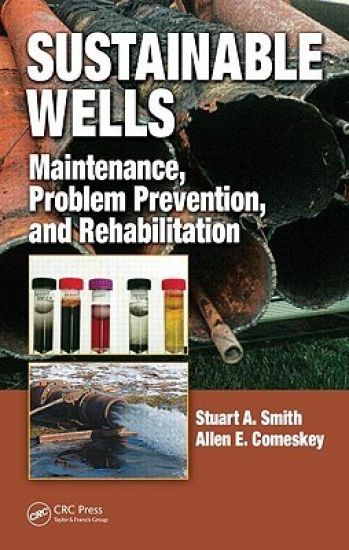
Sustainable Wells

Sustainable Wells

Stuart A. Smith; Allen E. Comeskey

CRC Press Inc
2009
sidottu
No one has recorded when well digging started, but surely humans imitated elephants in digging holes in the sand to access cooler water that didn’t make the children sick. Eventually, humankind began to redesign, maintain, and repair the wells they constructed, but when wells became "commodities" in the twentieth century, this maintenance ethic was fogotten. Recapturing that ethic, Sustainable Wells: Maintenance, Problem Prevention, and Rehabilitation is a guide to keeping well systems operating at peak capacity. The book focuses on how to prevent and forestall problems, and manage the problems with wells as they age. Examining the many challenges that come with maintaining well performance, the book provides a comprehensive yet readable state-of-the-art summary of performance maintenance, problem prevention, and rehabilitation or restoration practice with the goal of sustaining optimal performance over the long run. Rather than focusing on a certain aspect of well cleaning, or a particular technical approach, it covers the scope of maintenance and rehabilitation, from planning to evaluation testing. It also addresses the crucial subjects of preventive design, maintenance monitoring from electrical to biofouling, and evaluation testing. An exploration of the subject without a vendor or strong regional bias, the book is based on the authors’ extensive hands-on experience serving well-operating clientele. In addition to water supply wells, it addresses the problems and maintenance issues of monitoring, plume control, and other "environmental" wells. Compiling information from existing literature into a single source, and combining that information with experience, the book provides recommendations based on historical performance. Copiously illustrated with approximately ninety black and white photographs, figures, and a color insert, the book reflects the changes in the profession that have occurred during the past decade or so. These features and more make this the first resource to turn to when devising solutions for maintaining and improving well performance.
The Geezers' Guide to Colorado Hikes

The Geezers' Guide to Colorado Hikes

Stuart A. Schneck; Ida I. Nakashima

University Press of Colorado
2002
nidottu
Written by two self-proclaimed "geezers" who have shared forty-six years of hiking together, The Geezers' Guide to Colorado Hikes is the first book aimed at hikers over the age of sixty, as well as not-yet-acclimated visitors to Colorado, who want a glorious outdoor experience with minimal accompanying pain. Fifty-six hikes are described that fit, in a graded fashion, the physical capabilities of most older hikers. While the majority of hikes listed are in the Denver / Boulder area and the nearby foothills, the authors have detailed several routes in Rocky Mountain National Park, Aspen, and Vail that will entice more ambitious readers up into the high Colorado Rockies. The Geezers' Guide to Colorado Hikes includes an overview of the physiology of altitude and aging, a summary of altitude-related medical problems, notes on hike preparation and what to pack, and 56 recommended hikes with: Degree of difficulty ratings, distances, e stimated round-trip time for the older hiker, starting altitude and elevation gain figures, driving direction, trail descriptions, and maps.
Monitoring and Remediation Wells

Monitoring and Remediation Wells

Stuart A. Smith

CRC Press Inc
1995
sidottu
There is a growing problem of performance degradation of wells and associated systems on sites where groundwater quality is monitored or remediation performed. This book acts as a valuable guide in keeping monitoring and pumping well systems operating to their best capacity. It addresses the need for and methods of environmental well maintenance and restoration. This guidebook to the causes of well deterioration, methods of well maintenance, and well restoration or well rehabilitation methods offers methods for prevention and control of deterioration. If you are a consumer of professional services in well rehabilitation, this book will help you get the most from your professional help. It you are a provider, it is an important source of information intended to help you do your job better and more safely.
Building Bridges

Building Bridges

Stuart A. Pizer

Analytic Press,U.S.
1998
sidottu
In Building Bridges, Stuart A. Pizer gives much-needed recognition to the central role of negotiation in the analytic relationship and in the therapeutic process. Building on a Winnicottian perspective that comprehends paradox as the condition for preserving an intrapsychic and relational "potential space," Pizer explores how the straddling of paradox requires an ongoing process of negotiation and demonstrates how such negotiation articulates the creative potential within the potential space of analysis.Following careful review of Winnicott's perspective on paradox-via the pairings of privacy and interrelatedness, isolation and interdependence, ruthlessness and concern, and the notion of transitional phenomena-Pizer locates these elemental paradoxes within the negotiations of an analytic process. Together, he observes, analyst and patient negotiate the boundaries, potentials, limits, tonalities, resistances, and meanings that determine the course of their clinical dialogue. Elaborating on the theme of a multiply constituted, "distributed" self, Pizer presents a model for the tolerance of paradox as a developmental achievement related to ways in which caretakers function as "transitional mirrors." He then explores the impact of trauma and dissociation on the child's ability to negotiate paradox and clarifies how negotiation of paradox differs from negotiation of conflict. Pizer also broadens the scope of his study by turning to negotiation theory and practices in the disciplines of law, diplomacy, and dispute resolution. Enlivened by numerous clinical vignettes and a richly detailed chronicle of an analytic case from its earliest negotiations to termination, Building Bridges adds a significant dimension to theoretical understanding and clinical practice. It is altogether a psychoanalytic work of our time.
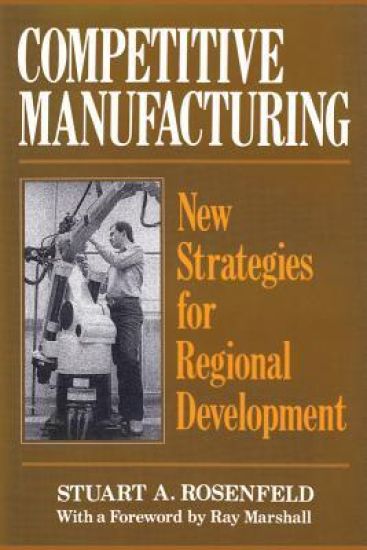
Competitive Manufacturing

Competitive Manufacturing

Stuart A. Rosenfeld

Transaction Publishers
1992
sidottu
Stuart A. Rosenfeld presents a timely analysis of the problems the United States and other industrialized countries face as they adjust from economies based on natural resources and goods to economies based on quality of human resources and high-performance, market-oriented organizations. Some of the questions raised include: Will American industry successfully face the competitive challenge of the global economy? Can US manufacturing raise productivity and innovate enough to remain healthy? Have the latest advances in process technology and management practice penetrated the rural industrial base? How can public policy help improve the competitiveness of the crucial manufacturing sector?This book challenges the conventional wisdom in economic development policy. Past state and local industrial policy focused on locational decisions, not on issues of competitiveness. Building the competitive advantage of industry is more important than promoting the competitive advantages of location. Incentives to modernize are more important than subsidies to locate.Competitive Manufacturing uses the rural South, the most industrialized rural region of the nation, to examine the strengths and weaknesses of manufacturing as the basis for economic growth. Using historical analysis, surveys, and intensive case studies, the author analyzes the technological capabilities of rural manufacturing, the factors that influence the decision to modernize, and the effects of technology on education and work. Comparative studies in Denmark and Italy point to new directions for US economic development policy.
Building Bridges

Building Bridges

Stuart A. Pizer

TAYLOR FRANCIS LTD
2021
nidottu
In Building Bridges, Stuart A. Pizer gives much-needed recognition to the central role of negotiation in the analytic relationship and in the therapeutic process. Building on a Winnicottian perspective that comprehends paradox as the condition for preserving an intrapsychic and relational “potential space,” Pizer explores how the straddling of paradox requires an ongoing process of negotiation and demonstrates how such negotiation articulates the creative potential within the potential space of analysis.Following careful review of Winnicott’s perspective on paradox—via the pairings of privacy and interrelatedness, isolation and interdependence, ruthlessness and concern, and the notion of transitional phenomena—Pizer locates these elemental paradoxes within the negotiations of an analytic process. Together, he observes, analyst and patient negotiate the boundaries, potentials, limits, tonalities, resistances, and meanings that determine the course of their clinical dialogue. Elaborating on the theme of a multiply constituted, “distributed” self, Pizer presents a model for the tolerance of paradox as a developmental achievement related to ways in which caretakers function as “transitional mirrors.” He then explores the impact of trauma and dissociation on the child’s ability to negotiate paradox and clarifies how negotiation of paradox differs from negotiation of conflict. Pizer also broadens the scope of his study by turning to negotiation theory and practices in the disciplines of law, diplomacy, and dispute resolution.Enlivened by numerous clinical vignettes and a richly detailed chronicle of an analytic case from its earliest negotiations to termination,Building Bridges adds a significant dimension to theoretical understanding and clinical practice. Now republished as a Classic Edition with an Introduction by Donnel Stern, this book is altogether a psychoanalytic work of our time.
Building Bridges

Building Bridges

Stuart A. Pizer

TAYLOR FRANCIS LTD
2021
sidottu
In Building Bridges, Stuart A. Pizer gives much-needed recognition to the central role of negotiation in the analytic relationship and in the therapeutic process. Building on a Winnicottian perspective that comprehends paradox as the condition for preserving an intrapsychic and relational “potential space,” Pizer explores how the straddling of paradox requires an ongoing process of negotiation and demonstrates how such negotiation articulates the creative potential within the potential space of analysis.Following careful review of Winnicott’s perspective on paradox—via the pairings of privacy and interrelatedness, isolation and interdependence, ruthlessness and concern, and the notion of transitional phenomena—Pizer locates these elemental paradoxes within the negotiations of an analytic process. Together, he observes, analyst and patient negotiate the boundaries, potentials, limits, tonalities, resistances, and meanings that determine the course of their clinical dialogue. Elaborating on the theme of a multiply constituted, “distributed” self, Pizer presents a model for the tolerance of paradox as a developmental achievement related to ways in which caretakers function as “transitional mirrors.” He then explores the impact of trauma and dissociation on the child’s ability to negotiate paradox and clarifies how negotiation of paradox differs from negotiation of conflict. Pizer also broadens the scope of his study by turning to negotiation theory and practices in the disciplines of law, diplomacy, and dispute resolution.Enlivened by numerous clinical vignettes and a richly detailed chronicle of an analytic case from its earliest negotiations to termination,Building Bridges adds a significant dimension to theoretical understanding and clinical practice. Now republished as a Classic Edition with an Introduction by Donnel Stern, this book is altogether a psychoanalytic work of our time.
Church Life and Thought in North Africa AD 200

Church Life and Thought in North Africa AD 200

Stuart A. Donaldson

Cambridge University Press
2013
pokkari
Stuart A. Donaldson was an admired scholar, Master of Magdalene College, Cambridge, and Vice-Chancellor of Cambridge University from 1912 to 1913. This book is a detailed study of the Church in North Africa in AD 200, and was first published in 1909. With specific focus on the writings of Tertullian, Donaldson writes in depth about Christian Doctrine and Practice in the North African Church. The text is made accessible to all by the careful translation of Greek and Latin passages into English. Donaldson discusses early North African Eucharist, creed and prayer, as well as explaining the threefold order of government in the Church. His other chapters explore North African Martyrs, Monatism and the Bible, and there is also an intriguing section on those other religions which stood to rival Christianity in 200 AD.
Loss Models: From Data to Decisions, 4e Student Solutions Manual

Loss Models: From Data to Decisions, 4e Student Solutions Manual

Stuart A. Klugman; Harry H. Panjer; Gordon E. Willmot

John Wiley Sons Inc
2012
nidottu
Student Solutions Manual to Accompany Loss Models: From Data to Decisions, Fourth Edition. This volume is organised around the principle that much of actuarial science consists of the construction and analysis of mathematical models which describe the process by which funds flow into and out of an insurance system.
Loss Models

Loss Models

Stuart A. Klugman; Harry H. Panjer; Gordon E. Willmot

John Wiley Sons Inc
2013
sidottu
An essential resource for constructing and analyzing advanced actuarial models Loss Models: Further Topics presents extended coverage of modeling through the use of tools related to risk theory, loss distributions, and survival models. The book uses these methods to construct and evaluate actuarial models in the fields of insurance and business. Providing an advanced study of actuarial methods, the book features extended discussions of risk modeling and risk measures, including Tail-Value-at-Risk. Loss Models: Further Topics contains additional material to accompany the Fourth Edition of Loss Models: From Data to Decisions, such as: Extreme value distributionsCoxian and related distributionsMixed Erlang distributionsComputational and analytical methods for aggregate claim modelsCounting processesCompound distributions with time-dependent claim amountsCopula modelsContinuous time ruin modelsInterpolation and smoothing The book is an essential reference for practicing actuaries and actuarial researchers who want to go beyond the material required for actuarial qualification. Loss Models: Further Topics is also an excellent resource for graduate students in the actuarial field.
Loss Models

Loss Models

Stuart A. Klugman; Harry H. Panjer; Gordon E. Willmot

Wiley-Blackwell
2019
sidottu
A guide that provides in-depth coverage of modeling techniques used throughout many branches of actuarial science, revised and updated Now in its fifth edition, Loss Models: From Data to Decisions puts the focus on material tested in the Society of Actuaries (SOA) newly revised Exams STAM (Short-Term Actuarial Mathematics) and LTAM (Long-Term Actuarial Mathematics). Updated to reflect these exam changes, this vital resource offers actuaries, and those aspiring to the profession, a practical approach to the concepts and techniques needed to succeed in the profession. The techniques are also valuable for anyone who uses loss data to build models for assessing risks of any kind. Loss Models contains a wealth of examples that highlight the real-world applications of the concepts presented, and puts the emphasis on calculations and spreadsheet implementation. With a focus on the loss process, the book reviews the essential quantitative techniques such as random variables, basic distributional quantities, and the recursive method, and discusses techniques for classifying and creating distributions. Parametric, non-parametric, and Bayesian estimation methods are thoroughly covered. In addition, the authors offer practical advice for choosing an appropriate model. This important text: • Presents a revised and updated edition of the classic guide for actuaries that aligns with newly introduced Exams STAM and LTAM • Contains a wealth of exercises taken from previous exams • Includes fresh and additional content related to the material required by the Society of Actuaries (SOA) and the Canadian Institute of Actuaries (CIA) • Offers a solutions manual available for further insight, and all the data sets and supplemental material are posted on a companion site Written for students and aspiring actuaries who are preparing to take the SOA examinations, Loss Models offers an essential guide to the concepts and techniques of actuarial science.
Loss Models: From Data to Decisions, 5e Student Solutions Manual

Loss Models: From Data to Decisions, 5e Student Solutions Manual

Stuart A. Klugman; Harry H. Panjer; Gordon E. Willmot

Wiley-Blackwell
2019
nidottu
Loss Models: From Data to Decisions, Fifth Edition continues to supply actuaries with a practical approach to the key concepts and techniques needed on the job. With updated material and extensive examples, the book successfully provides the essential methods for using available data to construct models for the frequency and severity of future adverse outcomes. The book continues to equip readers with the tools needed for the construction and analysis of mathematical models that describe the process by which funds flow into and out of an insurance system. Focusing on the loss process, the authors explore key quantitative techniques including random variables, basic distributional quantities, and the recursive method, and discuss techniques for classifying and creating distributions. Parametric, non-parametric, and Bayesian estimation methods are thoroughly covered along with advice for choosing an appropriate model. Throughout the book, numerous examples showcase the real-world applications of the presented concepts, with an emphasis on calculations and spreadsheet implementation. Loss Models: From Data to Decisions, Fifth Edition is an indispensable resource for students and aspiring actuaries who are preparing to take the SOA and CAS examinations. The book is also a valuable reference for professional actuaries, actuarial students, and anyone who works with loss and risk models.
Loss Models: From Data to Decisions, Book + Solutions Manual Set
A modern practical guide to building and using actuarial models.Loss Models: From Data to Decisions is organized around the principle that actuaries build models in order to analyze risks and make decisions about managing the risks based on conclusions drawn from the analysis. In practice, one begins with data and ends with a business decision. The book flows logically from this principle. It begins with a framework for model building and a description of frequency and severity loss data typically available to actuaries. Parametric models are emphasized throughout. The frequency and severity models are used in building aggregate loss models, in credibility-based pricing models, and in loss analysis over multiple time periods. Designed as both an educational text as well as a professional reference, Loss Models:Assumes little prior knowledge of insurance systemsFeatures many fascinating examples taken from insurance filesContains a major instructive case study continued through each chapterCovers the classical areas of risk theory and loss distributionsGives a practical but rigorous treatment of modern credibility theoryUses standard statistical concepts, methods, and notationProvides modern computational algorithms for implementing methodsIncludes free companion software available from an FTP siteDeals with many topics on CAS 4B and SOA 151 and 152 actuarial examsIncludes many exercises based on past CAS and SOA exams.
The European Commission and Europe's Democratic Process
This book examines the multitude of challenges which the European Commission faces: once the centre of political gravity in Europe’s integration process, the growth of Euroscepticism and the emergence of new institutional rivals threaten to undermine its status as an institution. Tracing the roots of the Commission’s decline from the early 1990s through to the Eurozone and refugee crises, Stuart A Brown draws on new evidence to illustrate why the EU’s executive now faces a battle for its future, and asks whether in the reforms of Jean-Claude Juncker the Commission may be facing its last chance. This study will appeal to students and scholars in EU institutions, politics, and public policy.
Building Bridges

Building Bridges

Stuart A. Pizer

Routledge
2014
nidottu
In Building Bridges, Stuart A. Pizer gives much-needed recognition to the central role of negotiation in the analytic relationship and in the therapeutic process. Building on a Winnicottian perspective that comprehends paradox as the condition for preserving an intrapsychic and relational "potential space," Pizer explores how the straddling of paradox requires an ongoing process of negotiation and demonstrates how such negotiation articulates the creative potential within the potential space of analysis.Following careful review of Winnicott's perspective on paradox-via the pairings of privacy and interrelatedness, isolation and interdependence, ruthlessness and concern, and the notion of transitional phenomena-Pizer locates these elemental paradoxes within the negotiations of an analytic process. Together, he observes, analyst and patient negotiate the boundaries, potentials, limits, tonalities, resistances, and meanings that determine the course of their clinical dialogue. Elaborating on the theme of a multiply constituted, "distributed" self, Pizer presents a model for the tolerance of paradox as a developmental achievement related to ways in which caretakers function as "transitional mirrors." He then explores the impact of trauma and dissociation on the child's ability to negotiate paradox and clarifies how negotiation of paradox differs from negotiation of conflict. Pizer also broadens the scope of his study by turning to negotiation theory and practices in the disciplines of law, diplomacy, and dispute resolution. Enlivened by numerous clinical vignettes and a richly detailed chronicle of an analytic case from its earliest negotiations to termination, Building Bridges adds a significant dimension to theoretical understanding and clinical practice. It is altogether a psychoanalytic work of our time.