Kirjojen hintavertailu. Mukana 11 244 527 kirjaa ja 12 kauppaa.

Kirjahaku

Etsi kirjoja tekijän nimen, kirjan nimen tai ISBN:n perusteella.

1000 tulosta hakusanalla Stuart J Reid

Probably Pistachio

Probably Pistachio

Stuart J. Murphy

HarperCollins
2016
nidottu
Nothing goes right for Jack all day long. He can't find his favorite sneakers, he spills milk on his math homework, and worst of all, he gets tuna fish for lunch. Will things ever get better? Readers will learn how to tell when something is certain, more likely, less likely, or impossible as Jack keeps hoping his streak of bad luck will break. Maybe, just maybe, pistachio ice cream for dessert will do the trick. But will it happen? Considering how Jack's day has been going, PROBABLY NOT!
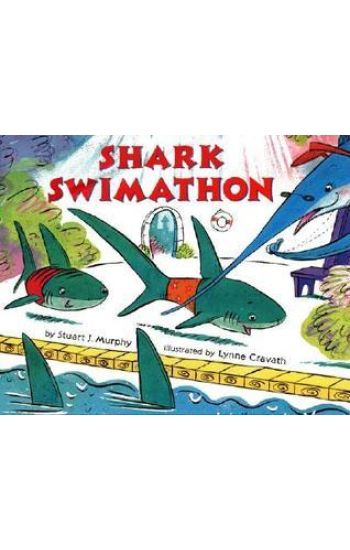
Shark Swimathon

Shark Swimathon

Stuart J. Murphy

HarperCollins
2016
nidottu
Shark Swimathon The Ocean City Sharks have to swim 75 laps by the end of the week, and every day they figure out how many laps are left to go. Swimming and subtraction are all part of the fun!
Seaweed Soup

Seaweed Soup

Stuart J. Murphy

HarperCollins
2016
nidottu
It's slimy. It's smelly. Its green and it's gooey. It's seaweed soup -- and its Turtle's favorite lunch! Turtle has made enough seaweed soup for everyone. But it looks awful and smells worse! Nobody wants to even taste it. How can they tell Turtle without hurting his feelings? As Turtle serves lunch to his reluctant guests, young readers can learn about matching sets (also called one-to-one correspondence) by keeping track of all the different bowls, cups, spoons, and napkins on the table. Lighthearted art and a surprise ending make this a story readers will eat up.
Let's Fly a Kite

Let's Fly a Kite

Stuart J. Murphy

HarperCollins
2016
nidottu
Let's Fly a Kite When Bob and Hannah split something, the two pieces had better be symmetrical--exactly the same. BUt to fly their kite, they'll have to learn something new--cooperation!
Treasure Map

Treasure Map

Stuart J. Murphy

HarperCollins
2016
nidottu
Matthew has found a treasure map, and soon the Elm Street Kids' Club is off on a quest. The map guides them into a wonderful, magical world, but it's the real-life math skills of understanding distance, scale, direction, and symbols that will help Matthew, Sheri, Meg, Danny, and Jed -- with some assistance from Petey the parrot -- find a treasure hidden fifty years ago.
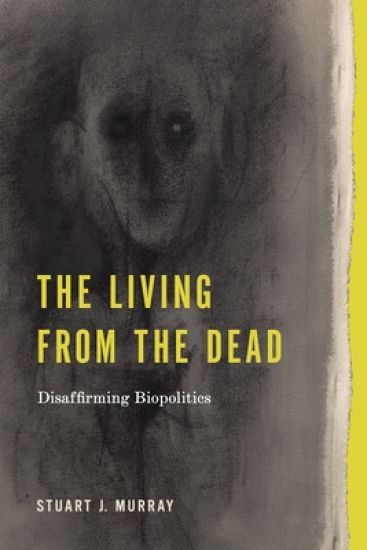
The Living from the Dead

The Living from the Dead

Stuart J. Murray

Pennsylvania State University Press
2022
pokkari
In a society that aims above all to safeguard life, how might we reckon with ethical responsibility when we are complicit in sacrificial economies that produce and tolerate death as a necessity of life?Arguing that biopower can be fully exposed only through an analysis of those whom society has “let die,” Stuart J. Murray employs a series of transdisciplinary case studies to uncover the structural and rhetorical conditions through which biopower works. These case studies include the concept of “sacrifice” in the “war” against COVID-19, where emergent cultures of pandemic “resistance” are explored alongside suicide bombings and military suicides; the California mass hunger strikes of 2013; legal cases involving “preventable” and “untimely” childhood deaths, exposing the irreconcilable claims of anti-vaxxers and Indigenous peoples; and the videorecording of the death of a disabled Black man. Murray demonstrates that active resistance to biopower inevitably reproduces tropes of “making live” and “letting die.” His counter to this fact is a critical stance of disaffirmation, one in which death disrupts the politics of life itself.A philosophically nuanced critique of biopower, The Living from the Dead is a meditation on life, death, power, language, and control in the twenty-first century. It will appeal to students and scholars of rhetoric, philosophy, and critical theory.
The Living from the Dead

The Living from the Dead

Stuart J. Murray

Pennsylvania State University Press
2022
sidottu
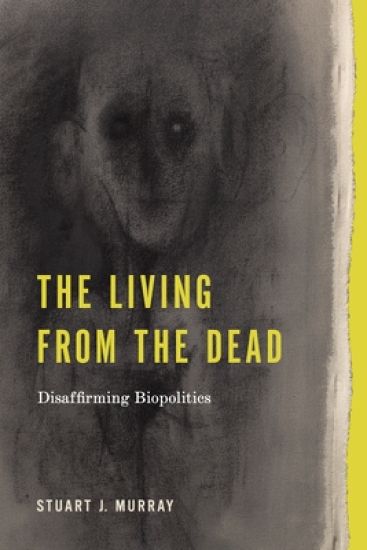
In a society that aims above all to safeguard life, how might we reckon with ethical responsibility when we are complicit in sacrificial economies that produce and tolerate death as a necessity of life?Arguing that biopower can be fully exposed only through an analysis of those whom society has “let die,” Stuart J. Murray employs a series of transdisciplinary case studies to uncover the structural and rhetorical conditions through which biopower works. These case studies include the concept of “sacrifice” in the “war” against COVID-19, where emergent cultures of pandemic “resistance” are explored alongside suicide bombings and military suicides; the California mass hunger strikes of 2013; legal cases involving “preventable” and “untimely” childhood deaths, exposing the irreconcilable claims of anti-vaxxers and Indigenous peoples; and the videorecording of the death of a disabled Black man. Murray demonstrates that active resistance to biopower inevitably reproduces tropes of “making live” and “letting die.” His counter to this fact is a critical stance of disaffirmation, one in which death disrupts the politics of life itself.A philosophically nuanced critique of biopower, The Living from the Dead is a meditation on life, death, power, language, and control in the twenty-first century. It will appeal to students and scholars of rhetoric, philosophy, and critical theory.
The Black Death in Egypt and England

The Black Death in Egypt and England

Stuart J. Borsch

University of Texas Press
2005
pokkari
Throughout the fourteenth century AD/eighth century H, waves of plague swept out of Central Asia and decimated populations from China to Iceland. So devastating was the Black Death across the Old World that some historians have compared its effects to those of a nuclear holocaust. As countries began to recover from the plague during the following century, sharp contrasts arose between the East, where societies slumped into long-term economic and social decline, and the West, where technological and social innovation set the stage for Europe's dominance into the twentieth century. Why were there such opposite outcomes from the same catastrophic event?In contrast to previous studies that have looked to differences between Islam and Christianity for the solution to the puzzle, this pioneering work proposes that a country's system of landholding primarily determined how successfully it recovered from the calamity of the Black Death. Stuart Borsch compares the specific cases of Egypt and England, countries whose economies were based in agriculture and whose pre-plague levels of total and agrarian gross domestic product were roughly equivalent. Undertaking a thorough analysis of medieval economic data, he cogently explains why Egypt's centralized and urban landholding system was unable to adapt to massive depopulation, while England's localized and rural landholding system had fully recovered by the year 1500.
An Emotional Gauntlet: From Life in Peacetime America to the War in European Skies
Stuart J. Wright tells the gripping story of a World War II American aircrew flying missions from England in a B-24 Liberator bomber they nicknamed Corky. This is a true account based on years of research and correspondence with crewmembers and their families. Wright adds a dimension rarely explored in other World War II memoirs and narratives, beginning the chronicle during peacetime when the men of the aircrew are introduced as civilians-kids during the 1920s. As they mature through the years of the Great Depression to face a world at war, questions are raised about "just" and "unjust" wars, imperialism, and patriotism. Jingoistic sentimentality is resisted in favor of objectivity, as the feelings and motivations of the crewmembers are explored: the Chinese American air gunner had hoped to serve in the U.S. Army Air Force to fight against the Japanese invaders of his homeland; the Jewish navigator felt compelled to join the battle against Nazi Germany. In recounting the harrowing conditions and horrors of bombing missions over Europe, An Emotional Gauntlet emphasizes the interpersonal relationships within the crew and the spirit these men shared. Corky's crew served under Operations Officer Major James Stewart (the Hollywood movie star.) They often returned from arduous bombing missions to sleep in half-empty huts--their friends in other planes had not been so lucky. Pilot Jack Nortridge regularly assured his crew, "If you fly with me, I'm going to bring you home." This book is a testament to their strength and determination.
An Emotional Gauntlet

An Emotional Gauntlet

Stuart J. Wright

University of Wisconsin Press
2008
nidottu
Stuart J. Wright tells the gripping story of a World War II American aircrew of the 453rd Bomb Group serving under Operations Officer Major James Stewart (the Hollywood movie star) and flying missions from England in a B-24 Liberator bomber nicknamed Corky, In recounting the harrowing conditions and horrors of bombing missions over Europe, An Emotional Gauntlet emphasizes the relationships among the crew and the spirit these men shared. In this true account based on years of research and correspondence with crewmembers and their families, Wright adds a dimension rarely explored in other World War II narratives, beginning the chronicle during peacetime and introducing the crewmen as civilians--kids during the 1920s. An Emotional Gauntlet follows the men as they mature through the years of the Great Depression to face a world at war and begin to raise questions about just and unjust wars, imperialism, and patriotism.
XML and Scientific Markup Languages for Chemists
XML and Scientific Markup Languages for Chemists introduces readers to the Extensible Markup Language (XML) and other Markup Languages (MLs) derived from XML that are pertinent to chemistry. The book describes translating information into XML format, as well as using XML to organize, link, and mine information. It provides a framework for using other chemistry-related MLs including Chemistry Markup Language (CML). A CD-ROM contains example files from the book, samples of different markup languages, and trial versions of various XML tools. Anyone dealing with chemical informatics will find this an invaluable resource.
Clinical Trials

Clinical Trials

Stuart J. Pocock

John Wiley Sons Inc
1983
sidottu
Clinical Trials A Practical Approach Stuart J. Pocock Professor of Medical Statistics and Director of Clinical Trials Research Group London School of Hygiene and Tropical Medicine, University of London, UK It is well recognized that randomized clinical trials play an important role in the evaluation of new treatments. However, the reliable achievement of genuine patient benefit depends on clinical trials being well organized and conducted according to proper ethical and scientific standards. This comprehensive text on the principles and practice of clinical trials gives a detailed account of how to conduct trials and also provides a general perspective on their historical development, current status and future strategy. Each aspect of clinical trial design, analysis and interpretation is described in a non-technical manner and illustrated by actual trials. In particular, relevant statistical methods are clearly explained for clinicians and others without statistical training. This book will be essential reading for clinicians, statisticians, medical students, the pharmaceutical industry and anyone wishing to acquire a true understanding of clinical trials. ‘The purpose of this book is to explain in practical terms the basic principles of clinical trials. This book succeeds admirably in this aim and is accessible to a wide audience, including clinical investigators, statisticians, and those involved in data management and the administration of clinical trials.’ Controlled Clinical Trials ‘This book is an outstanding practical guide to the design, planning, execution and analysis of clinical trials.’ Journal of the Royal Society of Medicine ‘Pocock’s book is a helpful and thoughtful one of considerable value to clinicians who are drawn into clinical trials.’ The Lancet ‘This is an excellent book which will be of value to anyone beginning work in the field of clinical trials, but at the same time it provides a useful reference work for those already experienced in clinical trials.’ Trends in Pharmacological Sciences

Prehistory of the Americas

Prehistory of the Americas

Stuart J. Fiedel

Cambridge University Press
1992
pokkari
Fiedel’s book exploring the development of the prehistoric cultures of North, Central and South America from about 10,000 BC to AD 1530 has been updated to include discussion of recent discoveries and analyses of their implications. Prehistory of the Americas examines archaeological evidence of the earliest human migration from Asia to the New World; the rapid expansion of Paleo-Indian hunters; the adaptations of archaic hunter-gatherers to post-Ice Age life; the origins and spread of farming and village life; and the rise and fall of chiefdoms and states. The author describes how different regions in the New World evolved, affected by a variety of factors ranging from technological developments to climate change. He compares the evolution of New World prehistory with that of Old World cultures. Discussion of the development of American archaeology, from the early European encounters with native Americans to the ‘new’ archaeology, is also included.
100 Questions & Answers About Hip Replacement

100 Questions & Answers About Hip Replacement

Stuart J. Fischer

Jones and Bartlett Publishers, Inc
2010
nidottu
Endorsed by the American Academy of Orthopedic Surgeons!Whether you or a relative have recently had a hip replacement or are considering or planning the surgery, this book offers help! Questions amp Answers About Hip Replacement gives authoritative, practical answers to your questions about the causes of joint disease and the details of surgery to relieve pain and improve function of the hip. This book provides sources of support from both the doctor's and patient's viewpoints. Dr. Fischer, an expert orthopedic surgeon, covers topics such as hip disease, diagnosis, treatment options, surgery, risks, and possible complications. An invaluable resource for anyone coping with the physical and emotional turmoil of hip replacement!
Nationalist Passions

Nationalist Passions

Stuart J. Kaufman

Cornell University Press
2015
sidottu
Nationalist and ethnic conflict can take many forms, from genocidal violence and civil war to protest movements and peaceful squabbles in democracies. Nationalist Passions poses a stark challenge to extreme rationalist understandings of political conflict. Stuart J. Kaufman elaborates a compelling theory of ethnic politics to explain why ethnic violence erupts in some contexts and how peace is maintained in others. At the core of Kaufman's theory is an assertion that conflicts are initiated due to popular "symbolic predispositions"—biases of all kinds—and perceptions of threat. Kaufman puts his theory to the test in a range of conflicts. He examines some highly violent episodes, among them the Muslim rebellion in the southern Philippines beginning in the 1970s; the civil war in southern Sudan that began in the 1980s; and the Rwanda genocide of 1994. Kaufman also analyzes other situations in which leaders attempted to tame the violence that nationalist passions can generate. In India, Mahatma Gandhi mobilized an overtly nonviolent movement but failed in his efforts to prevent the rise of Muslim-Hindu communal violence. In South Africa, Nelson Mandela and F. W. de Klerk ended apartheid, but not without terrible cost—more than fifteen thousand people died while the negotiations were under way. In Tanzania, however, Julius Nyerere led one of the few ethnically diverse countries in the world with almost no ethnic violence. Nationalist Passions is essential reading for policymakers, international aid workers, and all others who seek to find the best possible outcomes for future internal and interstate clashes.
Modern Hatreds

Modern Hatreds

Stuart J. Kaufman

Cornell University Press
2001
pokkari
Ethnic conflict has been the driving force of wars all over the world, yet it remains an enigma. What is it about ethnicity that breaks countries apart and drives people to acts of savage violence against their lifelong neighbors? Stuart Kaufman rejects the notion of permanent "ancient hatreds" as the answer. Dissatisfied as well with a purely rationalist explanation, he finds the roots of ethnic violence in myths and symbols, the stories ethnic groups tell about who they are. Ethnic wars, Kaufman argues, result from the politics of these myths and symbols—appeals to flags and faded glories that aim to stir emotions rather than to address interests. Popular hostility based on these myths impels groups to follow extremist leaders invoking such emotion-laden ethnic symbols. If ethnic domination becomes their goal, ethnic war is the likely result. Kaufman examines contemporary ethnic wars in the Caucasus and southeastern Europe. Drawing on information from a variety of sources, including visits to the regions and dozens of personal interviews, he demonstrates that diplomacy and economic incentives are not enough to prevent or end ethnic wars. The key to real conflict resolution is peacebuilding—the often-overlooked effort by nongovernmental organizations to change hostile attitudes at both the elite and the grassroots levels.
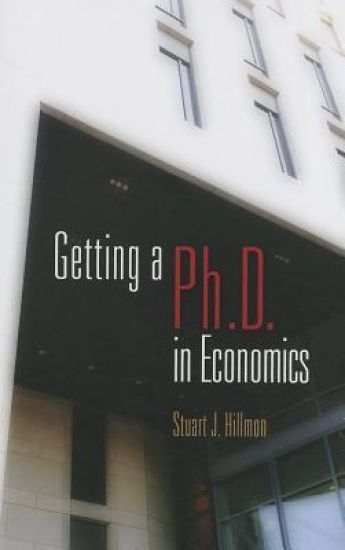
Getting a PhD in Economics

Getting a PhD in Economics

Stuart J. Hillmon

University of Pennsylvania Press
2014
pokkari
Considering a graduate degree in economics? Good choice: the twenty-first-century financial crisis and recession have underscored the relevance of experts who know how the economy works, should work, and could work. However, Ph.D. programs in economics are extremely competitive, with a high rate of attrition and a median time of seven years to completion. Also, economic professions come in many shapes and sizes, and while a doctoral degree is crucial training for some, it is less beneficial for others. How do you know whether a Ph.D. in economics is for you? How do you choose the right program-and how do you get the right program to choose you? And once you've survived years of rigorous and specialized training, how do you turn your degree into a lifelong career and meaningful vocation? Getting a Ph.D. in Economics is the first manual designed to meet the specific needs of aspiring and matriculating graduate students of economics. With the perspective of a veteran, Stuart J. Hillmon walks the reader though the entire experience-from the Ph.D. admissions process to arduous first-year coursework and qualifying exams to armoring up for the volatile job market. Hillmon identifies the pitfalls at each stage and offers no-holds-barred advice on how to navigate them. Honest, hard-hitting, and at times hilarious, this insider insight will equip students and prospective students with the tools to make the most of their graduate experience and to give them an edge in an increasingly competitive field.
Red Alert!

Red Alert!

Stuart J. Foster

Peter Lang Publishing Inc
2000
nidottu
Typically referred to as the red scare or McCarthy era, the period from 1947 to 1954 proved particularly exacting for educators in America's public schools. Red Alert details the profound impact that the red scare had on educational policy and practice as well as examines professional educators' cautious response to anti-communist repression. In particular, Red Alert focuses on the work of the National Education Association's Defense Commission and its singular, and often fruitless, efforts to thwart red scare attack.