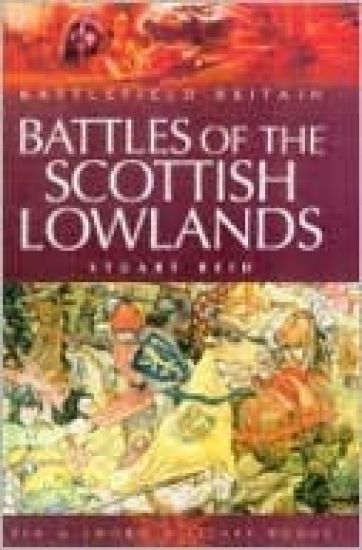
This historical guide retells, in graphic detail, the story of nine of the most important battles to be fought in Scotland south of the Highland Line. By skilful use of maps, diagrams and photographs the author explains the complex sequence of events that makes these encounters so fascinating. He provides a detailed tour of each battleground as it appears to the visitor in the present day and rediscovers the lanes and by-ways tramped by soldiers hundreds of years ago.
The 1640s were one of the most exciting and bloody decades in British and Irish history. This book interweaves the narrative threads in each theatre of conflict to provide an holistic account and analysis of the wars in and between England, Scotland and Ireland, from the Covenanter Rebellion to the execution of Charles I.Politics and War in the Three Stuart Kingdoms, 1637-49- stresses the need to examine the English Civil War within the context of the other conflicts in Scotland and Ireland, and vice versa- explores key themes, such as the relationship between armies and elites- assesses the extent to which the wars in and between the kingdoms were the product of religious and ethnic hatredUsing a wide range of original and secondary sources, and incorporating the latest research, David Scott offers a challenging new interpretation of political structure and dynamics in the warring Stuart realms.
The 1640s were one of the most exciting and bloody decades in British and Irish history. This book interweaves the narrative threads in each theatre of conflict to provide an holistic account and analysis of the wars in and between England, Scotland and Ireland, from the Covenanter Rebellion to the execution of Charles I.Politics and War in the Three Stuart Kingdoms, 1637-49- stresses the need to examine the English Civil War within the context of the other conflicts in Scotland and Ireland, and vice versa- explores key themes, such as the relationship between armies and elites- assesses the extent to which the wars in and between the kingdoms were the product of religious and ethnic hatredUsing a wide range of original and secondary sources, and incorporating the latest research, David Scott offers a challenging new interpretation of political structure and dynamics in the warring Stuart realms.
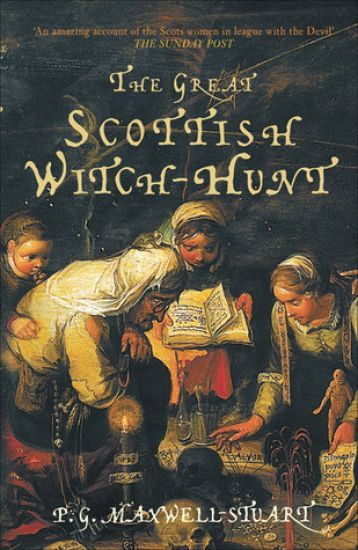
Scotland, in common with the rest of Europe, was troubled from time to time by outbreaks of witchcraft which the authorities sought to contain and then to suppress, and the outbreak of 1658-1662 is generally agreed to represent the high water mark of Scottish persecution. These were peculiar years for Scotland. This work deals with this subject.
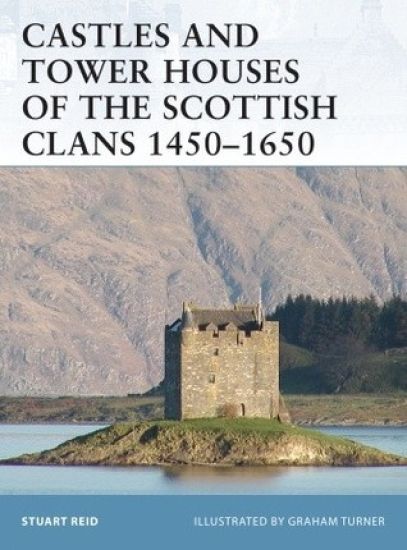
Scottish castles and Tower Houses evolved as fortified dwellings that were erected in an environment of weak royal authority and feuding between rival clans. They demonstrated a strong and highly successful design that formed the core of many larger structures. Many of them continued to be inhabited long after the threat of unwanted visitors had diminished and remain excellently preserved for visitors and historians. This book examines these castles and Tower Houses, focusing on their distinctive style that flourished in Scotland in the 16th and 17th centuries.
Biography He was born in Glasgow, on Charlotte Street, the son of Aberdeen banker, Alexander Blackie (d.1846) and Helen Stodart. He was educated at the New Academy and afterwards at the Marischal College, in Aberdeen, where his father was manager of the Commercial Bank. After attending classes at Edinburgh University (1825-1826), Blackie spent three years at Aberdeen as a student of theology. In 1829 he went to Germany, and after studying at G ttingen and Berlin (where he came under the influence of Heeren, Otfried M ller, Schleiermacher, Neander and B ckh) he accompanied Bunsen to Italy and Rome. The years spent abroad extinguished his former wish to enter the Church, and at his father's desire he gave himself up to the study of law. He had already, in 1824, been placed in a lawyer's office, but only remained there six months. By the time he was admitted a member of the Faculty of Advocates (1834) he had acquired a strong love of the classics and a taste for letters in general. A translation of Goethe's Faust, which he published in 1834, met with considerable success, winning the approbation of Carlyle. After a year or two of desultory literary work he was (May 1839) appointed to the newly instituted chair of Humanity (Latin) in the Marischal College. Difficulties arose in the way of his installation, owing to the action of the Presbytery on his refusing to sign unreservedly the Confession of Faith; but these were eventually overcome, and he took up his duties as professor in November 1841. In the following year he married. From the first his professorial lectures were conspicuous for the unconventional enthusiasm with which he endeavoured to revivify the study of the classics; and his growing reputation, added to the attention excited by a translation of Aeschylus which he published in 1850, led to his appointment in 1852 to the professorship of Greek at Edinburgh University, in succession to George Dunbar, a post which he continued to hold for thirty years.