Kirjahaku
Etsi kirjoja tekijän nimen, kirjan nimen tai ISBN:n perusteella.
1000 tulosta hakusanalla Studio Margo
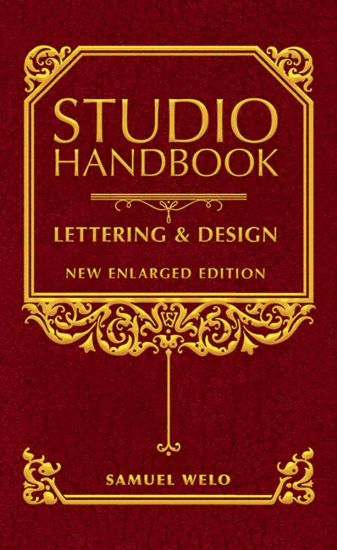
This beautifully designed little book reflects the elegance of the Art Deco period and will prove a useful and entertaining resource for modern typographers and graphic artists. In addition to demonstrating the appeal and effectiveness of great lettering, it abounds in material that designers can adapt -- borders, ribbons, dingbats, rules, and more. Like the 1931 first edition, it is printed in two colors and graced with a decorative Flexibound binding.
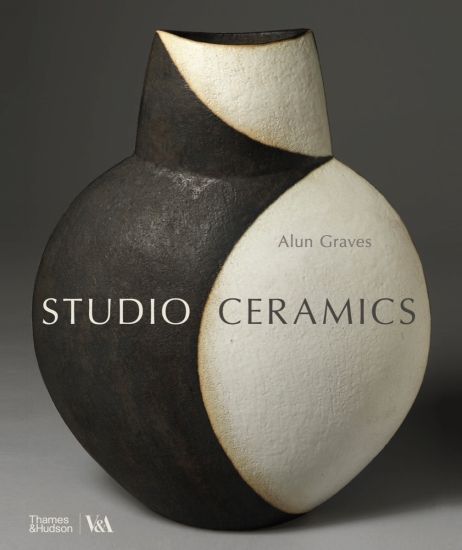
Studio Ceramics (Victoria and Albert Museum)
Alun Graves; Tanya Harrod
THAMES HUDSON LTD
2023
sidottu
A magnificent catalogue of the V&A's collection of twentieth-century and contemporary British ceramics. Contemporary ceramicists working in Britain, including Rachel Kneebone, Grayson Perry and Edmund de Waal, are part of a broader international group of artists experimenting with clay, considering how it intersects and works in dialogue with other art forms and with culture at large. Recent experimentation with the medium owes much to the rapid evolution of ceramics into an expanded field, and to the work of mid- to late 20th-century potters and their reinvention of ceramics as a radical and contemporary art practice. The pioneering methods and rethinking of form in the work of exponents such as Bernard Leach, Michael Cardew, Lucie Rie, Hans Coper and Alan Caiger-Smith – whose reference points were drawn from East Asia, Africa, the ancient Mediterranean and the Middle East as much as from their own heritage – continue to influence and inspire contemporary makers. In his introductory essay, Alun Graves, Senior Curator at the Victoria and Albert Museum, London, provides all lovers of ceramics – collectors, practitioners, historians and those interested in modern and contemporary art and crafts – with the historical context, documenting the medium’s shift into an expressive, and sometimes interventionist, art form. An extensive visual catalogue, Studio Ceramics is the primary reference for 20th-century and contemporary British studio ceramics, and a record of the national collection of British ceramics held at the V&A.
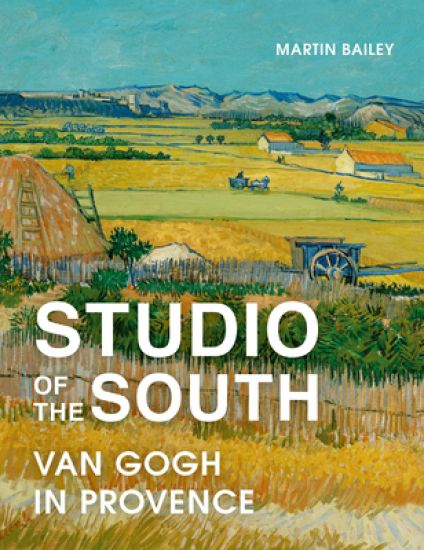
"Martin Bailey has written some of the most interesting books on Vincent’s life in France, where he produced his greatest work” - Johan van Gogh, grandson of Theo, the artist’s brotherStudio of the South tells the story of Van Gogh’s stay in Arles, when his powers were at their height. For Van Gogh, the south of France was an exciting new land, bursting with life. He walked into the hills inspired by the landscapes, and painted harvest scenes in the heat of summer. He visited a fishing village where he saw the Mediterranean for the first time, energetically capturing it in paint. He painted portraits of friends and locals, and flower still life paintings, culminating in the now iconic Sunflowers. He rented the Yellow House, and gradually did it up, calling it ‘an artist’s house’, inviting Paul Gauguin to join him there. This encounter was to have a profound impact on both of the artists. They painted side by side, their collaboration coming to a dramatic end a few months later. The difficulties Van Gogh faced led to his eventual decision to retreat to the asylum at Saint-Remy. Based on extensive original research, the book reveals discoveries that throw new light on the legendary artist and give a definitive account of his fifteen months in Provence, including his time at the Yellow House, his collaboration with Gauguin and its tragic and shocking ending.
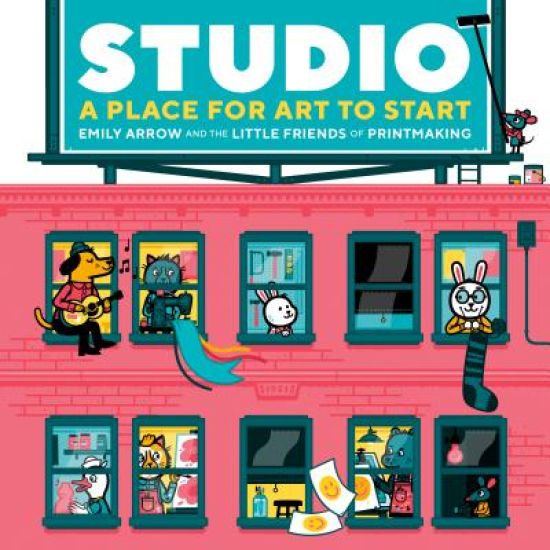
Studio: A Place For Art To Start
Emily Arrow; James Buchanan; Melissa Buchanan
Prentice Hall Press
2020
sidottu
In this prequel to "The Bomber", young Annika Bengtzon has taken a summer job at a Swedish tabloid. Before she can even begin to find her feet in the gritty, fast-paced world of journalism, fuelled by ambition and hampered by inexperience, she becomes immersed in a case of rape and murder.
An extensive history of The Royal Shakespeare Company's studio theatre, Studio Shakespeare: The Royal Shakespeare Company at The Other Place also includes a biography of its founder and first artistic director, Mary Ann 'Buzz' Goodbody (1947-75). Alycia Smith-Howard reveals how, as a socialist, feminist, and the RSC's first female director, Goodbody sought to invigorate classical theatre and its approach to producing the works of Shakespeare. The Other Place, which opened its doors in 1973, was her greatest achievement, and was, in the words of Ron Daniels of the American Repertory Theatre, 'a training ground for an entire generation of Shakespeare actors and directors'. The volume examines Shakespeare productions at The Other Place from 1973 to its closure in 1989. The author's sources include Goodbody's 'Mission Statement' for the studio theatre as well as other previously unavailable materials such as Goodbody's private papers, journal entries, director's notes and correspondence. In addition, it contains interviews and commentary from such theatrical luminaries as Judi Dench, Ian McKellen, Ben Kingsley, Cicely Berry, Trevor Nunn, Peter Hall, Patrick Stewart, and many others. Smith-Howard's narrative discusses productions of twelve plays at The Other Place, among them King Lear (1974), Hamlet (1975), The Merchant of Venice (1978), Antony and Cleopatra (1982), King John (1988) and Othello (1989). The cast lists of productions at The Other Place are included in an appendix. Smith-Howard's study captures the spirit and ethos of an important and radical exercise in theatre which influenced the mainstream work of The Royal Shakespeare Company. It is a lucid, compelling and valuable contribution not only to Shakespeare studies but also to theatre history. This book, as directors once said, 'has legs'.
Meet more than 50 master wood craftsmen who reveal new designs in this book dedicated exclusively to the emerging studio furniture movement. Furniture ranges from footstools to elaborate entertainment and office centers, each exquisite and unique in its execution. Featured are craftsmen who work in local lumber they mill on their private lots alongside artists who inlay precious, exotic woods from far corners of the earth. Some celebrate the natural art in the edges and grain of wood while others contort wood into seemingly impossible balances and configurations. The vast range of imagination and craftsmanship will delight as you peruse this collection of over 400 lush images, most of them never before seen in print. You'll revisit each page time and again.
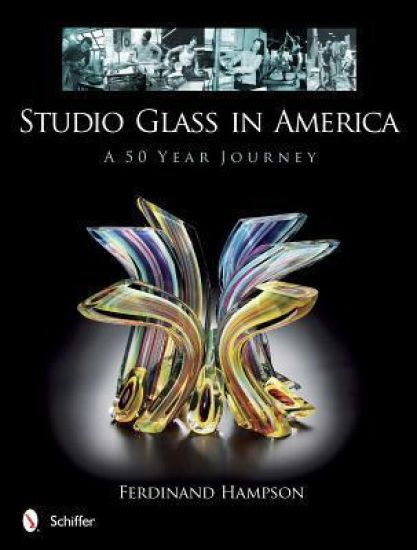
The American studio glass movement can be traced to 1962, when Harvey Littleton, a professor of ceramics at the University of Wisconsin, had a dream to alter molten glass into unique forms in a studio setting and teach his techniques. For the first time in its 3,500-year history, glass production, that had been limited to factory settings, moved to the artists' studios and became a part of an academic program in the fine arts. Since then, glass has become the fastest growing studio art medium throughout the world. This book takes us from the first workshop in a Toledo, Ohio garage, to reveal decade by decade the unprecedented growth of studio glass. Through high-quality, detailed images and stories, this retrospective of 50 top artists is a collector's dream. Noted art dealer Ferdinand Hampson offers a unique perspective on this exciting evolution.
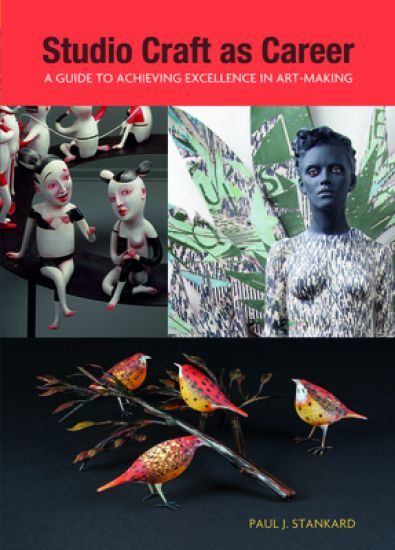
This unusual two-section resource directs creative people toward their personal best. Internationally renowned artist Paul Stankard provides a practical, personal guide outlining his philosophy based on self-directed learning. First, by referencing his own career path, he offers readers what he yearned for during his 45-year journey toward international acclaim: a practical, intimate guide showing how successful artists achieve excellence in their work. Next, he introduces a cross section of dozens of masters who are respected by experts on the American craft landscape. Stankard walks you through a selection of 150+ top works from these artists, each of whom also offers candid advice. With this guide, learn to compete with the best from the past and the present as you pursue a personal journey in the studio, or consider a career in the arts. This book promotes self-directed learning, and is destined to be a classic.
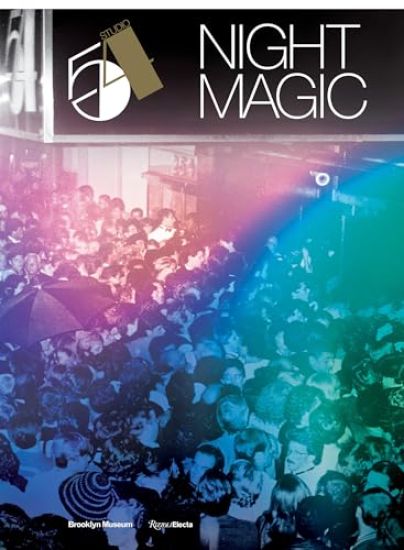
From the moment it opened in 1977, Studio 54 celebrated spectacle and promised a never-ending parade of anything goes. Although it existed for only three years, it served as a catalyst that brought together some of the most famous, creative, and strangest people in the world. It quickly became known for its all-ages celebrity guest list and its uniquely chic clientele of superstars and freaks of all races and sexual preferences who would often show up half-dressed or in costume. From the cutting-edge lighting displays and sound system to its elaborate sets that would change on a whim, altering the environment and ambiance, it was the beginning of nightclub as performance art. Now, the Brooklyn Museum is staging the first exhibition featuring the nightclub as a bellwether of New York City cultural life. More than 650 objects--spanning fashion, photography, drawings, film, and music--as well as video, film, and soundtrack, create an immersive experience, with an exhibition design inspired by the club's original lighting and atmosphere. Highlights include never-before-published costume sketches by artist Antonio Lopez and newly discovered set designs, as well as ephemera salvaged by the original club staff and interviews with the cultural luminaries who were there. Telling the story of this legendary club, as well as serving as a companion to the exhibition, Studio 54: Night Magic serves as a document of the era, depicting the wild energy and provocative creativity of this seminal cultural moment.
Studio Thinking from the Start
Jillian Hogan; Lois Hetland; Diane B. Jacquith; Ellen Winner
Teachers' College Press
2018
nidottu
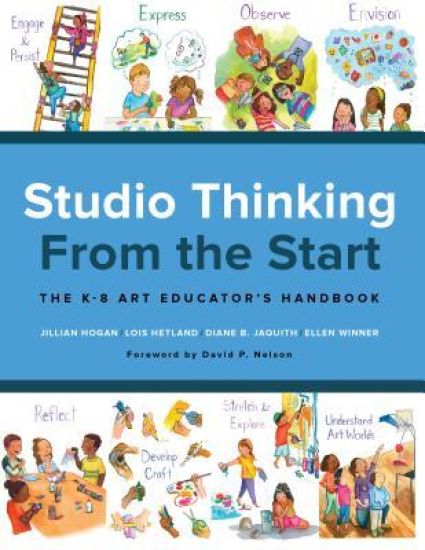
Students of all ages can learn to think like artists! Studio Thinking: The Real Benefits of Visual Arts Education changed the conversation about quality arts education. Now, a decade later, this new publication shows how the eight Studio Habits of Mind and four Studio Structures can be used successfully with younger students in a range of socioeconomic contexts and school environments.Book Features:Habit-by-habit definitions, classroom examples, and related visual artist exemplars emphasizing contemporary artists.Full color mini-posters teachers can hang in their classrooms to illustrate each of the eight Studio Habits of Mind.Sample templates for students to use as they plan, reflect upon, and talk about works of art.Innovative approaches to assessment and strategies for implementation.Photos throughout the book of Studio Thinking signage and activities, students making art, and student artworks.Suggestions for using Studio Thinking for arts education advocacy.COMPANION VOLUME? Studio Thinking 2: The Real Benefits of Visual Arts Education, Second Edition, Lois Hetland, Ellen Winner, Shirley Veenema, and Kimberly M. Sheridan.
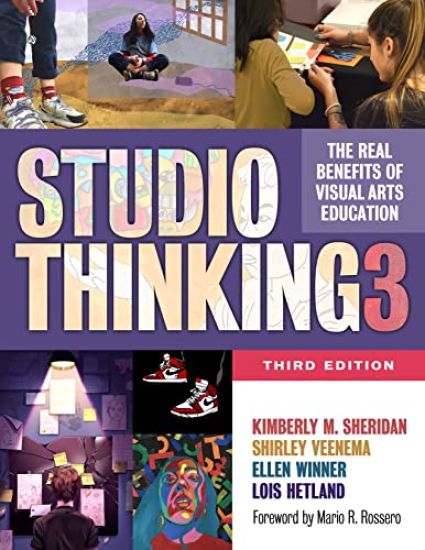
Studio Thinking 3
Kimberly M. Sheridan; Shirley Veenema; Ellen Winner; Lois Hetland; Mario R. Rossero
TEACHERS' COLLEGE PRESS
2022
nidottu
Studio Thinking 3 is a new edition of a now-classic text, a research-based account of teaching and learning in high school studio arts classes. It poses a framework that identifies eight habits of mind taught in visual arts and four studio structures by which they are taught. This edition includes new material about how the framework has been used since the original study, with new perspectives from artist-teachers who currently apply the Studio Thinking Framework in their own practice. It also reviews how contemporary organizations, educators, and researchers outside the arts have utilized the framework, highlighting its flexibility to inform teaching and learning. The authors have added a new chapter on assessment to introduce the practical and thoughtful ways that teachers are using Studio Thinking to assess and evaluate students' work, working processes, and thinking in the arts.The first edition of this bestseller was featured in The New York Times and The Boston Globe for its groundbreaking research on the positive effects of art education on student learning across the curriculum. Studio Thinking 3 will help advocates explain arts education to policymakers, support art teachers in developing and refining their teaching and assessment practices, and assist educators in other disciplines to learn from existing practices in arts education.Book Features:An explanation of "art as thinking" that unpacks and clarifies how teaching art is the process of teaching thinking.An account of what Studio Thinking looks like in diverse contemporary settings.Models of studio arts instruction that illuminate what educators are doing to support students' learning in the arts and why they are doing it that way. A new chapter with rich examples of approaches to assessment.New analyses on how studio art teachers support learner agency. Updated examples from practice showing how artist-teachers are using the Studio Thinking Framework.Full-color images with examples of student art.
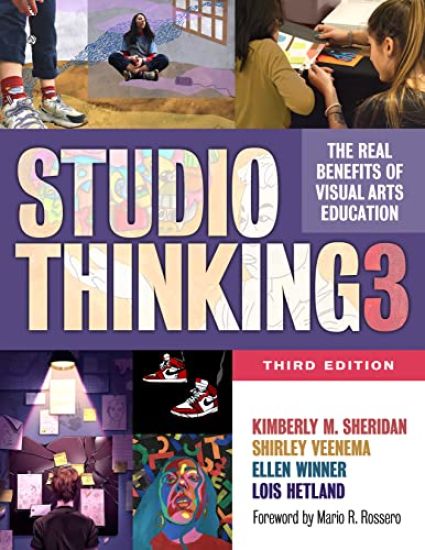
Studio Thinking 3
Kimberly M. Sheridan; Shirley Veenema; Ellen Winner; Lois Hetland; Mario R. Rossero
TEACHERS' COLLEGE PRESS
2022
sidottu
Studio Thinking 3 is a new edition of a now-classic text, a research-based account of teaching and learning in high school studio arts classes. It poses a framework that identifies eight habits of mind taught in visual arts and four studio structures by which they are taught. This edition includes new material about how the framework has been used since the original study, with new perspectives from artist-teachers who currently apply the Studio Thinking Framework in their own practice. It also reviews how contemporary organizations, educators, and researchers outside the arts have utilized the framework, highlighting its flexibility to inform teaching and learning. The authors have added a new chapter on assessment to introduce the practical and thoughtful ways that teachers are using Studio Thinking to assess and evaluate students' work, working processes, and thinking in the arts.The first edition of this bestseller was featured in The New York Times and The Boston Globe for its groundbreaking research on the positive effects of art education on student learning across the curriculum. Studio Thinking 3 will help advocates explain arts education to policymakers, support art teachers in developing and refining their teaching and assessment practices, and assist educators in other disciplines to learn from existing practices in arts education.Book Features:An explanation of "art as thinking" that unpacks and clarifies how teaching art is the process of teaching thinking.An account of what Studio Thinking looks like in diverse contemporary settings.Models of studio arts instruction that illuminate what educators are doing to support students' learning in the arts and why they are doing it that way. A new chapter with rich examples of approaches to assessment.New analyses on how studio art teachers support learner agency. Updated examples from practice showing how artist-teachers are using the Studio Thinking Framework.Full-color images with examples of student art.
Foreword- PART I BASICS - 1. Introduction2. Studio Planning3. Sound Insulation4. Reverberation5. Air-Conditioning System Noise Limits6. Sound-Retardant Windows and Doors7. Instrument Isolation for Multiple Track Recording8. Studio Testing9. Plumbing Noise Control10. Vibration Isolation11. Suspended Acoustic Ceiling12. Elevators13. Interior Decor of Studios14. Sound Power Versus Sound PressurePART II STUDIOS - 15. Control Rooms16. ADR Studios17. Re-Recording Studios18. Reverberation Chambers19. Motion Picture and TV Stages20. Music Recording Studios21. Review Rooms22. Future Sound-Recording Studios23. Canopied AmphitheatersPART III ELECTROACOUSTICS - 24. Microphone Properties25. Loudspeaker Sensitivity26. Electronic Light Dimmers - IndexSound recording studios are often built like showcases, either to attract clientele or to provide a distinctive image for the industry. They are, thus, like people, in that no two of them are alike. Yet, all such structures have to have certain common acoustic elements if they are to function to the best artistic and economic advantages. The enclosures must be sufficiently quiet, exhibit proper reverberatory conditions (often required to be adjustable), be devoid of parallelisms between hard surfaces, have no sound-focusing concave surfaces, be free of vibrations from external and internal sources, etc. It is for the purpose of providing first design principles of sound recording studios that this book has been prepared, so that for any given size structure, satisfactory vocal and instrumental recording conditions can be established therein. All equations involving physical quantities are given both in the English and the MKS system of measurement. Also, when the description of existing studios includes linear dimensions, their metric equivalents follow in parenthesis, as is also done for such quantities as surface density (mass per unit area) and sound absorption.
Studio Job: The Book of Job
Job Smeets; Nynke Tynagel
Rizzoli International Publications
2010
sidottu
Playing off of what some see as the near-biblical intensity of Studio Job’s oeuvre, this monograph, their first, is titled The Book of Job. The lavish package resembles a traditional leather-bound bible featuring a number of custom-printing effects including raised bands on the spine of the hardcover case which is covered in imitation leather overlaid with a dense signature composition by Studio Job, gilded page edges, cloth markers, black-letter type, and letterpress elements that distinguish the book from the conventional treatment of design monographs. Further, the slip-cased book is two-in-one with Studio Job on one side, and then on the flip side, the biblical The Book of Job, complete with illustrated illuminations.Themes present in the biblically inspired The Book of Job are echoed in the organization of the volume, translating the formal wit of Studio Job partners Job Smeets and Nynke Tynagel’s work into print. Interior spreads, including photographs taken expressly for the book, and gatefold tableaux specifically designed by the artists and created using special dies, will provides rare insight into Studio Job’s particular approach to design and pattern-making, resulting in a highly collectible and rarified book. The award-winning furniture and art objects designed by Smeets and Tynagel bring a monumental sensibility to contemporary industrial design, leavened with unapologetic wit and romance. Celebrated in design and art fairs from Milan to Miami, and featured in the permanent collections of important museums, the pair’s creations—from sculpture to graphic design—have attracted a cult following among the cognoscenti. Studio Job’s work is drawn from an artistic tradition that infuses everyday objects with grand historical themes, and these inspirational sources have been harnessed to create an unprecedented volume embodying the process of these designers.
There has never been and will never be another nightclub to rival the sheer glamour, energy, and wild creativity that was Studio 54. Now, in the first official book on the legendary club, co-owner Ian Schrager presents a spectacular volume brimming with star-studded photographs and personal stories from the greatest party of all time. From the moment it opened in 1977, Studio 54 celebrated spectacle and promised a never-ending parade of anything goes. Although it existed for only three years, it served as a catalyst that brought together some of the most famous and creative people in the world. It quickly became known for its celebrity guest list and uniquely chic clientele. From the cutting-edge lighting displays to its elaborate sets, it was the beginning of nightclub as performance art. Now, Studio 54 explores this cultural zeitgeist and gives us Schrager s personal firsthand account of what it was like to create and run the most famous nightclub of our age. With hundreds of photographs, many of which have never been seen before, of the celebrities and beautiful people and engaging stories and quotes from such cultural luminaries as Liza Minelli, David Geffen, Brooke Shields, Pat Cleveland, and Diane von Furstenberg, this exciting volume depicts the wild energy and glittering creativity of the era. One of the most important cultural landmarks of the twentieth century, Studio 54 continues to inspire with its legendary glamour. This exhilarating volume is a must-have for style and fashion aficionados today.
Studio Job
Skira Rizzoli
2016
sidottu
Studio Job redefines the applied arts for the contemporary age. Job Smeets and Nynke Tynagel's collaboration creates highly expressive work where the physical potential of the materials they use-often bronze or laser-cut marquetry-is pushed to the limit, with an approach more in keeping with that of traditional guilds than industrial design. Studio Job: Monkey Business includes furnishings, sculptures, exhibitions, commissioned interiors, and the designers' own home, tracing the past five years of Studio Job's creative vision. Opulent, intricate, and ironic, the work of Studio Job combines an extraordinarily high level of craftsmanship with extreme ornamentation. Studio Job draws from the traditional and the topical, the organic and the artificial. With design inspired by illuminated manuscripts and more than 200 sketches, concept renderings, and photographs, Studio Job: Monkey Business is the ultimate expression of two of the most influential designers working today.
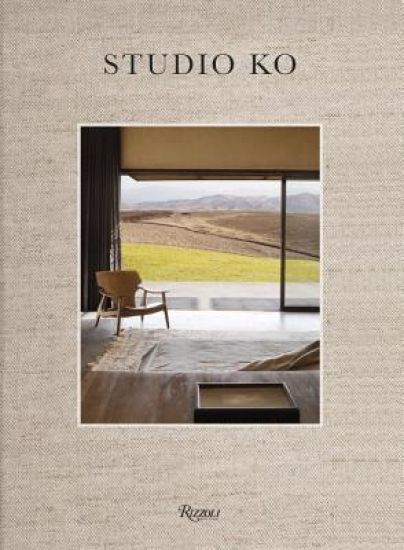
Studio KO
Karl Fournier; Olivier Marty; Pierre Bergé
Rizzoli International Publications
2017
sidottu
Founded by French architects Karl Fournier and Olivier Marty in 2000, Studio KO has quickly secured its status in the world of architectural design. A refreshing modernist aesthetic imbued with subtle references to history and culture defines their work. While Marty and Fournier are best known for their minimalist villas set in awe-inspiring landscapes, recent commissions also include restaurants, boutiques, and hotels across New York, Paris, and London. The first monograph dedicated to Studio KO, this beautifully illustrated book spotlights a diverse array of their work, from private residences in breathtaking scenery, ranging from the Moroccan mountains to Provence and Brittany in France, to the highly anticipated Yves Saint Laurent Museum, due to open in Marrakech in 2017. Boasting never-before-seen architectural plans, personal photos, and sumptuous photographs of finished spaces, this book offers a fascinating look at the most in-demand architectural designers of today.
A cutting-edge blend of contemporary design and art informs the work of architecture s enfant terrible. This first book on his firm presents an array of immersive spaces for living and working that walk the edge of practicality and imagination. Best known for UNESCO s Cop22 in Marrakech and the French Embassy extension in Vienna, as well as his daring 'guerrilla architecture,' such as Bow-House made from scaffolding and repurposed doors and windows in Holland, architect, urbanist, author, and former graffiti artist Stephane Malka is at the forefront of the architectural avant-garde. Malka s work blends art and architecture from a humanist perspective informed by the designer s intention to create work that is positive and sustainable. His practice, based in Paris and in Los Angeles, realizes homes, offices, art installations, and stage designs with the idea that we ought always to rethink our typical notions and challenge established conventions. This results in surprising places where there is an intermingling of dreams and pragmatism, the baroque and minimalism, ecology and sophistication. The book, an expression of Malka s daring aesthetic and conscientious ethos, features his groundbreaking exploration of contemporary housing. Included are his cliffside Mugu House, in Malibu, California, a dramatic expression of dwelling meets mountain in a delicate tracery of slatted wood and glass. Beyond freestanding structures, showcased as well are Studio Malka s interventions and transformations of existing architecture and the exploration and development of green building and design, embracing the adaptation and reuse of existing structures and materials a dazzling expression of artistry and innovation that opens its doors and windows on the future.
Known for their discretion, Studio Sofield publishes for the first time here many of its most important houses and retail settings. The firm has originated identities and design experiences for global brands such as Gucci, Bottega Veneta, Tom Ford, Yves Saint Laurent, and Harry Winston; iconic locales from the SoHo Grand to Zero Bond; and some truly extraordinary homes. Countless notable clients call upon them for their multidisciplinary approach, refined aesthetic, and affinity for material and craft.