

Kirjahaku
Etsi kirjoja tekijän nimen, kirjan nimen tai ISBN:n perusteella.
1000 tulosta hakusanalla Sumit Saxena

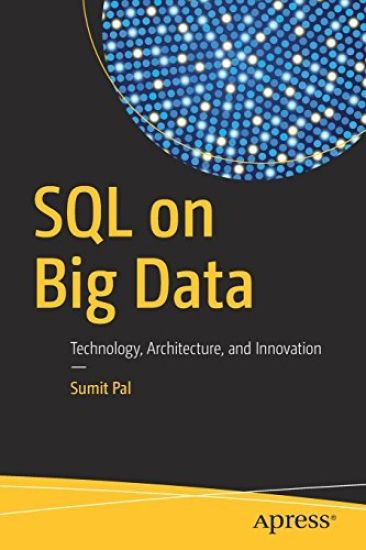
Learn various commercial and open source products that perform SQL on Big Data platforms. You will understand the architectures of the various SQL engines being used and how the tools work internally in terms of execution, data movement, latency, scalability, performance, and system requirements.This book consolidates in one place solutions to the challenges associated with the requirements of speed, scalability, and the variety of operations needed for data integration and SQL operations. After discussing the history of the how and why of SQL on Big Data, the book provides in-depth insight into the products, architectures, and innovations happening in this rapidly evolving space.SQL on Big Data discusses in detail the innovations happening, the capabilities on the horizon, and how they solve the issues of performance and scalability and the ability to handle different data types. The book covers how SQL on Big Data engines are permeating the OLTP, OLAP, and Operational analytics space and the rapidly evolving HTAP systems.You will learn the details of:Batch Architectures—Understand the internals and how the existing Hive engine is built and how it is evolving continually to support new features and provide lower latency on queriesInteractive Architectures—Understanding how SQL engines are architected to support low latency on large data setsStreaming Architectures—Understanding how SQL engines are architected to support queries on data in motion using in-memory and lock-free data structuresOperational Architectures—Understanding how SQL engines are architected for transactional and operational systems to support transactions on Big Data platformsInnovative Architectures—Explore the rapidly evolving newer SQL engines on Big Data with innovative ideas and conceptsWho This Book Is For:Business analysts, BI engineers, developers, data scientists and architects, and quality assurance professionals
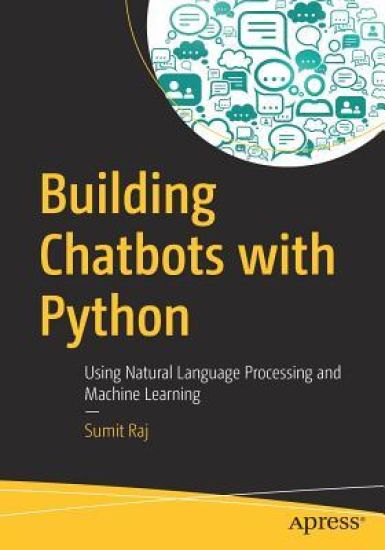
Build your own chatbot using Python and open source tools. This book begins with an introduction to chatbots where you will gain vital information on their architecture. You will then dive straight into natural language processing with the natural language toolkit (NLTK) for building a custom language processing platform for your chatbot. With this foundation, you will take a look at different natural language processing techniques so that you can choose the right one for you. The next stage is to learn to build a chatbot using the API.ai platform and define its intents and entities. During this example, you will learn to enable communication with your bot and also take a look at key points of its integration and deployment.The final chapter of Building Chatbots with Python teaches you how to build, train, and deploy your very own chatbot. Using open source libraries and machine learning techniques you will learnto predict conditions for your bot and develop a conversational agent as a web application. Finally you will deploy your chatbot on your own server with AWS. What You Will LearnGain the basics of natural language processing using Python Collect data and train your data for the chatbotBuild your chatbot from scratch as a web appIntegrate your chatbots with Facebook, Slack, and TelegramDeploy chatbots on your own serverWho This Book Is ForIntermediate Python developers who have no idea about chatbots. Developers with basic Python programming knowledge can also take advantage of the book.

Low Power Design with High-Level Power Estimation and Power-Aware Synthesis
Sumit Ahuja; Avinash Lakshminarayana; Sandeep Kumar Shukla
Springer-Verlag New York Inc.
2014
nidottu
This book presents novel research techniques, algorithms, methodologies and experimental results for high level power estimation and power aware high-level synthesis. Readers will learn to apply such techniques to enable design flows resulting in shorter time to market and successful low power ASIC/FPGA design.

Forest of lust: Friendship.Adventure.Destiny
Sumit Warudi
Createspace Independent Publishing Platform
2014
nidottu

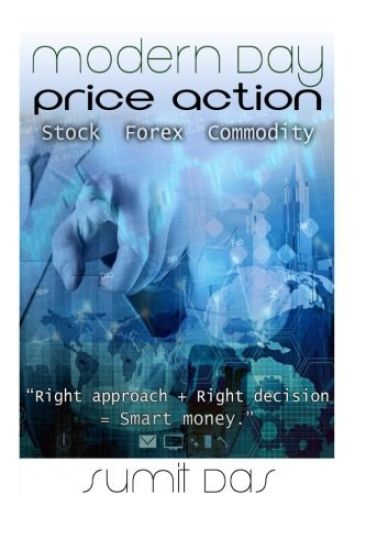
Modern day price action: theory for making profit ad stop loosing money
Sumit Das
Createspace Independent Publishing Platform
2014
nidottu

Excellent microsurgery derives not from natural dexterity alone or from pure book knowledge, but from these features combined with an appreciation of the instrumentation, physical forces, and tissue reactions that create the environment of microsurgery. Ophthalmic Microsurgery: Principles, Techniques, and Applications conveys both the art and science of microsurgery from an ophthalmic perspective.This unique resource begins with the principles and techniques of microsurgery, which can be applied to all types of surgeries and includes detailed laboratory exercises to teach the key concepts. The second section of Ophthalmic Microsurgery addresses the specific applications. While not an encyclopedia of all surgical interventions, Drs. Sumit “Sam” Garg and Roger Steinert, along with their contributors, provide an overview of key surgical competencies that are relevant to the various ophthalmic subspecialties.Ophthalmic Microsurgery is set apart from other similar resources by having a comprehensive and concise focus on translating surgical principles into reality through simple and inexpensive exercises.Grounded in practicality and requiring only basic materials, Ophthalmic Microsurgery: Principles, Techniques, and Applications covers the theory and basics of microsurgery needed during the ophthalmic surgical training of residents and fellows and serves as an excellent manual for the more experienced ophthalmologists looking to refine their technique in microsurgery.
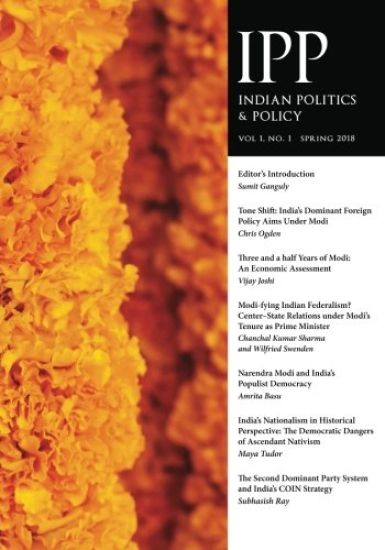
Indian Politics & Policy (IPP) aims to be the primary journal for studying contemporary Indian politics. We will consider submissions that analyze all aspects of Indian policies and political processes. We invite original work that demonstrates theoretical rigor, sound empirical research and policy relevance. We also welcome review articles, proposals for special issues and research forums on contemporary topics. Submissions should be sent to [email protected]. After an initial screening, the editors will send manuscripts to independent, experts in the field for double-blind reviews. Only manuscripts that are considered ready for publication will be sent for review. Indian Politics & Policy seeks to publish original research. Contributors should not submit significant portions of previously published work. In case of any question of overlap, the authors should send a copy of the earlier work to the editors to make a determination.
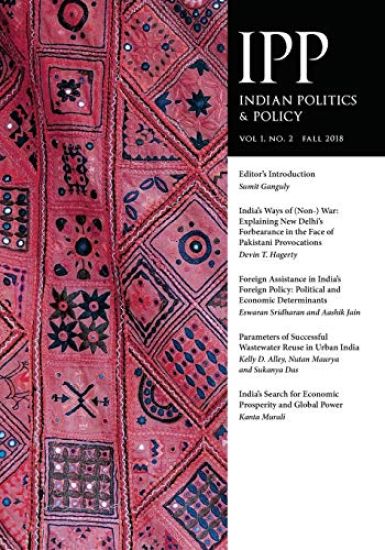
Indian Politics and Policy aims to be the primary journal for studying contemporary Indian politics. We will consider submissions that analyze all aspects of Indian policies and political processes. We invite original work that demonstrates theoretical rigor, sound empirical research and policy relevance. We also welcome review articles, proposals for special issues and research forums on contemporary topics. Table of Contents: Editor's Introduction Sumit Ganguly doi: 10.18278/inpp.1.2.1 India's Ways of (Non-) War: Explaining New Delhi's Forbearance in the Face of Pakistani Provocations Devin T. Hagerty doi: 10.18278/inpp.1.2.2 Foreign Assistance in India's Foreign Policy: Political and Economic Determinants Eswaran Sridharan and Aashik Jain doi: 10.18278/inpp.1.2.3 Parameters of Successful Wastewater Reuse in Urban India, Kelly D. Alley, Nutan Maurya, and Sukanya Das doi: 10.18278/inpp.1.2.4 India's Search for Economic Prosperity and Global Power, Kanta Murali doi: 10.18278/inpp.1.2.5
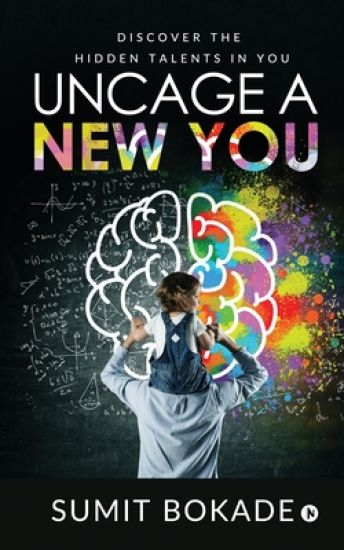



The Bright Side: How Optimists Change the World, and How You Can Be One
Sumit Paul-Choudhury
Scribner Book Company
2025
sidottu
In the thought-provoking tradition of Steven Pinker's Enlightenment Now and Yuval Noah Harari's Homo Deus, a fascinating and reassuring look at the philosophy, psychology, and practice of optimism, and why being optimistic is a moral obligation--even in the face of seemingly insurmountable challenges. Scrolling through our daily newsfeeds we see violence and cruelty, turmoil and injustice, fake news and clickbait, and worsening environmental and social crises--just a few of the dark currents feeding a tidal wave of pessimism. In the face of so many challenges, how can we stay optimistic? And, more important, why should we? In The Bright Side, Sumit Paul-Choudhury answers these pressing questions, arguing that optimism is not only essential for overcoming the challenges we face, but also fundamental to human wellbeing. Drawing on a wide array of evidence--from biology to history, and from economics to meteorology--he delves into the underappreciated roots of optimism, examines its impact on mental health and professional success, and discusses why it has a power that wishful thinking lacks. Additionally, The Bright Side shows how we can apply the principles of optimism to cope with environmental crises, artificial intelligence, and social change. From the polar reaches to the world's mightiest cities, through inspirational figures including explorers, activists, and scientists, the book illustrates optimism in action. A beacon amid dark times, The Bright Side provides a lens through which we can see the challenges we face more clearly--and it also offers tools for solving them, to create a better future for ourselves and generations to come.

"He wished to make a new planet of love and union, a new planet of trust and wisdom. In a hope of the great future, he reclined in his dreams."This book is a collection of short stories. But, in fact, more accurately, it is a sojourn through timelessness. With its candor and simplicity, the author has spun a world with a thousand different meanings. And a million different questions.Each of these questions engages you, it asks you to name it, to think about it, and to answer it. This book is also about self-discovery. It hints of a sublime primordiality vestiges of which exist in our consciousness, playing hide-and-seek, waiting to be found.You will end up asking yourself from where it is that you have come and where you are going. In your mind. Sometimes, the narrative softly flows and ebbs like the tides by a quiet crystalline beach someplace far away.You will find yourself standing, as if barefeet, on that beach looking far off into the horizon, and deep within yourself ... at the same time. As you go by your daily lives, most of the time you ask yourself "why". This book will get you to ponder "why not".It speaks of possibilities.The author writes simply, carefully, deliberately, his words transparent and fragile. After reading this book, you will feel that you should have read it sooner. You will find it delightful.
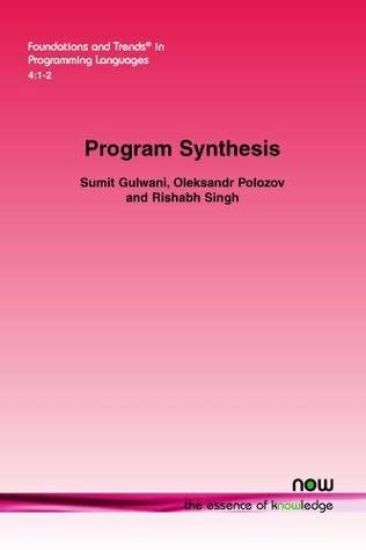
Program synthesis is the task of automatically finding a program in the underlying programming language that satisfies the user intent expressed in the form of some specification. Since the inception of artificial intelligence in the 1950s, this problem has been considered the holy grail of Computer Science. Despite inherent challenges in the problem such as ambiguity of user intent and a typically enormous search space of programs, the field of program synthesis has developed many different techniques that enable program synthesis in different real-life application domains. It is now used successfully in software engineering, biological discovery, compute-raided education, end-user programming, and data cleaning. In the last decade, several applications of synthesis in the field of programming by examples have been deployed in mass-market industrial products. This monograph is a general overview of the state-of-the-art approaches to program synthesis, its applications, and subfields. It discusses the general principles common to all modern synthesis approaches such as syntactic bias, oracle-guided inductive search, and optimization techniques. We then present a literature review covering the four most common state-of-the-art techniques in program synthesis: enumerative search, constraint solving, stochastic search, and deduction-based programming by examples. It concludes with a brief list of future horizons for the field.
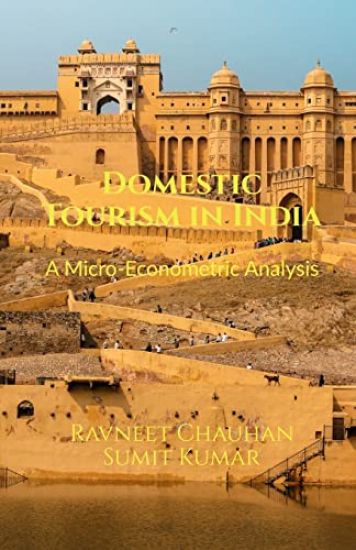
Tourism is one of the fastest growing industries and influential part of service sector having large positive and negative externalities. Tourism can contribute to economic development through many direct, indirect and induced effects. Apart from economic benefits, tourism is also considered as an essential part of a healthy lifestyle. It brings joy and peace to a hectic and monotonous human life, especially when performed for recreational purposes. Besides recreation, tourism also facilitates religious, medical, shopping, adventure, and social needs. It is vital for a well-balanced life of citizens in a country, so that they become better human resources of the nation. Therefore, policy makers, governments, and stakeholders for the welfare of tourism and tourists ought to be cautious of the micro factors influencing tourism. The book focuses on factors impacting the decision to travel, choice of travel mode, choice of destination and frequency of travelling, and also expenditure on travelling of Indians.