

Kirjahaku
Etsi kirjoja tekijän nimen, kirjan nimen tai ISBN:n perusteella.
1000 tulosta hakusanalla Susan L. Mitchell


Naming the Shadows is the first book to offer practitioners and students-in-training an in-depth exploration of a trauma-focused approach to individual and group psychotherapy that respects scientific rules.Drawing on the authors' own innovative research, on the widespread experience of colleagues, and on vivid dialogue from survivors themselves, Naming the Shadows has important implications for our understanding of the process of coping with childhood sexual abuse.

Susan Golden provides not just another book on proposal writing, but one which provides a realistic view of proposal writing with practical step-by-step guidance towards success -- useful for both novice and experienced grantwriters.?Patricia F. Lewis, ACFR, president and CEO, National Society of Fund Raising ExecutivesDrawing on more than 20 years of experience with more than 100 organizations, Golden arms fundraisers with the grantsmanship skills they need to successfully navigate the grantmaking process. From conducting effective prospect research and making initial conversations count to preparing, submitting, and following up on grant proposals, Susan Golden offers a focused, step-by-step method for reliably achieving success in any fund raising activity.

For more than a decade, Managing Public Disputes has beenthe first choice, hands-on guide for managers, offering usefulinstructions for handling a wide range of large and small publiccontroversies from the national to the community level. Itincludes: * Ten proven principles for managing conflict * A comprehensive framework with step-by-step procedures forcreating productive outcomes * Seven illustrative case examples * Detailed advice on effective methods for collectinginformation, conducting interviews, and analyzing a conflictsituation * Suggestions for handling special problems such as reluctantparticipants, keeping people at the negotiation table, and handlingsituations where emotions are running high * Eight tasks targeted for designing an overall strategy formanaging public disputes

Angel Financing for Entrepreneurs will give you the information you need to understand how angel investors think, as well as how to identify investor expectations, understand the investment analysis process, and prepare for post-investment requirements. Written by Susan Preston, an experienced angel investor, worldwide speaker and consultant on angel financing, and former Kauffman Foundation Entrepreneur-in-Residence, this hands-on resource, explains the factors that determine how private equity investors spend their money and what they expect from entrepreneurs. For example: Most venture capitalists do not invest in seed or start-up financing roundsInvestors typically require seasoned management, with successful start-up experienceInvestors are looking for entrepreneurs with passion for their ideas and the willingness to take and apply sound adviceBusiness plans must be well-written with detailed financial projections that extend 3–5 yearsInvestors are looking for a clear path to profitability in the business modelEntrepreneurs must have developed a corporate structure that is clean and uncomplicatedAnd much more


Practical Government Budgeting
Susan L. Riley; Peter W. Colby
State University of New York Press
1990
pokkari
This book provides descriptions, instructions, and exercises to help readers master government budgeting as it is actually practiced. University courses and training programs serving present and future state and local officials and staff will learn how to do public budgeting in this relevant, practical, and useful workbook. Each chapter presents techniques followed by step-by-step instructions complete with examples to help students learn the material. Self-test exercises conclude each chapter.
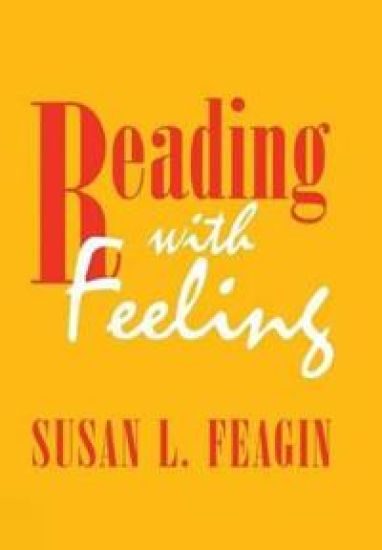
Feelings and other affective responses to a work of fiction are an important part appreciation and the capacity to inspire such responses is part of what is valuable about literary works of art. Susan L. Feagin's philosophical exploration of appreciation, focusing specifically on its emotional or affective components, asks us to consider aesthetic appreciation as getting the value out of the work. Appreciation involves exercising abilities. Feagin develops a psychological model for understanding how one becomes emotionally engaged with something one knows is fictional. She stresses the importance of the role of imagination in producing affective responses. Imagination is harnessed by the writer's choice of phrase or depiction of detail. Feagin cites the work of Angela Carter, Molly Keane, Heinrich Böll, Gabriel Garçia Marquez, and draws an extended example from Henry James. She notes that not all responses to a work are relevant or appropriate and discusses a variety of ways responses may be assessed. Even though assessing responses can stifle imagination, and hence threaten spontaneity and the responses themselves, the value of having affective responses to fiction depends upon our being able to make such assessments. Whatever else we may gain, appreciating a work, getting the value out of it, is one means of extending the capacities of our own imaginations.

Written by a medical and a legal pioneer in the field, this book comprehensively reviews and analyzes the evolving law and policy issues surrounding assisted reproductive technologies. Dr. Howard W. Jones, Jr., founder of the first in vitro fertilization program in the United States, offers medical commentary, while attorney Susan L. Crockin, author of the column "Legally Speaking" in ASRM News (the newsletter of the American Society for Reproductive Medicine), provides legal analysis. The book opens with a legal primer and timelines sketching the medical and legal milestones in the history of reproductive technology and law. Each chapter provides a case-by-case discussion of the relevant law, as well as cogent medical and legal commentary and analysis on a particular substantive area. Chapter topics deal with a vast array of issues, including artificial insemination, sperm and egg donation, traditional and gestational surrogacy, posthumous reproduction, same-sex parentage, genetics, cryopreservation and embryo litigation, discrimination and access to reproductive care, professional liability, stem cell research, and abortion. In discussing the medical and legal issues surrounding these topics, Crockin and Jones reveal what has gone right and what at times has gone terribly wrong for both the families and the professionals involved. They make clear that technological advancements have far outpaced the laws and policies in place to protect all who use them. This book makes a timely contribution to current debates over the legal and policy issues raised by the highly publicized birth of octuplets in California and the embryo legislation activity taking place in many states. It offers information and insight to policymakers, medical and legal professionals, patients and other participants, and everyone else interested in the history and future direction of the field.
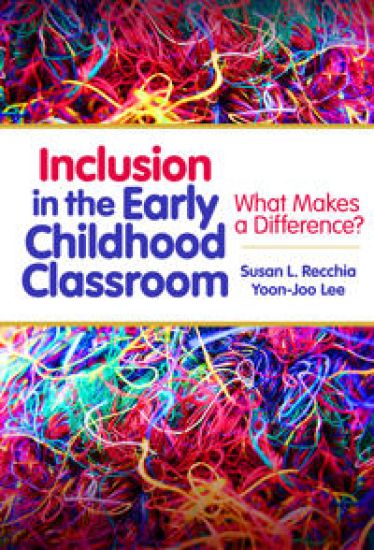
In this engaging book, the authors share stories from their practice and research about several young children with a variety of developmental delays and disabilities and their teachers. They explore the ways that teachers and children respond in real classrooms to real challenges, examining both those opportunities that are capitalised on as well as those that are missed. The book addresses a wide array of issues that contribute to our understanding of ''what makes a difference'' in the inclusive early childhood classroom: the role of development, ways of honouring different learning styles, building a sense of classroom community, addressing power dynamics, and responding to conflict with both teachers and peers. This practical resource introduces a framework that will inspire early childhood teachers to reflect on their own practices and take action to develop new strategies for teaching in inclusive classrooms.
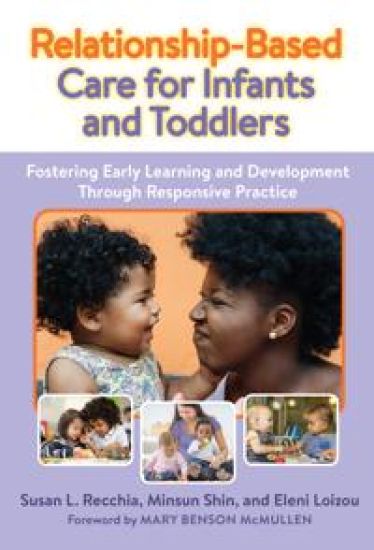
Relationship-Based Care for Infants and Toddlers
Susan L. Recchia; Minsun Shin; Eleni Loizou
TEACHERS' COLLEGE PRESS
2023
nidottu
Learn how to create and nurture communities of care for diverse children, families, and practitioners through responsive practice. In this text, the social and emotional worlds of babies and toddlers, their peers, and their caregivers come to life in the everyday moments of infant-toddler care and education. The authors show infants and toddlers as active, agentic, and intentional social partners from the start of life, highlighting their unique capacities for social engagement with both adults and peers. Interwoven within each chapter's narrative are insights culled from extensive observations, teacher interviews, and video analyses. Part I emphasizes play, peer friendships, and humor as essential elements of infant learning, illustrated throughout with anecdotes of praxis in early care and education settings. Building on these aspects of babies' ways of being in group care, Part II examines the complex roles of infant-toddler professionals and the critical importance of supportive and caring environments. Readers will explore the elements needed for in-depth and specialized professional preparation, including overarching principles of relationship-based practice.Book Features:Illuminates particular and understudied ways that infants and toddlers actively contribute to their own social learning and development.Shares how teachers learn to engage with and nurture infants' and toddlers' social capacities and experiences within child care settings.Uses anecdotes and vignettes from the authors' research and practice with infants, toddlers, and caregivers to bring their experiences to life.Discusses themes that are important and unique for infancy and toddlerhood, such as play, friendships, humor, and professional love.Presents a unique set of chapters that reveal infants' and toddlers' perspectives, while also considering the caregiver's actions within a responsive care framework.
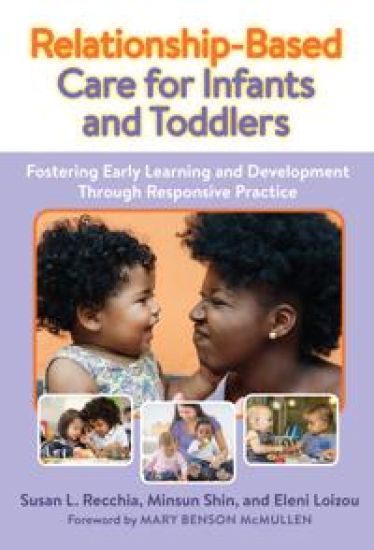
Relationship-Based Care for Infants and Toddlers
Susan L. Recchia; Minsun Shin; Eleni Loizou
TEACHERS' COLLEGE PRESS
2023
sidottu
Learn how to create and nurture communities of care for diverse children, families, and practitioners through responsive practice. In this text, the social and emotional worlds of babies and toddlers, their peers, and their caregivers come to life in the everyday moments of infant-toddler care and education. The authors show infants and toddlers as active, agentic, and intentional social partners from the start of life, highlighting their unique capacities for social engagement with both adults and peers. Interwoven within each chapter's narrative are insights culled from extensive observations, teacher interviews, and video analyses. Part I emphasizes play, peer friendships, and humor as essential elements of infant learning, illustrated throughout with anecdotes of praxis in early care and education settings. Building on these aspects of babies' ways of being in group care, Part II examines the complex roles of infant-toddler professionals and the critical importance of supportive and caring environments. Readers will explore the elements needed for in-depth and specialized professional preparation, including overarching principles of relationship-based practice.Book Features:Illuminates particular and understudied ways that infants and toddlers actively contribute to their own social learning and development.Shares how teachers learn to engage with and nurture infants' and toddlers' social capacities and experiences within child care settings.Uses anecdotes and vignettes from the authors' research and practice with infants, toddlers, and caregivers to bring their experiences to life.Discusses themes that are important and unique for infancy and toddlerhood, such as play, friendships, humor, and professional love.Presents a unique set of chapters that reveal infants' and toddlers' perspectives, while also considering the caregiver's actions within a responsive care framework.
Do you want to cultivate independent learners through an integrated curriculum? Schramm uncovers the theories behind the design of an integrated curriculum and provides a practical framework for implementation. After discussing the necessity of staff development strategies, appropriate text sources, alternative assessment strategies, leadership, and organizational strategies, she provides classroom-tested sample curriculums and discusses various successful teaching strategies.
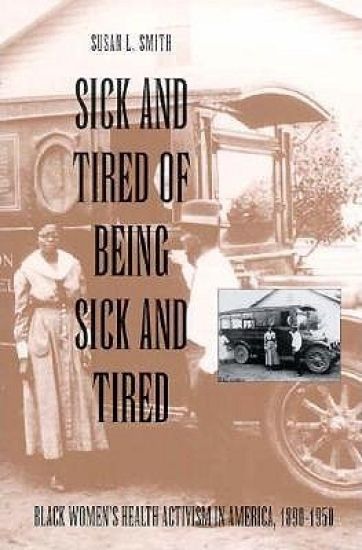
Sick and Tired of Being Sick and Tired moves beyond the depiction of African Americans as mere recipients of aid or as victims of neglect and highlights the ways black health activists created public health programs and influenced public policy at every opportunity. Smith also sheds new light on the infamous Tuskegee syphilis experiment by situating it within the context of black public health activity, reminding us that public health work had oppressive as well as progressive consequences.

The Black Death of 1348-50 devastated Europe. With mortality estimates ranging from thirty to sixty percent of the population, it was arguably the most significant event of the fourteenth century. Nonetheless, its force varied across the continent, and so did the ways people responded to it. Surprisingly, there is little Jewish writing extant that directly addresses the impact of the plague, or even of the violence that sometimes accompanied it. This absence is particularly notable for Provence and the Iberian Peninsula, despite rich sources on Jewish life throughout the century. In After the Black Death, Susan L. Einbinder uncovers Jewish responses to plague and violence in fourteenth-century Iberia and Provence. Einbinder's original research reveals a wide, heterogeneous series of Jewish literary responses to the plague, including Sephardic liturgical poetry; a medical tractate written by the Jewish physician Abraham Caslari; epitaphs inscribed on the tombstones of twenty-eight Jewish plague victims once buried in Toledo; and a heretofore unstudied liturgical lament written by Moses Nathan, a survivor of an anti-Jewish massacre that occurred in TÀrrega, Catalonia, in 1348. Through elegant translations and masterful readings, After the Black Death exposes the great diversity in Jewish experiences of the plague, shaped as they were by convention, geography, epidemiology, and politics. Most critically, Einbinder traces the continuity of faith, language, and meaning through the years of the plague and its aftermath. Both before and after the Black Death, Jewish texts that deal with tragedy privilege the communal over the personal and affirm resilience over victimhood. Combined with archival and archaeological testimony, these texts ask us to think deeply about the men and women, sometimes perpetrators as well as victims, who confronted the Black Death. As devastating as the Black Death was, it did not shatter the modes of expression and explanation of those who survived it-a discovery that challenges the applicability of modern trauma theory to the medieval context.
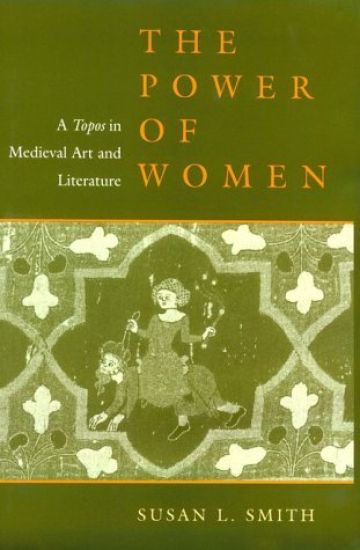
Eve tempting Adam with the apple, Delilah shearing Samson's hair, Phyllis riding the philosopher Aristotle like a horse-from the patristic period through the sixteenth century, examples of disorderly women such as these from the Bible, antiquity, and romance were cited to prove beyond any doubt that women exercise a power that no man, however superior his moral and physical qualities, can resist. An example of Latin topica, loci, or loci communes central to ancient rhetoric and medieval literature, the Power of Women topos illustrated how a woman could dominate, humiliate, and even destroy the man who loved her too well. Two or more infamous female figures were brought together to exemplify a cluster of interrelated themes: the wiles of women, the power of love, and the trials of marriage. Susan L. Smith's comprehensive study of the Power of Women topos in written texts and in art emphasizes the critical phase of its development from the late twelfth to the end of the fourteenth century. During this period , she argues, traditional employment of the topos exclusively to condemn women and justify male authority underwent a dramatic shift as new voices (some of them female voices) appropriated the Power of Women to contest and relativize the misogynistic views it had been created to promote. The Power of Women analyzes the topos's shifting operations in the context of ancient and medieval theories of rhetoric, particularly with respect to the practice of exemplification, which presuppose the possibility of conflicting judgments on disputed topics. Smith further supports her argument by reference to a wide range of recent theoretical writings by Mikhail Bakhtin and others.

When King Philip VI expelled the Jews in 1306, some 100,000 men, women, and children were driven from royal France into the neighboring lands of Spain, Provence, Italy, and North Africa. The great expulsion of 1306 was arguably one of the most traumatic moments of medieval Jewish history and would prove to be the harbinger of a series of recalls and expulsions, local and general, culminating in King Charles VI's expulsion decree of 1394. Despite the upheavals of the fourteenth century, the literary productivity of Jews was astonishing. Yet there are few direct references to the catastrophic events of 1306, even in Jewish liturgical and historiographic texts, where one would expect to find them. In No Place of Rest, Susan Einbinder coaxes out the literary traces of this traumatic expulsion. Why did the memory of this proud and vibrant Jewish community fade from historical memory? Where do its remnants reside among later communities and readers? From the lyrics of the supposed "Jewish troubadour" Isaac HaGorni to medical texts and astronomical charts, Einbinder studies a range of writings she reveals to be commemorative. Her careful readings uncover the ways in which medieval Jews asserted their identity in exile and, perhaps more important, helped to preserve or efface their history.

Faced with the economic pressures of globalization, many countries have sought to curb the fundamental right of workers to join trade unions and engage in collective action. In response, trade unions in developed countries have strategically used their own governments' commitments to human rights as a basis for resistance. Since the protection of human rights remains an important normative principle in global affairs, democratic countries cannot merely ignore their human rights obligations and must balance their international commitments with their desire to remain economically competitive and attractive to investors. Human Rights and Labor Solidarity analyzes trade unions' campaigns to link local labor rights disputes to international human rights frameworks, thereby creating external scrutiny of governments. As a result of these campaigns, states engage in what political scientist Susan L. Kang terms a normative negotiation process, in which governments, trade unions, and international organizations construct and challenge a broader understanding of international labor rights norms to determine whether the conditions underlying these disputes constitute human rights violations. In three empirically rich case studies covering South Korea, the United Kingdom, and Canada, Kang demonstrates that this normative negotiation process was more successful in creating stronger protections for trade unions' rights when such changes complemented a government's other political interests. She finds that states tend not to respect stronger economically oriented human rights obligations due to the normative power of such rights alone. Instead, trade union transnational activism, coupled with sufficient political motivations, such as direct economic costs or strong rule of law obligations, contributed to changes in favor of workers' rights.

The Black Death of 1348-50 devastated Europe. With mortality estimates ranging from thirty to sixty percent of the population, it was arguably the most significant event of the fourteenth century. Nonetheless, its force varied across the continent, and so did the ways people responded to it. Surprisingly, there is little Jewish writing extant that directly addresses the impact of the plague, or even of the violence that sometimes accompanied it. This absence is particularly notable for Provence and the Iberian Peninsula, despite rich sources on Jewish life throughout the century. In After the Black Death, Susan L. Einbinder uncovers Jewish responses to plague and violence in fourteenth-century Iberia and Provence. Einbinder's original research reveals a wide, heterogeneous series of Jewish literary responses to the plague, including Sephardic liturgical poetry; a medical tractate written by the Jewish physician Abraham Caslari; epitaphs inscribed on the tombstones of twenty-eight Jewish plague victims once buried in Toledo; and a heretofore unstudied liturgical lament written by Moses Nathan, a survivor of an anti-Jewish massacre that occurred in TÀrrega, Catalonia, in 1348. Through elegant translations and masterful readings, After the Black Death exposes the great diversity in Jewish experiences of the plague, shaped as they were by convention, geography, epidemiology, and politics. Most critically, Einbinder traces the continuity of faith, language, and meaning through the years of the plague and its aftermath. Both before and after the Black Death, Jewish texts that deal with tragedy privilege the communal over the personal and affirm resilience over victimhood. Combined with archival and archaeological testimony, these texts ask us to think deeply about the men and women, sometimes perpetrators as well as victims, who confronted the Black Death. As devastating as the Black Death was, it did not shatter the modes of expression and explanation of those who survived it-a discovery that challenges the applicability of modern trauma theory to the medieval context.