

Kirjahaku
Etsi kirjoja tekijän nimen, kirjan nimen tai ISBN:n perusteella.
1000 tulosta hakusanalla Tamil Edition

Soldiering in North Carolina; Being the experiences of a typo in the pines, swamps, fields, sandy roads, towns, cities, and among the fleas, wood-ticks, gray-backs, mosquitoes, blue-tail flies, moccasin snakes, lizards, scorpions, rebels, and other reptiles, pests, and vermin of the Old North State. Embracing an account of the three-years and nine-months Massachusetts regiments in the department, the freedmen, etc., etc., etc. (Edition1)
Ivan Sergeevich Turgenev
Alpha Editions
2024
nidottu
A Sportsman's Sketches Volume II, a classical book, was published more than a century ago and has been considered important throughout the human history, and so that this work is never forgotten we at Alpha Editions have made efforts in its preservation by republishing this book in a modern format for present and future generations. This whole book has been reformatted, retyped and designed. These books are not made of scanned copies of their original work and hence the text is clear and readable.

Les Soutanes Grotesques: Réimpression de l'Édition Complètement Épuisée Du 1er Volume
Léo Taxil
Hachette Livre - BNF
2017
pokkari

Prince Norman: Special Edition
Woody Roseland; Tami Greenfield Boehmer; Karen Loucks Rinedollar
Createspace Independent Publishing Platform
2014
nidottu

Spoken by eighty million people in South Asia and a diaspora that stretches across the globe, Tamil is one of the great world languages, and one of the few ancient languages that survives as a mother tongue for so many speakers. David Shulman presents a comprehensive cultural history of Tamil—language, literature, and civilization—emphasizing how Tamil speakers and poets have understood the unique features of their language over its long history. Impetuous, musical, whimsical, in constant flux, Tamil is a living entity, and this is its biography.Two stories animate Shulman’s narrative. The first concerns the evolution of Tamil’s distinctive modes of speaking, thinking, and singing. The second describes Tamil’s major expressive themes, the stunning poems of love and war known as Sangam poetry, and Tamil’s influence as a shaping force within Hinduism. Shulman tracks Tamil from its earliest traces at the end of the first millennium BCE through the classical period, 850 to 1200 CE, when Tamil-speaking rulers held sway over southern India, and into late-medieval and modern times, including the deeply contentious politics that overshadow Tamil today.Tamil is more than a language, Shulman says. It is a body of knowledge, much of it intrinsic to an ancient culture and sensibility. “Tamil” can mean both “knowing how to love”—in the manner of classical love poetry—and “being a civilized person.” It is thus a kind of grammar, not merely of the language in its spoken and written forms but of the creative potential of its speakers.
Tamil
HarperCollins Publishers India
2025
nidottu
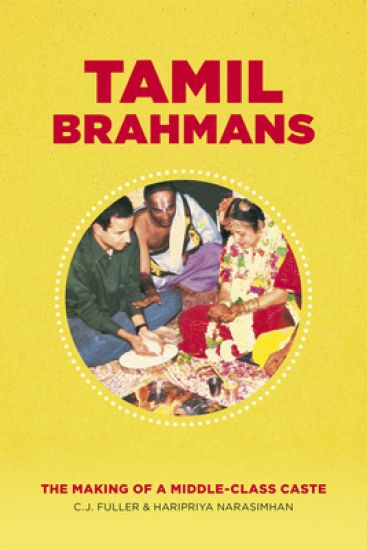
A cruise along the streets of Chennai - or Silicon Valley - filled with professional young Indian men and women, reveals the new face of India. In the twenty-first century, Indians have acquired a new kind of global visibility, one of rapid economic advancement and, in the information technology industry, spectacular prowess. In this book, C. J. Fuller and Haripriya Narasimhan examine one particularly striking group who have taken part in this development: Tamil Brahmans - a formerly traditional, rural, high-caste elite who have transformed themselves into a new middle-class caste in India, the United States, and elsewhere. Fuller and Narasimhan offer one of the most comprehensive looks at Tamil Brahmans around the world to date. They examine Brahman migration from rural to urban areas, more recent transnational migration, and how the Brahman way of life has translated to both Indian cities and American suburbs. They look at modern education and the new employment opportunities afforded by engineering and IT. They examine how Sanskritic Hinduism and traditional music and dance have shaped Tamil Brahmans' particular middle-class sensibilities and how middle-class status is related to the changing position of women. Above all, they explore the complex relationship between class and caste systems and the ways in which hierarchy has persisted in modernized India.
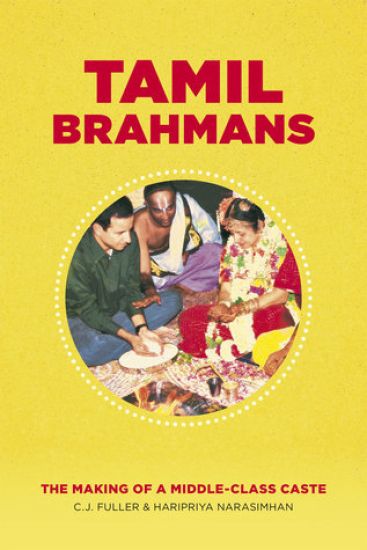
A cruise along the streets of Chennai - or Silicon Valley - filled with professional young Indian men and women, reveals the new face of India. In the twenty-first century, Indians have acquired a new kind of global visibility, one of rapid economic advancement and, in the information technology industry, spectacular prowess. In this book, C. J. Fuller and Haripriya Narasimhan examine one particularly striking group who have taken part in this development: Tamil Brahmans - a formerly traditional, rural, high-caste elite who have transformed themselves into a new middle-class caste in India, the United States, and elsewhere. Fuller and Narasimhan offer one of the most comprehensive looks at Tamil Brahmans around the world to date. They examine Brahman migration from rural to urban areas, more recent transnational migration, and how the Brahman way of life has translated to both Indian cities and American suburbs. They look at modern education and the new employment opportunities afforded by engineering and IT. They examine how Sanskritic Hinduism and traditional music and dance have shaped Tamil Brahmans' particular middle-class sensibilities and how middle-class status is related to the changing position of women. Above all, they explore the complex relationship between class and caste systems and the ways in which hierarchy has persisted in modernized India.
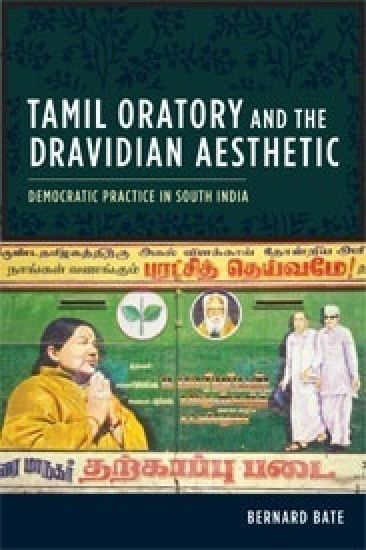
This is a book about the newness of old things. It concerns an oratorical revolution, a transformation of oratorical style linked to larger transformations in society at large. It explores the aesthetics of Tamil oratory and its vital relationship to one of the key institutions of modern society: democracy. Therefore this book also bears on the centrality of language to the modern human condition. Though Tamil oratory is a relatively new practice in south India, the Dravidian (or Tamil nationalist) style employs archaic forms of Tamil that suggest an ancient mode of speech. Beginning with the advent of mass democratic politics in the 1940s, a new generation of politician adopted this style, known as "fine," or "beautiful Tamil" (centamil), for its distinct literary virtuosity, poesy, and alluring evocation of a pure Tamil past. Bernard Bate explores the centamil phenomenon, arguing that the genre's spectacular literacy and use of ceremonial procession, urban political ritual, and posters, praise poetry are critical components in the production of a singularly Tamil mode of political modernity: a Dravidian neoclassicism. From his perspective, the centamil revolution and Dravidian neoclassicism suggest that modernity is not the mere successor of tradition but the production of tradition, and that this production is a primary modality of modernity, a new newness-albeit a newness of old things.
Tamil Love Poetry
Columbia University Press
2011
sidottu
Dating from the early decades of the third century C.E., the Ainkurunuru is believed to be the world's earliest anthology of classical Tamil love poetry. Commissioned by a Cera-dynasty king and composed by five masterful poets, the anthology illustrates the five landscapes of reciprocal love: jealous quarreling, anxious waiting and lamentation, clandestine love before marriage, elopement and love in separation, and patient waiting after marriage. Despite its centrality to literary and intellectual traditions, the Ainkurunuru remains relatively unknown beyond specialists. Martha Ann Selby, well-known translator of classical Indian poetry and literature, takes the bold step of opening this anthology to all readers, presenting crystalline translations of 500 poems dense with natural imagery and early examples of South Indian culture. Because of their form's short length, the anthology's five authors rely on double entendre and sophisticated techniques of suggestion, giving their poems an almost haikulike feel. Groups of verse center on one unique figure, in some cases an object or an animal, in others a line of direct address or a specific conversation or situation. Selby introduces each section with a biographical sketch of the poet and the conventions at work within the landscape. She then incorporates notes explaining shifting contexts. Excerpt: He has gone off all by himselfbeyond the wasteswhere tigers used to prowland the toothbrush trees grow tall,their trunks parched,on the flinty mountains, while the lovely folds of your loins, wide as a chariot's seat, vanish as your circlet worked from gold grows far too large for you.
Tamil Love Poetry
Columbia University Press
2011
pokkari
Dating from the early decades of the third century C.E., the Ainkurunuru is believed to be the world's earliest anthology of classical Tamil love poetry. Commissioned by a Cera-dynasty king and composed by five masterful poets, the anthology illustrates the five landscapes of reciprocal love: jealous quarreling, anxious waiting and lamentation, clandestine love before marriage, elopement and love in separation, and patient waiting after marriage. Despite its centrality to literary and intellectual traditions, the Ainkurunuru remains relatively unknown beyond specialists. Martha Ann Selby, well-known translator of classical Indian poetry and literature, takes the bold step of opening this anthology to all readers, presenting crystalline translations of 500 poems dense with natural imagery and early examples of South Indian culture. Because of their form's short length, the anthology's five authors rely on double entendre and sophisticated techniques of suggestion, giving their poems an almost haikulike feel. Groups of verse center on one unique figure, in some cases an object or an animal, in others a line of direct address or a specific conversation or situation. Selby introduces each section with a biographical sketch of the poet and the conventions at work within the landscape. She then incorporates notes explaining shifting contexts. Excerpt: He has gone off all by himselfbeyond the wasteswhere tigers used to prowland the toothbrush trees grow tall,their trunks parched,on the flinty mountains, while the lovely folds of your loins, wide as a chariot's seat, vanish as your circlet worked from gold grows far too large for you.
Tamil Folk Music as Dalit Liberation Theology
Zoe C. Sherinian
Indiana University Press
2014
sidottu
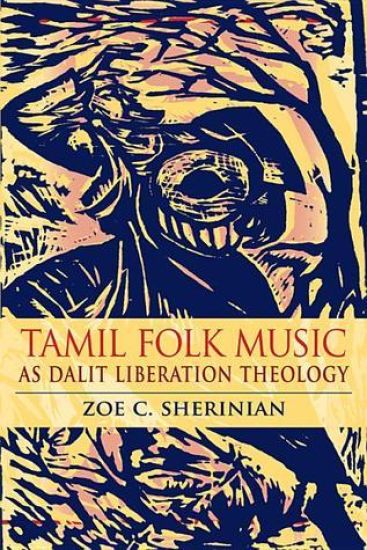
Zoe C. Sherinian shows how Christian Dalits (once known as untouchables or outcastes) in southern India have employed music to protest social oppression and as a vehicle of liberation. Her focus is on the life and theology of a charismatic composer and leader, Reverend J. Theophilus Appavoo, who drew on Tamil folk music to create a distinctive form of indigenized Christian music. Appavoo composed songs and liturgy infused with messages linking Christian theology with critiques of social inequality. Sherinian traces the history of Christian music in India and introduces us to a community of Tamil Dalit Christian villagers, seminary students, activists, and theologians who have been inspired by Appavoo's music to work for social justice. Multimedia components available online include video and audio recordings of musical performances, religious services, and community rituals.
Tamil Folk Music As Dalit Liberation Theology
Zoe C. Sherinian
Indiana University Press
2020
pokkari
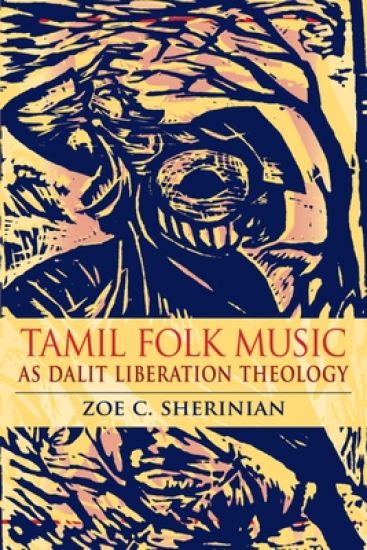
Zoe C. Sherinian shows how Christian Dalits (once known as untouchables or outcastes) in southern India have employed music to protest social oppression and as a vehicle of liberation. Her focus is on the life and theology of a charismatic composer and leader, Reverend J. Theophilus Appavoo, who drew on Tamil folk music to create a distinctive form of indigenized Christian music. Appavoo composed songs and liturgy infused with messages linking Christian theology with critiques of social inequality. Sherinian traces the history of Christian music in India and introduces us to a community of Tamil Dalit Christian villagers, seminary students, activists, and theologians who have been inspired by Appavoo's music to work for social justice. Multimedia components available online include video and audio recordings of musical performances, religious services, and community rituals.
Tamil Cinema in the Twenty-First Century
Routledge
2020
sidottu
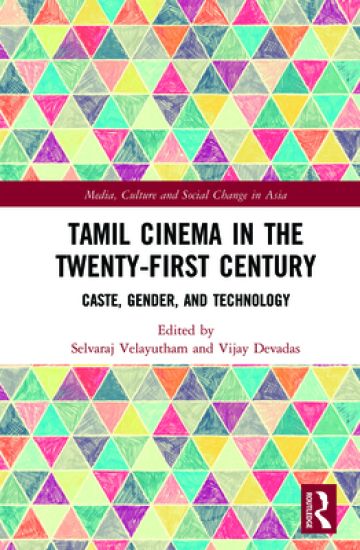
Tamil Cinema in the Twenty-First Century explores the current state of Tamil cinema, one of India’s largest film industries. Since its inception a century ago, Tamil cinema has undergone major transformations, and today it stands as a foremost cultural institution that profoundly shapes Tamil culture and identity. This book investigates the structural, ideological, and societal cleavages that continue to be reproduced, new ideas, modes of representation and narratives that are being created, and the impact of new technologies on Tamil cinema. It advances a critical interdisciplinary approach that challenges the narratives of Tamil cinema to reveal the social forces at work.
Tamil Cinema in the Twenty-First Century
TAYLOR FRANCIS LTD
2022
nidottu
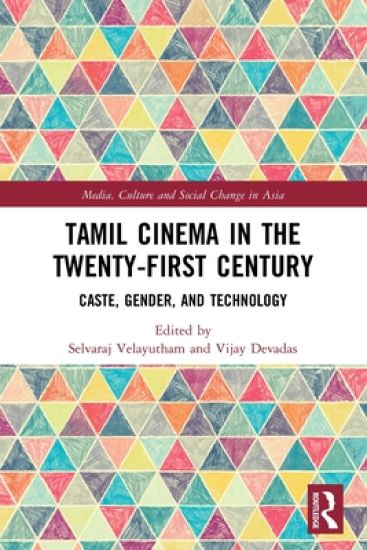
Tamil Cinema in the Twenty-First Century explores the current state of Tamil cinema, one of India’s largest film industries. Since its inception a century ago, Tamil cinema has undergone major transformations, and today it stands as a foremost cultural institution that profoundly shapes Tamil culture and identity. This book investigates the structural, ideological, and societal cleavages that continue to be reproduced, new ideas, modes of representation and narratives that are being created, and the impact of new technologies on Tamil cinema. It advances a critical interdisciplinary approach that challenges the narratives of Tamil cinema to reveal the social forces at work.
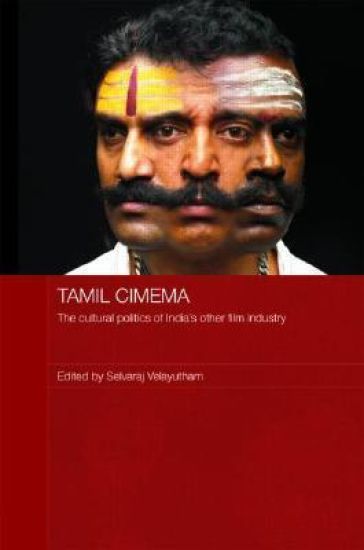
Tamil Cinema
Routledge
2008
sidottu
Hitherto, the academic study of Indian cinema has focused primarily on Bollywood, despite the fact that the Tamil film industry, based in southern India, has overtaken Bollywood in terms of annual output. This book examines critically the cultural and cinematic representations in Tamil cinema. It outlines its history and distinctive characteristics, and proceeds to consider a number of important themes such as gender, religion, class, caste, fandom, cinematic genre, the politics of identity and diaspora. Throughout, the book cogently links the analysis to wider social, political and cultural phenomena in Tamil and Indian society. Overall, it is an exciting and original contribution to an under-studied field, also facilitating a fresh consideration of the existing body of scholarship on Indian cinema.
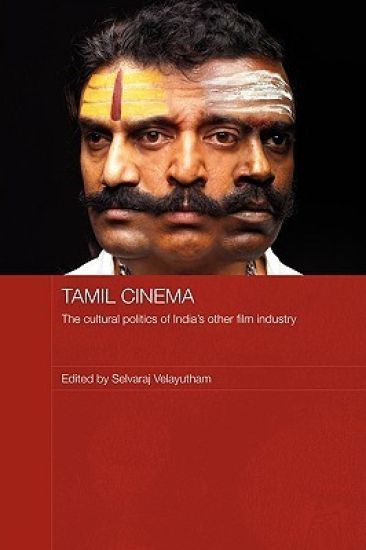
Tamil Cinema
Routledge
2009
nidottu
Hitherto, the academic study of Indian cinema has focused primarily on Bollywood, despite the fact that the Tamil film industry, based in southern India, has overtaken Bollywood in terms of annual output. This book examines critically the cultural and cinematic representations in Tamil cinema. It outlines its history and distinctive characteristics, and proceeds to consider a number of important themes such as gender, religion, class, caste, fandom, cinematic genre, the politics of identity and diaspora. Throughout, the book cogently links the analysis to wider social, political and cultural phenomena in Tamil and Indian society. Overall, it is an exciting and original contribution to an under-studied field, also facilitating a fresh consideration of the existing body of scholarship on Indian cinema.
Tamil Prose Reader
Asher R. E. Asher; Radhakrishnan R. Radhakrishnan
Cambridge University Press
1971
sidottu
A reader for non-Tamil-speaking students.