Are you looking for answers for your purpose in life? Do you have trouble figuring out your natural strengths and talents? Do you love learning about yourself and the people around you? No matter your current estimation of yourself, you are a wonderful and carefully made person, and you are here to create something that will astonish the world Now is the time to discover who you truly are and take action to uncover your spiritual self.
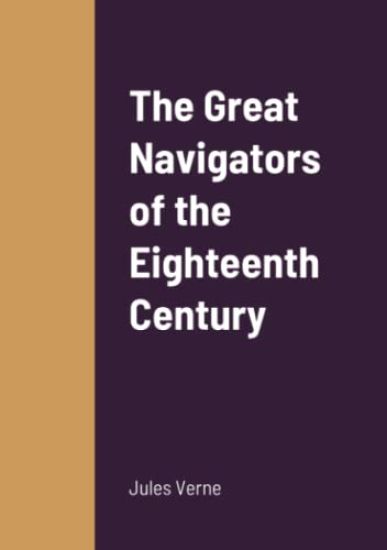
The Great Navigators of the Eighteenth Century - With 96 Illus. by Philippoteaux, Benett, and Matthis is an unchanged, high-quality reprint of the original edition of 1880. Hansebooks is editor of the literature on different topic areas such as research and science, travel and expeditions, cooking and nutrition, medicine, and other genres. As a publisher we focus on the preservation of historical literature. Many works of historical writers and scientists are available today as antiques only. Hansebooks newly publishes these books and contributes to the preservation of literature which has become rare and historical knowledge for the future.
Hendrik Willem van Loon(January 14, 1882 - March 11, 1944) was a Dutch-American historian, journalist, and award-winning children's book author.He was born in Rotterdam, Netherlands, the son of Hendrik Willem van Loonand Elisabeth Johanna Hanken.He went to the United States in 1902 to study at Cornell University, receiving his degree in 1905. In 1906 he married Eliza Ingersoll Bowditch (1880-1955), daughter of a Harvard professor, by whom he had two sons, Henry Bowditch and Gerard Willem. The newlyweds moved to Germany, where van Loon received his Ph.D. from the University of Munich in 1911 with a dissertation that became his first book, The Fall of the Dutch Republic (1913). He was a correspondent for the Associated Press during the Russian Revolution of 1905 and again in Belgium in 1914 at the start of World War I. He lectured at Cornell University from 1915 to 1917; in 1919 he became an American citizen. Van Loon had two later marriages, to Eliza Helen (Jimmie) Criswellin 1920 and playwright Frances Goodrich Ames in 1927, but after a divorce from Ames he returned to Criswell (it is debatable whether or not they remarried); she inherited his estate in 1944.From the 1910s until his death, Van Loon wrote many books, illustrating them himself. Most widely known among these is The Story of Mankind, a history of the world especially for children, which won the first Newbery Medal in 1922. The book was later updated by Van Loon and has continued to be updated, first by his son and later by other historians. However, he also wrote many other very popular books aimed at young adults. As a writer he was known for emphasizing crucial historical events and giving a complete picture of individual characters, as well as the role of the arts in history. He also had an informal and thought-provoking style which, particularly in The Story of Mankind, included personal anecdotes. As an illustrator of his own books, he was known for his lively black-and-white drawings and his chronological diagrams.... Jan Huyghen van Linschoten (1563 - 8 February 1611) was a Dutch merchant, trader and historian. An alternative spelling of his second name is Huijgen.e travelled extensively along the East Indies' regions under Portuguese influence and served as the Portuguese Viceroy's secretary in Goa between 1583 and 1588. He is credited with publishing in Europe important classified information about Asian trade. In 1596 he published a book, Itinerario (later published as an English edition as Discours of Voyages into Y East & West Indies) which graphically displayed for the first time in Europe detailed maps of voyages to the East Indies, particularly India. During his stay in Goa, abusing the trust put in him by the Viceroy, Jan Huyghens meticulously copied the top-secret charts page-by-page. Even more crucially, Jan Huyghens provided nautical data like currents, deeps, islands and sandbanks, which was absolutely vital for safe navigation, along with coastal depictions to guide the way. The publication of the navigational routes enabled the passage to the East Indies to be opened to trading by the English and the Dutch. As a consequence, The British East India Company and the Dutch East India Company broke the 16th-century monopoly enjoyed by the Portuguese on trade with the East Indies
First published in 1916, "The Golden Book of the Dutch Navigators" is a detailed account of various famous Dutch navigators, many of whom sacrificed their lives and did so knowingly in the name of exploration. Some of them were drowned, and some of them died of thirst. A few were frozen to death, and many were killed by the heat of the scorching sun. Others were speared by cannibals and provided a feast for the hungry tribes of the Pacific Islands. This volume is not to be missed by those with an interest in navigation and its history, and it would make for a fantastic addition to collections of allied literature. Willem van Loon (1882 - 1944) was a Dutch-American journalist, historian, and successful author of children's books. Contents include: "Jan Huygen Van Linschoten", "The Northeast Passage", "The Tragedy Of Spitzbergen", "The First Voyage To India-Failure", "The Second Voyage To India-Success", "Van Noort Circumnavigates The World", "The Attack Upon The West Coast Of America", "The Bad Luck Of Captain Bontekoe", etc. Other notable works by this author include: "The Story of Mankind" (1921), "The Story of the Bible" (1923), and "Witches and Witch-Finders" (1923). Many vintage books such as this are increasingly scarce and expensive. We are republishing this volume now in an affordable, modern, high-quality edition complete with the original text and artwork.
This is a story of magnificent failures. The men who equipped the expeditions of which I shall tell you the story died in the poorhouse. The men who took part in these voyages sacrificed their lives as cheerfully as they lighted a new pipe or opened a fresh bottle. Some of them were drowned, and some of them died of thirst. A few were frozen to death, and many were killed by the heat of the scorching sun. The bad supplies furnished by lying contractors buried many of them beneath the green cocoanut-trees of distant lands. Others were speared by cannibals and provided a feast for the hungry tribes of the Pacific Islands. But what of it? It was all in the day's work. These excellent fellows took whatever came, be it good or bad, or indifferent, with perfect grace, and kept on smiling. They kept their powder dry, did whatever their hands found to do, and left the rest to the care of that mysterious Providence who probably knew more about the ultimate good of things than they did.
Most navigators have heard of Viking sunstones, but few realize they are more than legend. Leif Karlsen has brought them to life. He shows us how they work--now, and a thousand years ago--and what it was that led the Viking navigators to develop this unique tool for finding the direction to the sun, even when the sun is obscured by clouds or fog.