

Kirjahaku
Etsi kirjoja tekijän nimen, kirjan nimen tai ISBN:n perusteella.
1000 tulosta hakusanalla Theodore Dreiser
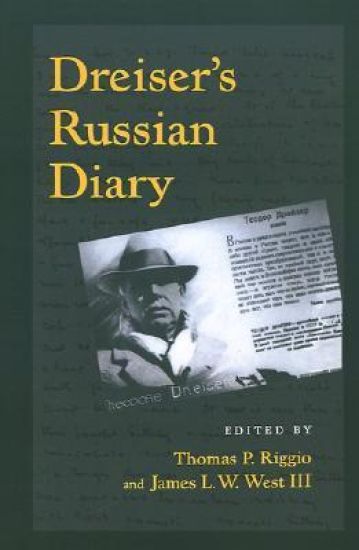
Theodore Dreiser's Russian Diary is an extended record of the American writer's travels throughout the Soviet Union in 1927-28. Dreiser was initially invited to Moscow for a week-long observance of the tenth anniversary of the October Revolution. He asked, and was granted, permission to make an extended tour of the country. This previously unpublished diary is a firsthand record of life in the USSR during the 1920s as seen by a leading American cultural figure. It is a valuable primary source, surely among the last from this period of modern history.
Dreiser-Mencken Letters, Volume 1
Theodore Dreiser; H.L. Mencken
University of Pennsylvania Press
1986
sidottu
This book is a volume in the Penn Press Anniversary Collection. To mark its 125th anniversary in 2015, the University of Pennsylvania Press rereleased more than 1,100 titles from Penn Press's distinguished backlist from 1899-1999 that had fallen out of print. Spanning an entire century, the Anniversary Collection offers peer-reviewed scholarship in a wide range of subject areas.

Dreiser-Mencken Letters, Volume 2
Theodore Dreiser; H.L. Mencken
University of Pennsylvania Press
1986
sidottu
This book is a volume in the Penn Press Anniversary Collection. To mark its 125th anniversary in 2015, the University of Pennsylvania Press rereleased more than 1,100 titles from Penn Press's distinguished backlist from 1899-1999 that had fallen out of print. Spanning an entire century, the Anniversary Collection offers peer-reviewed scholarship in a wide range of subject areas.
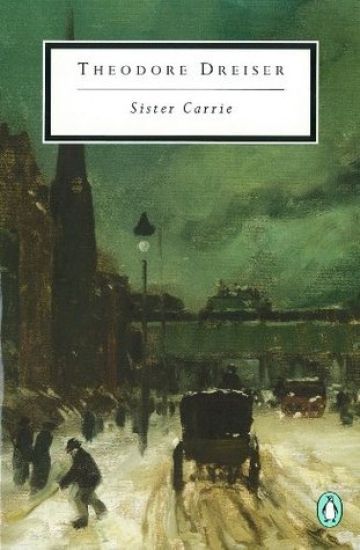
A landmark in American literature, presented in its complete and unexpurgated version. Dreiser's unsparing story of a country girl's rise to riches as the mistress of a wealthy man marked the beginning of the naturalist movement in America. Both its subject matter and Dreiser's objective, nonmoralizing approach made it highly controversial, and only a heavily edited version could be published in 1900. In this restored version, the truly revolutionary nature of Sister Carrie is made fully evident.
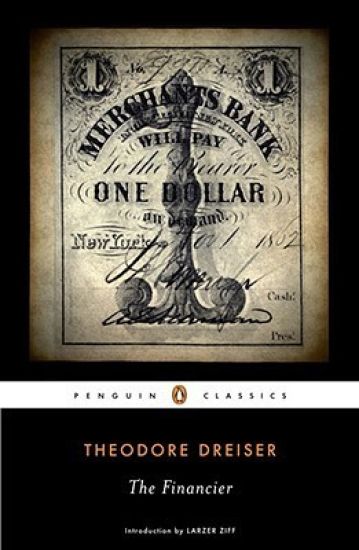
A master of gritty naturalism, Theodore Dreiser explores the corruption of the American dream in The Financier. Frank Cowperwood, a fiercely ambitious businessman, emerges as the very embodiment of greed as he relentlessly seeks satisfaction in wealth, women, and power. As Cowperwood deals and double-deals, betrays and is in turn betrayed, his rise and fall come to represent the American success story stripped down to brutal realities-a struggle for spoils without conscience or pity. Dreiser's 1912 classic remains an unsparing social critique as well as a devastating character study of one of the most unforgettable American businessmen in twentieth-century literature.
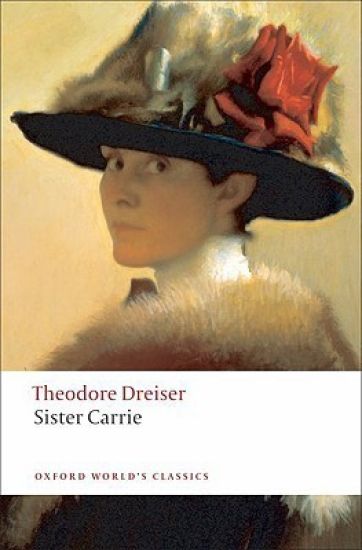
`When a girl leaves her home at eighteen, she does one of two things. Either she falls into saving hands and becomes better, or she rapidly assumes the cosmopolitan standard of virtue and becomes worse.' The tale of Carrie Meeber's rise to stardom in the theatre and George Hurstwood's slow decline captures the twin poles of exuberance and exhaustion in modern city life as never before. The premier example of American naturalism, Dreiser's remarkable first novel has deeply influenced such key writers as William Faulkner, F. Scott Fitzgerald, Saul Bellow, and Joyce Carol Oates. This edition uses the 1900 text, which is regarded as the author's final version. ABOUT THE SERIES: For over 100 years Oxford World's Classics has made available the widest range of literature from around the globe. Each affordable volume reflects Oxford's commitment to scholarship, providing the most accurate text plus a wealth of other valuable features, including expert introductions by leading authorities, helpful notes to clarify the text, up-to-date bibliographies for further study, and much more.

Before publishing Dreiser's European travel book in 1913, the Century Company editors had heavily excised autobiographical reminiscences, philosophical speculations, revealing portraits of prominent figures, Dreiser's relationships with women, and his carefully observed renditions of lower-class urban life. This newly edited text is based on the typescript that Dreiser himself had prepared from his holograph in order to preserve it fully for future publication. The text reveals Dreiser's multiple motives in going to Europe--not least the cultivation of his reputation in England and the exploration of his ancestral roots in Germany. The earlier edition is about places; this fuller text is about Dreiser himself.
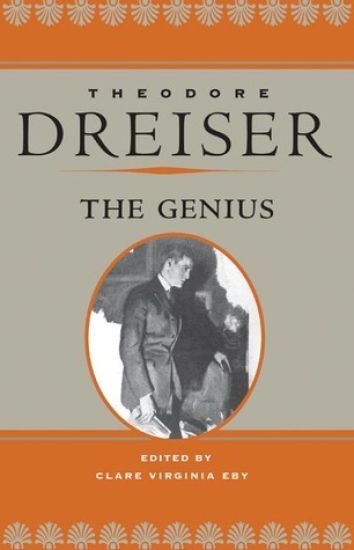
Thoroughly immersed in the turn-of-the-century art scene, Theodore Dreiser's autobiographical The Genius explores the multiple conflicts between art and business, art and marriage, and between traditional and modern views of sexual morality. Despite heavy editing before its 1915 publication, The Genius was deemed so shocking that its sale was immediately prohibited by the New York Society for the Suppression of Vice. Eventually released in 1923, the novel confirmed Dreiser's status as a writer ahead of his time.Clare Virginia Eby's new edition brings to print for the first time Dreiser's original version of the novel as he composed it in 1911. The protagonist Eugene Witla, as well as the women he loves, emerge as very different characters than they appear in the 1915 edition and the ending takes a markedly different turn. Dreiser's attention to female characters' inner lives and their passions, sexual and otherwise, also renders them more comprehensible and sympathetic.Long understood as the most autobiographical of Dreiser's novels, this new edition suggests a younger, less assertive Dreiser whose mature ideas of self, masculinity, artistic achievement, and worldly success were still in the process of formation.
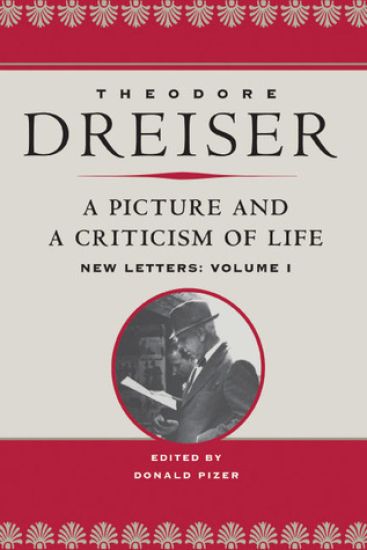
Dreiser's captivating portraits of turn-of-the-century America's famous figures Before coming to national attention for his novel Sister Carrie, Theodore Dreiser worked for nearly a decade as a magazine editor and freelance writer. Now in paperback, Art, Music, and Literature, 1897-1902 collects a rich selection of Dreiser's brief, colorful articles and interviews with American artists, musicians, and writers during this period. His profiles and interviews include such notables as Alfred Stieglitz, William Dean Howells, and legendary impresario Major James Burton Pond, as well as numerous women artists, novelists, and musicians. The volume is liberally seasoned with period illustrations reproduced from the original publications, and Yoshinobu Hakutani's notes provide biographical details about Dreiser's various subjects.
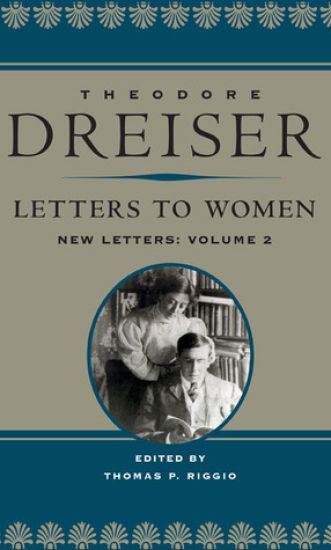
Theodore Dreiser led a long and controversial life, almost always pursuing some serious question, and not rarely pursuing women. This collection, the second volume of Dreiser correspondence to be published by the University of Illinois Press, gathers previously unpublished letters Dreiser wrote to women between 1893 and 1945, many of them showing personal feelings Dreiser revealed nowhere else. Here he both preens and mocks himself, natters and scolds, relates his jaunts with Mencken and his skirmishes with editors and publishers. He admits his worries, bemoans his longings, and self-consciously embarks on love letters that are unafraid to smolder and flame. To one reader he sends "Kisses, Kisses, Kisses, for your sweety mouth" and urges his needy requests: "Write me a love-letter Honey girl." Alongside such amorous play, he often expressed his deepest feelings on philosophical, religious, and social issues that characterize his public writing. Chronologically arranged and meticulously edited by Thomas P. Riggio, these letters reveal how wide and deep Dreiser's needs were. Dreiser often discussed his writing in his letters to women friends, telling them what he wanted to do, where he thought he succeeded and failed, and seeking approval or criticism. By turns seductive, candid, coy, and informative, these letters provide an intimate view of a master writer who knew exactly what he was after.
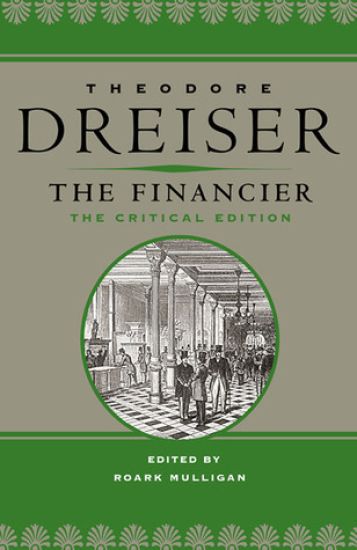
First published in 1912, Theodore Dreiser's third novel, The Financier, captures the ruthlessness and sparkle of the Gilded Age alongside the charismatic amorality of the power brokers and bankers of the mid-nineteenth century. This volume is the first modern edition of The Financier to draw on the uncorrected page proofs of the original 1912 version, which established Dreiser as a master of the American business novel. The novel was the first volume of Dreiser’s Trilogy of Desire, also known as the Cowperwood Trilogy, which includes The Titan (1914) and The Stoic (1947).Dreiser laboriously researched the business practices and personal exploits of real-life robber baron Charles Yerkes to narrate Frank Algernon Cowperwood's early career in The Financier, which explores the unscrupulous world of finance from the Civil War through the panic incited by the 1871 Chicago fire. In 1927, the monumental novel reappeared in a radically revised version for which Dreiser, notorious for lengthy novels, agreed to cut more than two hundred and seventy pages. This revised version became the most familiar, reprinted by publishers and studied by scholars for decades.For this new edition, Roark Mulligan meticulously reviewed earlier versions of the novel and its publication history, including the last-minute removal of paragraphs, pages, and even whole chapters from the 1912 edition, cuts based mainly on the advice of H. L. Mencken. The restored text better matches Dreiser's original vision for the work. More than three hundred additional pages not available to modern readers--including those cut from the 1927 edition and more than seventy hastily removed from the manuscript just days before publication in 1912--more effectively establish characterization and motivation. Restored passages dedicated to the internal thoughts of major and minor characters bring a softer dimension to a novel primarily celebrated for its realistic attention to the cold external world of finance.Mulligan's historical commentary reveals new insights into Dreiser's creative practices and how his business knowledge shaped The Financier. This supplemental material considers the novel's place within the tradition of American business novels and its reflections on the scandalous business practices of the robber baron era.

Theodore Dreiser staked his reputation on fearless expression in his fiction, but he never was more outspoken than when writing about American politics, which he did prolifically. Although he is remembered primarily as a novelist, the majority of his twenty-seven books were nonfiction treatises. To Dreiser, everything was political. His sense for the hype and hypocrisies of politics took shape in reasoned but emphatic ruminations in his fiction and nonfiction on the hopes and disappointments of democracy, the temptations of nationalism and communism, the threat and trumpets of war, and the role of writers in resisting and advancing political ideas. Spanning a period of American history from the Progressive Era to the advent of the Cold War, this generous volume collects Dreiser's most important political writings from his journalism, broadsides, speeches, private papers, and long out-of-print nonfiction books. Touching on the Great Depression, the New Deal, and both World Wars as well as Soviet Russia and the persecution of Jews in Nazi Germany, these writings exemplify Dreiser's candor and his penchant for championing the defenseless and railing against corruption. Positing Dreiser as an essential public intellectual who addressed the most important issues of the first half of the twentieth century, these writings also navigate historical terrain with prescient observations on topics such as religion, civil rights, national responsibility, individual ethics, global relations, and censorship that remain particularly relevant to a contemporary audience. Editor Jude Davies provides historical commentaries that frame these selections in the context of his other writings, particularly his novels.

Dreiser's captivating portraits of turn-of-the-century America's famous figures In this volume, liberally seasoned with period illustrations, Yoshinobu Hakutani has collected and annotated a rich selection of Theodore Dreiser's pre-fame writings on the cultural milieu of his day. In these brief essays, Dreiser sallies into the vibrant world of creative work in turn-of-the-century America. He inspects the eccentric and revealing paraphernalia of artists' studios, probes the work habits of writers, and goes behind the scenes in the popular song-writing business, where this week's celebrity is next week's has-been. He profiles famous figures and introduces numerous women artists, novelists, and musicians, including the prolific and tireless Amelia Barr (mother of fourteen children and author of thirty-two novels), the illustrator Alice B. Stephens, and the opera singer Lillian Nordica. Hakutani's notes provide biographical detail on dozens of now-obscure individuals mentioned by Dreiser.

Recounts the author's return to his native Indiana by car in 1916 with artist Franklin Booth
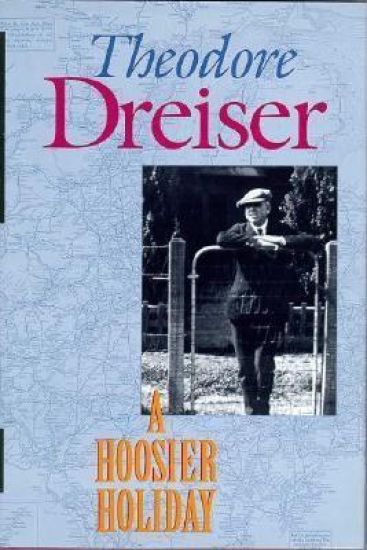
"Though far from the author's usual musings, this is actually a forerunner to the American road novel and very well could have been one of the inspirations for Jack Kerouac . . . this is a fine addition to public and academic libraries." —Library Journal "Theodore Dreiser, road warrior . . . Dreiser's account of his homecoming will touch a familiar and responsive chord in anyone who has undertaken one. . . . In that, as in so much else in this book, as in the great body of all his work, Dreiser in his earnest, heartfelt, clumsy way speaks to the universal experience." —Jonathan Yardley, Washington Post Book World "Because [the book] provides a portrait of the artist as a young man and describes the nation as a mosaic of individual cultures, Dreiser's journey offers several different lessons. Part travelogue, part autobiography, part collection of essays, A Hoosier Holiday lays out the landscape of a nation that ceased to exist once the highway unfurled across the map." —Publishers Weekly (starred review) By 1914, Theodore Dreiser was a successful writer living in New York. He had not been back to his home state in over 20 years. When his friend Franklin Booth approached him with the idea of driving from New York to Indiana, Dreiser's response to Booth was immediate: "All my life I've been thinking of making a return trip to Indiana and writing a book about it." Along the route, Dreiser recorded his impressions of the people and land in words while his traveling companion sketched some of these scenes. In this reflective tale, Dreiser and Booth cross four states to arrive at Indiana and the sites and memories of Dreiser's early life in Terre Haute, Sullivan, Evansville, Warsaw, and his one year at Indiana University.

" Theodore Dreiser is a man who, with the passage of time, is bound to loom larger and larger in the awakening aesthetic consciousness of America. Among all of our prose writers he is one of the few men of whom it may be said that he has . . . never been a trickster. If there is a modern movement in American prose writing, a movement toward greater courage and fidelity to life in writing, Theodore Dreiser is the pioneer and the hero of the movement."--Sherwood AndersonLong before she was seduced by the cautious and ordinary man whose life she would unravel with no malice and only intermittent interest, the young Carrie Meeber was seduced by the promise of the city--its vitality and reckless possibility, the thrill of material luxury, and the spectacle of power and industry. Banned on publication for its questionable morals, Sister Carrie is the great American novel of seduction, a masterpiece of insight into appetite and innocence."Such a novel as Sister Carrie stands quite outside the brief traffic of the customary stage. It leaves behind an inescapable impression of bigness, of epic sweep and dignity. It is not a mere story, not a novel in the customary American meaning of the word; it is at once a psalm of life and a criticism of life. . . . [Dreiser's] aim is not merely to tell a tale; his aim is to show the vast ebb and flow of forces which sway and condition human destiny. The thing he seeks to do is to stir, to awaken, to move. One does not arise from such a book as Sister Carrie with a smirk of satisfaction; one leaves it infinitely touched."--H. L. Mencken
The novel is followed by "A Note on the Text," which discusses the relationship between this edition’s text and that of the Pennsylvania Edition (1981), and a "Textual Appendix," which provides a generous sampling of the cuts Dreiser and his friend Arthur Henry made in the typescript version of Sister Carrie. "Backgrounds and Sources" reprints generous excerpts from Dreiser’s autobiographies and other writings that help establish his personal connection to the novel. Coverage of the supposed "suppression" of Sister Carrie by its first publisher is drawn from Dreiser’s correspondence with Frank Norris, Arthur Henry, Walter H. Page, and F. N. Doubleday. "Criticism" collects thirteen essays, six of them new to the Third Edition, that discuss Dreiser’s distinctive literary naturalism and narrative technique, the novel’s relationship to American culture, and issues of gender and class in the novel, among other topics. Contributors include Ellen Moers, Robert Penn Warren, Amy Kaplan, Alan Trachtenberg, and Donald Pizer, among others. A Chronology of Sister Carrie and a Selected Bibliography are also included.
This epic of urban life tells of small- town heroine Carrie Meeber, adrift in an indifferent Chicago. Setting out, she has nothing but a few dollars and an unspoiled beauty. Hers is a story of struggle? from sweatshop to stage success?and of the love she inspires in an older, married man whose obsession with her threatens to destroy him.

An American Masterpiece Clyde Griffiths finds his social-climbing aspirations and love for a rich and beautiful debutante threatened when his lower-class pregnant girlfriend gives him an ultimatum.