#1 New York Times Bestseller - Los Angeles Times Bestseller One of The Wall Street Journal's 10 Books to Read Now - One of Kirkus Reviews's Best Nonfiction Books of the Year - One of Publishers Weekly's Most Anticipated Books of the YearShortlisted for the OWL Business Book Award and Longlisted for the Financial Times and McKinsey Business Book of the Year Award Version 2.0, Updated and Expanded, with a New AfterwordWe all sense it--something big is going on. You feel it in your workplace. You feel it when you talk to your kids. You can't miss it when you read the newspapers or watch the news. Our lives are being transformed in so many realms all at once--and it is dizzying. In Thank You for Being Late, version 2.0, with a new afterword, Thomas L. Friedman exposes the tectonic movements that are reshaping the world today and explains how to get the most out of them and cushion their worst impacts. His thesis: to understand the twenty-first century, you need to understand that the planet's three largest forces--Moore's law (technology), the Market (globalization), and Mother Nature (climate change and biodiversity loss)--are accelerating all at once. These accelerations are transforming five key realms: the workplace, politics, geopolitics, ethics, and community. The year 2007 was the major inflection point: the release of the iPhone, together with advances in silicon chips, software, storage, sensors, and networking, created a new technology platform that is reshaping everything from how we hail a taxi to the fate of nations to our most intimate relationships. It is providing vast new opportunities for individuals and small groups to save the world--or to destroy it. With his trademark vitality, wit, and optimism, Friedman shows that we can overcome the multiple stresses of an age of accelerations--if we slow down, if we dare to be late and use the time to reimagine work, politics, and community. Thank You for Being Late is an essential guide to the present and the future.
The acknowledgment that obesity is a disease—a disease with enormous impact on both the public health and the economy and an incredible burden to its victims—has ?nally come. This ?nal recognition will hopefully free research dollars and will encourage third party payers to understand the need to cover services for treatment. Dr McKnight is an honored family medicine educator who combines his sense of academic rigor with the understanding of a compassionate family p- sician. Thus he approaches this clinical syndrome in the manner of a family physician: he aims to have an effect on the entire person and that person’s life, not just some disease entity. His broad-based approach draws on behavioral strategies, diet and exercise modi?cation, and limited use of pharmaceuticals in selected cases. The practical tools presented here will prove to be valuable ad- tions to the armamentarium of care teams that look to develop treatment plans for their patients with this disease. I myself have been obese as long as I can remember. I am the son of obese parents and my sister has shared this chronic problem. Over my lifetime I have dealt with almost all of the problems of obesity, and I have used all of the excuses. I have dealt with many obese patients during my years in practice, some who have said openly that they chose me as their physician because I really couldn’t tell them to lose weight, since I could not myself.
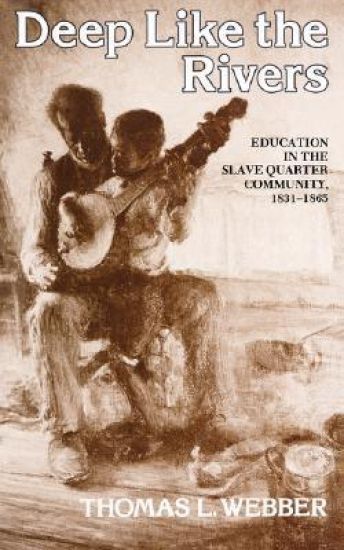
By the time of the Civil War, Thomas L. Webber shows, American slaves had created for themselves a new and separate culture, combining elements of their African past and their experiences under slavery in the South. How they were able to educate themselves and their children is the story of this book, told in many cases in the words of the slaves themselves.
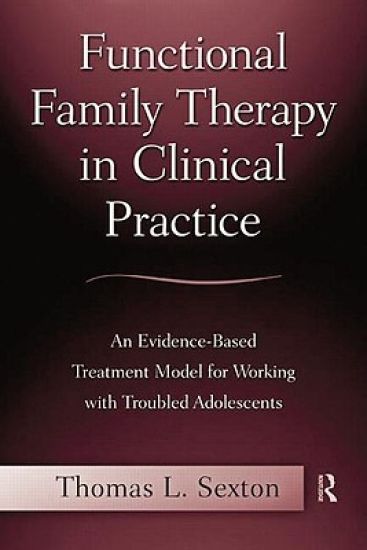
Functional Family Therapy in Clinical Practice develops a comprehensive presentation that serves as a systematic guide to understanding the Functional Family Therapy (FFT) clinical model, the FFT service delivery system, the theoretical principles that serve as the foundation of FFT, and the mechanism of therapeutic change that gives FFT its potency. Clinically relevant, theoretically sound, and scientifically based, this book contains systematic discussions of topics and theoretical perspectives, as well as illustrative clinical examples that demonstrate the manner in which principles are applied in Family Focused Therapy.
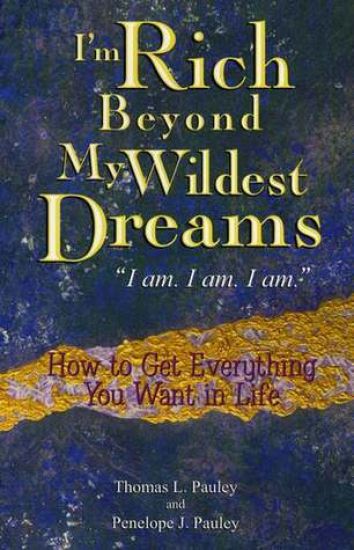
They were given a key that unlocked the door to riches beyond their imaginations. It came to them on wings of gold. Now father and daughter share their story. The simple system detailed in this book is so powerful it took their family from a second personal bankruptcy to a rich and happy life...practically overnight. Learn: - How to guarantee your success - One amazing secret that makes millionaires out of wage earners - The key to an immediate, large, permanent increase in your income - One secret formula the rich use to do less and have more - Why too much effort produces exactly the opposite result
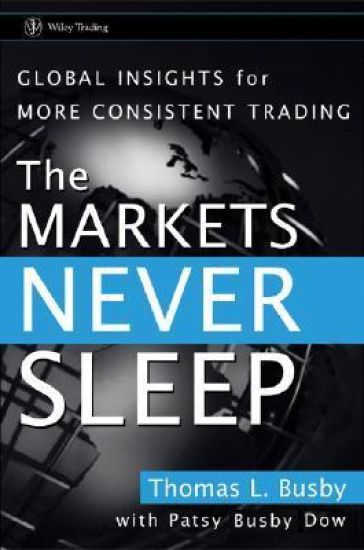
Praise for The Markets Never Sleep "An excellent primer for futures and the global financial market, a clear voice of their importance for all traders. Tom also gives an easy-to-understand professional approach to discipline, money management, and the 'numbers' to watch that indicate market direction. Help for all traders to earn bigger, more consistent profits." --Ned W. Bennett, CEO, optionsXpress, Inc. "Well . . . they've done it again! Tom and Patsy have written another insightful and entertaining book on understanding and trading the world's markets. The Markets Never Sleep shows how to analyze all the global markets and use timing and money management to control losses and reap significant rewards without using up all of one's emotional energy. In other words, everything needed to make trading fun and profitable!" --Russ Mothershed, former corporate executive and current DTI student "Trading follows the sun, as Busby points out, and with a click of one's mouse, traders today have the full advantage of global trading. Busby makes a compelling case for opportunistic trading. In an easy-to-follow outline, he shares trading strategies to ensure a high probability of profit. The Markets Never Sleep is a must-read for traders and investors who seek insight navigating the global markets." --Chuck Dukas, President, TRENDadvisor.com
Now fully revised and in a second edition, The Portable Ethicist for Mental Health Professionals suggests solutions to the simple and complex ethical questions mental health professionals must deal with on a daily basis. This indispensable guide arms you with the expert knowledge you need to avoid an ethical violation?or to handle the situation if a complaint is filed. Web copy, 5/14/08, RH
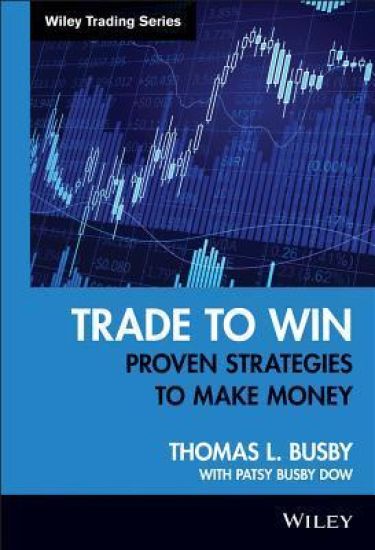
Divided into three comprehensive parts, Trade to Win explains the fundamental elements of author Thomas Busby's proven trading approach–which deals with the significance and use of time, key numbers, and market indicators. Along the way, you'll find strategies for trading stocks, options, futures, and other financial products, and go beyond the numbers to learn about a few of the often overlooked aspects of trading–including risk management, money management, and the impact of emotions on your trading.
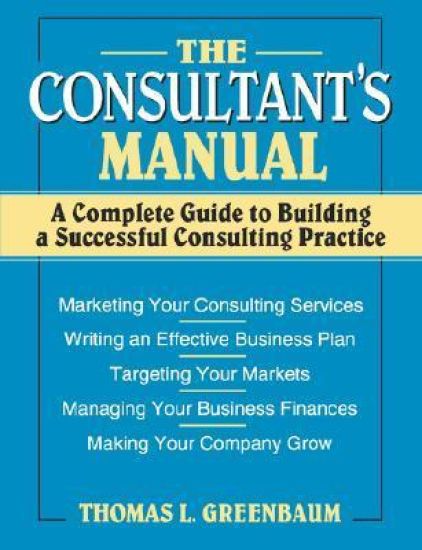
The Consultant's Manual If you're serious about starting your own consulting practice, there's something you should know . . No matter how knowledgeable you are in your field.. No matter how expert your advice or impressive your credentials.. If you don't bring an air of consummate professionalism to every phase of your practice--from proposal-writing and fee-setting, to drawing up contracts and issuing reports--you'll almost definitely lose out to the professional who does. But don't worry, because with Tom Greenbaum and The Consultant's Manual in your corner, you can make sure that never happens! Growing out of the author's Harvard consulting course, this book offers level-headed, expert advice on virtually every practical aspect of starting, building, and marketing your consulting practice. Centered around the theme of developing and working an exhaustive business plan for your firm, it leads you step-by-step through the research, planning, and problem-solving stages. Positioning your firm, giving it a name, targeting your market, establishing a sales culture, maintaining top-flight customer service, cash flow, billing, and fee setting . it's all in here, and much more.
Nonlinear and Optimal Control Systems offers a self-contained introduction to analysis techniques used in the design of nonlinear and optimal feedback control systems, with a solid emphasis on the fundamental topics of stability, controllability, optimality, and the corresponding geometry. The book develops and presents these key subjects in a unified fashion. An integrated approach is used to develop stability theory, function minimizing feedback controls, optimal controls, and differential game theory.Starting with a background on differential equations, this accessible text examines nonlinear dynamical systems and nonlinear control systems, including basic results in nonlinear parameter optimization and parametric two-player games. Lyapunov stability theory and control system design are discussed in detail, followed by in-depth coverage of the controllability minimum principle and other important controllability concepts. The optimal control (Pontryagin's) minimum principle is developed and then applied to optimal control problems and the design of optimal controllers.Nonlinear and Optimal Control Systems features examples and exercises taken from a wide range of disciplines and contextsfrom engineering control designs to biological, economic, and other systems. Numerical algorithms are provided for solving problems in optimization and control, as well as simulation of systems using nonlinear differential equations. Readers may choose to develop their own code from these algorithms or solve problems with the help of commercial software programs.Providing readers with a sturdy foundation in nonlinear and optimal control system design and application, this new resource is a valuable asset to advanced students and professional engineers in many different fields.An integrated approach to the fundamentals of nonlinear and optimal control systems. This self-contained text provides a solid introduction to the analysis techniques used in the design of nonlinear and optimal feedback control systems. Building on thorough coverage of the basic concepts of stability, controllability, and optimality, the book develops highly effective feedback controllers for stability, function minimizing control, optimal control, and two-player differential games.Concepts are illustrated throughout with examples that represent a range of disciplines and design contexts, bridging theory and application for advanced students and practicing engineers in many different fields. The book features: *An accessible introduction to nonlinear system dynamics *Lyapunov stability theory and control system design *Controllability of nonlinear systems, including in-depth treatment of the controllability minimum principle and Pontryagin's minimum principle *Optimal control systems and design using Pontryagin's minimum principle *Differential games and design conceptsqualitative and quantitative games, Isaacs' min-max principle, and more *Numerical algorithms for control, optimization, and simulation of nonlinear dynamical systems
Take a proven approach to short-term trading. Winning the Day Trading Game offers an insider's view of the trading life and provides proven strategies for profitable trading. Professional trader Tom Busby explains how the strategies that made him so much money early on in his career ultimately failed during the 1987 stock market crash and then reveals how he reinvented himself as a high-percentage day trader. He interweaves personal experiences with technical explanations to outline the cornerstones of his technique. In highlighting his own trading experiences, Busby clearly explains how to beat the market by balancing the impulses of greed and fear, managing risk at all times; and taking responsibility for your trading. Thomas L. Busby (Mobile, AL) has been a professional trader and broker for 25 years, working with Merrill Lynch and Smith Barney. He founded the Day Trading Institute in 1996 and it has grown into one of the most successful trading schools in the world.
Why is there still so much dissatisfaction with the role of special interest groups in financing American election campaigns, even though no aspect of interest group politics has been so thoroughly regu-lated and constrained? This book argues that part of the answer lies in the laws themselves, which prevent many hard-to-organize citizen groups from forming effective political action committees (PACs), while actually helping business groups organize PACs.Thomas L. Gais points out that many laws that regulate group involvement in elections ignore the real difficulties of political mobilization, and he concludes that PACs and the campaign finance laws reflect a fundamental discrepancy between grassroots ideals and the ways in which broadly based groups actually get organized.". . . . of fundamental scholarly and practical importance. The implications for 'reform' are controversial, flatly contradicting other recent reform proposals . . . . I fully expect that Improper Influence will be one of the most significant books on campaign finance to be published in the 1990s." --Michael Munger, Public Choice"It is rare to find a book that affords a truly fresh perspective on the role of special interest groups in the financing of U.S. elections. It is also uncommon to find a theoretically rigorous essay confronting a topic usually grounded in empirical terms. . . . Improper Influence scores high on both counts and deserves close attention from students of collective action, campaign finance law, and the U.S. political process more generally." --American Political Science ReviewThomas L. Gais is Senior Fellow, The Nelson A. Rockefeller Institute of Government, State University of New York.
This is an invaluable reference to all the characters who appear in English drama from 1500 to 1660. The book indexes well over a thousand printed plays. In addition to characters' names it indexes character types (Dwarf, Gypsy), nationalities (Frenchman, American), military ranks, psychological states (Jealousy, Melancholy), occupations and professions. The accompanying Finding List provides a table of play titles, authors, dates of publication, dates of performance and short-title catalogue numbers. The book is a much revised and expanded version of An Index of Characters in English Printed Drama to the Restoration (1975). This edition indexes the names of characters in 180 plays which no longer survive in print and characters from Latin plays of the period. Further features are an alphabetical list of plays, an index of playwrights and an expanded bibliography.
This book introduces readers to analytical interpretation of seminal writings and thinkers in the history of political thought, including Socrates, Plato, Aristotle, the Bible, Thomas Aquinas, Machiavelli, Bacon, Hobbes, Locke, Montesquieu, Rousseau, Tocqueville, Marx, and Nietzsche. Chronologically arranged, each chapter in the book is devoted to the work of a single thinker. The selected texts together engage with 2000 years of debate on fundamental questions including: what is the purpose of political life? What is justice? What is a right? Do human beings have rights? What kinds of human virtues are there and which regimes best promote them? The difficulty of accessing the texts included in this volume is the result not only of their subtlety but also of the dramatic change in everyday life. The authors shed light on the texts' vocabulary and complexities of thought and help students understand and weigh the various interpretations of each philosopher's thought.
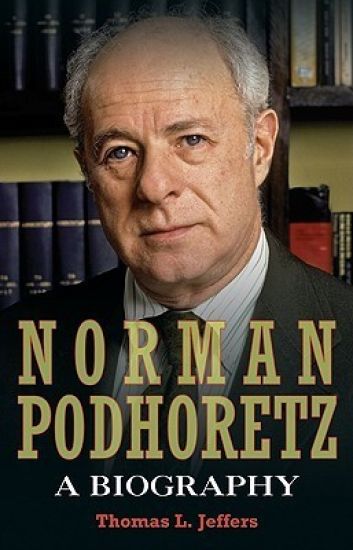
This is the first biography of the Jewish-American intellectual Norman Podhoretz, long-time editor of the influential magazine Commentary. As both an editor and a writer, he spearheaded the countercultural revolution of the 1960s and - after he 'broke ranks' - the neoconservative response. For years he defined what was at stake in the struggle against communism; recently he has nerved America for a new struggle against jihadist Islam; always he has given substance to debates over the function of religion, ethics, and the arts in our society. The turning point of his life occurred, at the age of forty near a farmhouse in upstate New York, in a mystic clarification. It compelled him to 'unlearn' much that he had earlier been taught to value, and it also made him enemies. Revealing the private as well as the public man, Thomas L. Jeffers chronicles a heroically coherent life.
Science and the Enlightenment is a general history of eighteenth-century science covering both the physical and life sciences. It places the scientific developments of the century in the cultural context of the Enlightenment and reveals the extent to which scientific ideas permeated the thought of the age. The book takes advantage of topical scholarship, which is rapidly changing our understanding of science during the eighteenth century. In particular it describes how science was organized into fields that were quite different from those we know today. Professor Hankins's work is a much needed addition to the literature on eighteenth-century science. His study is not technical; it will be of interest to all students of the Enlightenment and the history of science, as well as to the general reader with some background in science.
Science and the Enlightenment is a general history of eighteenth-century science covering both the physical and life sciences. It places the scientific developments of the century in the cultural context of the Enlightenment and reveals the extent to which scientific ideas permeated the thought of the age. The book takes advantage of recent scholarship, which is rapidly changing our understanding of science during the eighteenth century. In particular it describes how science was organized into fields that were quite different from those we know today. Professor Hankins’s work is a much needed addition to the literature on eighteenth-century science. His study is not technical; it will be of interest to all students of the Enlightenment and the history of science, as well as to the general reader with some background in science.
This is an invaluable reference to all the characters who appear in English drama from 1500 to 1660. The book indexes well over a thousand printed plays. In addition to characters’ names it indexes character types (Dwarf, Gypsy), nationalities (Frenchman, American), military ranks, psychological states (Jealousy, Melancholy), occupations and professions. The accompanying Finding List provides a table of play titles, authors, dates of publication, dates of performance, and short-title catalogue numbers. The book is a much revised and expanded version of An Index of Characters in English Printed Drama to the Restoration (Microcard Editions, 1975). This edition indexes for the first time the names of characters in 180 plays which no longer survive in print, and characters from Latin plays of the period. Further new features are an alphabetical list of plays, an index of playwrights and an expanded bibliography.
All of life is a game, and evolution by natural selection is no exception. The evolutionary game theory developed in this 2005 book provides the tools necessary for understanding many of nature's mysteries, including co-evolution, speciation, extinction and the major biological questions regarding fit of form and function, diversity, procession, and the distribution and abundance of life. Mathematics for the evolutionary game are developed based on Darwin's postulates leading to the concept of a fitness generating function (G-function). G-function is a tool that simplifies notation and plays an important role developing Darwinian dynamics that drive natural selection. Natural selection may result in special outcomes such as the evolutionarily stable strategy (ESS). An ESS maximum principle is formulated and its graphical representation as an adaptive landscape illuminates concepts such as adaptation, Fisher's Fundamental Theorem of Natural Selection, and the nature of life's evolutionary game.