Kirjojen hintavertailu. Mukana 12 290 406 kirjaa ja 12 kauppaa.

Kirjahaku

Etsi kirjoja tekijän nimen, kirjan nimen tai ISBN:n perusteella.

1000 tulosta hakusanalla Thomas W. Foley

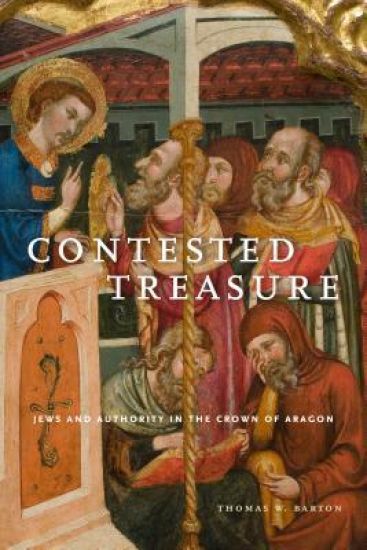
Contested Treasure

Contested Treasure

Thomas W. Barton

Pennsylvania State University Press
2014
sidottu
In Contested Treasure, Thomas Barton examines how the Jews in the Crown of Aragon in the twelfth through fourteenth centuries negotiated the overlapping jurisdictions and power relations of local lords and the crown. The thirteenth century was a formative period for the growth of royal bureaucracy and the development of the crown’s legal claims regarding the Jews. While many Jews were under direct royal authority, significant numbers of Jews also lived under nonroyal and seigniorial jurisdiction. Barton argues that royal authority over the Jews (as well as Muslims) was far more modest and contingent on local factors than is usually recognized. Diverse case studies reveal that the monarchy’s Jewish policy emerged slowly, faced considerable resistance, and witnessed limited application within numerous localities under nonroyal control, thus allowing for more highly differentiated local modes of Jewish administration and coexistence. Contested Treasure refines and complicates our portrait of interfaith relations and the limits of royal authority in medieval Spain, and it presents a new approach to the study of ethnoreligious relations and administrative history in medieval European society.
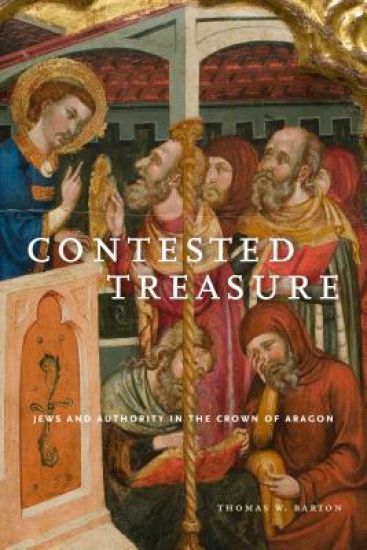
Contested Treasure

Contested Treasure

Thomas W. Barton

Pennsylvania State University Press
2015
pokkari
In Contested Treasure, Thomas Barton examines how the Jews in the Crown of Aragon in the twelfth through fourteenth centuries negotiated the overlapping jurisdictions and power relations of local lords and the crown. The thirteenth century was a formative period for the growth of royal bureaucracy and the development of the crown’s legal claims regarding the Jews. While many Jews were under direct royal authority, significant numbers of Jews also lived under nonroyal and seigniorial jurisdiction. Barton argues that royal authority over the Jews (as well as Muslims) was far more modest and contingent on local factors than is usually recognized. Diverse case studies reveal that the monarchy’s Jewish policy emerged slowly, faced considerable resistance, and witnessed limited application within numerous localities under nonroyal control, thus allowing for more highly differentiated local modes of Jewish administration and coexistence. Contested Treasure refines and complicates our portrait of interfaith relations and the limits of royal authority in medieval Spain, and it presents a new approach to the study of ethnoreligious relations and administrative history in medieval European society.
Posters for Peace

Posters for Peace

Thomas W. Benson

Pennsylvania State University Press
2015
sidottu
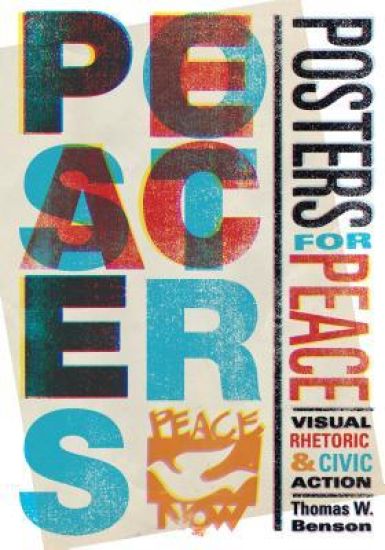
By the spring of 1970, Americans were frustrated by continuing war in Vietnam and turmoil in the inner cities. Students on American college campuses opposed the war in growing numbers and joined with other citizens in ever-larger public demonstrations against the war. Some politicians-including Ronald Reagan, Spiro Agnew, and Richard Nixon-exploited the situation to cultivate anger against students. At the University of California at Berkeley, student leaders devoted themselves, along with many sympathetic faculty, to studying the war and working for peace. A group of art students designed, produced, and freely distributed thousands of antiwar posters. Posters for Peace tells the story of those posters, bringing to life their rhetorical iconography and restoring them to their place in the history of poster art and political street art. The posters are vivid, simple, direct, ironic, and often graphically beautiful. Thomas Benson shows that the student posters from Berkeley appealed to core patriotic values and to the legitimacy of democratic deliberation in a democracy-even in a time of war.
Posters for Peace

Posters for Peace

Thomas W. Benson

Pennsylvania State University Press
2016
pokkari
By the spring of 1970, Americans were frustrated by continuing war in Vietnam and turmoil in the inner cities. Students on American college campuses opposed the war in growing numbers and joined with other citizens in ever-larger public demonstrations against the war. Some politicians—including Ronald Reagan, Spiro Agnew, and Richard Nixon—exploited the situation to cultivate anger against students. At the University of California at Berkeley, student leaders devoted themselves, along with many sympathetic faculty, to studying the war and working for peace. A group of art students designed, produced, and freely distributed thousands of antiwar posters. Posters for Peace tells the story of those posters, bringing to life their rhetorical iconography and restoring them to their place in the history of poster art and political street art. The posters are vivid, simple, direct, ironic, and often graphically beautiful. Thomas Benson shows that the student posters from Berkeley appealed to core patriotic values and to the legitimacy of democratic deliberation in a democracy—even in a time of war.
Nicaragua

Nicaragua

Thomas W. Walker

Praeger Publishers Inc
1985
sidottu
This timely book, with its useful and comprehensive index, is an insightful study of Nicaragua that should be read by any student of foreign affairs. Journal of Internal Law & PoliticsThis book is an examination of the evolving social and political atmosphere during the first half decade after the Sandinist revolution. Written by eminent scholars and participants Nicaragua documents the rapid social change that has occurred during the last five years. The essays focus on agrarian reform, education, health care, food policy, and Nicaragua's relations with the U.S., Latin America, Europe, and the non-alligned and socialist bloc nations.
The Laws of Genocide

The Laws of Genocide

Thomas W. Simon

Praeger Publishers Inc
2007
sidottu
The tools of reason offer the best hope for the international community to confront the increasing incidents of hate throughout the world. A historically informed, normative examination of the elements of the crime of genocide provides an excellent case study of how the law, reason's handmaiden, enhances understanding and improves practical ways of dealing with global injustices.How should we confront hate? As political activists, we could resort to fighting hate with hate. As concerned citizens, we could consciously ignore or actively protest hate. As committed educators, we could put the implements and survivors of hate on display. As committed scholars, we could resuscitate the idea of evil. As humanitarian jurists, we could put individual hate-mongers on trial. Part I of this book makes a case for making the maximum use of reason to deal with hate. This means that we should actively debate those who promote hate. Further, as a close look at the history of applying law to incidents of hate and violence illustrates, the courtroom proves to be an excellent place to demonstrate the virtues of applying the tools of reason, not to global evils, but to the grave injustices of the world.In Part II, Simon demonstrates the power of legal analysis in enhancing our understanding of genocide, probably the worst injustice imaginable. A close examination of each purported element of the crime of genocide redirects misguided turns taken by international jurists. Contrary to a more realistic perspective adopted at the Nuremberg trials, jurists have mistakenly modeled international criminal law on national criminal law, which focuses on individual responsibility. However, the cases of grave injustices throughout the 20th century amply demonstrate the primary collective responsibility underlying incidences of genocide. The failure to prosecute criminal organizations for genocide has and will continue to have disastrous results. While the Nuremberg tribunal at least disbanded the responsible Nazi organizations, current war crimes tribunals have allowed organizations responsible for the Rwandan genocide to continue to wreak havoc throughout Central Africa. If the international community cannot forge a common understanding of genocide, then it has little hope of establishing an international legal order or a global ethics.
Superminds: The Surprising Power of People and Computers Thinking Together
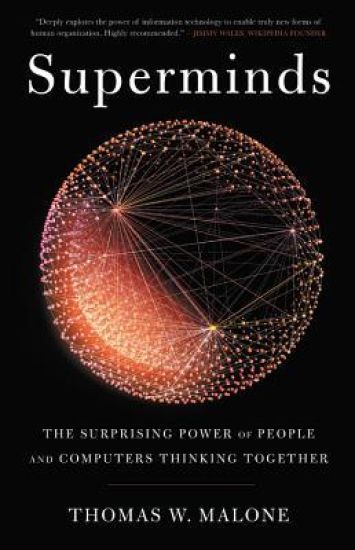
From the founding director of the MIT Center for Collective Intelligence comes a fascinating look at the remarkable capacity for intelligence exhibited by groups of people and computers working together. If you're like most people, you probably believe that humans are the most intelligent animals on our planet. But there's another kind of entity that can be far smarter: groups of people. In this groundbreaking book, Thomas Malone, the founding director of the MIT Center for Collective Intelligence, shows how groups of people working together in superminds -- like hierarchies, markets, democracies, and communities -- have been responsible for almost all human achievements in business, government, science, and beyond. And these collectively intelligent human groups are about to get much smarter. Using dozens of striking examples and case studies, Malone shows how computers can help create more intelligent superminds simply by connecting humans to one another in a variety of rich, new ways. And although it will probably happen more gradually than many people expect, artificially intelligent computers will amplify the power of these superminds by doing increasingly complex kinds of thinking. Together, these changes will have far-reaching implications for everything from the way we buy groceries and plan business strategies to how we respond to climate change, and even for democracy itself. By understanding how these collectively intelligent groups work, we can learn how to harness their genius to achieve our human goals. Drawing on cutting-edge science and insights from a remarkable range of disciplines, Superminds articulates a bold -- and utterly fascinating -- picture of the future that will change the ways you work and live, both with other people and with computers.
Nicaragua

Nicaragua

Thomas W. Walker; Christine J. Wade

Routledge
2019
sidottu
Nicaragua: Emerging from the Shadow of the Eagle details the country's unique history, culture, economics, politics, and foreign relations. Its historical coverage considers Nicaragua from pre-Columbian and colonial times as well as during the nationalist liberal era, the U.S. Marine occupation, the Somoza dictatorship, the Sandinista revolution and government, the conservative restoration after 1990, and consolidation of the FSLN's power since the return of Daniel Ortega to the presidency in 2006.The thoroughly revised and updated sixth edition features new material covering political, economic, and social developments since 2011. This includes expanded discussions on economic diversification, women and gender, and social programs. Students of Latin American politics and history will learn the how the interventions by the United States 'the eagle' to 'the north' have shaped Nicaraguan political, economic, and cultural life, but also the extent to which Nicaragua is increasingly emerging from the eagle's shadow.
Reagan Versus The Sandinistas

Reagan Versus The Sandinistas

Thomas W Walker; Harvey Williams; Peter Kornbluh; Eva Gold

Routledge
2020
sidottu
The product of research and investigation by a team of sixteen authors, Reagan versus the Sandinistas is the most comprehensive and current study to date of the Reagan administration's mounting campaign to reverse the Sandinista revolution. The authors thoroughly examine all major aspects of Reagan's "low-intensity war," from the U.S. government's attempts at economic destabilization to direct CIA sabotage and the sponsorship of the contras or freedom fighters. They also explore less-public tactics such as electronic penetration, behind-the-scenes manipulation of religious and ethnic tensions, and harassment of U.S. Nicaraguan specialists and "fellow travelers." The book concludes with a consideration of the impact of these activities and their implications for international law, U.S. interests, U.S. polity, and Nicaragua itself. Reagan versus the Sandinistas is designed not only for courses on Latin America, U.S. foreign policy, and international relations, but also for students, scholars, and others interested in understanding one of the most massive, complex efforts—short of direct intervention—organized by the United States to overthrow the government of another country.
Revolution And Counterrevolution In Nicaragua
A comprehensive overview of the Sandinista revolution in Nicaragua, this book offers an interdisciplinary study of the domestic and foreign challenges that faced the Sandinista government during its ten years in power. Based on extensive research in Nicaragua during the revolution, the essays examine important aspects of both the revolution and the U.S.-orchestrated counterrevolution that brought it to an end. After an introduction to the historical background of the revolutionary period, contributors offer an overview of specific groups and institutions within the revolution, such as women, grass-roots organizations, and the armed forces, and provide a balanced assessment of Sandinista public policy and performance in such areas as agrarian reform, health care, education, and housing. The impact and implications of the contra war, financed by the United States, are also analyzed, as well as efforts made over the years to promote a negotiated peace.
Reagan Versus The Sandinistas

Reagan Versus The Sandinistas

Thomas W Walker; Harvey Williams; Peter Kornbluh; Eva Gold

TAYLOR FRANCIS LTD
2024
nidottu
The product of research and investigation by a team of sixteen authors, Reagan versus the Sandinistas is the most comprehensive and current study to date of the Reagan administration's mounting campaign to reverse the Sandinista revolution. The authors thoroughly examine all major aspects of Reagan's "low-intensity war," from the U.S. government's attempts at economic destabilization to direct CIA sabotage and the sponsorship of the contras or freedom fighters. They also explore less-public tactics such as electronic penetration, behind-the-scenes manipulation of religious and ethnic tensions, and harassment of U.S. Nicaraguan specialists and "fellow travelers." The book concludes with a consideration of the impact of these activities and their implications for international law, U.S. interests, U.S. polity, and Nicaragua itself. Reagan versus the Sandinistas is designed not only for courses on Latin America, U.S. foreign policy, and international relations, but also for students, scholars, and others interested in understanding one of the most massive, complex efforts—short of direct intervention—organized by the United States to overthrow the government of another country.
Revolution And Counterrevolution In Nicaragua

Revolution And Counterrevolution In Nicaragua

Thomas W Walker

TAYLOR FRANCIS LTD
2024
nidottu
A comprehensive overview of the Sandinista revolution in Nicaragua, this book offers an interdisciplinary study of the domestic and foreign challenges that faced the Sandinista government during its ten years in power. Based on extensive research in Nicaragua during the revolution, the essays examine important aspects of both the revolution and the U.S.-orchestrated counterrevolution that brought it to an end. After an introduction to the historical background of the revolutionary period, contributors offer an overview of specific groups and institutions within the revolution, such as women, grass-roots organizations, and the armed forces, and provide a balanced assessment of Sandinista public policy and performance in such areas as agrarian reform, health care, education, and housing. The impact and implications of the contra war, financed by the United States, are also analyzed, as well as efforts made over the years to promote a negotiated peace.
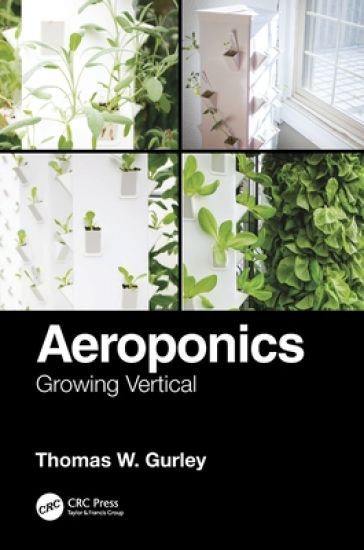
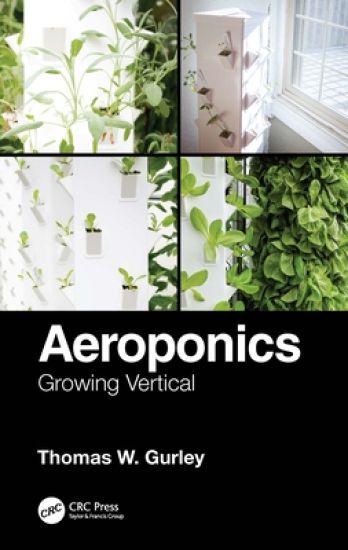
Aeroponics

Aeroponics

Thomas W. Gurley

CRC Press
2020
nidottu
Aeroponics: Growing Vertical covers aspects of the emerging technology, aeroponics, which is a sister to hydroponics, involving state-of-the-art controlled environment agriculture. The book begins with an introduction of aeroponics followed by a summary of peer-reviewed technical literature conducted over 50 years involving various aspects of aeroponics. It covers the science and all the patent literature since 2001 to give the reader a comprehensive view of the innovations related to aeroponics. This book is a useful reference for people interested in learning about how aeroponics works. This book is for novices as well as scientists interested in research activities conducted in countries around the world as well as work in using aeroponics in outer space. Designed for the user interested in research conducted in the past, this a helpful resource for those in the next generation of profitable agricultural endeavors. Features:· Comprehensive resource presenting key aspects of aeroponics· Focus on areas of aeroponics including its history, science, innovations, business, and practice· Provides a complete overview of the intellectual property associated with aeroponics· Presents a broad overview of research using aeroponic systems across the globe· Features information on key start-up businesses and activities that drive this technologyThomas Gurley earned a BA in chemistry from Houghton College and a PhD in analytical chemistry from Case Western Reserve University and has 40 years industrial chemistry experience with companies including Goodyear, Abbott Labs, and his consulting company, Manning Wood LLC. He holds two Fulbright scholarships to Ukraine and Uganda. He is currently R&D Director for Aero Development Corporation, a manufacturer of aeroponic commercial growing systems. He conducts research in aeroponics as an adjunct professor at Charleston Southern University in South Carolina.
Aeroponics

Aeroponics

Thomas W. Gurley

CRC Press
2020
sidottu
Aeroponics: Growing Vertical covers aspects of the emerging technology, aeroponics, which is a sister to hydroponics, involving state-of-the-art controlled environment agriculture. The book begins with an introduction of aeroponics followed by a summary of peer-reviewed technical literature conducted over 50 years involving various aspects of aeroponics. It covers the science and all the patent literature since 2001 to give the reader a comprehensive view of the innovations related to aeroponics. This book is a useful reference for people interested in learning about how aeroponics works. This book is for novices as well as scientists interested in research activities conducted in countries around the world as well as work in using aeroponics in outer space. Designed for the user interested in research conducted in the past, this a helpful resource for those in the next generation of profitable agricultural endeavors. Features:· Comprehensive resource presenting key aspects of aeroponics· Focus on areas of aeroponics including its history, science, innovations, business, and practice· Provides a complete overview of the intellectual property associated with aeroponics· Presents a broad overview of research using aeroponic systems across the globe· Features information on key start-up businesses and activities that drive this technologyThomas Gurley earned a BA in chemistry from Houghton College and a PhD in analytical chemistry from Case Western Reserve University and has 40 years industrial chemistry experience with companies including Goodyear, Abbott Labs, and his consulting company, Manning Wood LLC. He holds two Fulbright scholarships to Ukraine and Uganda. He is currently R&D Director for Aero Development Corporation, a manufacturer of aeroponic commercial growing systems. He conducts research in aeroponics as an adjunct professor at Charleston Southern University in South Carolina.
Arms Diffusion

Arms Diffusion

Thomas W. Zarzecki

Routledge
2020
nidottu
Weapons proliferation is one of the most pressing global concerns following the end of the Cold War. Despite the absence of an overarching superpower conflict, armaments and related technologies have continued to spread throughout the international system. This has been particularly true in areas like East Asia and the Middle East, where the traditional two party arms races are not readily apparent. This text addresses these concerns and shortcomings using data on fourteen specific military technological innovations that diffused throughout the international system from 1960 to 1997.
Integrating CBT with Experiential Theory and Practice
This workbook elucidates the techniques clinicians will encounter using the cognitive experiential (psychodrama) group therapy (CEGT) model. This model incorporates cognitive behavioral and psychodramatic interventions to help identify and modify negative thinking, behavior, and interpersonal patterns. Beginning with a brief overview of cognitive behavioral therapy (CBT) and psychodrama, the book highlights concepts and techniques that are most relevant to CEGT session content. The second half of the workbook provides a description of CEGT and what group members should expect through their engagement in this therapy. Featured throughout are tables and exercises that create pathways to challenge dysfunctional thinking along with blank worksheets to be used by group members located in the appendices.Readers will learn techniques to challenge negative thought patterns and increase engagement in positive and success-based experiences through clear guidelines for behavioral interventions to help move individuals from negativity to a more positive life space.
Integrating CBT with Experiential Theory and Practice
This workbook elucidates the techniques clinicians will encounter using the cognitive experiential (psychodrama) group therapy (CEGT) model. This model incorporates cognitive behavioral and psychodramatic interventions to help identify and modify negative thinking, behavior, and interpersonal patterns. Beginning with a brief overview of cognitive behavioral therapy (CBT) and psychodrama, the book highlights concepts and techniques that are most relevant to CEGT session content. The second half of the workbook provides a description of CEGT and what group members should expect through their engagement in this therapy. Featured throughout are tables and exercises that create pathways to challenge dysfunctional thinking along with blank worksheets to be used by group members located in the appendices.Readers will learn techniques to challenge negative thought patterns and increase engagement in positive and success-based experiences through clear guidelines for behavioral interventions to help move individuals from negativity to a more positive life space.
Allosteric Regulatory Enzymes

Allosteric Regulatory Enzymes

Thomas W. Traut

Springer-Verlag New York Inc.
2007
sidottu
All enzymes are remarkable since they have the ability to increase the rate of a chemical reaction, often by more than a billion-fold. Allosteric enzymes are even more amazing because the have the additional ability to change their rate in response to cellular activators or inhibitors. This enables them to control the pathway in which they are the regulatory enzyme. Since the effector molecules represent the current status of the cell for a given metabolic pathway, this results in very responsive and balanced metabolic states, and makes it possible for cells and organisms to be appropriately dynamic, and responsive, in a changing environment. This book provides a logical introduction to the limits for enzyme function as dictated by the factors that are limits for life. This book presents a complete description of all the mechanisms used for changing enzyme acticity. Eight enzymes are used as model systems after extensive study of their mechanisms. Wherever possible, the human form of the enzyme is used to illustrate the regulatory features.
Algebra

Algebra

Thomas W. Hungerford

Springer-Verlag New York Inc.
1980
sidottu
Algebra fulfills a definite need to provide a self-contained, one volume, graduate level algebra text that is readable by the average graduate student and flexible enough to accomodate a wide variety of instructors and course contents. The guiding philosophical principle throughout the text is that the material should be presented in the maximum usable generality consistent with good pedagogy. Therefore it is essentially self-contained, stresses clarity rather than brevity and contains an unusually large number of illustrative exercises. The book covers major areas of modern algebra, which is a necessity for most mathematics students in sufficient breadth and depth.