Thomas Morley (1557/8-1602) has long been regarded as the most important English music theorist of the early modern period. His treatise, A Plaine and Easie Introduction to Practicall Musicke was published in a luxurious folio format in 1597 and a second edition appeared in 1608. The three parts of the treatise set forth elementary music ('teaching to sing') and beginning and advanced counterpoint ('treating of descant' and 'treating of composing or setting of songs'). The text, written in dialogue format, is enlivened by remarkable descriptions of music, musicians, musical performance and compositional practice. Jessie Ann Owens introduces the facsimile, explaining why the 1608 version has been chosen.
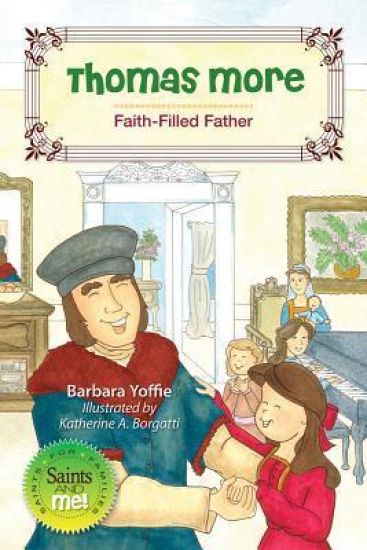
Saints are real-life heroes and heroines of faith who inspire us by their virtues to become more like Christ. In this series of beautifully illustrated early reader books, these real stories come to life and connect with a today's children, ages 4 to 9. St. Thomas More was the father of a happy and holy family. They prayed and read scripture together. He believed in living his faith and teaching by example. Loyalty to God was first and foremost in his life. A man of great integrity, he would not compromise his moral values. He shared his strong beliefs until his martyrdom in 1535. He is the patron saint of lawyers and public servants. His feast day is June 22. THEME: SHARE
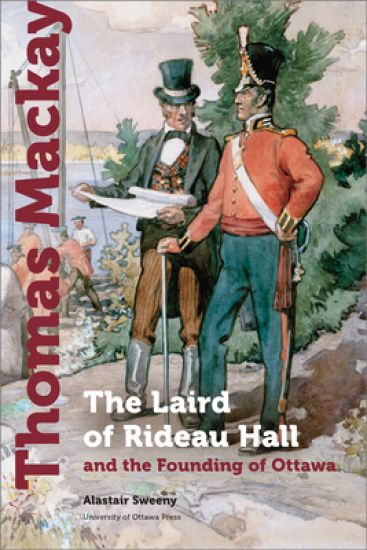
Thomas Mackay: The Laird of Rideau Hall and the Founding of Ottawa explores the life and times of Thomas Mackay, the chief founder of Bytown/Ottawa.Born and raised in Perth, Scotland, Mackay and his family emigrated to Montreal in 1817. Partnering with fellow mason John Redpath, he built the locks of the first Lachine Canal, did military construction work at Fort Lennox and St. Helen’s Island, and supplied stone for Montreal’s Notre Dame Basilica. Engaged by Colonel By of the Royal Engineers to build the Ottawa and Hartwell Locks of the Rideau Canal, Mackay used his profits to found the village of New Edinburgh and build a mill complex at Rideau Falls, as well as the residence his daughter named Rideau Hall. With his hefty canal profits—paid in Spanish silver pieces of eight—Mackay was a major financier of the Ottawa and Prescott Railway, and chief promoter of Ottawa as the capital of Canada. He served as Colonel of the Russell and Carleton militias, was MLA for Russell for seven years, and a member of the Legislative Council of Canada for fifteen.After Mackay’s death in 1855, his son-in-law and estate manager Thomas Keefer sold Rideau Hall to the government to serve as a residence for Canada’s Governor General. Keefer also developed a tract of land owned by the estate into the village of Rockcliffe Park, today home to over 70 diplomatic residences.
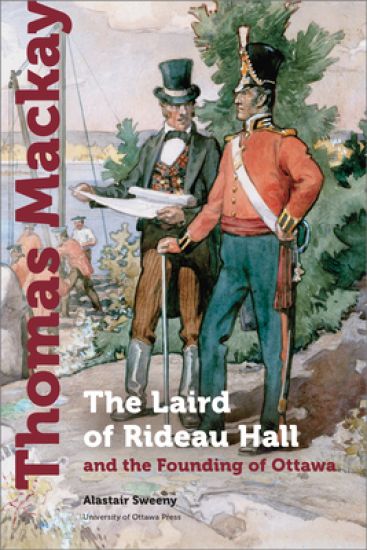
The Laird of Rideau Hall explores the life and times of Thomas Mackay, the chief founder of Bytown/Ottawa.Born and raised in Perth, Scotland, Mackay and his family emigrated to Montreal in 1817. Partnering with fellow mason John Redpath, he built the locks of the first Lachine Canal, did military construction work at Fort Lennox and St. Helen’s Island, and supplied stone for Montreal’s Notre Dame Basilica. Engaged by Colonel By of the Royal Engineers to build the Ottawa and Hartwell Locks of the Rideau Canal, Mackay used his profits to found the village of New Edinburgh and build a mill complex at Rideau Falls, as well as the residence his daughter named Rideau Hall. With his hefty canal profits—paid in Spanish silver pieces of eight—Mackay was a major financier of the Ottawa and Prescott Railway, and chief promoter of Ottawa as the capital of Canada. He served as Colonel of the Russell and Carleton militias, was MLA for Russell for seven years, and a member of the Legislative Council of Canada for fifteen. After Mackay’s death in 1855, his son-in-law and estate manager Thomas Keefer sold Rideau Hall to the government to serve as a residence for Canada’s Governor General. Keefer also developed a tract of land owned by the estate into the village of Rockcliffe Park, today home to over 70 diplomatic residences.
Rejected in the sixteenth century by both Protestants and Catholics, yet hailed by Marxist historians as a forerunner of the Marxist revolution, this volume tells M?ntzer's story and offers a critical assessment of him in light of his extant works, with particular attention to the religious foundations of his revolutionary program.
Taking up where Merton's own Seven Storey Mountain ends, this penetrating biography by Lawrence Cunningham explores Merton's monastic life and his subsequent growth into a modern-day spiritual master. Though the basic story of Thomas Merton's life may be well known, the details of his spiritual development are less familiar. Cunningham shows that Merton's prolific writings and his continuing influence can only be understood against the background of his contemplative experience as a Trappist monk. "If one does not understand Merton as a monk," writes Cunningham, "one does not understand Merton at all." Merton emerges from this balanced and reliable account as an extraordinary Christian seeker and pioneer whose faith in the power of the contemplative life remains highly relevant today.
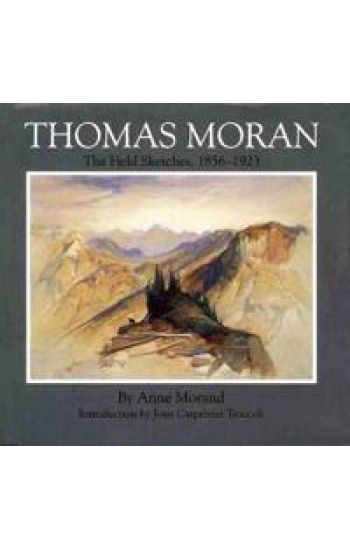
This illustrated catalog of Thomas Moran's field sketches includes an interpretive essay tracing the artist's seventy-year career in the field; a chronological, stylistic, and geographical survey of his fieldwork; an illustrated checklist of the 1080 sketches in public collections. Moran is best known for his work in the American West during the post-Civil War expansion, particularly in what would become Yellowstone, Grand Canyon, and Yosemite national parks. Yet this virtuoso painter and draftsman also traveled in search of inspiration in Pennsylvania, New York's Long Island, Florida, Wisconsin, Mexico, England, Scotland, Wales, France, and Italy, returning repeatedly to favorite subjects. An almost compulsive desire to sketch refined his innate skill as one of America's finest landscape artists. Most of Moran's known field sketches are reproduced here. As described in the introduction, ""their range encompasses summary contour drawings of the spectacular topography of the American West, luminous watercolors that simultaneously fix local color and evoke the artist's rapturous response to the natural world, and fully realized works that nevertheless preserve the intensity of Moran's firsthand experience of his plein air subjects."" No serious formal study of Thomas Moran can be made without reference to this volume.
This extensively revised edition of Thurman Wilkins's masterful and engaging biography - well illustrated in color and black-and-white - draws on new information and recent scholarship to place Thomas Moran more securely in the milieu of the Gilded Age. It also portrays more fully the controversies that surrounded the art of Moran's time, as he became ""the Dean of American Painters.""The American West was the subject of Thomas Moran's greatest artistic triumphs - Yosemite, the Grand Canyon of the Colorado, Zion Canyon, the Virgin River, Colorado's Mountain of the Holy Cross, and the Grand Tetons - but his travels with Ferdinand V. Hayden's geological surveys of the Upper Yellowstone were matched by trips to his native Britain and to Venice, Florida, the Spanish Southwest, and Old Mexico. These scenes inspired memorable landscapes and seascapes, as did the sojourns of the Moran family in Pennsylvania, New Jersey, and East Hampton, Long Island, when they retreated from the demands of the New York art scene. In the 1880s Moran and his artist wife, Mary Nimmo Moran, also threw themselves into the etching craze of the period, creating some of the finest prints produced in the United States.Moran was an artist happy in his work. He wrote, ""I have always held that the grandest, most beautiful, or wonderful in nature, would, in capable hands, make the grandest, most beautiful, or wonderful pictures."" The New York Times said of the first edition of this unique account of his life, ""Moran's mastery comes through clearly and awesomely and often, pleasurably."" Readers will find the new edition equally enjoyable.
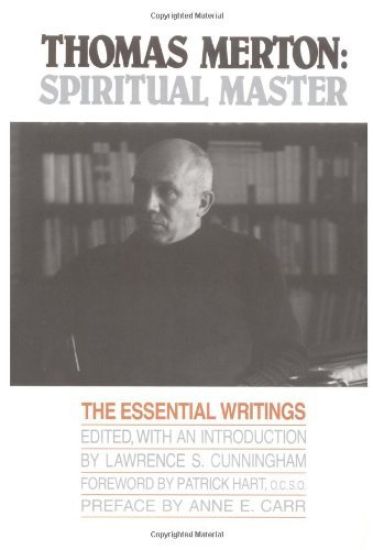
A one-volume anthology of the spiritual writings of the greatest spiritual master the American Catholic church has produced in this century. The selections, which are substantial in length, provide a generous sampling of Merton's vast output.
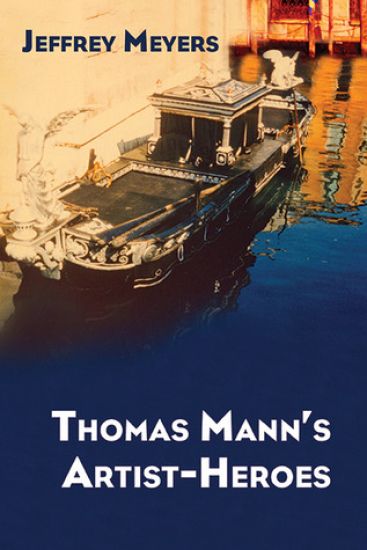
Jeffrey Meyers has written acclaimed biographies of many of the most influential authors of the twentieth century, but none has affected him as deeply as Thomas Mann. From his first youthful encounter with Death in Venice, Meyers has cultivated a lifetime obsession with Mann’s elegant style, penetrating irony, and insight into the life of the artist.Thomas Mann’s Artist-Heroes follows Mann’s own obsession with the artistic life through his characters: from the fiction of Gustav von Aschenbach in Death in Venice and the music of Adrian Leverkühn in Doctor Faustus, to Tonio Kröger’s life as a writer, to the artistically minded patient Hans Castorp in The Magic Mountain, and finally to Mann’s time in America and later memoirs by his family. Mann probes deeper than perhaps any other author into questions of how an artist is formed, why he must defy conventional society, and how suffering and disease affect his work.Admirers of Thomas Mann and of Jeffrey Meyers’s biographies will find in this remarkable book the best introduction to one of the greatest writers of the modern age.
"The moment of takeoff was ecstatic...joy. We left the ground—I with Christian mantras and a great sense of destiny, of being at last on my true way after years of waiting and wondering..." With these words, dated October 15. 1968, the late Father Thomas Merton recorded the beginning of his fateful journey to the Orient. His travels led him from Bangkok, through India to Ceylon, and back again to Bangkok for his scheduled talk at a conference of Asian monastic orders. There he unequivocally reaffirmed his Christian vocation. His last journal entry was made on December 8, 1968, two days before his untimely, accidental death. Amply illustrated with photographs he himself took along the way and fully indexed, the book also contains a glossary of Asian religious terms, a preface by the Indian scholar Amiya Chakravarty, a foreword and postscript by Brother Patrick Hart of the Abbey of Gethsemani, as well as several appendices, among them the text of Merton's final address.
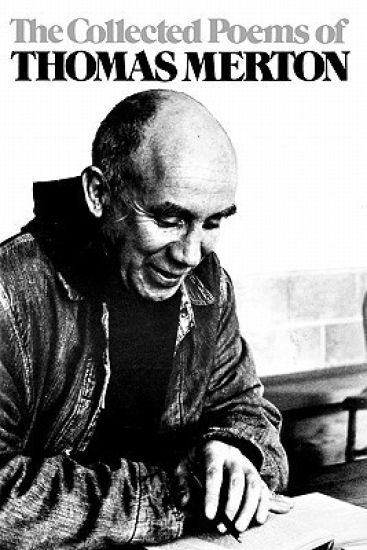
In 1944, New Directions brought out Thomas Merton’s first book of verse. By the time of his tragic, untimely death in 1968, Father Louis (as he was known at the Trappist monastery where he lived for twenty-seven years) had published upwards of fifty books and pamphlets, including several more collections of poetry. All of these poems have been assembled in a single, definitive volume (first published by New Directions in 1977) which includes much additional unpublished or uncollected material drawn from the archive of the Merton Studies Center at Bellarmine College in Louisville, Kentucky, or supplied by the poet’s friends and associates. Brought together in The Collected Poems of Thomas Merton are: Early Poems (1940-42, published posthumously in 1971), Thirty Poems (1944), A Man in the Divided Sea (1946), Figures for an Apocalypse (1947), The Tear of the Blind Lions (1949), The Strange Islands (1957), Original Child Bomb (1962), Emblems of a Season of Fun (1963), Cables to Ace (1968), and The Geography of Lograire (completed in 1968 and published posthumously). These are followed by Sensation Time at the Home and Other New Poems, a book which Merton completed shortly before his death. There are also sections of uncollected poems, humorous verse, poems written in French, with some English translations, Merton’s translations of poetry from various languages, drafts and fragments, and a selection of concrete poems. With the availability of The Collected Poems of Thomas Merton as a New Directions paperbook, an ever wider audience may more fully appreciate the impressive range of the poet’s technique, the scope of his concerns, and the humaneness of his vision.
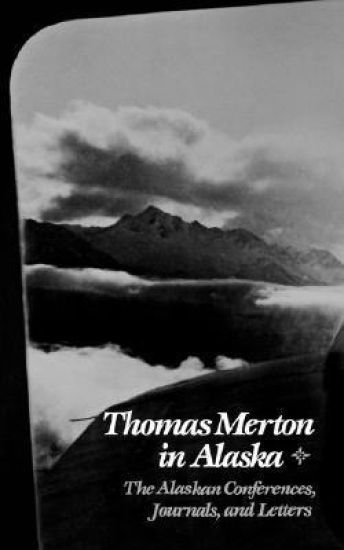
Thomas Merton spent two weeks in Alaska in 1968 just prior to his fateful trip to the East. He had no thought of publication either of his journal or his conferences--the talks he gave to religious communities there. Although it was his nature to give his attention to what was immediately before him, he was counting the days until he would step onto the plane that would take off across the Pacific. This book contains the journal and letters Merton wrote during his Alaskan visit that were published in a limited edition in 1988 as The Alaskan Journal by Turkey Press. To this have been added the transcriptions of the informal but pithy talks he gave in Eagle River and Anchorage. These conferences are interesting for the direct light they throw on Merton's thinking about prayer, religious life and community, the priestly tradition, and they are enhanced by their spontaneous quality which gives a palpable sense of being in Merton's presence. Robert E. Daggy, curator of The Thomas Merton Studies Center, transcribed Merton's journal and letters and has contributed a fine introduction. Also included is a preface by David D. Cooper of Michigan State University and a group of some of the photographs Merton took on his Alaskan adventure.
Poet, Trappist monk, religious philosopher, translator, social critic: the late Thomas Merton was all these things. This classic selection from his great body of poetry affords a comprehensive view of his varied and progressively innovative work. Selected by Mark Van Doren and James Laughlin, this slim volume is now available again as a wonderful showcase of Thomas Merton’s splendid poetry.
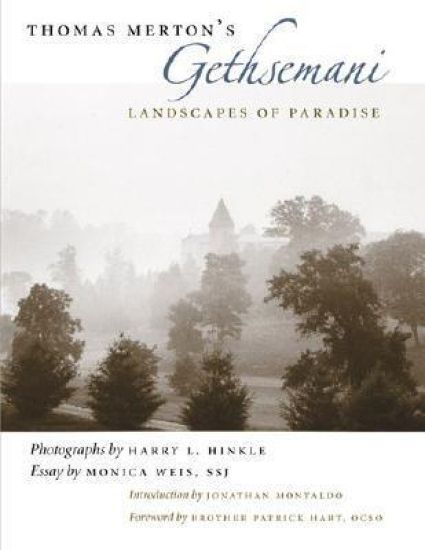
For twenty-seven years, renowned and beloved monk Thomas Merton (1915-1968) belonged to Our Lady of Gethsemani, a Trappist monastery established in 1848 amid the hills and valleys near Bardstown, Kentucky. In Thomas Merton's Gethsemani, dramatic black-and-white photographs by Harry L. Hinkle and artful text by Merton scholar Monica Weis converge in a unique experience for lovers of Merton.Hinkle was allowed unprecedented access to many areas inside the monastery and on its grounds that are generally restricted. His photographs invite the reader to experience the various knobs, lakes, woods, and hermitages Merton sought out for times of solitude and contemplation and for reading and writing. These unique images, each accompanied by a passage from Merton's writings, evoke personal reflection and a deeper understanding of how and why Merton came to recognize himself as a part of his Kentucky landscape.Woven throughout the book, Weis's text explores Merton's fascination with nature not only at Gethsemani, but during his early childhood, throughout his spiritual conversion to Roman Catholicism, and while a member of the Trappist community. She examines how Merton's lifelong interaction with nature subtly revealed and informed his profound spiritual experiences and his writing about contemplation. Thomas Merton's Gethsemani replicates Merton's path on his solitary hikes in the woods and conveys the wonder of the landscapes that inspired him.
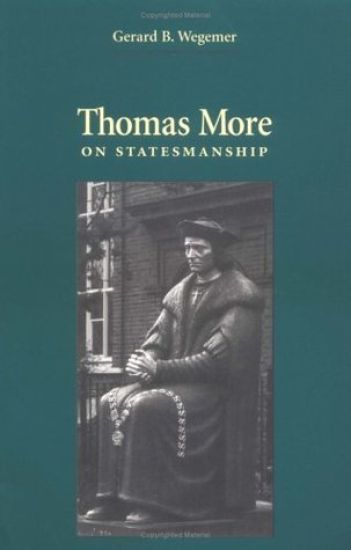
The term ""statesman"" entered the English language during the Renaissance as a result of the widespread return to the Greek and Roman classics. Sir Thomas More, who brought his careful study of Plato and Aristotle, Cicero and Augustine to bear upon his political life, contributed most to the recovery of the ancient Greco-Roman concept of the statesman. Throughout More's writings and his actions one finds a consistent and principled approach to statesmanship that emphasizes the free character of the human person and integrates classical and Christian thought with the best of England's common law tradition of self-rule. This study is the first to examine More's complete works in view of his concept of statesmanship, and, in the process, link More's humanism, his faith, and his legal and political vocations into a coherent narrative. In Part One Gerard B. Wegemer sets forth More's theory of statesmanship, drawing heavily from the entire corpus of his work. In the second part he presents More's understanding of literature and applies this understanding to his book Utopia. In Part Three he investigates the two most controversial events in More's life: his treatment of heretics and his refusal to obey his king. More presented a consistent defense of institutional arrangements now taken as basic to all democratic government: rule of law, division of power, separation of church and state, elected representation, and protected forms of free and public deliberation. He believed that the essential work of the statesman is to draw upon the nation's deepest and longest-standing consensus, as expressed in its literature and its laws, in order to govern with the people's consent. More was convinced that law, not individual persons, should rule.This book, which integrates the literature, philosophy, history, and politics of the Renaissance, will appeal across disciplines to scholars of early modern England and to anyone fascinated by the life and times of St. Thomas More. Gerard B. Wegemer is the author of Thomas More: A Portrait of Courage (1995) and has written about More and his times for such journals as Renascence, Philosophy and Rhetoric, Moreana, and The Review of Politics. He holds master's degrees in political philosophy and literature from Boston College and Georgetown respectively, and a doctorate in English literature from Notre Dame. He is associate professor of literature at the University of Dallas, and he teaches and lectures regularly on St. Thomas More. -------------------------------------------------------------------------------- ""Professor Wegemer's book is an extraordinary work of interpretation. The key to its success is a comprehensive grasp of More's life and work, rooted in a profound sympathy for the man and his goals. With a calm and confident hand, Wegemer sheds new light on More's views of statesmanship and its requirements, on the inner structure of his enigmatic and playful masterpiece Utopia, and on the guiding conceptions of his practical political life. Rarely do authors show such a capacity for leaping across the chasm of culture and years to understand the vision that makes sense of a man's life and thought.""-- Professor Christopher Wolfe, Department of Political Science, Marquette UniversityTable of ContentsIntroductionI. More's Understanding of the Statesman's Work1. Can Reason Rule the Free?2. First, Self-Rule3. Ruling Citizens: What Is Needed?II. Utopia: A Statesman's Puzzle4. Literature and the Acquisition of Political Prudence5. Utopia 1 and 2: Dramatizing Competing Philosophies of Life6. Utopia 1: Ciceronian Statesmanship7. Utopia 2: Augustinian RealistIII. Issues in More's Career as Statesman8. The Limits of Reason and the Need for Law9. Reform over Revolution: In Defense of Free
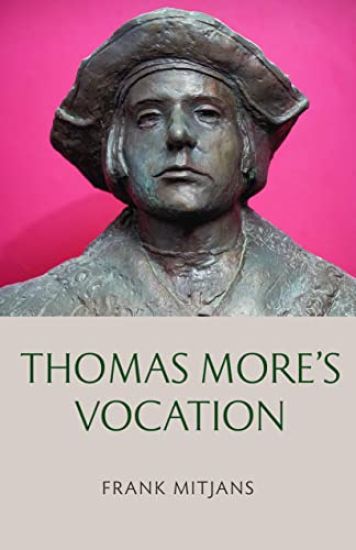
The book considers Thomas More's early life-choices. An early letter is cited by biographers but most miss More's reference to the market place. More's great-grandson, Cresacre, a Londoner, understood it correctly, and that gives reason to trust him on other aspects of More's youth.This study is based on early testimonies, those of Erasmus, Roper, Harpsfield, Stapleton and Cresacre More, as well as More's early writings, the Pageant Verses, and his additions/omissions to the Life of Pico; evidence drawn from authors he recommended, like Hilton and Gerson; and finally, his epitaph. Attention is given to his lectures on St Augustine's City of God, and to St John Chrysostom. It is argued More studied Chrysostom's Homilies on the Gospel of St Matthew from a Greek manuscript. Chrysostom, in the introductory homily, spoke of the city and the market place, as the setting in which Christians practice the teaching of Christ.More practiced law and taught it. He was attracted to becoming a Christian humanist alongside Grocyn, Colet, Linacre, and Lily. With them he studied Greek, the classics and Fathers of the Church. Helped by them he became a man of prayer, aware of the need to seek holiness in the midst of the world as a layman. Faced with the dilemma of the humanist in choosing between the contemplative life of the philosopher and an active life of engagement with the world, he deliberately chose the active life in service to society, and the contemplative life of the Christian as a married man. This awareness and choice is what is called vocation, implying determination to persevere throughout life: More saw his life as a pilgrimage towards heaven as described in the last chapter focusing on More's last work, De tristitia, tedio, pavore, etoratione christi ante captionem eius.