Kirjahaku
Etsi kirjoja tekijän nimen, kirjan nimen tai ISBN:n perusteella.
1000 tulosta hakusanalla Timothy C Davis
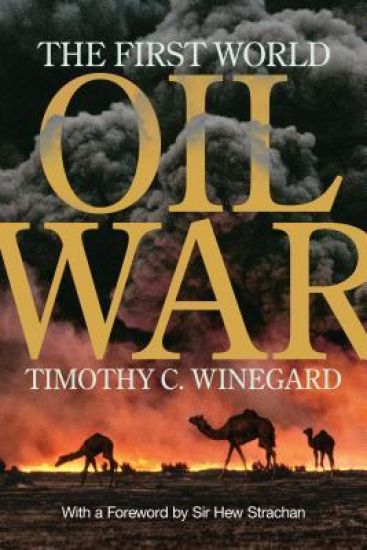
The First World Oil War
Timothy C. Winegard; Sir Hew Strachan
University of Toronto Press
2016
sidottu
Oil is the source of wealth and economic opportunity. Oil is also the root source of global conflict, toxicity and economic disparity. When did oil become such a powerful commodity-during, and in the immediate aftermath of, the First World War. In his groundbreaking book The First World Oil War, Timothy C. Winegard argues that beginning with the First World War, oil became the preeminent commodity to safeguard national security and promote domestic prosperity. For the first time in history, territory was specifically conquered to possess oil fields and resources; vital cogs in the continuation of the industrialized warfare of the Twentieth Century. This original and pioneering study analyzes the evolution of oil as a catalyst for both war and diplomacy, and connects the events of the First World War to contemporary petroleum geo-politics and international aggression.
DragonKnights: (Protectors of the Realm)
Timothy C. Socha
Createspace Independent Publishing Platform
2014
nidottu
The Elusive Quest of the Spiritual Malcontent
Timothy C. F. Stunt
Wipf Stock Publishers
2015
nidottu
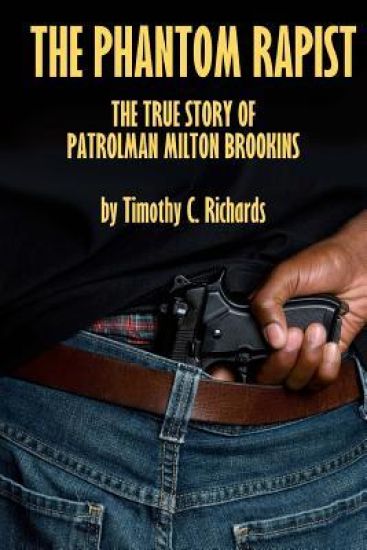
Phantom Rapist: The True Story of Patrolman Milton Brookins
Timothy C. Richards
Createspace Independent Publishing Platform
2014
nidottu
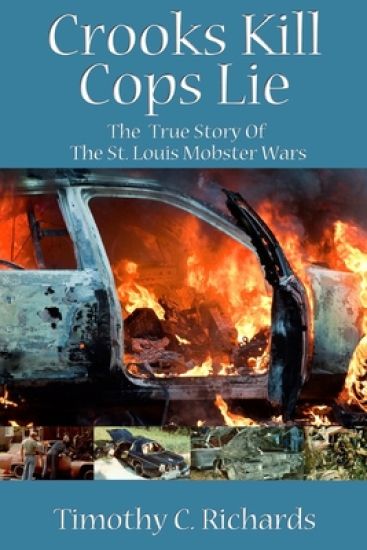
Crooks Kill, Cops Lie: The True Story of the St Louis Mobster Wars
Timothy C. Richards
Createspace Independent Publishing Platform
2015
nidottu
In the early 1980's, the St. Louis Region was controlled by the Chicago "outfit" controlled by Joey (Doves) Aiuppa. Joey (Doves) controlled all of the labor locals and most of the trade unions.He had considerable clout within local and state government due to union financial support of local politicians.Joey (Doves) guys in charge in St. Louis (John Vitale and Tony Giordano) became sick and old and the young guns in the region saw a chance to take over the rackets in the region.A Syrian family (Leisure (Paul and Anthony) decided to bomb a few of the "outfit's guys.One good car bombing begets another. It was chaos on the streets of St. Louis.The author was a detective in the prestigious Intelligence Unit of the police department. His job was to investigate (spy on) the organized criminals. His first hand account of what transpired in the St. Louis gang war is true and indisputable.The book contains crime scene photos, true names, and an index. It is nonfiction true crime at its finest.

Island Detour tells two stories. The first is an abridged account of Vietnam's war history from 1913 to 1975. The second is a biographical narrative of a self-exiled Vietnamese officer and his wife's escape in 1975. An unexpected diversion routed them to the United States. Once in America, they became dedicated sponsors of more Vietnamese refugees.
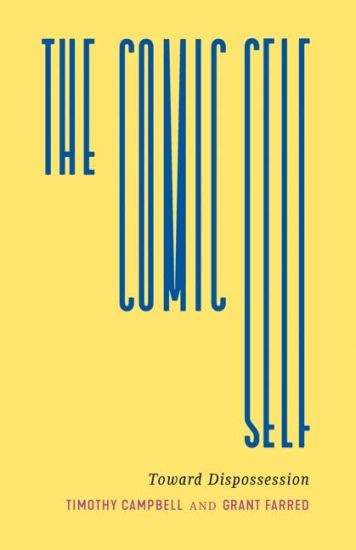
A provocative and unconventional call to dispossess the self of itself Challenging the contemporary notion of “self-care” and the Western mania for “self-possession,” The Comic Self deploys philosophical discourse and literary expression to propose an alternate and less toxic model for human aspiration: a comic self. Timothy Campbell and Grant Farred argue that the problem with the “care of the self,” from Foucault onward, is that it reinforces identity, strengthening the relation between I and mine. This assertion of self-possession raises a question vital for understanding how we are to live with each other and ourselves: How can you care for something that is truly not yours?The answer lies in the unrepresentable comic self. Campbell and Farred range across philosophy, literature, and contemporary comedy-engaging with Socrates, Burke, Hume, Hegel, Marx, Nietzsche, Heidegger, Derrida, Deleuze, and Levinas; Shakespeare, Cervantes, Woolf, Kafka, and Pasolini; and Stephen Colbert, David Chappelle, and the cast of Saturday Night Live. They uncover spaces where the dispossession of self and, with it, the dismantling of the regime of self-care are possible. Arguing that the comic self always keeps a precarious closeness to the tragic self, while opposing the machinations of capital endemic to the logic of self-possession, they provide a powerful and provocative antidote to the tragic self that so dominates the tenor of our times.
A provocative and unconventional call to dispossess the self of itself Challenging the contemporary notion of “self-care” and the Western mania for “self-possession,” The Comic Self deploys philosophical discourse and literary expression to propose an alternate and less toxic model for human aspiration: a comic self. Timothy Campbell and Grant Farred argue that the problem with the “care of the self,” from Foucault onward, is that it reinforces identity, strengthening the relation between I and mine. This assertion of self-possession raises a question vital for understanding how we are to live with each other and ourselves: How can you care for something that is truly not yours?The answer lies in the unrepresentable comic self. Campbell and Farred range across philosophy, literature, and contemporary comedy-engaging with Socrates, Burke, Hume, Hegel, Marx, Nietzsche, Heidegger, Derrida, Deleuze, and Levinas; Shakespeare, Cervantes, Woolf, Kafka, and Pasolini; and Stephen Colbert, David Chappelle, and the cast of Saturday Night Live. They uncover spaces where the dispossession of self and, with it, the dismantling of the regime of self-care are possible. Arguing that the comic self always keeps a precarious closeness to the tragic self, while opposing the machinations of capital endemic to the logic of self-possession, they provide a powerful and provocative antidote to the tragic self that so dominates the tenor of our times.

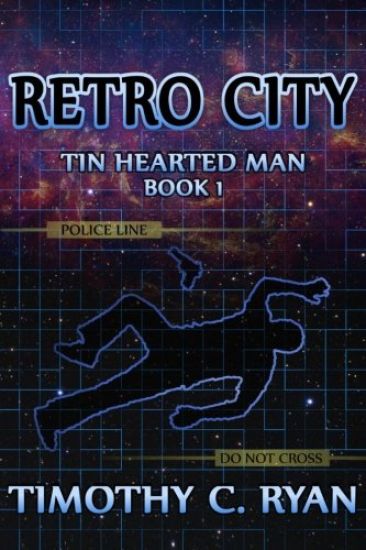
The day I traded in my bad heart for a mechanical one, my father told me I was dead to him, that I had become one of them - a machine. You see, I grew up hearing tales about machines replacing people, computer programs taking over companies, and remotely-operated war drones eliminating faceless enemies that were no more than a blip on the screen. I'd dismissed it all as Retro propaganda designed to keep young people from seeking their fortune in the modern 33rd century; that is, until I came face to face with those nightmares. My name is Jack Sung Lee. I'm an agent for the Council of Worlds. Yeah, I'm that crazy cop from Retro City, the city where people reject the modern life of cybernetic body parts and smart phones implanted right in the brain.It was my Retro past that made me the perfect choice to lead the investigation. An expert on cybernetics was murdered with all his implants surgically removed. The last person to see him alive was his client, a man on death row for killing his entire family, though he claimed his e-view implant was in control. No one believed him. Maybe no one wanted to. If e-view could control minds, then billions of people with the implants would panic and the cybernetics industry would lose trillions. Funny thing about being a Retro, I was the only cop willing to believe him. I had no idea the trouble that would bring me.