Kirjojen hintavertailu. Mukana 11 342 296 kirjaa ja 12 kauppaa.

Kirjahaku

Etsi kirjoja tekijän nimen, kirjan nimen tai ISBN:n perusteella.

1000 tulosta hakusanalla Timothy J Standring

Evidence-Based Treatment Planning for Disruptive Child and Adolescent Behavior Facilitator's Guide
This DVD Facilitator's Guide to the Evidence-Based Psychotherapy Treatment Planning for Disruptive Child and Adolescent Behavior (DVD sold separately) is designed to help teachers or trainers conduct lectures or training sessions on the content of the DVD. The guide follows each section of the DVD, providing succinct summaries of key section content, section review test questions and answers, and test-style questions and answers covering key concepts. Online links are provided to client homework exercises consistent with the therapeutic techniques described and demonstrated on the DVD. References to empirical work supporting the treatments, clinical resource materials, and training opportunities are also cited. The DVD,Companion Workbook, andFacilitator’s Guide are designed so that instructors can cover only the content of the DVD or springboard into further coverage of any of the concepts. Optional topics for further discussion, with talking points, are provided in each chapter of the Facilitator’s Guide. Designed to be used in conjunction with the DVD and itsCompanion Workbook, this guide includes: Summary highlights of content shown in the DVDChapter review questions and answers summarizing key conceptsTest-style questions and answers on selected chapter conceptsOptional topics for further discussion, with talking pointsScripts and critiques of the role-played scenarios demonstrating selected aspects of the ESTsReferences to empirical support, clinical resources, and training opportunities for the treatments discussedOnline links to client homework exercises consistent with the therapeutic techniques described and demonstratedExplanations of correct and incorrect answers to the test-style questions from each chapter
Evidence-Based Treatment Planning for Obsessive-Compulsive Disorder Facilitator's Guide
This DVD Facilitator's Guide to the Evidence-Based Psychotherapy Treatment Planning for Obsessive-Compulsive Disorder (DVD sold separately) is designed to help teachers or trainers conduct lectures or training sessions on the content of the DVD. The guide follows each section of the DVD, providing succinct summaries of key section content, section review test questions and answers, and test-style questions and answers covering key concepts. Online links are provided to client homework exercises consistent with the therapeutic techniques described and demonstrated on the DVD. References to empirical work supporting the treatments, clinical resource materials, and training opportunities are also cited. The DVD, Companion Workbook, and Facilitator’s Guide are designed so that instructors can cover only the content of the DVD or springboard into further coverage of any of the concepts. Optional topics for further discussion, with talking points, are provided in each chapter of the Facilitator’s Guide. Designed to be used in conjunction with the DVD and its Companion Workbook, this guide includes: Summary highlights of content shown in the DVDChapter review questions and answers summarizing key conceptsTest-style questions and answers on selected chapter conceptsOptional topics for further discussion, with talking pointsScripts and critiques of the role-played scenarios demonstrating selected aspects of the ESTsReferences to empirical support, clinical resources, and training opportunities for the treatments discussedOnline links to client homework exercises consistent with the therapeutic techniques described and demonstratedExplanations of correct and incorrect answers to the test-style questions from each chapter
Evidence-Based Treatment Planning for Posttraumatic Stress Disorder Facilitator's Guide
This DVD Facilitator's Guide to the Evidence-Based Psychotherapy Treatment Planning for Posttraumatic Stress Disorder (DVD sold separately) is designed to help teachers or trainers conduct lectures or training sessions on the content of the DVD. The guide follows each section of the DVD, providing succinct summaries of key section content, section review test questions and answers, and test-style questions and answers covering key concepts. Online links are provided to client homework exercises consistent with the therapeutic techniques described and demonstrated on the DVD. References to empirical work supporting the treatments, clinical resource materials, and training opportunities are also cited. The DVD, Companion Workbook, and Facilitator’s Guide are designed so that instructors can cover only the content of the DVD or springboard into further coverage of any of the concepts. Optional topics for further discussion, with talking points, are provided in each chapter of the Facilitator’s Guide. Designed to be used in conjunction with the DVD and its Companion Workbook, this guide includes: Summary highlights of content shown in the DVDChapter review questions and answers summarizing key conceptsTest-style questions and answers on selected chapter conceptsOptional topics for further discussion, with talking pointsScripts and critiques of the role-played scenarios demonstrating selected aspects of the ESTsReferences to empirical support, clinical resources, and training opportunities for the treatments discussedOnline links to client homework exercises consistent with the therapeutic techniques described and demonstratedExplanations of correct and incorrect answers to the test-style questions from each chapter
Fuzzy Logic with Engineering Applications
Fuzzy logic refers to a large subject, dealing with a set of methods to characterize and quantify uncertainty in engineering systems that arise from ambiguity, imprecision, fuzziness, and lack of knowledge. Fuzzy logic is a reasoning system based on a foundation of fuzzy set theory, itself an extension of classical set theory, where set membership can be partial as opposed to all or none, as in the binary features of classical logic. Fuzzy logic is a relatively new discipline in which major advances have been made over the last decade or so with regard to theory and applications. Following on from the successful first edition, this fully updated new edition is therefore very timely and much anticipated. Concentration on the topics of fuzzy logic combined with an abundance of worked examples, chapter problems and commercial case studies is designed to help motivate a mainstream engineering audience, and the book is further strengthened by the inclusion of an online solutions manual as well as dedicated software codes. Senior undergraduate and postgraduate students in most engineering disciplines, academics and practicing engineers, plus some working in economics, control theory, operational research etc, will all find this a valuable addition to their bookshelves.
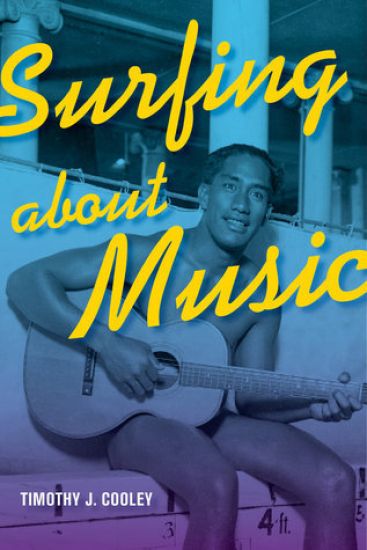
Surfing about Music

Surfing about Music

Timothy J. Cooley

University of California Press
2014
pokkari
This first major examination the interrelationships of music and surfing explores different ways that surfers combine surfing with making and listening to music. Tim Cooley uses his knowledge and experience as a practicing musician and avid surfer to consider the musical practices of surfers in locations around the world, taking into account ideas about surfing as a global affinity group and the real-life stories of surfers and musicians he encounters. In doing so, he expands ethnomusicological thinking about the many ways musical practices are integral to human socializing, creativity, and the condition of being human. Cooley discusses the origins of surfing in Hawai'i, its central role in Hawaiian society, and the mele (chants) and hula (dance or visual poetry) about surfing. He covers instrumental rock from groups like Dick Dale and the Del Tones and many others, and songs about surfing performed by the Beach Boys. As he traces trends globally, three broad styles emerge: surf music, punk rock, and acoustic singer-songwriter music. Cooley also examines surfing contests and music festivals as well as the music used in a selection surf movies that were particularly influential in shaping the musical practices of significant groups of surfers. Engaging, informative, and enlightening, this book is a fascinating exploration of surfing as a cultural practice with accompanying rituals, habits, and conceptions about who surfs and why, and of how musical ideas and practices are key to the many things that surfing is and aspires to be.
In the Shadow of the Cold War

In the Shadow of the Cold War

Timothy J. Lynch

Cambridge University Press
2019
pokkari
This book offers a bold re-interpretation of the prevailing narrative that US foreign policy after the Cold War was a failure. In chapters that retell and re-argue the key episodes of the post-Cold War years, Lynch argues that the Cold War cast a shadow on the presidents that came after it and that success came more from adapting to that shadow than in attempts to escape it. When strategic lessons of the Cold War were applied, presidents fared better; when they were forgotten, they fared worse. This book tells the story not of a revolution in American foreign policy but of its essentially continuous character from one era to the next. While there were many setbacks between the fall of Soviet communism and the opening years of the Trump administration, from Rwanda to 9/11 and Iraq to Syria, Lynch demonstrates that the US remained the world's dominant power.
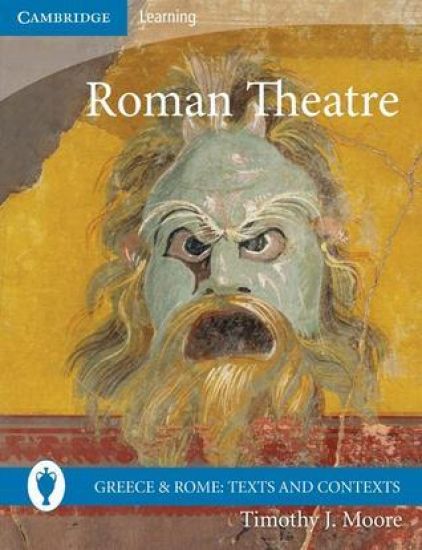
Roman Theatre

Roman Theatre

Timothy J. Moore

Cambridge University Press
2012
pokkari
When we think of ancient theatre today, we tend to think of Greek theatre. Yet the Romans also had a lively and varied set of theatrical traditions, which have had a considerable influence on later drama. This book offers an introduction to these traditions, including the origins of Roman theatre, the extant plays of Plautus, Terence and Seneca, and the many works of comedy, tragedy, mime and pantomime that no longer survive as written texts. The emphasis throughout is on performance, the role of these theatrical works within Roman society, and Roman theatre's legacy.
In the Shadow of the Cold War

In the Shadow of the Cold War

Timothy J. Lynch

Cambridge University Press
2019
sidottu
This book offers a bold re-interpretation of the prevailing narrative that US foreign policy after the Cold War was a failure. In chapters that retell and re-argue the key episodes of the post-Cold War years, Lynch argues that the Cold War cast a shadow on the presidents that came after it and that success came more from adapting to that shadow than in attempts to escape it. When strategic lessons of the Cold War were applied, presidents fared better; when they were forgotten, they fared worse. This book tells the story not of a revolution in American foreign policy but of its essentially continuous character from one era to the next. While there were many setbacks between the fall of Soviet communism and the opening years of the Trump administration, from Rwanda to 9/11 and Iraq to Syria, Lynch demonstrates that the US remained the world's dominant power.
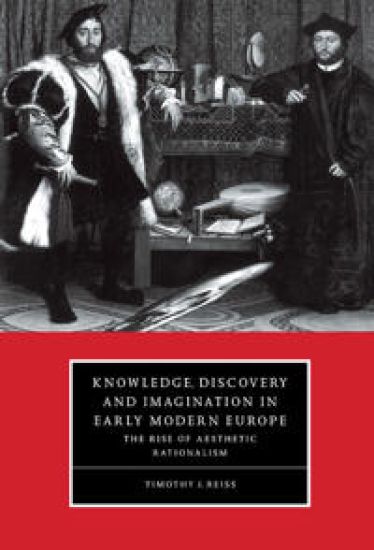
Knowledge, Discovery and Imagination in Early Modern Europe

Knowledge, Discovery and Imagination in Early Modern Europe

Timothy J. Reiss

Cambridge University Press
1997
sidottu
Recent explanations of changes in early modern European thought speak much of a move from orality and emphasis on language to print culture and a 'spatial' way of thinking. Timothy J. Reiss offers a more complex explanation for the massive changes that occurred. He describes how by the late fifteenth century the language arts of the trivium had come to seem useful only for communication, teaching and public debate, and how humanists turned to the mathematical arts of the quadrivium - including music - to enable new means and methods of discovery. Reiss goes on to argue that the new 'mathematical' ideal formed the basis of wide sociocultural renewal; he analyses Northern vernacular grammars, examines the work of French and Italian mathematicians, musicians and philosophers including Descartes, and censures such modern commonplaces as the supposed impact of print and 'spatial' thinking. He ends by exploring the broad impact of this 'mathematisation' of the Western imagination.
Decline and Recovery of the Island Fox

Decline and Recovery of the Island Fox

Timothy J. Coonan; Catherin A. Schwemm; David K. Garcelon

Cambridge University Press
2010
pokkari
Native only to the California Channel Islands, the island fox is the smallest canid in North America. Populations on four of the islands were threatened to extinction in the 1990s due to human-mediated predation and disease. This is the first account of the natural history and ecology of the island fox, illustrating both the vulnerability of island ecosystems and the efficacy of cooperative conservation measures. It explains in detail the intense conservation actions required to recover fox populations, such as captive breeding and reintroduction, and large-scale ecosystem manipulation. These actions were successful due in large part to extraordinary collaboration among the scientists, managers and public advocates involved in the recovery effort. The book also examines the role of some aspects of island fox biology, characteristic of the 'island syndrome', in facilitating their recovery, including high productivity and an apparent adaptation to periodic genetic bottlenecks.
The Judaean Poor and the Fourth Gospel

The Judaean Poor and the Fourth Gospel

Timothy J. M. Ling

Cambridge University Press
2006
sidottu
Judaean society in the first century did not conform to the stereotypical 'Mediterranean honour culture', in that it lacked a significant gentile population and was dominated by a powerful religious elite. Timothy Ling argues that this demands a new social-scientific approach to the Gospel and Letters of John that moves away from the accepted 'sectarian' interpretation. He attributes their distinctiveness instead to their roots in Jesus' Judaean ministry, as contrasted with the Galilean ministry that has attracted much recent study. In particular, Ling contends that the numerous references to 'the poor' in the New Testament can be better understood in the context of the 'alternative' ideologies found among pietistic religious groups practising asceticism, renunciation, and other forms of 'virtuoso religion' in first-century Judaea. In doing so, he mounts a convincing challenge to the current dominant reading of the Gospel of John as a product of early Christian sectarianism.
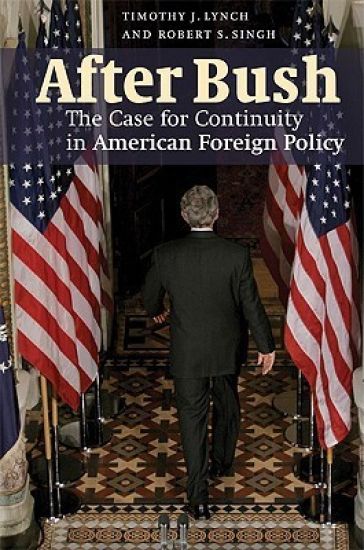
After Bush

After Bush

Timothy J. Lynch; Robert S. Singh

Cambridge University Press
2008
sidottu
The foreign policy of the George W. Bush administration has won few admirers, and many anticipate that his successor will repudiate the actions of the past eight years. In their provocative account Lynch and Singh argue that Bush's policy should be placed within the mainstream of the American foreign policy tradition. Further, they suggest that there will, and should, be continuity in US foreign policy from his presidency to those of his successors. Providing a positive audit of the war on terror (which they contend should be understood as a Second Cold War) they maintain that the Bush doctrine has been consistent with past policy at times of war and that the key elements of Bush's grand strategy will continue to shape America's approach in the future. Above all, they predict that his successors will pursue the war against Islamist terror with similar dedication.
Decline and Recovery of the Island Fox

Decline and Recovery of the Island Fox

Timothy J. Coonan; Catherin A. Schwemm; David K. Garcelon

Cambridge University Press
2010
sidottu
Native only to the California Channel Islands, the island fox is the smallest canid in North America. Populations on four of the islands were threatened to extinction in the 1990s due to human-mediated predation and disease. This is the first account of the natural history and ecology of the island fox, illustrating both the vulnerability of island ecosystems and the efficacy of cooperative conservation measures. It explains in detail the intense conservation actions required to recover fox populations, such as captive breeding and reintroduction, and large-scale ecosystem manipulation. These actions were successful due in large part to extraordinary collaboration among the scientists, managers and public advocates involved in the recovery effort. The book also examines the role of some aspects of island fox biology, characteristic of the 'island syndrome', in facilitating their recovery, including high productivity and an apparent adaptation to periodic genetic bottlenecks.
A Place Called Jubilee

A Place Called Jubilee

Timothy J. Garrett

Rock Yard Books
2019
nidottu
Named Notable Indie #1 in the Shelf Unbound Magazine 2019 Best Indie Book Awards. Deception, witchcraft, and the secrets of a long-dead former slave churn the life of ambitious young clergyman Coleman Hightower - even as fear, bombings, and riots rock the nation. Timothy J. Garrett's historical novel A PLACE CALLED JUBILEE tells Coleman's story as he leaves his mountain home and arrives in Washington D.C. in 1961 as the Civil Rights movement explodes across America. Coleman's plans for a prestigious life are torn apart by his forbidden longing for beautiful and fiery activist Rosalee. His search for meaning turns into a desperate journey that takes him and the woman of his dreams all the way to Jubilee, Alabama - a place where intrigue, betrayal, and murder combine to make Coleman wonder if he will win Rosalee's love or even leave the tiny town alive.
No One Cheers for Goliath

No One Cheers for Goliath

Timothy J Brown

Monday Creek Publishing
2021
pokkari
No One Cheers for Goliath chronicles the obstacles overcome and the leadership lessons learned by Timothy J. Brown from his journey as a first generation African America college student to academic dean. As the son of a steel worker, his path took him from the small steel mill town of Coatesville, PA through his improbable ascension into leadership positions in higher education. His story, however, started inauspiciously as he landed on academic probation after his first semester at West Chester University of Pennsylvania. He would rebound to earn two degrees in Communication Studies from West Chester University, and complete his Ph.D. in Rhetoric at Ohio University. From Ohio, he would take his first faculty position at Buffalo State College, before returning to West Chester University as a faculty member in the same department in which he was a student. After five years, he would succeed his mentor and the person who first encouraged him to go to graduate school, Dr. Denny Klinzing, as department chair (Denny served 26 years as chair of the department). Dr. Brown would serve 10 years as department chair of the Department of Communication Studies at West Chester University-a program that had over 500 majors and over 35 faculty members before being named the Dean of the James L. Knight School of Communication at Queens University of Charlotte. The Knight School of Communication is the only school in the nation that carries the Knight Foundation name. Currently, Dr. Brown serves as the Dean of Liberal Arts at Montgomery County Community College where he oversees 15 departments that span the arts & humanities and social sciences. As Dr. Brown excelled as a teacher/scholar, he became a leader on his campus and in the discipline of communication. Among his many honors includes being named a Distinguished Teaching Fellow and a Distinguished Research Fellow by the Eastern Communication Association, and being honored as a Drum Major for Justice by West Chester University's Frederick Douglass Society.No One Cheers for Goliath revisits Dr. Brown's leadership journey in higher education through personal reflections, life experiences, and memories of the people and events that shaped his leadership philosophy of being a servant-leader. Dr. Brown's servant-leadership approach is forged upon building authentic relationships and providing individuals with opportunities and support in order for them to succeed. Through powerful personal examples and stories, Dr. Brown captures what he learned as a leader in higher education. He believes in people because others had believed in him. He supports people as others supported him. He connects with people as others have connected with him. His ability to see people through their challenges, is reflective of the challenges that he had to overcome. The people, events, and circumstances that Dr. Brown discusses in No One Cheers for Goliath are meant to motivate, to encourage, and inspire leaders and aspiring leaders. As a result, effective leadership is a transformative process where the leader comes along side others to unlock their potential in order for them to reach goals that might have otherwise seemed unobtainable.
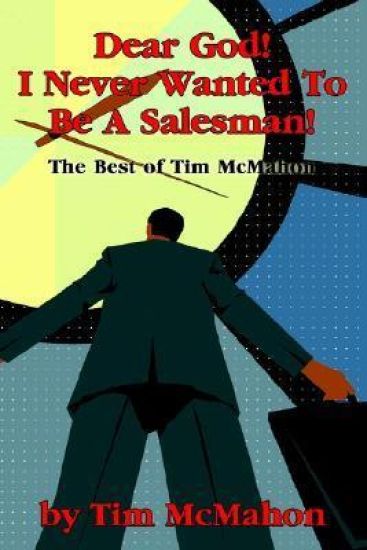
Dear God! I Never Wanted To Be A Salesman!
Tim McMahon has been called "one of the world's Top Three Experts in sales and management"! His powerful, inspiring, and often humorous insights on selling, managing and achieving outrageous success have appeared in major publications around the world. Tim looks at the changing world of sales - from how to create Unique Customer Value to making the most of today's new selling technologies such as CRM - to bring you a wealth of ideas you can use today to achieve peak sales performance! ... the wonderful stories, successes, and pitfalls of selling from a true master salesman who never wanted to be one ... A "must read" !