

Kirjahaku
Etsi kirjoja tekijän nimen, kirjan nimen tai ISBN:n perusteella.
1000 tulosta hakusanalla Timothy R Rice
Common Aero Vehicle Autonomous Reentry Trajectory Optimization Satisfying Waypoint and No-Fly Zone Constraints
Timothy R Jorris
Hutson Street Press
2025
sidottu
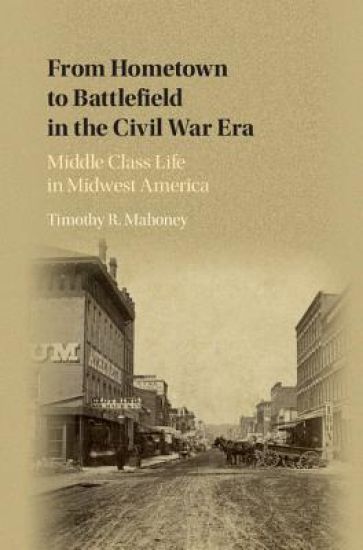
From Hometown to Battlefield in the Civil War Era
Timothy R. Mahoney
Cambridge University Press
2016
sidottu
Mahoney examines how members of the middle class from small cities across the great West were transformed by boom and bust, years of recession, and civil war. He argues that in their encounters with national economic forces, the national crisis in politics, and the Civil War, middle class people were cut adrift from the social identity that they had established in the 'face to face' communities of the 'hometowns' of the urban West. By grounding them in their hometown ethos, and understanding how the Panic of 1857 and the subsequent recession undermined their lives, the author provides important insights into how they encountered, responded to, and were changed by their experiences in the Civil War. Providing a rare view of social history through the framework of the Civil War, the author documents, in both breadth and depth, the dramatic change and development of modern life in nineteenth-century America.
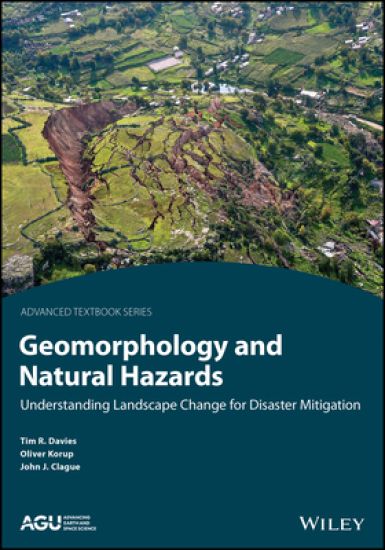
Geomorphology and Natural Hazards
Timothy R. Davies; Oliver Korup; John J. Clague
Wiley-Blackwell
2021
nidottu
Natural disasters are occasional intense events that disturb Earth's surface, but their impact can be felt long after. Hazard events such as earthquakes, volcanos, drought, and storms can trigger a catastrophic reshaping of the landscape through the erosion, transport, and deposition of different kinds of materials. Geomorphology and Natural Hazards: Understanding Landscape Change for Disaster Mitigation is a graduate level textbook that explores the natural hazards resulting from landscape change and shows how an Earth science perspective can inform hazard mitigation and disaster impact reduction. Volume highlights include: Definitions of hazards, risks, and disastersImpact of different natural hazards on Earth surface processesGeomorphologic insights for hazard assessment and risk mitigationModels for predicting natural hazardsHow human activities have altered 'natural' hazardsComplementarity of geomorphology and engineering to manage threats
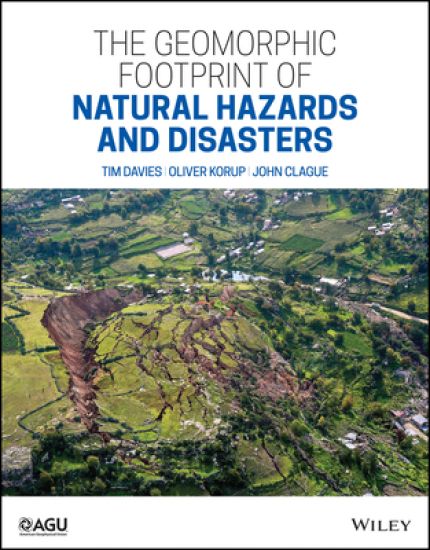
The Geomorphic Footprints of Natural Hazards
Timothy R. H. Davies; Mauri McSaveney; Oliver Korup
Wiley-Blackwell
2021
sidottu
Natural disasters are occasional intense events that disturb Earth's surface, but their impact can be felt long after. Hazard events such as earthquakes, volcanos, drought, and storms can trigger a catastrophic reshaping of the landscape through the erosion, transport, and deposition of different kinds of materials. Geomorphology and Natural Hazards: Understanding Landscape Change for Disaster Mitigation is a graduate level textbook that explores the natural hazards resulting from landscape change and shows how an Earth science perspective can inform hazard mitigation and disaster impact reduction. Volume highlights include: Definitions of hazards, risks, and disasters Impact of different natural hazards on Earth surface processes Geomorphologic insights for hazard assessment and risk mitigation Models for predicting natural hazards How human activities have altered 'natural' hazards Complementarity of geomorphology and engineering to manage threats

In the writings of Nicola Vicentino (1555) and Gioseffo Zarlino (1558) is found, for the first time, a systematic means of explaining music's expressive power based upon the specific melodic and harmonic intervals from which it is constructed. This "theory of interval affect" originates not with these theorists, however, but with their teacher, influential Venetian composer Adrian Willaert (1490-1562). Because Willaert left no theoretical writings of his own, Timothy McKinney uses Willaert's music to reconstruct his innovative theories concerning how music might communicate extramusical ideas. For Willaert, the appellations "major" and "minor" no longer signified merely the larger and smaller of a pair of like-numbered intervals; rather, they became categories of sonic character, the members of which are related by a shared sounding property of "majorness" or "minorness" that could be manipulated for expressive purposes. This book engages with the madrigals of Willaert's landmark Musica nova collection and demonstrates that they articulate a theory of musical affect more complex and forward-looking than recognized currently. The book also traces the origins of one of the most widespread musical associations in Western culture: the notion that major intervals, chords and scales are suitable for the expression of happy affections, and minor for sad ones. McKinney concludes by discussing the influence of Willaert's theory on the madrigals of composers such as Vicentino, Zarlino, Cipriano de Rore, Girolamo Parabosco, Perissone Cambio, Francesco dalla Viola, and Baldassare Donato, and describes the eventual transformation of the theory of interval affect from the Renaissance view based upon individual intervals measured from the bass, to the Baroque view based upon invertible triadic entities.
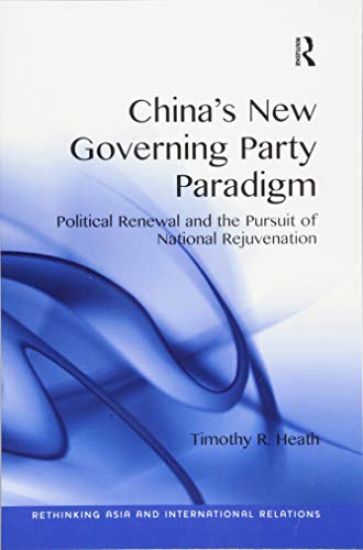
For the first time since its founding in 1921, the Chinese Communist Party (CCP) has adopted a new paradigm for its role in China. Abandoning its former identity as a 'revolutionary party', the CCP now regards itself as a 'governing party' committed to meeting the diverse needs of its people and realizing China’s revitalization as a great power. To enhance its ability to realize these aims, the CCP has enacted extensive political and ideological reforms. Central to that effort are changes to how the party develops and oversees strategy and policy. Few studies are available on the CCP's adoption of this new identity and of its political implications. This book remedies that oversight by explaining the historic context, drivers, and meaning of the governing party paradigm. It explains how adoption of this paradigm is transforming the processes through which the CCP develops strategy and policy. Furthermore, it differs from many other books in that it is the first to derive its analysis primarily from the study of authoritative Chinese sources. The book also provides an extensive array of helpful references, including chronologies, lists of major strategy documents, a glossary, and more. Accurately understanding the CCP's new role as a governing party requires a firm grasp of how China’s leadership formulates, documents, and implements strategies and policies to improve its governance and further the nation’s rejuvenation. This book provides such valuable information in one handy volume.
Army Battle Command System Functions, Integration, and Parallel Support of the Military Decision-Making Process
Timothy R Frambes
Biblioscholar
2012
pokkari
The Global War on Terror is an ideological war being fought in the environment indicative of fourth generation warfare. Propaganda bypasses traditional defenses and strikes right at the center of gravity - popular support. In a modern war of ideologies, communication is decisive; propaganda is cleverly designed, influential communication that compels associated populations to support the cause or leave the battlefield. The Jihadists seek social revolution and rely on propaganda to communicate the cause. Propaganda is especially effective because of the nature of globalized communications - a picture, a video, or a statement quickly consumes the attention of the world media and is spread instantaneously. Communist China successfully completed a social revolution during the 20th Century. Their revolution has striking similarities to the current Jihadist social revolution. China had a significant capability the Jihadists do not; the Chinese government could control nearly all aspects of information within their country. Despite the advantages of globalized communications, the Jihadists do not "own" the battlefield. They are effectively using the battleground (television, internet, satellite TV) but pale in comparison to America's potential. Today, America does little to compete with the Jihadists in the realm of information operations. America can win the war of ideology on the information battlefield should it ever decide to compete. This work has been selected by scholars as being culturally important, and is part of the knowledge base of civilization as we know it. This work was reproduced from the original artifact, and remains as true to the original work as possible. Therefore, you will see the original copyright references, library stamps (as most of these works have been housed in our most important libraries around the world), and other notations in the work. This work is in the public domain in the United States of America, and possibly other nations. Within the United States, you may freely copy and distribute this work, as no entity (individual or corporate) has a copyright on the body of the work. As a reproduction of a historical artifact, this work may contain missing or blurred pages, poor pictures, errant marks, etc. Scholars believe, and we concur, that this work is important enough to be preserved, reproduced, and made generally available to the public. We appreciate your support of the preservation process, and thank you for being an important part of keeping this knowledge alive and relevant.

Extending from the Cold War through the current Era of Persistent Conflict, the Army implemented a number of force structure changes in response to the existing and predicted strategic environment. Similar to the architectural standard phrase that "Form Follows Function," Army force structure and force generating processes each represent a form evolved over time to satisfy the function of projecting military strength. The current Army process of force generation, termed ARFORGEN, serves as the model and process through which conventional Army combat forces are trained, resourced, and certified for global deployment under the Global Force Management processes defined by the National Military Strategy, all within a constrained environment of military end strength limitations, the All-Volunteer Force, and competing combatant command requirements. While still in development and lacking definitive codification, ARFORGEN remains the current U. S. Army force generation methodology to provide ground combat forces to the Joint Force Provider (U. S. Joint Forces Command) in response to regional combatant command requests for forces to support theater strategies and contingencies. This work has been selected by scholars as being culturally important, and is part of the knowledge base of civilization as we know it. This work was reproduced from the original artifact, and remains as true to the original work as possible. Therefore, you will see the original copyright references, library stamps (as most of these works have been housed in our most important libraries around the world), and other notations in the work. This work is in the public domain in the United States of America, and possibly other nations. Within the United States, you may freely copy and distribute this work, as no entity (individual or corporate) has a copyright on the body of the work. As a reproduction of a historical artifact, this work may contain missing or blurred pages, poor pictures, errant marks, etc. Scholars believe, and we concur, that this work is important enough to be preserved, reproduced, and made generally available to the public. We appreciate your support of the preservation process, and thank you for being an important part of keeping this knowledge alive and relevant.
Given the importance of security force assistance in an era of persistent conflict and the need for counterinsurgency operations, what makes indigenous police forces effective in counterinsurgency? This monograph proposes that, if the Army faces an era of persistent conflict and chooses to assist indigenous forces, then paramilitary organization and U.S. military leadership make for effective indigenous police in counterinsurgency operations. To test the hypothesis, this study explores two related areas. The paper begins with an analysis of several cases to analyze what type of organization makes for effective indigenous police in counterinsurgency operations. It continues with an analysis of who should lead the effort to effective indigenous police during counterinsurgency operations. Case research indicates that indigenous police are most effective in counterinsurgency efforts when structured along paramilitary lines. Analysis of these cases suggests that paramilitary police forces are survivable and effective against insurgent elements. Exploration into cases in Iraq and Afghanistan illustrate how civilian government agencies are challenged to lead efforts contributing to effective local police forces during counterinsurgency. The research indicates the military is better able to lead efforts to make effective indigenous police for counterinsurgency operations. Based on the research, the monograph provides recommendations. First, establish paramilitary police organizations in Iraq and Afghanistan resembling the successful Philippine Constabulary. Second, expand Army doctrine to greater cover host-nation paramilitary force employment. Third, amend the Foreign Assistance Act to allow the military to lead indigenous police support efforts during counterinsurgency conflicts. Fourth, establish a centralized agency with definite lines of authority over indigenous police assistance in peacetime versus the current course of confused interagency effort. Fifth, and last, This work has been selected by scholars as being culturally important, and is part of the knowledge base of civilization as we know it. This work was reproduced from the original artifact, and remains as true to the original work as possible. Therefore, you will see the original copyright references, library stamps (as most of these works have been housed in our most important libraries around the world), and other notations in the work. This work is in the public domain in the United States of America, and possibly other nations. Within the United States, you may freely copy and distribute this work, as no entity (individual or corporate) has a copyright on the body of the work. As a reproduction of a historical artifact, this work may contain missing or blurred pages, poor pictures, errant marks, etc. Scholars believe, and we concur, that this work is important enough to be preserved, reproduced, and made generally available to the public. We appreciate your support of the preservation process, and thank you for being an important part of keeping this knowledge alive and relevant.
Feasibility Study of Encoding Operational Mission Metadata Into IPv6 Packet Headers
Timothy R Policarpio
Biblioscholar
2012
pokkari
Macroscopic Computational Model of Dielectric Barrier Discharge Plasma Actuators
Timothy R Klein
Biblioscholar
2012
pokkari
Common Aero Vehicle Autonomous Reentry Trajectory Optimization Satisfying Waypoint and No-Fly Zone Constraints
Timothy R Jorris
Biblioscholar
2012
pokkari