Kirjojen hintavertailu. Mukana 11 342 296 kirjaa ja 12 kauppaa.

Kirjahaku

Etsi kirjoja tekijän nimen, kirjan nimen tai ISBN:n perusteella.

1000 tulosta hakusanalla Vivek Aggarwal

Applied Econometrics Using the SAS System

Applied Econometrics Using the SAS System

Vivek Ajmani

John Wiley Sons Inc
2009
nidottu
The first cutting-edge guide to using the SAS® system for the analysis of econometric data Applied Econometrics Using the SAS® System is the first book of its kind to treat the analysis of basic econometric data using SAS®, one of the most commonly used software tools among today's statisticians in business and industry. This book thoroughly examines econometric methods and discusses how data collected in economic studies can easily be analyzed using the SAS® system. In addition to addressing the computational aspects of econometric data analysis, the author provides a statistical foundation by introducing the underlying theory behind each method before delving into the related SAS® routines. The book begins with a basic introduction to econometrics and the relationship between classical regression analysis models and econometric models. Subsequent chapters balance essential concepts with SAS® tools and cover key topics such as: Regression analysis using Proc IML and Proc Reg Hypothesis testing Instrumental variables analysis, with a discussion of measurement errors, the assumptions incorporated into the analysis, and specification tests Heteroscedasticity, including GLS and FGLS estimation, group-wise heteroscedasticity, and GARCH models Panel data analysis Discrete choice models, along with coverage of binary choice models and Poisson regression Duration analysis models Assuming only a working knowledge of SAS®, this book is a one-stop reference for using the software to analyze econometric data. Additional features include complete SAS® code, Proc IML routines plus a tutorial on Proc IML, and an appendix with additional programs and data sets. Applied Econometrics Using the SAS® System serves as a relevant and valuable reference for practitioners in the fields of business, economics, and finance. In addition, most students of econometrics are taught using GAUSS and STATA, yet SAS® is the standard in the working world; therefore, this book is an ideal supplement for upper-undergraduate and graduate courses in statistics, economics, and other social sciences since it prepares readers for real-world careers.
Enterprise Supply Chain Management

Enterprise Supply Chain Management

Vivek Sehgal

John Wiley Sons Inc
2009
sidottu
ENTERPRISE SUPPLYCHAIN MANAGEMENT Integrating Best-in-Class Processes Is supply chain management all about forecasting? Or is it just a warehousing and transportation function? Demystifying the mystery supply chain management is for many, Enterprise Supply Chain Management: Integrating Best-in-Class Processes offers a comprehensive look at the role of this field within your own organization. Written by industry leader Vivek Sehgal, this book invites you to evaluate your current supply chain practices and leverage its best in class concepts to your own challenges. Drawing from the author's abundant research and analysis, this resourceful book shows how to manage a supply chain across an enterprise, encompassing technological, financial, procurement, and operational issues. You will find in this book a thoroughly functional view of supply chain, so you can readily understand the meaning of processes and where they fit into your company's big picture. This essential book covers: A primer on supply chain and financeElements of a supply chain modelThe scope of the supply chainDemand and supply planningSupply chain network designTransportation and warehouse managementSupply chain collaborationReverse logistics managementSupply chain technology Whether you are a business manager, an IT manager, or a supply chain student, if you are looking for more of a comprehensive understanding of what each of the supply chain processes in your organization brings to the table and how each functions as part of the whole, Enterprise Supply Chain Management: Integrating Best-in-Class Processes is for you. Immensely functional on all aspects of supply chain management, this guide clearly explains how each process works and the relationships among them, allowing you to start implementing best-in-class approaches in your organization.
EUV Lithography

EUV Lithography

Vivek Bakshi

John Wiley Sons Inc
2009
sidottu
EUVL is an area of intense research and this book provides the foundation required for understanding and applying this technology. It offers contributions from the world's leading EUVL researchers, and provides all the critical information needed by practitioners and those wanting to enter the field.
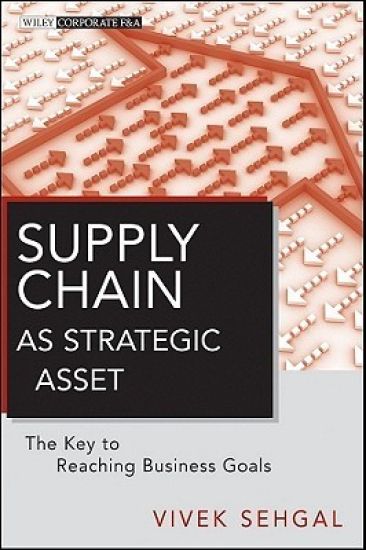
Supply Chain as Strategic Asset

Supply Chain as Strategic Asset

Vivek Sehgal

John Wiley Sons Inc
2011
sidottu
Hands-on guidance for creating competitive advantages through strategy realization How can your supply chain create competitive advantages and help achieve business goals? Drawing from the author's abundant research and analysis, this resourceful book shows how aligning the supply chain design with business strategy helps build competitive capabilities, prioritize capital investments, and takes your firm beyond the industry best-practices to create competitive advantages, not just competitive parity. Summarizing the current literature on business and supply chain strategies, this book provides path-breaking new direction to build your own winning supply chain strategy. Real-life cases show how this strategy alignment has produced results for the most successful companies and how it can be achieved in your firm. An overview of the concepts of business strategy, the current thinking on supply chain strategy and why it is inadequate to drive competitive advantage through supply chain designProcess for establishing your own supply chain strategy to build competitive advantageThe place of technology in creating business capabilities in modern corporations and why managing technology should be a core competence and an integral part of strategy planningStep-by-step direction and examples for creating strategy alignment and designing a supply chain that goes beyond supporting your operationsCase studies including Wal-mart, Cemex, Kmart, HP, Dell, and others Consolidating the lessons learned along with implementation guidance, Supply Chain as Strategic Asset is the must-read road map for designing a supply chain that will be vital in achieving your business goals.
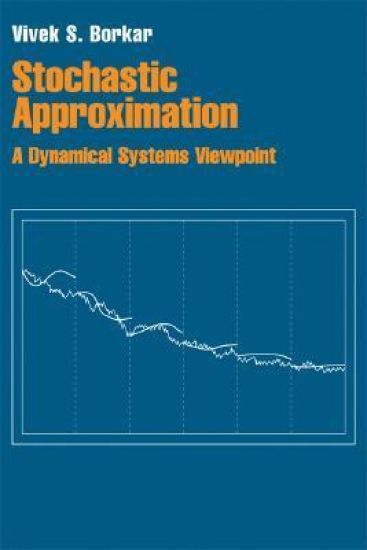
Stochastic Approximation

Stochastic Approximation

Vivek S. Borkar

Cambridge University Press
2008
sidottu
This simple, compact toolkit for designing and analyzing stochastic approximation algorithms requires only basic literacy in probability and differential equations. Yet these algorithms have powerful applications in control and communications engineering, artificial intelligence and economic modelling. The dynamical systems viewpoint treats an algorithm as a noisy discretization of a limiting differential equation and argues that, under reasonable hypotheses, it tracks the asymptotic behaviour of the differential equation with probability one. The differential equation, which can usually be obtained by inspection, is easier to analyze. Novel topics include finite-time behaviour, multiple timescales and asynchronous implementation. There is a useful taxonomy of applications, with concrete examples from engineering and economics. Notably it covers variants of stochastic gradient-based optimization schemes, fixed-point solvers, which are commonplace in learning algorithms for approximate dynamic programming, and some models of collective behaviour. Three appendices give background on differential equations and probability.
Ghachar Ghochar

Ghachar Ghochar

Vivek Shanbhag

Faber Faber
2018
nidottu
'One of the finest literary works you will ever encounter.' Irish Times 'A jewel of a novel.' Times Literary Supplement 'A stunning satire.' Observer 'India's finest writer.' HeraldIt's true what they say, it's not we who control the money, it's the money that controls us. A close-knit family is delivered from near-destitution to sudden wealth after a miraculous change in fortune. But family dynamics begin to shift when the narrator moves with his sister, his parents, and his uncle from a cramped shack to a huge home and encounters new-found wealth. As the dream of middle-class, aspirational living comes true, allegiances and desires realign; marriages are arranged and begin to falter; and conflict brews ominously in the background.
Sakina's Kiss

Sakina's Kiss

Vivek Shanbhag

FABER FABER
2025
sidottu
From a master of contemporary Indian fiction, an expertly crafted and taut family drama, set over the course of four days. 'A delightful read.' Abraham Verghese'Extraordinary.' Geetanjali Shree'A writer of rare and wonderful gifts.' Garth Greenwell 'One of those writers whose voice takes your breath away.' Yiyun Li A middle-class couple in Bengaluru, Venkat and Viji, find their quiet life upended - and the flaws in their marriage exposed - when two strange young men come knocking at their door one evening, claiming to have business with their daughter, Rekha. Since Rekha, a college senior, happens to be visiting relatives in the countryside, Venkat sends the boys away - but they come back the next day, and this time they're not alone. Venkat begins to fear for his daughter's safety and is haunted by memories of similar sinister events from his own youth, events that culminated in a betrayal and disappearance he'd prefer to forget. As Venkat's guilt-ridden imagination leaps between knowing and unknowing, evasion and confrontation, Shanbhag reveals not just the tensions in a marriage or a family, but also the fissures of class, politics and threatened violence that can tear communities apart.'Tense, taut and compulsively readable.' Deepa Anappara 'Vivek Shanbhag is probably the best writer writing in any language anywhere.' Mohammed Hanif
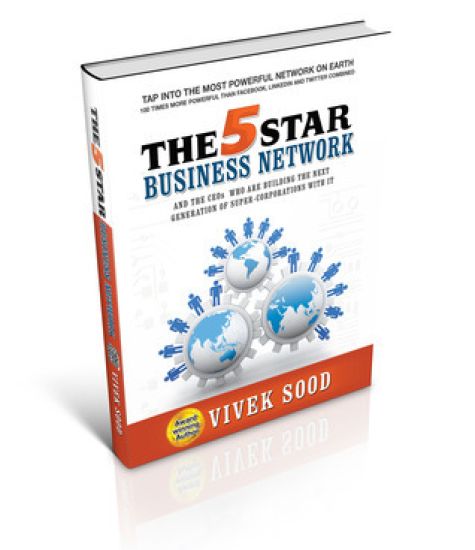
The 5-Star Business Network: And the Ceos Who Are Building the Next Generation of Super Corporations with It
Most effective business leaders know: -Why did Apple sue Samsung while it continues to buy critical parts for its winning products from Samsung? -Why did Google create Android OS for mobile applications, and is now talking about opening its own retail stores? -Why did Amazon create Kindle when the market is already saturated by other tablets and similar products? -How did Nokia mobile phone lose its shine? -Why did Apple build its own retail presence? -How will shale gas discoveries in North America change the business world and perhaps the geo-political balance in the next 10 years? Do you? Win big time by using the wisdom of your business networks to create, innovate, deliver and profit. Read this book to find out how. Praise for this book: The rules of the business world have changed - and nobody has full grasp of the new reality. This book is an important step leading the business leaders towards the new normal. From use of technology to outsourcing to innovation - the breadth and depth of thinking is seminal and intense. The best part about this book is the actionable nature of the content. Tony Fedorowicz - Global Supply Chain Strategist Your business model might be broke, and you may not even be aware of this. This books offers a breath of fresh air in the world of business strategy dominated by staid Ivy League thinking which cannot see beyond its doorsteps. When everybody is thinking alike - in general - nobody is thinking at all. This book forces you to think afresh, and shows how you can apply your thinking in the changing global business environment to build enormous business advantage. Dr. Wolfgang Partsch - Ex Global Head, Ernst and Young Supply Chain Practice Once every few years a business book comes along that stands far above the clutter, that has more than one single idea, that is based on solid research, that related theory and models to the real time business, and that is still ahead of the curve. This is one of those rare books. I will buy hundreds of copies and give them to my suppliers, customers and other business network partners. I think it is well worth the expense to orchestrate a business network when everyone is singing from the same song sheet. Tinku Grewal - Chief Executive Officer, Biotech Trading Pty Ltd If you buy only one business book this decade, make sure this is the one. Your entire way of looking at business world will change for good. You will discover hidden treasures in business networks you did not even know existed. Keep it on your bookshelf, give it to your key employees and friends, and make sure your enemies do not get hold of this book. Cooma Chelliah - Chief Executive Officer, Jardine Thompson and Ex Chief Executive Officer - Encyclopedia Britannica Aus In the high volatility environment, if you are running a portfolio of supply chain purchase worth hundreds of millions of dollars a year, there is no other way to mitigate the enormous risk than by managing the business network extremely carefully. This book expounds and builds on some of the techniques I have utilized for risk management and value creation in a soft commodity supply chain through roller coaster highs and lows of the recent commodity cycles. There is no doubt business networks are powerful beyond belief and useful beyond comparison. Hugh Robertson, Ex Director - Commodities and Risk, Weston Milling
The Class Matrix

The Class Matrix

Vivek Chibber

Harvard University Press
2022
sidottu
An influential sociologist revives materialist explanations of class, while accommodating the best of rival cultural theory.Following the collapse of the Soviet Union, analysis of class and other basic structures of capitalism was sidelined by theorists who argued that social and economic life is reducible to culture—that our choices reflect interpretations of the world around us rather than the limitations imposed by basic material facts. Today, capitalism is back on the agenda, as gross inequalities in wealth and power have pushed scholars to reopen materialist lines of inquiry. But it would be a mistake to pretend that the cultural turn never happened. Vivek Chibber instead engages cultural theory seriously, proposing a fusion of materialism and the most useful insights of its rival.Chibber shows that it is possible to accommodate the main arguments from the cultural turn within a robust materialist framework: one can agree that the making of meaning plays an important role in social agency, while still recognizing the fundamental power of class structure and class formation. Chibber vindicates classical materialism by demonstrating that it in fact accounts for phenomena cultural theorists thought it was powerless to explain. But he also shows that aspects of class are indeed centrally affected by cultural factors.The Class Matrix does not seek to displace culture from the analysis of modern capitalism. Rather, in prose of exemplary clarity, Chibber gives culture its due alongside what Marx called “the dull compulsion of economic relations.”
The Class Matrix

The Class Matrix

Vivek Chibber

HARVARD UNIVERSITY PRESS
2024
nidottu
“A quite thorough and impressive work, not only a compelling defense of materialism but also a fair-minded if highly critical engagement with cultural theory. It isn’t clear how culturalists—especially the anti-Marxist ones—can effectively respond to this broadside, tightly and cogently argued as it is.”—Chris Wright, CounterPunch “Chibber…has developed a sophisticated, elegant, and readable defense of the sociological significance of class structure in understanding and addressing the key problems inherent in capitalism.”—Choice “[A] clear, compelling, and systematic statement of the view that class is an objective reality that predictably and rationally shapes human thought and action, one we need to grapple with seriously if we’re to comprehend contemporary society and its morbid symptoms.”—Jacobin Following the collapse of the Soviet Union, theorists argued that social and economic life is reducible to culture—that our choices reflect interpretations of the world around us rather than the limitations imposed by basic material facts. Today, gross inequalities in wealth and power have pushed scholars to reopen materialist lines of inquiry. But it would be a mistake to pretend that the cultural turn never happened. Vivek Chibber instead engages cultural theory seriously, proposing a fusion of materialism and the most useful insights of its rival. Chibber accommodates the main arguments from the cultural turn within a robust materialist framework, showing how one can agree that the making of meaning plays an important role in social agency while still recognizing the fundamental power of class structure and class formation. He vindicates classical materialism by demonstrating that it accounts for phenomena cultural theorists thought it was powerless to explain, while also showing that aspects of class are indeed centrally affected by cultural factors. The Class Matrix does not seek to displace culture from the analysis of modern capitalism. Rather, in prose of exemplary clarity, Chibber gives culture its due alongside what Marx called “the dull compulsion of economic relations.”
Bengali Harlem and the Lost Histories of South Asian America
Winner of the Theodore Saloutos Memorial Book AwardWinner of the Association for Asian American Studies Book Award for HistoryA Times Literary Supplement Book of the YearA Saveur “Essential Food Books That Define New York City” SelectionIn the final years of the nineteenth century, small groups of Muslim peddlers arrived at Ellis Island every summer, bags heavy with embroidered silks from their home villages in Bengal. The American demand for “Oriental goods” took these migrants on a curious path, from New Jersey’s beach boardwalks into the heart of the segregated South. Two decades later, hundreds of Indian Muslim seamen began jumping ship in New York and Baltimore, escaping the engine rooms of British steamers to find less brutal work onshore. As factory owners sought their labor and anti-Asian immigration laws closed in around them, these men built clandestine networks that stretched from the northeastern waterfront across the industrial Midwest.The stories of these early working-class migrants vividly contrast with our typical understanding of immigration. Vivek Bald’s meticulous reconstruction reveals a lost history of South Asian sojourning and life-making in the United States. At a time when Asian immigrants were vilified and criminalized, Bengali Muslims quietly became part of some of America’s most iconic neighborhoods of color, from Tremé in New Orleans to Detroit’s Black Bottom, from West Baltimore to Harlem. Many started families with Creole, Puerto Rican, and African American women.As steel and auto workers in the Midwest, as traders in the South, and as halal hot dog vendors on 125th Street, these immigrants created lives as remarkable as they are unknown. Their stories of ingenuity and intermixture challenge assumptions about assimilation and reveal cross-racial affinities beneath the surface of early twentieth-century America.
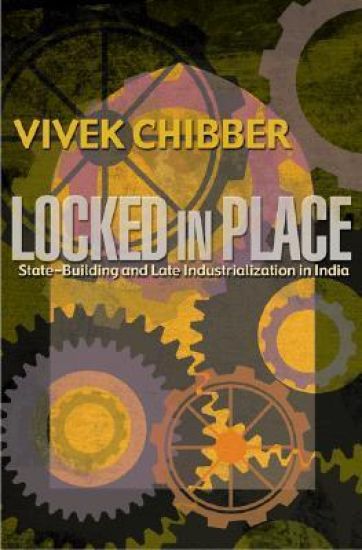
Locked in Place

Locked in Place

Vivek Chibber

Princeton University Press
2006
pokkari
Why were some countries able to build "developmental states" in the decades after World War II while others were not? Through a richly detailed examination of India's experience, Locked in Place argues that the critical factor was the reaction of domestic capitalists to the state-building project. During the 1950s and 1960s, India launched an extremely ambitious and highly regarded program of state-led development. But it soon became clear that the Indian state lacked the institutional capacity to carry out rapid industrialization. Drawing on newly available archival sources, Vivek Chibber mounts a forceful challenge to conventional arguments by showing that the insufficient state capacity stemmed mainly from Indian industrialists' massive campaign, in the years after Independence, against a strong developmental state. Chibber contrasts India's experience with the success of a similar program of state-building in South Korea, where political elites managed to harness domestic capitalists to their agenda. He then develops a theory of the structural conditions that can account for the different reactions of Indian and Korean capitalists as rational responses to the distinct development models adopted in each country. Provocative and marked by clarity of prose, this book is also the first historical study of India's post-colonial industrial strategy. Emphasizing the central role of capital in the state-building process, and restoring class analysis to the core of the political economy of development, Locked in Place is an innovative work of theoretical power that will interest development specialists, political scientists, and historians of the subcontinent.
I'm Afraid of Men

I'm Afraid of Men

Vivek Shraya

Prentice Hall Press
2018
sidottu
"Cultural rocket fuel." --Vanity Fair "Emotional and painful but also layered with humour, I'm Afraid of Men will widen your lens on gender and challenge you to do better. This challenge is a necessary one--one we must all take up. It is a gift to dive into Vivek's heart and mind." --Rupi Kaur, bestselling author of The Sun and Her Flowers and Milk and Honey A trans artist explores how masculinity was imposed on her as a boy and continues to haunt her as a girl--and how we might reimagine gender for the twenty-first century. Vivek Shraya has reason to be afraid. Throughout her life she's endured acts of cruelty and aggression for being too feminine as a boy and not feminine enough as a girl. In order to survive childhood, she had to learn to convincingly perform masculinity. As an adult, she makes daily compromises to steel herself against everything from verbal attacks to heartbreak. Now, with raw honesty, Shraya delivers an important record of the cumulative damage caused by misogyny, homophobia, and transphobia, releasing trauma from a body that has always refused to assimilate. I'm Afraid of Men is a journey from camouflage to a riot of colour and a blueprint for how we might cherish all that makes us different and conquer all that makes us afraid.
The Complete Verilog Book

The Complete Verilog Book

Vivek Sagdeo

Springer
1998
sidottu
The Verilog hardware description language (HDL) provides the ability to describe digital and analog systems. This ability spans the range from descriptions that express conceptual and architectural design to detailed descriptions of implementations in gates and transistors. Verilog was developed originally at Gateway Design Automation Corporation during the mid-eighties. Tools to verify designs expressed in Verilog were implemented at the same time and marketed. Now Verilog is an open standard of IEEE with the number 1364. Verilog HDL is now used universally for digital designs in ASIC, FPGA, microprocessor, DSP and many other kinds of design-centers and is supported by most of the EDA companies. The research and education that is conducted in many universities is also using Verilog. This book introduces the Verilog hardware description language and describes it in a comprehensive manner. Verilog HDL was originally developed and specified with the intent of use with a simulator. Semantics of the language had not been fully described until now. In this book, each feature of the language is described using semantic introduction, syntax and examples. Chapter 4 leads to the full semantics of the language by providing definitions of terms, and explaining data structures and algorithms. The book is written with the approach that Verilog is not only a simulation or synthesis language, or a formal method of describing design, but a complete language addressing all of these aspects. This book covers many aspects of Verilog HDL that are essential parts of any design process.
Confidence Intervals for Discrete Data in Clinical Research

Confidence Intervals for Discrete Data in Clinical Research

Vivek Pradhan; Ashis Gangopadhyay; Sandeep M. Menon; Cynthia Basu; Tathagata Banerjee

TAYLOR FRANCIS LTD
2024
nidottu
Confidence Intervals for Discrete Data in Clinical Research is designed as a toolbox for biomedical researchers. Analysis of discrete data is one of the most used yet vexing areas in clinical research. The array of methodologies available in the literature to address the inferential questions for binomial and multinomial data can be a double-edged sword. On the one hand, these methods open a rich avenue of exploration of data; on the other, the wide-ranging and competing methodologies potentially lead to conflicting inferences, adding to researchers' confusion and frustration and also leading to reporting bias. This book addresses the problems that many practitioners experience in choosing and implementing fit for purpose data analysis methods to answer critical inferential questions for binomial and count data. The book is an outgrowth of the authors' collective experience in biomedical research and provides an excellent overview of inferential questions of interest for binomial proportions and rates based on count data, and reviews various solutions to these problems available in the literature. Each chapter discusses the strengths and weaknesses of the methods and suggests practical recommendations. The book's primary focus is on applications in clinical research, and the goal is to provide direct benefit to the users involved in the biomedical field.
Dalit Studies and Dalit Movements in India

Dalit Studies and Dalit Movements in India

Vivek Kumar

TAYLOR FRANCIS LTD
2026
sidottu
This volume seeks to provide a philosophical and theoretical foundation for Dalit studies. It begins by formulating a philosophical and theoretical definition of the term ‘Dalit’, along with its empirical characteristics—structural location; the cumulative and collective nature of exclusion; the temporal history of exclusion; and the evolution and identification of icons and cultural symbols within Dalit society. The volume studies the Dalits through the lens of social mobility; highlights the triple exploitation of Dalit women; presents an epistemic and theoretical framework for evolving a ‘Dalit perspective’ and its functions to understand social reality from the point of view of Dalit experience; and engages with the different facets of the Dalit movement. Lucid, accessible, and thought-provoking, this book will be of great interest to scholars and researchers of social exclusion and discrimination studies, sociology, law and human rights, and South Asian studies.