Discerning the early stages of the rebirth of a new Russian empire from the ashes of the Soviet Union, Vladimir Putin and Russia’s Imperial Revival argues that Russia’s recent overtly aggressive actions and foreign policy doctrines have signaled a renewal of the Cold War. At the least, Russia’s actions represent the potential for renewal. This book explains these developments in a historical context.The book begins by describing Russia’s initial policy of rapprochement after the collapse of the Soviet Union and its development into a foreign policy of threatened or actual armed aggression. It identifies today’s Russia as a nation determined to re-establish itself as a political and military force. As a prominent figure in the development and continuation of its current foreign policy, Vladimir Putin plays a central role in the topics covered.Previous literature often treats Putin as an individual phenomenon examining his connections to corruption or the secret police, but here David E. McNabb examines him as the latest in a long history of Russian despots who followed similar expansionist policies. He details some of the tactics Putin uses to instill fear and dominate political policies of republics newly independent from Russia. These tactics include the use of energy as a weapon, cyber terrorism, and military support for ethnic Russian separatists in other sovereign nations, most recently exemplified by Russia’s annexation of Crimea from Ukraine via armed invasion.In an attempt to demystify Russia’s re-emergence as an international political force, Vladimir Putin and Russia’s Imperial Revival grounds its analyses in history. It explores as far back as the establishment of the first Russian empire, and regards Putin as a leader determined to establish a fifth imperial incarnation. It provides a nuanced understanding of how Russia arrived at its current position through recent and distant internal and international events.
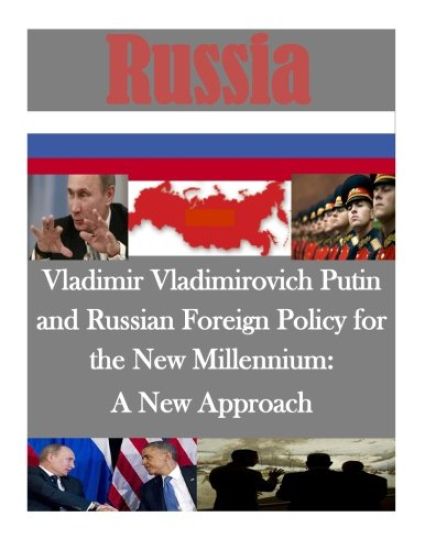
Russian foreign policy during 2001 - 2002 has taken on an entirely new approach. President Vladimir Putin and his Foreign Minister, Igor Ivanov have expanded the scope of Russian external relations both in terms of numbers of nations and the depth of the relationships. The preceding administration of Boris Yeltsin had alienated many both internally and externally and there was much to do to rebuild the damage done.The events of 11 September vaulted the Russians into a position of prominence that Putin and Ivanov could not imagine. A fast and firm show of support by Putin and the promise to assist in any way Russia could has meant that Moscow is at the center of the war against terrorism, both as a regional hegemon and as a partner with the US.In the Middle East and Asia, the Russians have made every effort to make it clear that they are on the side of the "little guy". They have forged close military and diplomatic relationships with Iraq, Iran, India, and even China (though more slowly and cautiously). In addition, they have worked hard to stand behind the Palestinian Authority and effectively enhanced their position in the settlement negotiations. They have done so well vis- -vis the solution that they have been included in the so-called "Quartet of Mediators" including the US, the UN, and the EU.In Europe, the Russians have successfully increased both their access and status in NATO. Both NATO Secretary General George Robertson and UK Prime Minister Tony Blair have pushed hard for an increased Russian role, up to and including a limited vote for Russia on NATO policy issues. At the same time, Russia has made significant inroads with the European Union and the World Trade Organization. Russian leaders including Putin have made numerous trips to European capitals in an effort to build diplomatic bridges that could be useful later.In Central and South America, Moscow has successfully rekindled relationships in the Western Hemisphere. Putin has made personal visits followed up with effective military and diplomatic ties with Brazil and Argentina as well as becoming more visible throughout the region. The Russians have even been allowed to compete their highest technology weaponry against the US when bidding for purchase.Russian relations with the US have been clearly improved. The relationship had languished under Boris Yeltsin, but has made significant strides under Vladimir Putin. Both Presidents Bush and Putin have made a personal and professional connection. The US Secretary of State, Colin Powell has brought Russia deeply into the negotiations in the Middle East and both US leaders have endorsed the Russian handling of the situation in Chechnya. However, there is still some Cold War feeling remaining and competition for influence still echoes in the relationship between Moscow and Washington.The future remains uncertain for Russian foreign policy. But one thing is clear; it will not be without the pragmatic efforts of Vladimir Putin. He will make every effort to steer Russia that brings every advantage. US policy-makers should never underestimate the cleverness of the Russian leader nor his ability to exploit any situation. Finally, Russian foreign policy efforts are expanding not contracting. US leaders should be wary yet positive in that step, but never compromise American interests to gain Russian support. However tempting that might be.
Vladimir LeninThe political theories of Lenin have long outlived him, and have even gone on to outlive the Marxist state he help to found; the Soviet Union. The name Lenin still reverberates around the world, and yet
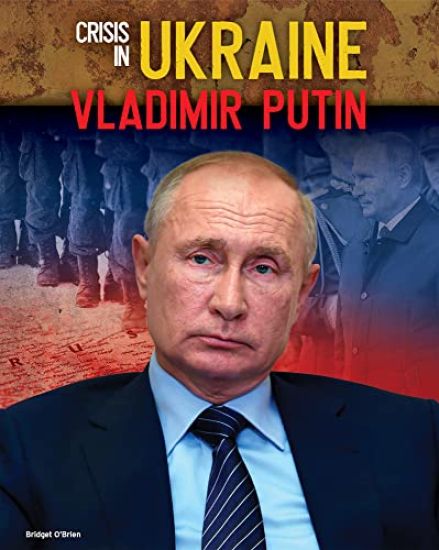
This title examines the life of Vladimir Putin including his early life and education, his career as an intelligence officer in the Soviet Union's security agency, and his terms as prime minister and president of the Russian Federation. Aligned to Common Core standards and correlated to state standards. Abdo & Daughters is an imprint of Abdo Publishing, a division of ABDO.
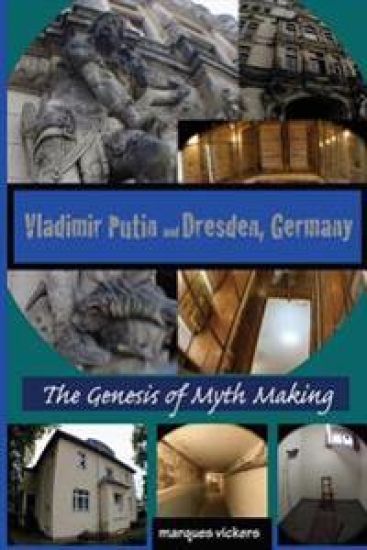
Author and Photographer Marques Vickers examines a propaganda story introduced by Russian President Vladimir Putin crediting himself with single-handedly defusing a hostile East German crowd intent on ransacking the Dresden KGB offices in 1989. Vickers' book "Vladimir Putin and Dresden, Germany: The Genesis of Myth Making", recounts the narrative, first related in Putin's published memoirs "First Person" (2000) and later embellished in a 2009 broadcast via a Russian national television documentary.Between 1985 and 1990, Putin was stationed as a KGB officer in Dresden, Germany, the third largest city of the German Democratic Republic (GDR). He was officially titled as a consular officer, but most scrutinizing Western observers have concurred that his energies were directed towards recruiting spies and siphoning out information regarding West German high technology industries. Other media sources have conjectured that he commanded an investigative team with the East German Stasi police that investigated political crime within the GDR.On the evening of December 5, 1989, a large crowd (speculated at 15,000 people) reportedly surrounded the Dresden Stasi prison. They then entered the facility overwhelming the outnumbered guards. The compound was located across the road from Putin's KGB bureau. The event occurred one month following the fall of the Berlin Wall. That same evening, Putin elaborated that a faction of the crowd descended upon the KGB offices. In First Person, Putin elaborated that he verbally confronted and defused the crowd's hostile intentions by persuasion. Their intention was to ransacking the KGB compound. In a 2009 Russian television documentary, a modified version indicated that he brandished a pistol and threatened to shoot anyone trespassing into the facility. The documentary account accentuated the menacing conditions and heightened Putin's heroics. The size of crowd has never been determined. The incident was not published at the time either. Two cited crowd participants confirmed the story over twenty years later, but their credibility has never been publicly authenticated.Russian media has integrated this encounter prominently into their character construction of Vladimir Putin. Did the incident actually occur? There are significant reasons for doubt.Putin's tenure in Dresden and intimate view of the GDR's collapse has been acknowledged as an influential contributing factor to his hard-line and aggressive foreign policy. His conclusions regarding the momentum of change a unified crowd can provoke has prompted his own tight internal controls within Russia.The 102-page book features over 100 photographs of the Dresden KGB bureau, Stasi prison facility including a decrepit Russian interrogation wing, the former nearby residence of the Putin family, and renovated core of Dresden's center city.Vickers addresses the background, evolution and reconstruction of Dresden since the Russian Cold War occupation between 1945-1989. The author visited Dresden during the summer of 1990 when the city's once esteemed monuments and architecture languished in neglect and decay under the Soviet Occupation. The contemporary city center no longer resembles the wreckage that Putin once knew during his residence.German reunification has completely upgraded and polished Dresden to aesthetic preeminence. The city was formerly known as the Florence on the River Elbe and the jewel of Prussian Empire aesthetics. Dresden stunning Baroque architecture has been rescued due to German taxation subsidies intended towards eastern rehabilitation.Vickers, in his research was unable to confirm or adequately contest Putin's account of 1989 events. Understanding Putin's Dresden experience, however, has proven an excellent window into the thinking process of one of the world's most complex and perplexing national leaders.
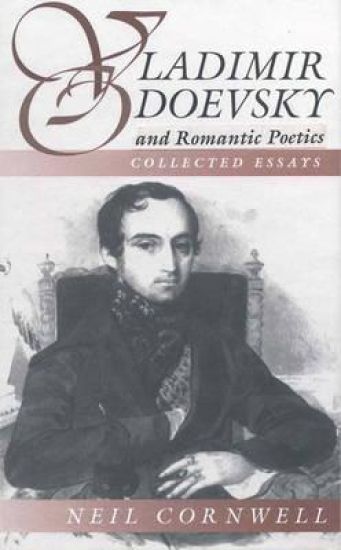
Vladimir Odoevsky (1804-1869) was a fascinating and encyclopedic figurein nineteenth-century Russian culture, who in his day was mentioned in the same breath as Pushkin and Gogol. Thinker, pedagogue, musicologist, amateur scientist and public servant, he is now undergoing a revival as a virtually rediscovered writer of Romantic and Gothic fiction. The author, a leading specialist on Odoevsky, analyses the contribution of Odoevsky to Russian prose fiction and in particular his influential approach to Romanticism, his Gothic novellas and his proto-science fiction, as well as his critical reception.
Vladimir Soloviev (1853-1900), one of the greatest philosophers of the nineteenth century, was the founder of a tradition of Russian spirituality that brought together philosophy, mysticism, and theology with a powerful social message. This unique, timely book -- the first in-depth portrait of Soloviev as a mystic to appear in English -- is the result of Dr Allen's lifelong research into Russian mysticism.
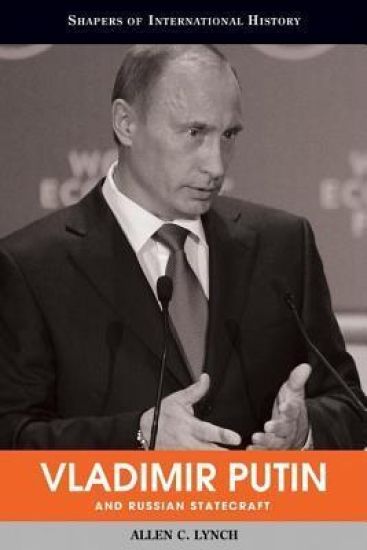
Since Russian leader Vladimir Putin assumed power in August 1999, speculation about his character, motives, and plans for Russia's future has been rampant in the West. A portrait of Putin has emerged in the West that is one-dimensional, ill informed, and diametrically opposed to the image of Putin the majority of Russians hold. Even after he stepped down as president in May 2008, retaining a significant measure of power as prime minister under his hand-picked successor, President Dmitri Medvedev, Putin remains poorly understood. In this interpretive biography of Putin, Allen C. Lynch seeks to reconcile the two conflicting images and find out just where the truth lies about the man and the statesman.Westerners view Putin as an authoritarian holdover from the Soviet era who has clamped down on domestic opposition, freedom of the press, and other elements of a functioning democracy and who has relentlessly exerted Russian influence abroad, challenging the West and seeking to control its post-Soviet periphery. Most Russians, in contrast, are likely to be grateful to Putin for presiding over an economic recovery and reasserting Russian dignity on the world stage. A complete apprehension of the Russian leader, according to Lynch, requires an understanding of the way in which Putin's personal experiences and critical events in recent Russian history have shaped his outlook. Lynch convincingly demonstrates how a complex interplay of Russia's post-Soviet circumstances and the particular path of Putin's career have informed his choices as leader.
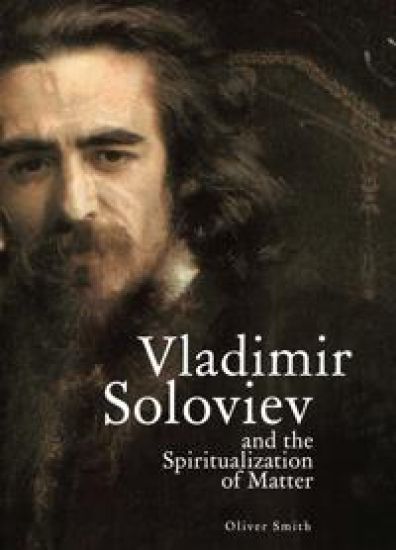
While he is widely acknowledged as the most important Russian thinker of the nineteenth century, Vladimir Soloviev’s place in the landscape of world philosophy nevertheless remains uncertain. Approaching him through a single synoptic lens, this book foregrounds his unique envisioning of the interaction between humanity and the material world. By investigating the development of a single theme in his work—his idea of the “spiritualization of matter”, the “task” of humanity—Smith constructs a rounded picture of Soloviev’s overall importance to an understanding. If nineteenth-century thought, as well as to modern theology and philosophy. The picture that emerges is of a writer whose contribution to a Christian philosophy of matter resonates with many of the religious debates of modernity.
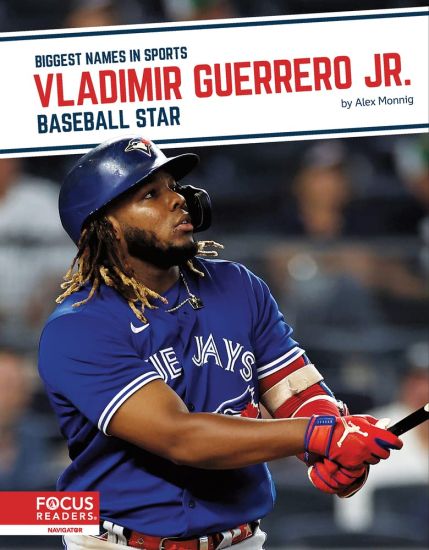
This exciting book introduces readers to the life and career of baseball star Vladimir Guerrero Jr. Colorful photos, fun facts, interesting sidebars, and a map of important places in his life make this a thrilling read for young sports fans. This Focus Readers series is at the Navigator level, aligned to reading levels of grades 3-5 and interest levels of grades 4-7.
This exciting book introduces readers to the life and career of baseball star Vladimir Guerrero Jr. Colorful photos, fun facts, interesting sidebars, and a map of important places in his life make this a thrilling read for young sports fans. This Focus Readers series is at the Navigator level, aligned to reading levels of grades 3-5 and interest levels of grades 4-7.
Gallop off to another century in this action-filled adventure that crosses two continents. Set in the 1850's and 60's, Vladimir is a hunter who becomes the hunted. Come with Vlad on attacks in the Russian Army, follow him to Alaska, cross the pristine wilderness of the Alaskan frontier and the Canadian west, and thrill to danger in the American Civil War. Enjoy the beauty of the wild Alaskan-Canadian wilderness with gold-filled creeks, breathtaking vistas, and abundant wildlife, where man was not always at the top of the food chain. See how a young woman intrigues and captivates Vlad as they fall in love. Through this epic tale, see how faith, perseverance, and love overcome all barriers.