
Kirjahaku
Etsi kirjoja tekijän nimen, kirjan nimen tai ISBN:n perusteella.
1000 tulosta hakusanalla W G Simms

Notion Press proudly brings to you timeless classics from ancient texts to popular modern classics. This carefully chosen collection of books is a celebration of literature, our tribute to the pioneers, the legends and the giants of the literary world.Apart from being the voice of indie writers, we also want to introduce every reader to read all kinds of literature.In this series, you will find a wide range of books--from popular classics like the works of Shakespeare and Charlotte Bront to rare gems by the likes of Edith Wharton and James Fenimore Cooper.

What initially appears to be a plain account of the lives of Jewish emigrants in Norfolk, Austria, America and Manchester, merges into an evocation of the experience of exile and the loss of homeland.
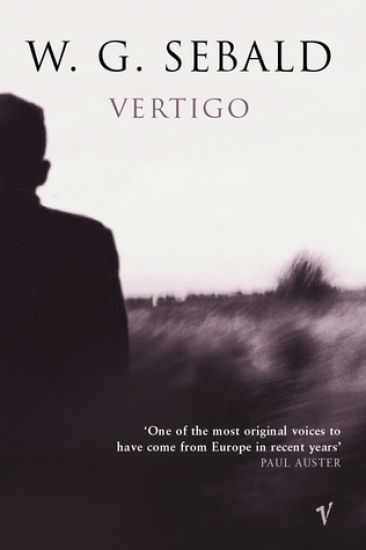
At moments when reality shows itself to be unstable or uncanny, we experience a form of vertigo. This experience is further complicated when we try to transform experience into writing, and fact clashes with memory. Sebald's novel, part fiction, part travelogue explores this theme.
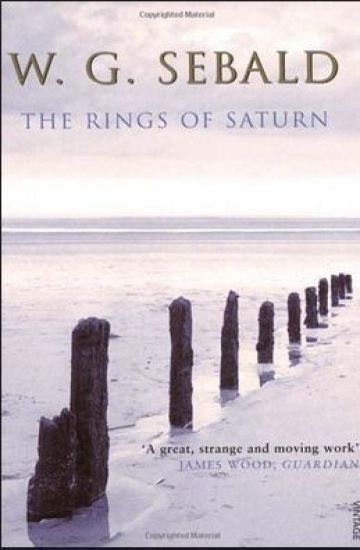
A work of imaginative literature, this fictional record of a journey on foot through coastal East Anglia, Sebald's home for the last 20 years, is also an exploration of England's pastoral and imperial past, evoking people and cultures of the region, past and present
This clear and authoritative book surveys the history of Japan from the mid 19th century up to the present day. It charts the spectacular rise of Japan, a society which leapt in little more than a generation from the feudal to early industrial forms of organisation - an exceptionally disturbing experience for the Japanese as they left behind the traditional and Asian and moved towards the modern and Western. It examines the turbulent 1930s and an empire won and lost between 1937 and 1945, and investigates the major changes after 1945 including the astonishing economic growth that has been achieved since the 1950s. This revised editon covers the economic recession and the dramatic political upheavals of the 1990s, taking the history of Japan up to the end of the 20th century.
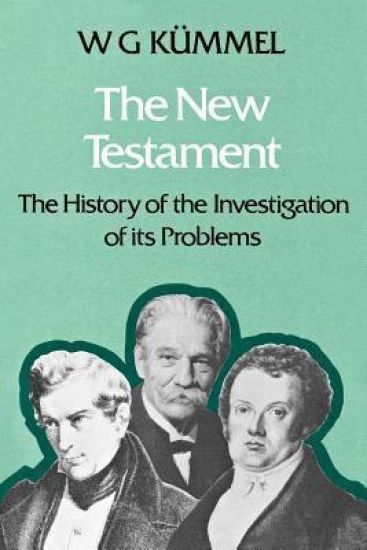
'There can be nothing but praise for the treatment of the subject from the turn of the seventeenth to the eighteenth century up to the present day. Kummel finds the decisive stimuli of New Testament research as we now understand it in Textual Criticism and, interestingly enough, in English Deism. He goes on to trace scientific study from Semler and Michaelis up to the consistently historical approach inaugurated by D. B. Strauss and F. C. Baur. The other major developments are grouped under the main headings of "The History of Religion School" and the "Historico-Theological View". On this broad canvas the detail is superbly organized. Perhaps the outstanding feature of the book is the large amount of illustrative material taken from the writings of the principal scholars whose views are adumbrated and criticized. Behind the selection of material lie great skill and perception. To draw attention to the rich vein of source material is in no way to depreciate Kummel's own contribution which sets in context and gives significance to the excerpts. He makes the reader aware of what precisely are the problems of interpretation, how and why they arise when they do, how they are dealt with by this scholar and that, what is the strength and the weakness of each approach and hypothesis. Running commentary and illustrative material are both enhanced by over five hundred comprehensive notes, full indices, and bibliography. Here is an instrument of study for which we have long been looking and can only receive with gratitude' (Marcus Ward in The Heythrop Journal).
This book, first published in 1957, was the first in English to provide a full and clear introduction to one of the most significant of Indian gods, and stresses his supreme role in Indian religion and art. The book relates the full Krishna story, explaining his role in Indian religion, and traces the history of Krishna in Indian painting. There are 39 plates of Indian pictures, each accompanied by a commentary by the author, revealing a wealth of subtle and poetic detail.
This book, first published in 1957, was the first in English to provide a full and clear introduction to one of the most significant of Indian gods, and stresses his supreme role in Indian religion and art. The book relates the full Krishna story, explaining his role in Indian religion, and traces the history of Krishna in Indian painting. There are 39 plates of Indian pictures, each accompanied by a commentary by the author, revealing a wealth of subtle and poetic detail.
This book, first published in 1986, is an excellent introduction to the main topics of economic and applied geology for undergraduate students of geology, geophysics, mining geology and civil engineering.
This book, first published in 1986, is an excellent introduction to the main topics of economic and applied geology for undergraduate students of geology, geophysics, mining geology and civil engineering.
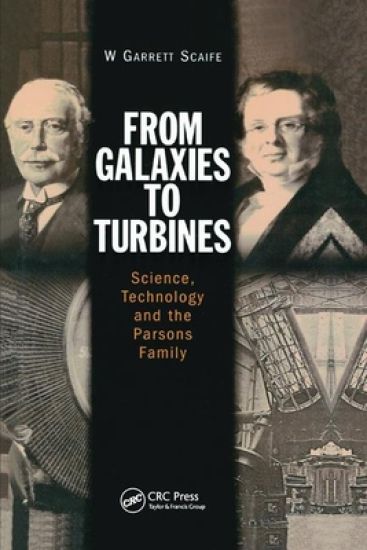
From Galaxies to Turbines: Science, Technology and the Parsons Family looks at the way science and industry relate to each other, and at the way social attitudes affect this relationship. An expert on the Parsons Family, the author beautifully illustrates this by tracing the story of the remarkable endeavors of the Parsons family during the 125 years that embraced their lives in Ireland and Great Britain during the developing Industrial Revolution. The father of the family, William Parsons, Earl of Rosse, discovered the Spiral Nebulae at his observatory in Ireland and displayed an unusual familiarity with engineering principles in the building of his two giant telescopes. His son, Charles, was at the forefront of the new age of technology among shipbuilders and engineers in the northeast coast of England. Lavishly illustrated throughout, with a handy family tree and map of the River Tyne pin-pointing key historic events, this is a highly accessible and fascinating account for the general reader interested in the way scientific knowledge and industrial application have slowly emerged in recent history.
Originally published in 1947, The Vertical Man explores a form of Indian sculpture largely ignored in other studies, with a focus on two kinds of sculpture from the province of Bihar.The book provides detailed analysis of the formal characteristics of the sculpture and the influences of the myth, ritual, and context in which they were commissioned and made. It explains why the sculpture is regional and "why the styles are what they are". It is an original study which throws light on important subjects such as the relations of art and religion and of art and economics. The Vertical Man will appeal to those with an interest in art, specifically sculpture and the art of the Indian countryside.
Originally published in 1974, The Hill of Flutes, is a descriptive account of the Santals and their poetry in their heartland of the Santal Parganas. The book explores the Santal world view, including approaches to education, love, sex, and marriage. It describes and discusses Santal dances, festivals and ceremonies, and other key events and gatherings, such as annual hunts.Through the close consideration of song and poetry, The Hills of Flutes offers an engaging insight into life in Santal society.
Originally published in 1974, The Hill of Flutes, is a descriptive account of the Santals and their poetry in their heartland of the Santal Parganas. The book explores the Santal world view, including approaches to education, love, sex, and marriage. It describes and discusses Santal dances, festivals and ceremonies, and other key events and gatherings, such as annual hunts.Through the close consideration of song and poetry, The Hills of Flutes offers an engaging insight into life in Santal society.
Originally published in 1947, The Vertical Man explores a form of Indian sculpture largely ignored in other studies, with a focus on two kinds of sculpture from the province of Bihar.The book provides detailed analysis of the formal characteristics of the sculpture and the influences of the myth, ritual, and context in which they were commissioned and made. It explains why the sculpture is regional and "why the styles are what they are". It is an original study which throws light on important subjects such as the relations of art and religion and of art and economics. The Vertical Man will appeal to those with an interest in art, specifically sculpture and the art of the Indian countryside.

During World War Two, 131 German cities and towns were targeted by Allied bombs, a good number almost entirely flattened. Six hundred thousand German civilians died--a figure twice that of all American war casualties. Seven and a half million Germans were left homeless. Given the astonishing scope of the devastation, W. G. Sebald asks, why does the subject occupy so little space in Germany's cultural memory? On the Natural History of Destruction probes deeply into this ominous silence.
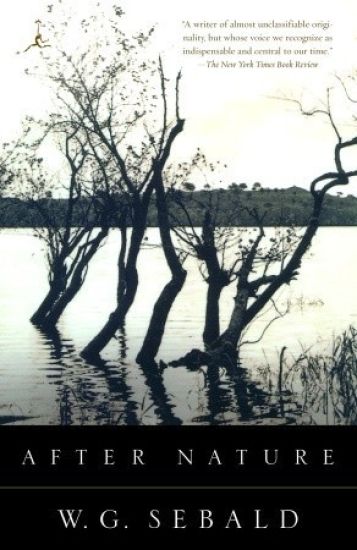
A biographical poetic triptych explores the lives of medieval German painter Matthias Grunewald, eighteenth-century explorer and naturalist Georg Stellar, and Sebald himself, as his describes his own haunting odyssey through twentieth-century Germany. Reprint. 10,000 first printing.