This is a smaller 6x9 edition of the modern rendition of C.F.W. Walther as Theologian. This stellar work by Dr. Franz Pieper acts as a guide to one of the most important figures in early American Lutheranism.
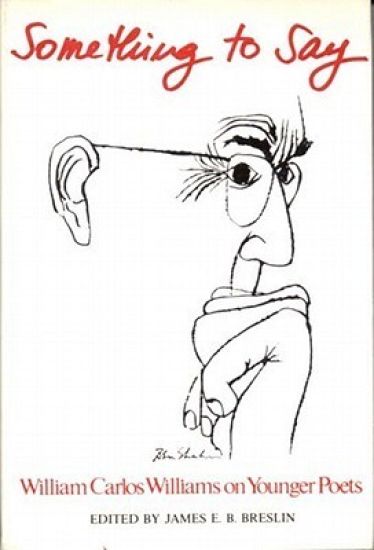
Something to Say: William Carlos Williams on Younger Poets collects all of Williams’ known writings—reviews, essays, introductions, and letters to the editor—on the two generations of poets that followed him, from Kenneth Rexroth and Louis Zukofsky to Robert Lowell and Allen Ginsberg. What might have been a random collection of occasional pieces achieves remarkable coherence from the singleness of Williams’ poetic vision: his belief that the secret spirit of ritual, of poetry, was trapped in restrictive molds, and, if these could be broken, the spirit would be able to live again in a new, contemporary form. Only a revived clarity and accuracy in sight and expression would enable the modern world to reform social order which Williams saw in complete disarray. To resuscitate American Poetry, Williams concentrated his efforts on the purification of poetic speech—his American idiom—and on remaking the poetic line in a new measure—his variable foot. And while his battles with his contemporaries on these issues could be heated, he was always a nurturing father to the young, “a useful presence,” “a model and a liberator.” He told Ginsberg to pare down and economize, Roethke to open up, and encouraged Lowell and Levertov to shake off poetic conventions. But in all his emphasis on the poem as a made object of concrete physicality or as a field of action, he would return again and again to this basic advice to young writers: “The only thing necessary is to have something to say when at last the opportunity comes to say it.”
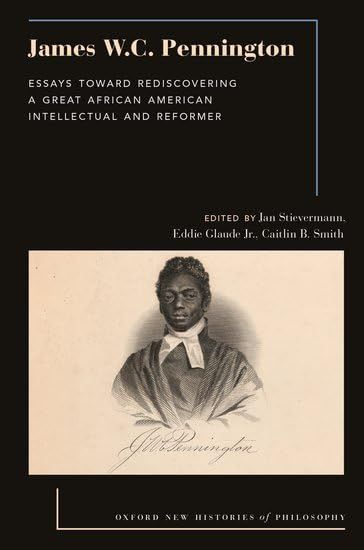
The story of James W.C. Pennington who was a former slave, then a Yale scholar, minister, and international leader of the Antebellum abolitionist movement. He escaped from slavery aged 19 in 1827 and soon became one of the leading voices against slavery before the Civil War. In 1837 he was ordained as a priest after studying at Yale and was soon traveling all over the world as an anti-slavery advocate.
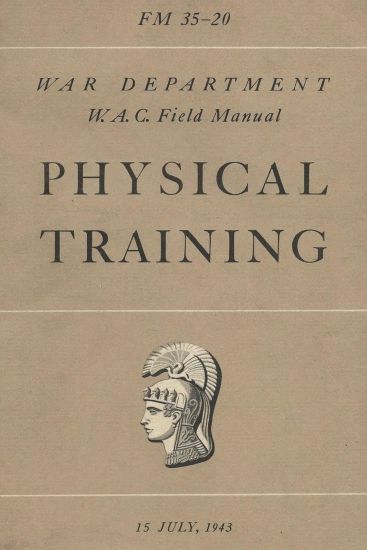
This piece is an exacting reproduction of the 1945 original book for women in the army. It contains over 140 pages of informational text and photographs covering everything a new recruit could need. There may be slight typographical errors including crooked or off-center pages because they are present in the original book. Please understand that this piece has been reproduced to these exacting standards. It is nearly identical to an original, including these flaws.
Charles W. Valentine (1879-1964) is an important figure in the history of educational psychology. Leaving school at 17 to become a teacher, he continued to study at the same time, gaining degrees from London, Cambridge and St. Andrews. He was professor of education at the University of Birmingham in 1919 until his retirement in 1946, then president of the British Psychological Society from 1947-1948. His research covered many areas including child development, imagery, mental testing, home and classroom discipline. Out of print for many years, the Collected Works of C.W. Valentine is an opportunity to revisit many of his finest works.
Title: A Texas Scrap-Book. Made up of the history, biography, and miscellany of Texas and its people. Compiled by D. W. C. Baker. With plates, including portraits.]Publisher: British Library, Historical Print EditionsThe British Library is the national library of the United Kingdom. It is one of the world's largest research libraries holding over 150 million items in all known languages and formats: books, journals, newspapers, sound recordings, patents, maps, stamps, prints and much more. Its collections include around 14 million books, along with substantial additional collections of manuscripts and historical items dating back as far as 300 BC.The GENERAL HISTORICAL collection includes books from the British Library digitised by Microsoft. This varied collection includes material that gives readers a 19th century view of the world. Topics include health, education, economics, agriculture, environment, technology, culture, politics, labour and industry, mining, penal policy, and social order. ++++The below data was compiled from various identification fields in the bibliographic record of this title. This data is provided as an additional tool in helping to insure edition identification: ++++ British Library Baker, D W. C.; 1875 xii. 657 p.; 8 . 10412.ee.8.
The 18th century was a wealth of knowledge, exploration and rapidly growing technology and expanding record-keeping made possible by advances in the printing press. In its determination to preserve the century of revolution, Gale initiated a revolution of its own: digitization of epic proportions to preserve these invaluable works in the largest archive of its kind. Now for the first time these high-quality digital copies of original 18th century manuscripts are available in print, making them highly accessible to libraries, undergraduate students, and independent scholars.Medical theory and practice of the 1700s developed rapidly, as is evidenced by the extensive collection, which includes descriptions of diseases, their conditions, and treatments. Books on science and technology, agriculture, military technology, natural philosophy, even cookbooks, are all contained here.++++The below data was compiled from various identification fields in the bibliographic record of this title. This data is provided as an additional tool in helping to insure edition identification: ++++National Library of ScotlandT200990 Dumfries?]: printed for the author, 1760?]. 186p.; 8
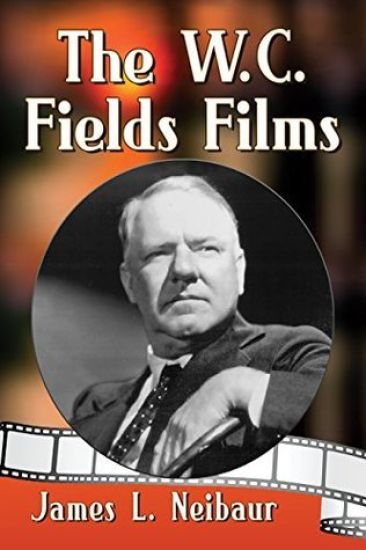
W.C. Fields was at the top among comedians during Hollywood's Golden Era of the 1930s and 1940s and has since remained a comic icon. Despite his character's misanthropic, child-hating, alcoholic tendencies, his performances were enduringly popular and Fields became personally defined by them. This critical study of his work provides commentary and background on each of his films, from the early silents through the cameos near the end of his life, with fresh appraisals of his well known classics. Pictures once believed to be lost that have been discovered and restored are discussed, and new information is given on some that remain lost.
This book explores the ways to teach the literary works of William Clark Falkner and William Faulkner to ESL (English as a Second Language) students in today’s digital environment. William Faulkner’s great-grandfather, William Clark Falkner, wrote romantic literary works, and William Faulkner critically uses the motifs of his great-grandfather’s works to establish his literary world. Applying Mikhail Bakhtin’s dialogical theory, this book theoretically explains how these two authors imagine the social formations of the American South differently in their literary works. The coined term, social combination—which is defined as the individuals’ mutual effort to have equal relationships for a certain time—is used as a key term to examine how these two authors depict the characters’ personal relationships. William Faulkner employs his characters’ social combination as a resistance against the American South’s romantic illusions that are represented by William Clark Falkner’s literary works. William Faulkner’s historical perspective is beneficial for today’s ESL students, who explore their new egalitarian formations in their digitally expanded world. The last part of this study outlines how an American literary teacher can connect the works of William Clark Falkner and William Faulkner when teaching ESL students by using today’s digital environment. Using three digital platforms—Moodle, WordPress, and Google Drive—a teacher composes egalitarian relationships among class members and inspires students’ autonomous discussion on these two authors’ works. Through these activities, ESL students are expected to comprehend that the literature of the American South is not only the historical development of the foreign region, but the phenomenon that is connected to their own social formations.
This book explores the ways to teach the literary works of William Clark Falkner and William Faulkner to ESL (English as a Second Language) students in today’s digital environment. William Faulkner’s great-grandfather, William Clark Falkner, wrote romantic literary works, and William Faulkner critically uses the motifs of his great-grandfather’s works to establish his literary world. Applying Mikhail Bakhtin’s dialogical theory, this book theoretically explains how these two authors imagine the social formations of the American South differently in their literary works. The coined term, social combination—which is defined as the individuals’ mutual effort to have equal relationships for a certain time—is used as a key term to examine how these two authors depict the characters’ personal relationships. William Faulkner employs his characters’ social combination as a resistance against the American South’s romantic illusions that are represented by William Clark Falkner’s literary works. William Faulkner’s historical perspective is beneficial for today’s ESL students, who explore their new egalitarian formations in their digitally expanded world. The last part of this study outlines how an American literary teacher can connect the works of William Clark Falkner and William Faulkner when teaching ESL students by using today’s digital environment. Using three digital platforms—Moodle, WordPress, and Google Drive—a teacher composes egalitarian relationships among class members and inspires students’ autonomous discussion on these two authors’ works. Through these activities, ESL students are expected to comprehend that the literature of the American South is not only the historical development of the foreign region, but the phenomenon that is connected to their own social formations.
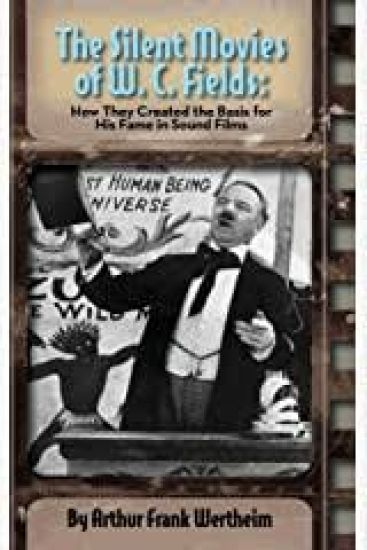
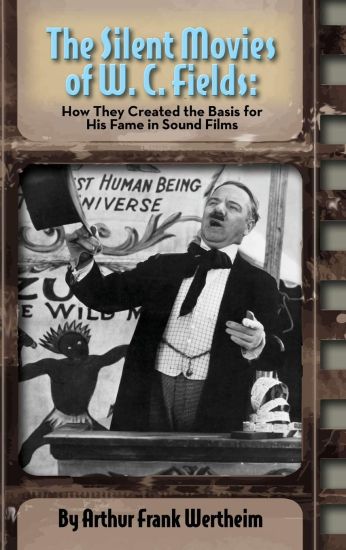
Arthur Frank Wertheim's groundbreaking book is the first to examine W.C. Fields' twelve silent movies and how they influenced his later career in sound films. The author concludes that Fields might never have become one of the prem-ier comedians during the Golden Age of Sound Films without first embarking on a career in silent movies. In this explo-ration, readers will discover new insights and surprises concerning Fields' experiences in this medium.The Silent Movies of W.C. Fields details Fields' early failed screen attempts, which resulted in his decision not to abandon his successful Ziegfeld Follies career, a choice that would prevent him from joining the pantheon of great silent film stars: Chaplin, Keaton, and Lloyd---each of whom, by 1925, had achieved worldwide recog-nition and success. Wertheim relates how Fields would have to struggle against all types of roadblocks to reach the second pantheon tier - and how legendary filmmaker D. W. Griffith came to his rescue by directing two of his silent pictures.The Silent Movies of W.C. Fields is a comprehensive depiction of Fields' early years in New York and Holly-wood, his personal and professional trials and accomplishments, his triumphs and disillusionments, each of which would lead to his ultimate screen legacy.Generously illustrated with many new and rare photos, The Silent Movies of W.C. Fields will prove invaluable to fans of both the comic genius of W.C. Fields and his pristine time of moviemaking. Arthur Frank Wertheim has written numerous books on Twentieth Century American Culture including The New York Little Renaissance and Radio Comedy. He has also co-edited with Barbara Bair three volumes on the The Papers of Will Rogers and edited Will Rogers at the Ziegfeld Follies and American Popular Culture. An American history professor at several universities, his awards include a Fulbright grant to teach at the Univer-sity of Indonesia. He has recently published a three-volume biography on W. C. Fields.
Arthur Frank Wertheim's groundbreaking book is the first to examine W.C. Fields' twelve silent movies and how they influenced his later career in sound films. The author concludes that Fields might never have become one of the prem-ier comedians during the Golden Age of Sound Films without first embarking on a career in silent movies. In this explo-ration, readers will discover new insights and surprises concerning Fields' experiences in this medium.The Silent Movies of W.C. Fields details Fields' early failed screen attempts, which resulted in his decision not to abandon his successful Ziegfeld Follies career, a choice that would prevent him from joining the pantheon of great silent film stars: Chaplin, Keaton, and Lloyd---each of whom, by 1925, had achieved worldwide recog-nition and success. Wertheim relates how Fields would have to struggle against all types of roadblocks to reach the second pantheon tier - and how legendary filmmaker D. W. Griffith came to his rescue by directing two of his silent pictures.The Silent Movies of W.C. Fields is a comprehensive depiction of Fields' early years in New York and Holly-wood, his personal and professional trials and accomplishments, his triumphs and disillusionments, each of which would lead to his ultimate screen legacy.Generously illustrated with many new and rare photos, The Silent Movies of W.C. Fields will prove invaluable to fans of both the comic genius of W.C. Fields and his pristine time of moviemaking. Arthur Frank Wertheim has written numerous books on Twentieth Century American Culture including The New York Little Renaissance and Radio Comedy. He has also co-edited with Barbara Bair three volumes on the The Papers of Will Rogers and edited Will Rogers at the Ziegfeld Follies and American Popular Culture. An American history professor at several universities, his awards include a Fulbright grant to teach at the Univer-sity of Indonesia. He has recently published a three-volume biography on W. C. Fields.






![A [Ne]w Method of [C]ookery ... Together with Several Cosmetick or Beautifying Waters](/covers/9781170910443.jpg)
![A Texas Scrap-Book. Made up of the history, biography, and miscellany of Texas and its people. Compiled by D. W. C. Baker. [With plates, including portraits.]](/covers/9781241419769.jpg)
![A [ne]w Method of [c]ookery ... Together With Several Cosmetick or Beautifying Waters](/covers/9781385462034.jpg)