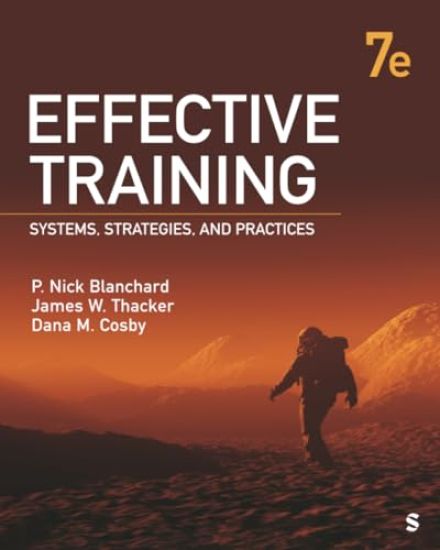
Formerly published by Chicago Business Press, now published by Sage Effective Training: Systems, Strategies, and Practices is unique in its integration of theory with effective and practical training applications. Authors P. Nick Blanchard, James W. Thacker, and Dana Cosby examine the relationship between change management and training, introduce the ADDIE model as an overarching framework for the training process, and consider perspectives relevant to small businesses. Additionally, this text provides a step-by-step process for developing learning objectives and highlights the importance of integrating both learning and design theories in creating successful training programs. The Seventh Edition adds new material while enhancing the ease of reading and understanding. The end of each relevant chapter (needs analysis, design, development and implementation, and evaluation) features an example of the process of developing an actual training program (Fabrics, Inc.). At the end of each chapter are discussion questions, cases, and exercises to enhance understanding.
Charlotte Mary Yonge (11 August 1823 - 24 May 1901) was an English novelist known for her huge output, now mostly out of print. Life: Charlotte Mary Yonge was born in Otterbourne, Hampshire, England, on 11 August 1823 to William Yonge and Fanny Yonge, n e Bargus.She was educated at home by her father, studying Latin, Greek, French, Euclid and algebra. Her father's lessons could be harsh: He required a diligence and accuracy that were utterly alien to me. He thundered at me so that nobody could bear to hear it, and often reduced me to tears, but his approbation was so delightful that it was a delicious stimulus... I believe, in spite of all breezes over my innate slovenliness, it would have broken our hearts to leave off working together. And we went on till I was some years past twenty. Yonge's devotion to her father was lifelong and her relationship with him seems to have been for her the standard for all other relationships, including marriage. His "approbation was throughout life my bliss; his anger my misery for the time."She was born into a religious family background, was devoted to the High Church, and much influenced by John Keble, Vicar of Hursley from 1835, a near neighbour and one of the leaders of the Oxford Movement. Yonge is herself sometimes referred to as "the novelist of the Oxford Movement", as her novels frequently reflect the values and concerns of Anglo-Catholicism. She remained in Otterbourne all her life and for 71 years was a teacher in the village Sunday school.In 1868 a new parish was formed to the south of Yonge's home village of Otterbourne; the parish was to contain the villages of Eastley and Barton. Yonge donated 500 towards the parish church and was asked to choose which of the two villages the parish should be named after. She chose Eastley, but decided that it should be spelt 'Eastleigh' as she perceived this as being more modern. Yonge died in her hometown of Otterbourne on 24 May 1901. Her obituary in The Times said: Her friends, and especially her poorer neighbours, knew both the strength and the winning charm of her character. Thus the late Archbishop Benson noted in his diary her 'odd majesty and kindliness, which are very strong'. But it is of course as a writer that Miss Yonge will be remembered. She had an inventive mind and a ready pen, and a bare list of the books written or edited by her would probably occupy nearly a whole column of The Times. She wrote chiefly for young people, especially young girls, and her books are the result not only of a strong ethical purpose, but also of her firm devotion to the High Church view of Christian doctrine and practice. William John Hennessy (July 11, 1839 - December 27, 1917) was an Irish artist. William John Hennessy (originally hAonghusa) was born in Thomastown, County Kilkenny in 1839. His father, John Hennessy, was forced to leave Ireland in 1848 as a result of his involvement in the Young Ireland movement. He landed in Canada and settled in New York City. William, his mother Catherine, and brother joined their father there in 1849. He gained admittance to the National Academy of Design in 1854 and exhibitioned his first works there. Hennessy developed a skill in wood engraving and was hired to illustrate the works of renowned poets, including that of Tennyson, Longfellow and Whittier. As an American he became the co-founder of the Artists' Fund Society, and an honorary member of the American Society of Painters in Watercolours. In 1870 he moved to London where he became a member of the Royal Institute of Oil Painters in 1902. Between 1879 and 1907 the Royal Hibernian Academy displayed eight of his paintings.
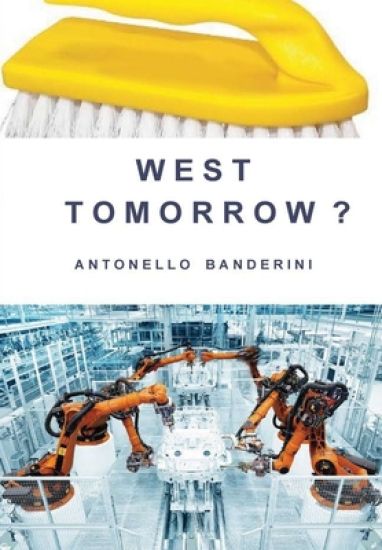
Strutturate Tesi con lungimirante sguardo sul nostro Futuro per evitare un Occidente Domani fra Crisi Economiche e Guerre Civili con : Sangue che scorre e Soldi che bruciano che potrebbero essere di ognuno di noi.Capitoli ...7.La memoria trafugata8.Il commercio insostenibile9.Il punto di partenza10.La scala11.AK - 47 12.La bilancia che non pesa ...50.Il ping pong delle fabbriche51.Industria leggera e Pesante ...53.L'andamento dell'attivita industriale ...56.I passaggi della proprieta industriale nell'era della "globalizzazione" ...60.Cambiare possiamo ...64.Q-Cell "Made in Germany"65.Sonnental: la Solar Valley tedesca 66.Il Signor Frank Asbeck 67.John Deere 68.Il villaggio dei profitti e globale ... 73.Puoi comprarti il mondo74.Il delirio del possesso ... 77.La Finlandia 78.Chi avra successo 79.Perche questa Europa non ha funzionato...81.GE elettrodomestici, KUKA e Mercedes ...83.Dove ci stiamo dirigendo 84.Un'altra direzione ...
Charlotte Mary Yonge (11 August 1823 - 24 May 1901) was an English novelist known for her huge output, now mostly out of print. Life: Charlotte Mary Yonge was born in Otterbourne, Hampshire, England, on 11 August 1823 to William Yonge and Fanny Yonge, n e Bargus.She was educated at home by her father, studying Latin, Greek, French, Euclid and algebra. Her father's lessons could be harsh: He required a diligence and accuracy that were utterly alien to me. He thundered at me so that nobody could bear to hear it, and often reduced me to tears, but his approbation was so delightful that it was a delicious stimulus... I believe, in spite of all breezes over my innate slovenliness, it would have broken our hearts to leave off working together. And we went on till I was some years past twenty. Yonge's devotion to her father was lifelong and her relationship with him seems to have been for her the standard for all other relationships, including marriage. His "approbation was throughout life my bliss; his anger my misery for the time."She was born into a religious family background, was devoted to the High Church, and much influenced by John Keble, Vicar of Hursley from 1835, a near neighbour and one of the leaders of the Oxford Movement. Yonge is herself sometimes referred to as "the novelist of the Oxford Movement", as her novels frequently reflect the values and concerns of Anglo-Catholicism. She remained in Otterbourne all her life and for 71 years was a teacher in the village Sunday school.In 1868 a new parish was formed to the south of Yonge's home village of Otterbourne; the parish was to contain the villages of Eastley and Barton. Yonge donated 500 towards the parish church and was asked to choose which of the two villages the parish should be named after. She chose Eastley, but decided that it should be spelt 'Eastleigh' as she perceived this as being more modern. Yonge died in her hometown of Otterbourne on 24 May 1901. Her obituary in The Times said: Her friends, and especially her poorer neighbours, knew both the strength and the winning charm of her character. Thus the late Archbishop Benson noted in his diary her 'odd majesty and kindliness, which are very strong'. But it is of course as a writer that Miss Yonge will be remembered. She had an inventive mind and a ready pen, and a bare list of the books written or edited by her would probably occupy nearly a whole column of The Times. She wrote chiefly for young people, especially young girls, and her books are the result not only of a strong ethical purpose, but also of her firm devotion to the High Church view of Christian doctrine and practice. William John Hennessy (July 11, 1839 - December 27, 1917) was an Irish artist.William John Hennessy (originally hAonghusa) was born in Thomastown, County Kilkenny in 1839. His father, John Hennessy, was forced to leave Ireland in 1848 as a result of his involvement in the Young Ireland movement. He landed in Canada and settled in New York City. William, his mother Catherine, and brother joined their father there in 1849. He gained admittance to the National Academy of Design in 1854 and exhibitioned his first works there. Hennessy developed a skill in wood engraving and was hired to illustrate the works of renowned poets, including that of Tennyson, Longfellow and Whittier. As an American he became the co-founder of the Artists' Fund Society, and an honorary member of the American Society of Painters in Watercolours. In 1870 he moved to London where he became a member of the Royal Institute of Oil Painters in 1902. Between 1879 and 1907 the Royal Hibernian Academy displayed eight of his paintings.
Charlotte Mary Yonge (11 August 1823 - 24 May 1901) was an English novelist known for her huge output, now mostly out of print. Life: Charlotte Mary Yonge was born in Otterbourne, Hampshire, England, on 11 August 1823 to William Yonge and Fanny Yonge, n e Bargus.She was educated at home by her father, studying Latin, Greek, French, Euclid and algebra. Her father's lessons could be harsh: He required a diligence and accuracy that were utterly alien to me. He thundered at me so that nobody could bear to hear it, and often reduced me to tears, but his approbation was so delightful that it was a delicious stimulus... I believe, in spite of all breezes over my innate slovenliness, it would have broken our hearts to leave off working together. And we went on till I was some years past twenty. Yonge's devotion to her father was lifelong and her relationship with him seems to have been for her the standard for all other relationships, including marriage. His "approbation was throughout life my bliss; his anger my misery for the time."She was born into a religious family background, was devoted to the High Church, and much influenced by John Keble, Vicar of Hursley from 1835, a near neighbour and one of the leaders of the Oxford Movement. Yonge is herself sometimes referred to as "the novelist of the Oxford Movement", as her novels frequently reflect the values and concerns of Anglo-Catholicism. She remained in Otterbourne all her life and for 71 years was a teacher in the village Sunday school.In 1868 a new parish was formed to the south of Yonge's home village of Otterbourne; the parish was to contain the villages of Eastley and Barton. Yonge donated 500 towards the parish church and was asked to choose which of the two villages the parish should be named after. She chose Eastley, but decided that it should be spelt 'Eastleigh' as she perceived this as being more modern. Yonge died in her hometown of Otterbourne on 24 May 1901. Her obituary in The Times said: Her friends, and especially her poorer neighbours, knew both the strength and the winning charm of her character. Thus the late Archbishop Benson noted in his diary her 'odd majesty and kindliness, which are very strong'. But it is of course as a writer that Miss Yonge will be remembered. She had an inventive mind and a ready pen, and a bare list of the books written or edited by her would probably occupy nearly a whole column of The Times. She wrote chiefly for young people, especially young girls, and her books are the result not only of a strong ethical purpose, but also of her firm devotion to the High Church view of Christian doctrine and practice. William John Hennessy (July 11, 1839 - December 27, 1917) was an Irish artist.William John Hennessy (originally hAonghusa) was born in Thomastown, County Kilkenny in 1839. His father, John Hennessy, was forced to leave Ireland in 1848 as a result of his involvement in the Young Ireland movement. He landed in Canada and settled in New York City. William, his mother Catherine, and brother joined their father there in 1849. He gained admittance to the National Academy of Design in 1854 and exhibitioned his first works there. Hennessy developed a skill in wood engraving and was hired to illustrate the works of renowned poets, including that of Tennyson, Longfellow and Whittier. As an American he became the co-founder of the Artists' Fund Society, and an honorary member of the American Society of Painters in Watercolours. In 1870 he moved to London where he became a member of the Royal Institute of Oil Painters in 1902. Between 1879 and 1907 the Royal Hibernian Academy displayed eight of his paintings.
Socrates said, "The secret of change is to focus all your energy, not on fighting the old, but on building the new." In other words, energy flows where attention goes. This guided journal will lead you through Six Steps Olympic athletes commonly use to reprogram their minds for a very high level of success. Practicing these six steps in your own life will help reorient your mind for greater success, by increasing your determination to overcome each and every challenge that comes your way.
W.I.S.D.O.M. tells the story of the perpetually reluctant mother, as she enters her twenties with her own pessimistic views on children and parenthood, only to discover that in the words of Ian Malcolm, "life, uh...finds a way." Through bitingly honest humor she navigates through a multifront effort to pursue her own life goals, fight against mommy culture, and, oh yeah, raise a child. Through clever acronyms, W.I.S.D.O.M. guides the reader on a chronological journey to overcome the challenges faced throughout child-rearing. The reader will learn how to prepare for a baby while averting the insidious baby industry and their devious corporate marketers, and champion judgment-free parenting with the metric of, "what is easiest for me?" Most importantly, this book speaks to mothers striving to retain own goals outside of parenthood by giving career advice such as, "A great way to answer the typical interview question, 'What has been a challenge in your life and what did you do to overcome it' is to begin with 'Before the accident...' and then describe how you overcame those challenges to get where you are today. Just don't mention that 'accident' means pregnancy." In the end, every reader can comfortably rest knowing that, like the author's ancestors, who upon reaching the Midwest over one hundred years ago, decide that sometimes we just have to settle for good enough.
W.M.L. de Wette (1780-1849) was not only one of the founders of modern Old Testament criticism. His loss and recovery of Christian faith, his dismissal from his post in Berlin in 1819 on political grounds and his long subsequent exile in Basel left their mark upon his work in New Testament ethics, dogmatics and aesthetics. This first modern critical study of de Wette's life and work evaluates his achievements in the context of his own times and asesses their importance on modern biblical scholars.




![In Memoriam. M[arie] W[ykeham. in Verse. by Wykeham, of Kherwarra Rajputana].](/covers/9781241051204.jpg)