Kirjojen hintavertailu. Mukana 12 390 323 kirjaa ja 12 kauppaa.

Kirjahaku

Etsi kirjoja tekijän nimen, kirjan nimen tai ISBN:n perusteella.

1000 tulosta hakusanalla W. Perry Epes

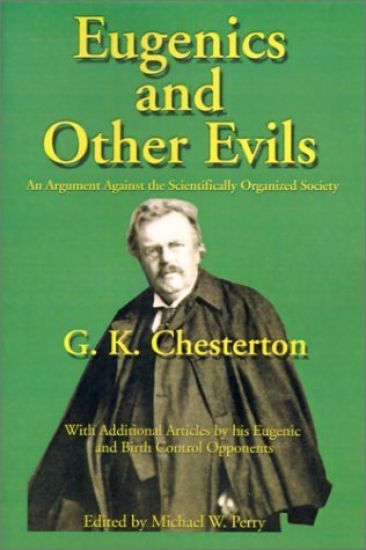
Eugenics and Other Evils

Eugenics and Other Evils

G K Chesterton; Michael W Perry

Inkling Books
2000
nidottu
In the second decade of the twentieth century, an idea became all too fashionable among those who feel it is their right to set social trends. Wealthy families took it on as a pet cause, generously bankrolling its research. The New York Times praised it as a wonderful "new science." Scientists, such as the brilliant plant biologist, Luther Burbank, praised it unashamedly. Educators as prominent as Charles Elliot, President of Harvard University, promoted it as a solution to social ills. America's public schools did their part. In the 1920s, almost three-fourths of high school social science textbooks taught its principles. Not to be outdone, judges and physicians called for those principles to be enshrined into law. Congress agree, passing the 1924 immigration law to exclude from American shores the people of Eastern and Southern Europe that the idea branded as inferior. In 1927, the U. S. Supreme Court joined the chorus, ruling by a lopsided vote of 8 to 1 that the sterilization of unwilling men and women was constitutional. That idea was eugenics and in the English-speaking world it had virtually no critics among the "chattering classes." When he wrote this book, Chesterton stood virtually alone against the intellectual world of his day. Yet to his eternal credit, he showed no sign of being intimidated by the prestige of his foes. On the contrary, he thunders against eugenics, ranking it one of the great evils of modern society. And, in perhaps one of the most chillingly accurate prophecies of the century, he warns that the ideas that eugenics had unleashed were likely to bear bitter fruit in another nation. That nation was Germany, the "very land of scientific culture from which the ideal of a Superman had come." In fact, the very group that Nazism tried to exterminate, Eastern European Jews, and the group it targeted for later extermination, the Slavs, were two of those whose biological unfitness eugenists sought so eagerly to confirm. What are sometimes called the "excesses" of Nazism drove the open advocacy of eugenics underground. But there's little evidence that the elements of society who once trumpeted the idea have changed their mind. Dr. Alan Guttmacher provides a good example. The fact that he had been Vice-President of the American Eugenics Association was no hindrance to his assuming the Presidency of Planned ParenthoodÐWorld Population in 1962. And his seedy past did not keep Congress from providing millions of dollars in federal funds to Planned Parenthood. Nor did it stop the Supreme Court from carrying out the central item in Dr. Guttmacher's political agendaÑlegalized abortion. Many of those who now admit that eugenics was evil have trouble explaining why so few of its advocates were every exposed and why so many are still honored. As the title suggests, eugenics is not the only evil that Chesterton blasts. Socialism gets some brilliantly worded broadsides and Chesterton, in complete fairness, does not spare capitalism. He also attacks the scientifically justified regimentation that others call the "health police." The same rationalizations that justified eugenics, he notes, can also be used to deprive a working man of his beer or any man of his pipe. Although it was first published in 1922, there's a startling relevance to what Chesterton had to say about mettlesome bureaucrats who deprive life of its little pleasures and freedoms. His tale about an unfortunate man fired because "his old cherry-briar" "might set the water-works on fire" is priceless. That tale illustrates Chesterton's brilliant use of humor, a knack his foes were quick to realize. In their review of his book, Birth Control News griped, "His tendency is reactionary, and as he succeeds in making most people laugh, his influence in the wrong direction is considerable. Eugenics Review was even blunter. "The only interest in this book," they said, "is pathological. It is a revelation of the ineptitude to which ignorance and blind prejudice may reduce an intelligent man." History has been far kinder to Chesterton than to his critics. It's now generally agree that eugenics was born of evolution and the "ignorance and blind prejudice" of social elites. But never forget that Chesterton was the first to say so, condemning what many of his peers praised. The completely new edition of Chesterton's classic includes almost fifty pages from the writings of Chesterton's opponents. They illustrate just how accurate his attacks on eugenists were. For researchers, it also includes a detailed, 13-page index.
Theism and Humanism

Theism and Humanism

Arthur James Balfour; Michael W Perry

Inkling Books
2000
nidottu
In 1962, Christian Century asked the well-known Christian writer, C. S. Lewis, to name the books that had most influenced his thought. Among those that Lewis listed was Arthur J. Balfour's Theism and Humanism (1915). This was no passing whim. Almost twenty years earlier, in 1944, Lewis had lamented in "Is Theology Poetry" that Theism was "a book too little read." Many others shared Lewis' enthusiasm. When Balfour gave the original lectures on which the book was based, some 2,000 people crowded into Bute Hall at the University of Glasgow on a weekday winter afternoons to cheer and laugh. Even more telling, they kept coming back, week after week for all ten speeches. Even the staid Times of London commented on the "wildly enthusiastic" audiences and noted the diversity of those attending, from citizens and students to professors. Unfortunately, until now the book hasn't been that easy to find. Copies have only been available on the used market and were thus rare and relatively expensive. This newly typeset edition and enhanced makes the book inexpensive and widely available. Balfour was a talented writer and perhaps the most intelligent British Prime Minister of the twentieth century. During World War One he replaced Winston Churchill as First Lord of the Admiralty and went on to become Foreign Secretary. In the latter office he was responsible for the 1917 Balfour Declaration committing Great Britain to the establishment of a Jewish homeland in Palestine. It is no exaggeration to say that Israel owes its existence to Balfour. Theism and Humanism is based on a 1914 Gifford Lecture that Balfour gave at the University of Glasgow. All the original text is included along with over 50 pages of additional material. There are 11 sketches of Balfour adapted from political cartoons in Punch magazine. There are four appendices taken from his other writings, including the marvelous "A Catechism for Naturalism" (which sent the arch-agnostic Thomas Huxley, better known as "Darwin's Bulldog," into a fit of rage). There's also a glossary of people and terms mentioned in the book and a detailed index. Finally, this new edition includes brief quotes from Balfour's other writings to highlight what he is saying. The second edition improves on the first by adding to each chapter in the original, the extensive coverage that The Times of London gave to Balfour's original speech. It also includes three letters by C. S. Lewis on themes closely related to Balfour's book. Balfour's topic is naturalism, the belief that all that exists are natural processes. He challenges those who believe in it to come up with a rationale for what they hold dearest--human reason, human rights, and the importance of art--based solely on naturalism. He believes that cannot be done and summarizes his book in these words: "My desire has been to show that all we think best in human culture, whether associated with beauty, goodness, or knowledge, requires God for its support, that Humanism without Theism loses more than half its value." If you like philosophy and provocative ideas, this book is perfect for you. The Cambridge-educated Balfour was very knowledgeable about science. (He was the President of the British Association for the Advancement of Science in 1904 and his brother was a talented scientist.) That makes this book a useful complement to the Oxford-educated Lewis whose specialty was literature.
More to William Morris

More to William Morris

William Morris; Michael W Perry

Inkling Books
2003
pokkari
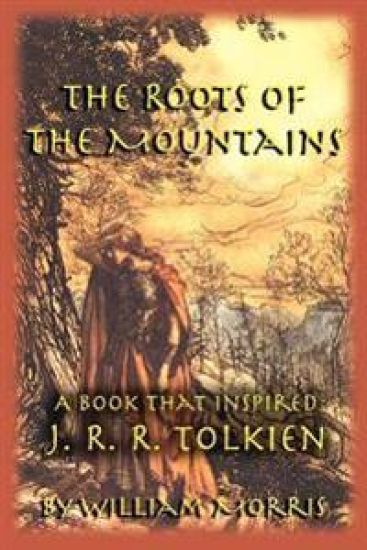
J. R. R. Tolkien, author of The Lord of the Rings, said that his writing was inspired and influenced by the books of William Morris. This book contains two of Morris's best loved books: The House of the Wolfings and The Roots of the Mountains.
The House of the Wolfings

The House of the Wolfings

William Morris; Michael W Perry

Inkling Books
2003
pokkari
J. R. R. Tolkien was inspired in the writing of The Lord of the Rings by this tale of a magical coat of mail and the temptation to use its protection in a war between the Rohan-like Wolfings and the enslaving armies of Rome.
The Zodiac and the Salts of Salvation: Both Parts - Complete and Unabridged

The Zodiac and the Salts of Salvation: Both Parts - Complete and Unabridged

George W. Carey; Inez Eudora Perry

Pantianos Classics
1932
nidottu
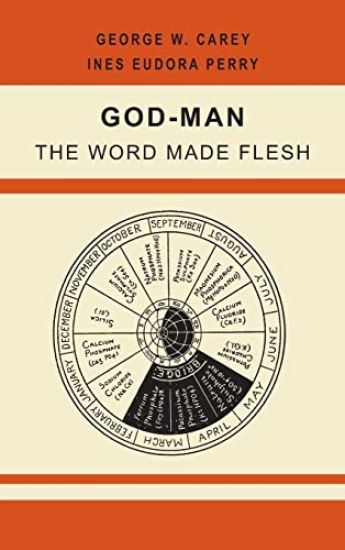
This classic manual explains the connections between astrology, alchemy and the appearance of salts in the body's cells.George Carey and Inez Eudora Perry offer illuminating insights into the history and milestones of astrology in the context of cellular chemistry. Thousands of years ago, the writings of Ancient Greek scholars such as Hippocrates marked the early appearance of astrology in the context of examining the body's composition. The use of this knowledge advanced over centuries, with examples of this evolution in understanding given through the book's chapters.This book consists of two volumes, which are united in this edition. The first volume consists of short summarizing examinations of the various zodiac signs, explaining their significance. The second volume embarks on detailing the links between the astrological signs and the chemical compositions of the bodily salts. A series of analytical discussions of these syntheses is given, that the reader may fully comprehend their intricacy and depth.
A Treatise on the Law of Trusts and Trustees

A Treatise on the Law of Trusts and Trustees

Frank Parsons; Jairus W Perry

Hansebooks
2017
pokkari
A Treatise on the Law of Trusts and Trustees - Volume 1 is an unchanged, high-quality reprint of the original edition of 1889. Hansebooks is editor of the literature on different topic areas such as research and science, travel and expeditions, cooking and nutrition, medicine, and other genres. As a publisher we focus on the preservation of historical literature. Many works of historical writers and scientists are available today as antiques only. Hansebooks newly publishes these books and contributes to the preservation of literature which has become rare and historical knowledge for the future.
Readings In Farming Systems Research And Development

Readings In Farming Systems Research And Development

W. R. Schmehl; W R Schmehl; Perry F Philipp; W. W. Shaner

Routledge
2019
sidottu
This collection offers a comprehensive view of the commonalities and diversities of the farming systems research and development (FSR&D) approaches being applied around the world. The authors–among the leading practitioners in FSR&D–discuss conceptual frameworks, research methodology, data collection, and several ongoing FSR&D programs. The book is a must for anyone interested in gaining a concise, yet broad view of this new and growing field of research and its importance to small-scale farming in developing countries.
Readings In Farming Systems Research And Development

Readings In Farming Systems Research And Development

W. R. Schmehl; W R Schmehl; Perry F Philipp; W. W. Shaner

Routledge
2020
nidottu
This collection offers a comprehensive view of the commonalities and diversities of the farming systems research and development (FSR&D) approaches being applied around the world. The authors–among the leading practitioners in FSR&D–discuss conceptual frameworks, research methodology, data collection, and several ongoing FSR&D programs. The book is a must for anyone interested in gaining a concise, yet broad view of this new and growing field of research and its importance to small-scale farming in developing countries.
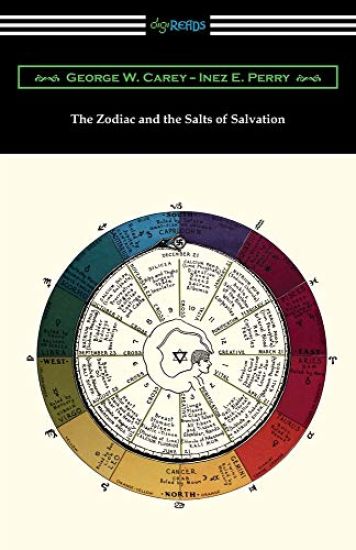
The Zodiac and the Salts of Salvation

The Zodiac and the Salts of Salvation

George W. Carey; Inez E. Perry

Digireads.com
2019
nidottu
First published in 1932, "The Zodiac and the Salts of Salvation" is a thorough introduction to homeopathy and astrology written by George Washington Carey and Inez Eudora Perry. Dr. Carey was born in 1845 and was an American medical doctor who wrote several books during the early twentieth-century on biochemistry, religion, astrology, physiology, and his mineral-based theory of the origin of human health and disease. In "The Zodiac and the Salts of Salvation", Dr. Carey and his co-author Perry explore the relationship between the basic biochemical cell salts, or homeopathic remedies, and the twelve sun signs, or zodiac signs. In Part 1, Dr. Carey takes the reader on an in-depth examination of each homeopathic remedy and how it relates to the body's physiology. In Part 2, Perry explains the meaning and origin of each of the zodiac signs in both eastern and western religion, masonic texts, and their spiritual significance. The authors then detail how each of these homeopathic remedies interact in different ways in a body depending on the person's sun sign and the current phase of the solar calendar. "The Zodiac and the Salts of Salvation" remains an important and informative guide for all students of homeopathy and astrology. This edition is printed on premium acid-free paper.