Kirjojen hintavertailu. Mukana 11 699 587 kirjaa ja 12 kauppaa.

Kirjahaku

Etsi kirjoja tekijän nimen, kirjan nimen tai ISBN:n perusteella.

1000 tulosta hakusanalla Walter Alvarez

Walter Pater

Walter Pater

Routledge
1995
sidottu
The Critical Heritage gathers together a large body of critical sources on major figures in literature. Each volume presents contemporary responses to a writer's work, enabling students and researchers to read for themselves, for example, comments on early performances of Shakespeare's plays, or reactions to the first publication of Jane Austen's novels. The carefully selected sources range from landmark essays in the history of criticism to journalism and contemporary opinion, and little published documentary material such as letters and diaries. Significant pieces of criticism from later periods are also included, in order to demonstrate the fluctuations in an author's reputation. Each volume contains an introduction to the writer's published works, a selected bibliography, and an index of works, authors and subjects. The Collected Critical Heritage set will be available as a set of 68 volumes and the series will also be available in mini sets selected by period (in slipcase boxes) and as individual volumes.
Walter Scott

Walter Scott

Routledge
1995
sidottu
The Critical Heritage gathers together a large body of critical sources on major figures in literature. Each volume presents contemporary responses to a writer's work, enabling students and researchers to read for themselves, for example, comments on early performances of Shakespeare's plays, or reactions to the first publication of Jane Austen's novels.The carefully selected sources range from landmark essays in the history of criticism to journalism and contemporary opinion, and little published documentary material such as letters and diaries. Significant pieces of criticism from later periods are also included, in order to demonstrate the fluctuations in an author's reputation.Each volume contains an introduction to the writer's published works, a selected bibliography, and an index of works, authors and subjects.
Walter Benjamin:Critical Evaluations 3V
No other single author has so commanding a critical presence across so many disciplines within the arts and humanities, in so many national contexts, as Walter Benjamin (1892-1940). The belated reception of his work as a literary critic (dating from the late 1950s) has been followed by a rapid series of critical receptions in different contexts: Frankfurt Critical Theory and Marxism, Judaism, Film Theory, Post-structuralism, Philosophical Romanticism, and Cultural Studies. This collection brings together a selection of the most critically important items in the literature, across the full range of Benjamin's cultural-theoretical interests, from all periods of the reception of his writings, but focusing upon the most recent, to produce a comprehensive overview of the best critical literature.
Walter Benjamin and Architecture
The essays compiled in this book explore aspects of Walter Benjamin’s discourse that have contributed to the formation of contemporary architectural theories. Issues such as technology and history have been considered central to the very modernity of architecture, but Benjamin’s reflection on these subjects has elevated the discussion to a critical level. The contributors in this book consider Walter Benjamin's ideas in the context of digitalization of architecture where it is the very technique itself that determines the processes of design and the final form. This book was published as a special issue of Architectural Theory Review.
Walter Ullmann on Medieval Political Theory - 3 Volumes (Routledge Revivals)
Celebrated Austrian-Jewish scholar Walter Ullmann (1910-1983) was a leading authority in the field of medieval political thought, and in particular legal theory. He settled in the United Kingdom after leaving Austria in the late 1930s and went on to hold positions at the University of Leeds and Trinity College, Cambridge as Professor of Medieval History. Featured in this Routledge Revivals collection are the works: The Medieval Idea of Law as Represented by Lucas de Penna (1946), The Principles of Government and Politics in the Middle Ages (1961), The Individual and Society in the Middle Ages (1966) and The Carolingian Renaissance and the Idea of Kingship (1969).
Walter Scott

Walter Scott

Routledge
2014
nidottu
The Critical Heritage gathers together a large body of critical sources on major figures in literature. Each volume presents contemporary responses to a writer's work, enabling students and researchers to read for themselves, for example, comments on early performances of Shakespeare's plays, or reactions to the first publication of Jane Austen's novels.The carefully selected sources range from landmark essays in the history of criticism to journalism and contemporary opinion, and little published documentary material such as letters and diaries. Significant pieces of criticism from later periods are also included, in order to demonstrate the fluctuations in an author's reputation.Each volume contains an introduction to the writer's published works, a selected bibliography, and an index of works, authors and subjects.
Walter Scott's Books

Walter Scott's Books

J.H. Alexander

Routledge
2017
sidottu
Scott's Books is an approachable introduction to the Waverley Novels. Drawing on substantial research in Scott's intertextual sources, it offers a fresh approach to the existing readings where the thematic and theoretical are the norm. Avoiding jargon, and moving briskly, it tackles the vexed question of Scott's 'circumbendibus' style head on, suggesting that it is actually one of the most exciting aspects of his fiction: indeed, what Ian Duncan has called the 'elaborately literary narrative', at first sight a barrier, is in a sense what the novels are primarily 'about'.The book aims to show how inventive, witty, and entertaining Scott's richly allusive style is; how he keeps his varied readership on board with his own inexhaustible variety; and how he allows proponents of a wide range of positions to have their say, using a detached, ironic, but never cynical narrative voice to undermine the more rigid and inhumane rhetoric.The Introduction outlines this approach and sets the book in the context of earlier and current Scott criticism. It also deals with some practical issues, including forms of reference and the distinctive use of the term 'Authorial'. The four chapters are designed to zoom in progressively from the general to the particular. 'Resources' explores the printed material available to Scott in his library and gives an overview of the way he uses it in his fiction. 'Style' confronts objections to the 'circumbendibus' Scott and shows how his Ciceronian style with its penchant for polysyllables enables him to embrace a wide range of rhetoric relayed in a detached but not cynical Authorial voice. 'Strategies' explores how he keeps his very wide audience on board by a complex bonding between characters, readers, and Author, and stresses the extraordinary variety of exuberant inventiveness with which he handles intertextual allusions. 'Mottoes' examines the most remarkable of Scott's intertextual devices, the chapter epigraphs, bringing into play the approaches developed in the previous chapters. The brief concluding 'Envoi' moves out again to the widest possible perspective, suggesting how readers should now be able to move on to, or return to, the novels and the critical conversation, with an appreciation of the central importance of the ludic for an appreciation of Scott in a world once again threatened by inhumane and humorless rigidities.
Walter Benjamin and Architecture
The essays compiled in this book explore aspects of Walter Benjamin’s discourse that have contributed to the formation of contemporary architectural theories. Issues such as technology and history have been considered central to the very modernity of architecture, but Benjamin’s reflection on these subjects has elevated the discussion to a critical level. The contributors in this book consider Walter Benjamin's ideas in the context of digitalization of architecture where it is the very technique itself that determines the processes of design and the final form. This book was published as a special issue of Architectural Theory Review.
Walter Benjamin's Philosophy
This collection explores, in Adorno's description, `philosophy directed against philosophy'. The essays cover all aspects of Benjamin's writings, from his early work in the philosophy of art and language, through to the concept of history. The experience of time and the destruction of false continuity are identified as the key themes in Benjamin's understanding of history.
Walter Pater

Walter Pater

Routledge
2013
nidottu
The Critical Heritage gathers together a large body of critical sources on major figures in literature. Each volume presents contemporary responses to a writer's work, enabling students and researchers to read for themselves, for example, comments on early performances of Shakespeare's plays, or reactions to the first publication of Jane Austen's novels. The carefully selected sources range from landmark essays in the history of criticism to journalism and contemporary opinion, and little published documentary material such as letters and diaries. Significant pieces of criticism from later periods are also included, in order to demonstrate the fluctuations in an author's reputation. Each volume contains an introduction to the writer's published works, a selected bibliography, and an index of works, authors and subjects. The Collected Critical Heritage set will be available as a set of 68 volumes and the series will also be available in mini sets selected by period (in slipcase boxes) and as individual volumes.
Walter Benjamin, Religion and Aesthetics
Walter Benjamin, Religion, and Aesthetics is an innovative and creative attempt to unsettle and reconceive the key concepts of religious studies through a reading with, and against, Walter Benjamin. Constructing what he calls an "allegorical aesthetics," Plate sifts through Benjamin's writings showing how his concepts of art, allegory, and experience undo traditionally stabilizing religious concepts such as myth, symbol, memory, narrative, creation, and redemption.
Walter Benjamin, Religion and Aesthetics
Walter Benjamin, Religion, and Aesthetics is an innovative and creative attempt to unsettle and reconceive the key concepts of religious studies through a reading with, and against, Walter Benjamin. Constructing what he calls an "allegorical aesthetics," Plate sifts through Benjamin's writings showing how his concepts of art, allegory, and experience undo traditionally stabilizing religious concepts such as myth, symbol, memory, narrative, creation, and redemption.
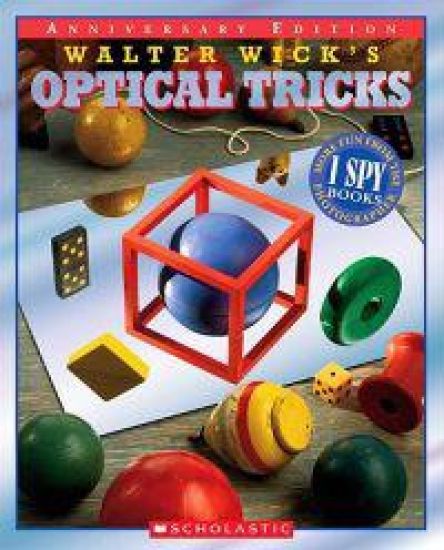
Walter Wick's Optical Tricks

Walter Wick's Optical Tricks

Walter Wick

Cartwheel Books
2008
sidottu
Walter Wick's amazing puzzler celebrates its 10th anniversary with a new redesigned foil cover and an eye-popping magic-picture postcard You may have seen drawings of impossible objects, but have you ever seen them photographed? Wick's book of optical illusions leaves readers of all ages wondering just how the I Spy photographer does it This book combines fascinating optical illusions with simple explanations of how the visual tricks work. Photos of "Stairs to Nowhere," "The Phantom of the Forest," and more seemingly improbable images are a delightful treat for the eye and mind. Beautiful, challenging, and just really fun, this book has to be seen to be believed. And once you see it, you won't be able to put it down
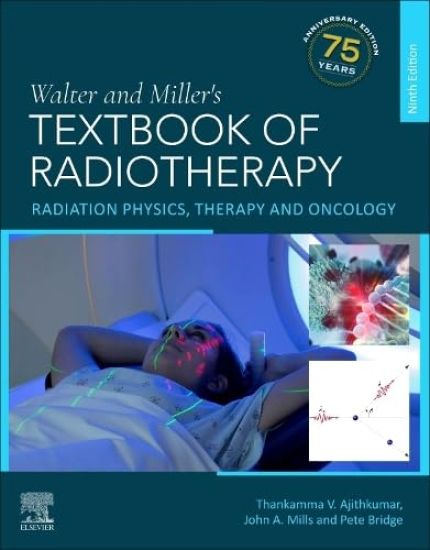
Walter and Miller's Textbook of Radiotherapy: Radiation Physics, Therapy and Oncology
Seventy-five years since it was first published, Walter and Miller’s Textbook of Radiotherapy has become the go-to resource for therapeutic radiography and radiotherapy students from around the world. Fully revised to include new clinical evidence and techniques, this ninth edition provides a comprehensive guide to the professional, technical, practical, and medical aspects of modern clinical radiotherapy practice. The first part of the book clearly and simply explains the fundamentals of radiotherapy physics, offering a sound foundation for clinicians new to the field. The design and use of a wide range of equipment is described, along with clear explanation of the underlying physical principles. The second part provides a systematic review of evidence-based clinical practice in an easy to navigate approach for each of the main tumour sites and categories. A wide range of expert authors from clinical practice have contributed to ensure the text has wide international appeal. With additional information on the emerging roles of chemotherapy, surgery and non-radiotherapy treatments as well as a grounding in the principles of cancer treatment and care, Walter and Miller will be a trusted resource for all those working in the rapidly changing field of oncology. This keystone textbook has been extensively revised and updated by a multidisciplinary expert editorial team to ensure that this ninth edition will remain an indispensable textbook for radiation oncology, medical physics and therapeutic radiography students and trainees or anyone requiring up to date information about radiotherapy practice. Notably, this new 75th anniversary edition features new and expanded information on: Novel particle and MR-linac therapies Radio-biology 4DCT imaging and Transit Dosimetry Clinical use of Image Guided Radiotherapy and decision-making Reirradiation in cancer care Immunotherapy Person-centred care
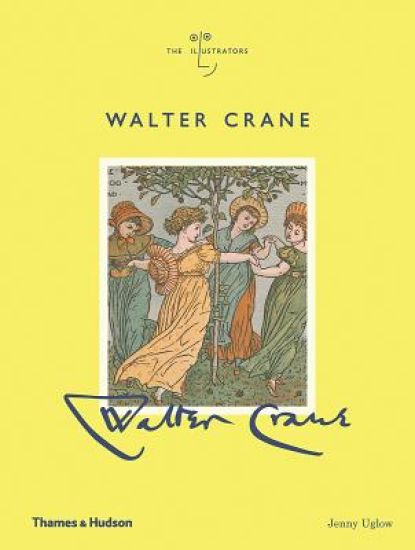
Walter Crane

Walter Crane

Jenny Uglow

Thames Hudson Ltd
2019
sidottu
Jenny Uglow narrates the story of Walter Crane, an intriguing and most prolific figure not only in illustration, but in political culture more broadly. Uglow expertly weaves a fascinating study of how Crane’s art and politics developed from his childhood love of Pre-Raphaelite painting to the influences of Morris and William Blake on the journals, books, banners, pamphlets and postcards he went on to create as he forged a new style for the international socialist movement. Comprising a staggering range of visual material, Crane’s images became a symbolic code that leapt over linguistic boundaries. This book is a brilliant record of an artist who blended styles and influences like no one before him.
Walter Benjamin

Walter Benjamin

Richard Wolin

University of California Press
1994
pokkari
Few twentieth-century thinkers have proven as influential as Walter Benjamin, the German-Jewish philosopher and cultural and literary critic. Richard Wolin's book remains among the clearest and most insightful introductions to Benjamin's writings, offering a philosophically rich exposition of his complex relationship to Adorno, Brecht, Jewish Messianism, and Western Marxism. Wolin provides nuanced interpretations of Benjamin's widely studied writings on Baudelaire, historiography, and art in the age of mechanical reproduction. In a new Introduction written especially for this edition, Wolin discusses the unfinished Arcades Project, as well as recent tendencies in the reception of Benjamin's work and the relevance of his ideas to contemporary debates about modernity and postmodernity.
Walter Benjamin's Other History

Walter Benjamin's Other History

Beatrice Hanssen

University of California Press
2000
pokkari
Long considered to be an impenetrable, hermetic treatise, Walter Benjamin's The Origin of German Tragic Drama has rarely received the attention it deserves as a key text, central to a full understanding of his work. In this critically acclaimed study, distinguished Benjamin scholar Beatrice Hanssen unlocks the philosophical and ethical dimensions of his thought with great clarity and sophisitication.
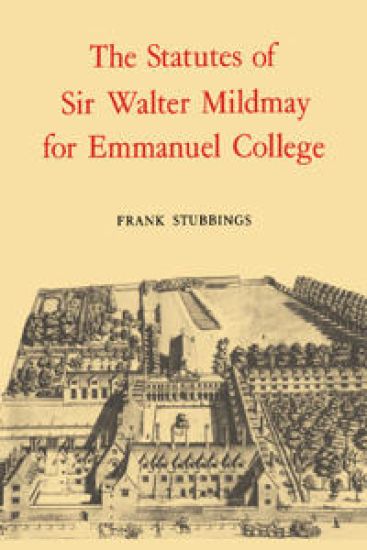
The Statutes of Sir Walter Mildmay

The Statutes of Sir Walter Mildmay

Walter Mildmay

Cambridge University Press
2005
pokkari
The original Tudor Latin statutes of Emmanuel College, Cambridge, are here translated for the first time by Frank Stubbings, Life Fellow and former Librarian of the College. The College was founded in 1584 by Sir Walter Mildmay, Chancellor of the Exchequer to Queen Elizabeth I. Its prime object was the training of Puritan ministers, and its graduates were prominent in the religious thought and activity of the seventeenth century. In the 1630s many (like John Harvard) emigrated for conscience sake and became a powerfully formative element in early New England. The character of the College is therefore historically important, and the basic document for it is these statutes. Dr Stubbings provides not only explanatory comments, but an introduction which elucidates the Founder's purpose by outlining the history of the University through the religious and social ups and downs of his lifetime. The statutes themselves are no mere dry bones: they tell us not only of dons and undergraduates, but of the Manciple, the cooks, the launderer and the Master's servant. The book includes also the College orders of 1588, supplementary regulations on such everyday matters as mealtimes and student behaviour. The original Latin statutes are printed at the end of the volume.
Walter Scott

Walter Scott

Robin Mayhead

Cambridge University Press
1973
nidottu
A good deal of Scott's commercial writing is now of historical interest only. But there are important and valuable books, especially those where Scott is contemplating the detribalization of Scotland after the Jacobite rebellions, and the political and social stresses this brought about. This is a modern concern, since we live in the developed world with the long-term consequences, and, when this book was first published in 1973, similar processes were visible in developing countries. There is also a vein of shrewd moral wisdom in Scott, associated with the notions of justice and prudence. Mr Mayhead singles out Waverley, Heart of Midlothian, Guy Mannering and The Abbot as the works which embody these interests. He also looks at the poetry and criticism.
Walter Pater

Walter Pater

Wolfgang Iser

Cambridge University Press
2011
nidottu
Wolfgang Iser's study of Walter Pater (1839-94) was first published in German in 1960. It places the English critic, essayist and novelist in a philosophical tradition whose major exponents were Hegel and Coleridge, at the same time showing how Pater differed crucially from these thinkers to become representative of a late Victorian culture critically poised in transition between Romanticism and Modernism. Pater's new definitions of 'beauty' and 'style' in art, his doctrine of 'art for art's sake', his preoccupation with aesthetic existence, his fascination with periods of balance and historical transition are seen in the light of his scepticism towards all systematisation and his view of art as countering human finiteness by capturing the intensity of the moment. This important book, which remains as illuminating now as when it first appeared, will interest those interested in philosophy and aesthetics and Pater specialists alike.