Kirjojen hintavertailu. Mukana 11 486 552 kirjaa ja 12 kauppaa.

Kirjahaku

Etsi kirjoja tekijän nimen, kirjan nimen tai ISBN:n perusteella.

1000 tulosta hakusanalla Walter Benjamin

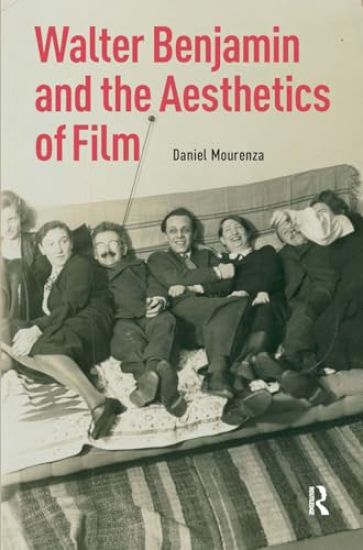
Walter Benjamin and the Aesthetics of Film

Walter Benjamin and the Aesthetics of Film

Daniel Mourenza

TAYLOR FRANCIS LTD
2025
nidottu
Walter Benjamin is today regarded as one of the leading thinkers of the twentieth century. Often captured in pensive pose, his image is now that of a serious intellectual. But Benjamin was also a fan of the comedies of Adolphe Menjou, Mickey Mouse, and Charlie Chaplin. As an antidote to repressive civilization, he developed, through these figures, a theory of laughter. Walter Benjamin and the Aesthetics of Film is the first monograph to thoroughly analyse Benjamin’s film writings, contextualizing them within his oeuvre whilst also paying attention to the various films, actors, and directors that sparked his interest. The book situates all these writings within Benjamin’s ‘anthropological materialism’, a concept that analyses the transformations of the human sensorium through technology. Through the term ‘innervation’, Benjamin thought of film spectatorship as an empowering reception that, through a rush of energy, would form a collective body within the audience, interpenetrating a liberated technology into the distracted spectators. Benjamin’s writings on Soviet film and German cinema, Charlie Chaplin, and Mickey Mouse are analysed in relation to this posthuman constellation that Benjamin had started to dream of in the early twenties, long before he began to theorize about films.
Walter Benjamin's Concept of the Image
In this book, Alison Ross engages in a detailed study of Walter Benjamin’s concept of the image, exploring the significant shifts in Benjamin’s approach to the topic over the course of his career. Using Kant’s treatment of the topic of sensuous form in his aesthetics as a comparative reference, Ross argues that Benjamin’s thinking on the image undergoes a major shift between his 1924 essay on ‘Goethe’s Elective Affinities,’ and his work on The Arcades Project from 1927 up until his death in 1940. The two periods of Benjamin’s writing share a conception of the image as a potent sensuous force able to provide a frame of existential meaning. In the earlier period this function attracts Benjamin’s critical attention, whereas in the later he mobilises it for revolutionary outcomes. The book gives a critical treatment of the shifting assumptions in Benjamin’s writing about the image that warrant this altered view. It draws on hermeneutic studies of meaning, scholarship in the history of religions and key texts from the modern history of aesthetics to track the reversals and contradictions in the meaning functions that Benjamin attaches to the image in the different periods of his thinking. Above all, it shows the relevance of a critical consideration of Benjamin’s writing on the image for scholarship in visual culture, critical theory, aesthetics and philosophy more broadly.
Walter Benjamin and the Aesthetics of Change
Following the spirit of Benjamin's Arcades Project, this book acts as a kaleidoscope of change in the 21st century, tracing its different reflections in the international contemporary while seeking to understand individual/collective reactions to change through a series of creative methodologies.
Walter Benjamin and the Critique of Political Economy

Walter Benjamin and the Critique of Political Economy

Duy Lap Nguyen

BLOOMSBURY PUBLISHING PLC
2022
sidottu
Exploring the connections between Walter Benjamin’s philosophy of history and a Marxian Critique of Political Economy, Duy Lap Nguyen analyses Benjamin’s early writings and their development into a distinct understanding of historical materialism. Benjamin’s historically materialist conception of history is shown to be characterised by a focus on the religion of capitalism, the mythology of the state, and messianic time. Revealing these factors, Nguyen joins up Benjamin’s philosophical critique of the Kantian conception of history, alongside the historical trajectory of capitalism he subscribed to. Influenced by the theory of fascism outlined by German Marxist theorist Karl Korsch, we see how Benjamin’s own theory of revolution and redemption in capitalist society developed into a sophisticated critique. Essential to Benjamin’s materialist critique was a recognition of the fallibility of the Enlightenment notion of progress, as well as the need to overturn the political and economic catastrophes which enable capitalism and fascism to thrive. In mapping the exact course of Benjamin’s critical historical materialism, Nguyen fully explicates the unique contribution he made to western Marxism.
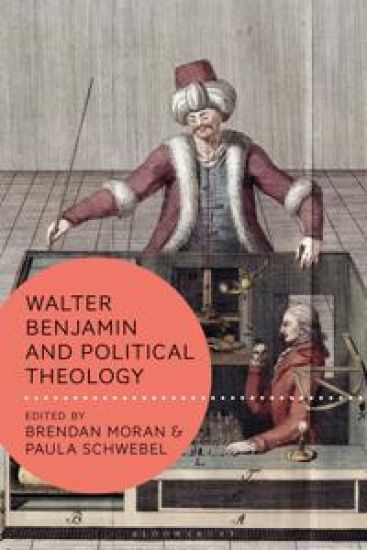
Walter Benjamin and Political Theology
Tracing Walter Benjamin's convergences with, and divergences from, influential German legal theorist Carl Schmitt, this edited collection contextualizes Benjamin’s thinking in the intellectual currents of his time, while also placing him in dialogue with traditions and thinkers from antiquity to the present. At stake is whether Benjamin presents the possibility of a distinctive political theology—a question which the collection addresses without collapsing the tensions internal to Benjamin’s thought. Benjamin’s thought has been a touchstone, explicitly or implicitly, in numerous efforts to conceive of a ‘new’ political theology that is not anchored in legitimizing and preserving power, but in justice and liberation. Benjamin interrogates the political-theological complex from what may be construed as a vantage point opposed to Schmitt. Whereas Schmitt excavates the theological elements in modernity in order to shore up liberalism’s illiberal inheritance, Benjamin roots out these latent structures in order to dissolve them and liberate us from their oppressive legacy. This volume’s multifaceted contributions explore why Benjamin has been such a fertile source for thinking about political theology beyond – and often against – Schmitt. Benjamin indicates how existing political theologies can be challenged or expanded. This book accordingly makes a wide range of relevant work available for study whilst also opening new perspectives on Benjamin’s œuvre.
Walter Benjamin and Political Theology
Tracing Walter Benjamin's convergences with, and divergences from, influential German legal theorist Carl Schmitt, this edited collection contextualizes Benjamin’s thinking in the intellectual currents of his time, while also placing him in dialogue with traditions and thinkers from antiquity to the present. At stake is whether Benjamin presents the possibility of a distinctive political theology—a question which the collection addresses without collapsing the tensions internal to Benjamin’s thought. Benjamin’s thought has been a touchstone, explicitly or implicitly, in numerous efforts to conceive of a ‘new’ political theology that is not anchored in legitimizing and preserving power, but in justice and liberation. Benjamin interrogates the political-theological complex from what may be construed as a vantage point opposed to Schmitt. Whereas Schmitt excavates the theological elements in modernity in order to shore up liberalism’s illiberal inheritance, Benjamin roots out these latent structures in order to dissolve them and liberate us from their oppressive legacy. This volume’s multifaceted contributions explore why Benjamin has been such a fertile source for thinking about political theology beyond – and often against – Schmitt. Benjamin indicates how existing political theologies can be challenged or expanded. This book accordingly makes a wide range of relevant work available for study whilst also opening new perspectives on Benjamin’s œuvre.
Walter Benjamin and the Critique of Political Economy

Walter Benjamin and the Critique of Political Economy

Duy Lap Nguyen

BLOOMSBURY PUBLISHING PLC
2024
nidottu
Exploring the connections between Walter Benjamin’s philosophy of history and a Marxian Critique of Political Economy, Duy Lap Nguyen analyses Benjamin’s early writings and their development into a distinct understanding of historical materialism. Benjamin’s historically materialist conception of history is shown to be characterised by a focus on the religion of capitalism, the mythology of the state, and messianic time. Revealing these factors, Nguyen joins up Benjamin’s philosophical critique of the Kantian conception of history, alongside the historical trajectory of capitalism he subscribed to. Influenced by the theory of fascism outlined by German Marxist theorist Karl Korsch, we see how Benjamin’s own theory of revolution and redemption in capitalist society developed into a sophisticated critique. Essential to Benjamin’s materialist critique was a recognition of the fallibility of the Enlightenment notion of progress, as well as the need to overturn the political and economic catastrophes which enable capitalism and fascism to thrive. In mapping the exact course of Benjamin’s critical historical materialism, Nguyen fully explicates the unique contribution he made to western Marxism.
Walter Benjamin and Cultural Translation

Walter Benjamin and Cultural Translation

Birgit Haberpeuntner

BLOOMSBURY PUBLISHING PLC
2024
sidottu
Dissecting the radical impact of Walter Benjamin on contemporary cultural, postcolonial and translation theory, this book investigates the translation and reception of Benjamin’s most famous text about translation, “The Task of the Translator,” in English language debates around ‘cultural translation’. For years now, there has been a pronounced interest in translation throughout the Humanities, which has come with an increasing detachment of translation from linguistic-textual parameters. It has generated a broad spectrum of discussions subsumed under the heading of ‘cultural translation’, a concept that is constantly re-invented and manifests in often heavily diverging expressions. However, there seems to be a distinct constant: In their own (re-)formulations of this concept, a remarkable number of scholars—Bhabha, Chow, Niranjana, to name but a few—explicitly refer to Walter Benjamin’s “The Task of the Translator.” In its first part, this book considers Benjamin and the way in which he thought about, theorized and practiced translation throughout his writings. In a second part, Walter Benjamin meets 'cultural translation': tracing various paths of translation and reception, this part also tackles the issues and debates that result from the omnipresence of Walter Benjamin in contemporary theories and discussions of 'cultural translation'. The result is a clearer picture of the translation and reception processes that have generated the immense impact of Benjamin on contemporary cultural theory, as well as new perspectives for a way of reading that re-shapes the canonized texts themselves and holds the potential of disturbing, shifting and enriching their more ‘traditional’ readings.
Walter Benjamin and Cultural Translation

Walter Benjamin and Cultural Translation

Birgit Haberpeuntner

BLOOMSBURY PUBLISHING PLC
2025
nidottu
Dissecting the radical impact of Walter Benjamin on contemporary cultural, postcolonial and translation theory, this book investigates the translation and reception of Benjamin’s most famous text about translation, “The Task of the Translator,” in English language debates around ‘cultural translation’. For years now, there has been a pronounced interest in translation throughout the Humanities, which has come with an increasing detachment of translation from linguistic-textual parameters. It has generated a broad spectrum of discussions subsumed under the heading of ‘cultural translation’, a concept that is constantly re-invented and manifests in often heavily diverging expressions. However, there seems to be a distinct constant: In their own (re-)formulations of this concept, a remarkable number of scholars—Bhabha, Chow, Niranjana, to name but a few—explicitly refer to Walter Benjamin’s “The Task of the Translator.” In its first part, this book considers Benjamin and the way in which he thought about, theorized and practiced translation throughout his writings. In a second part, Walter Benjamin meets 'cultural translation': tracing various paths of translation and reception, this part also tackles the issues and debates that result from the omnipresence of Walter Benjamin in contemporary theories and discussions of 'cultural translation'. The result is a clearer picture of the translation and reception processes that have generated the immense impact of Benjamin on contemporary cultural theory, as well as new perspectives for a way of reading that re-shapes the canonized texts themselves and holds the potential of disturbing, shifting and enriching their more ‘traditional’ readings.
Walter Benjamin's Antifascist Education

Walter Benjamin's Antifascist Education

Tyson E. Lewis

State University of New York Press
2020
sidottu
A comprehensive study of education in the writings of Walter Benjamin.Walter Benjamin's Antifascist Education is the first comprehensive analysis of educational themes across the entirety of the critical theorist's diverse writings. Starting with Benjamin's early reflections on teaching and learning, Tyson E. Lewis argues that the aesthetic and cultural forms to which Benjamin so often turned-namely, radio broadcasts, children's theatrical productions, collections, cityscapes, public cinemas, and word games-swell with educational potentialities. What emerges from Lewis's reading is a constellational curriculum composed of minor practices such as poor teaching, absentminded learning, and nondurational studying. This curriculum carries political significance, offering an antidote to past and present forms of fascist manipulation, hardness, and coldness. Walter Benjamin's Antifascist Education is a testimony to Benjamin's belief that "everyone is an educator and everyone needs to be educated and everything is education."
Walter Benjamin's Antifascist Education

Walter Benjamin's Antifascist Education

Tyson E. Lewis

State University of New York Press
2021
pokkari
A comprehensive study of education in the writings of Walter Benjamin.Walter Benjamin's Antifascist Education is the first comprehensive analysis of educational themes across the entirety of the critical theorist's diverse writings. Starting with Benjamin's early reflections on teaching and learning, Tyson E. Lewis argues that the aesthetic and cultural forms to which Benjamin so often turned-namely, radio broadcasts, children's theatrical productions, collections, cityscapes, public cinemas, and word games-swell with educational potentialities. What emerges from Lewis's reading is a constellational curriculum composed of minor practices such as poor teaching, absentminded learning, and nondurational studying. This curriculum carries political significance, offering an antidote to past and present forms of fascist manipulation, hardness, and coldness. Walter Benjamin's Antifascist Education is a testimony to Benjamin's belief that "everyone is an educator and everyone needs to be educated and everything is education."
Walter Benjamin and the Idea of Natural History

Walter Benjamin and the Idea of Natural History

Eli Friedlander

STANFORD UNIVERSITY PRESS
2024
sidottu
In this incisive new work, Eli Friedlander demonstrates that Walter Benjamin's entire corpus, from early to late, comprises a rigorous and sustained philosophical questioning of how human beings belong to nature. Across seemingly heterogeneous writings, Friedlander argues, Benjamin consistently explores what the natural in the human comes to, that is, how nature is transformed, actualized, redeemed, and overcome in human existence. The book progresses gradually from Benjamin's philosophically fundamental writings on language and nature to his Goethean empiricism, from the presentation of ideas to the primal history of the Paris arcades. Friedlander's careful analysis brings out how the idea of natural history inflects Benjamin's conception of the work of art and its critique, his diagnosis of the mythical violence of the legal order, his account of the body and of action, of material culture and technology, as well as his unique vision of historical materialism. Featuring revelatory new readings of Benjamin's major works that differ, sometimes dramatically, from prevailing interpretations, this book reveals the internal coherence and philosophical force of Benjamin's thought.
Walter Benjamin and the Idea of Natural History

Walter Benjamin and the Idea of Natural History

Eli Friedlander

STANFORD UNIVERSITY PRESS
2024
pokkari
In this incisive new work, Eli Friedlander demonstrates that Walter Benjamin's entire corpus, from early to late, comprises a rigorous and sustained philosophical questioning of how human beings belong to nature. Across seemingly heterogeneous writings, Friedlander argues, Benjamin consistently explores what the natural in the human comes to, that is, how nature is transformed, actualized, redeemed, and overcome in human existence. The book progresses gradually from Benjamin's philosophically fundamental writings on language and nature to his Goethean empiricism, from the presentation of ideas to the primal history of the Paris arcades. Friedlander's careful analysis brings out how the idea of natural history inflects Benjamin's conception of the work of art and its critique, his diagnosis of the mythical violence of the legal order, his account of the body and of action, of material culture and technology, as well as his unique vision of historical materialism. Featuring revelatory new readings of Benjamin's major works that differ, sometimes dramatically, from prevailing interpretations, this book reveals the internal coherence and philosophical force of Benjamin's thought.
Walter Benjamin, Messianismo e Revolução: a história secreta: Ensaio sobre o Conceito de Messianismo na Obra de Walter Benjamin
Esta tese visa analisar o conceito de messianismo na obra de Walter Benjamin. Procuramos, acima de tudo, mostrar que este conceito n o um tema pac fico e que re na o consenso, mas, pelo contr rio, muito pol mico e controverso, na sua obra. Se, por um lado, numa primeira fase, Benjamin revela nos seus textos, de forma muito clara e expl cita, a presen a dessa tonalidade messi nica, por outro, nos textos mais tardios, a presen a do elemento messi nico desvanece-se, sob a presen a mais forte e mais vis vel do materialismo hist rico. Todavia, o elemento messi nico na sua obra nunca desapareceu e a prova derradeira o seu ressurgimento nos ltimos textos que redige em vida: O Livro das Passagens e Sobre o Conceito de Hist ria.
Walter Benjamin Stares At The Sea

Walter Benjamin Stares At The Sea

C.D. Rose

Melville House Publishing
2024
nidottu
A collection of entrancing literary fables from an underrated master of the form ... Perfect for the fans of David Mitchell, Julio Cort zar and Steven Barthelme are these 15 dreamlike tales. Welcome to the fictional universe of C. D. Rose, whose stories seem to be set in some unidentifiable but vaguely Mitteleuropean nation, and likewise have an uncanny sense of timelessness -- the time could be some cobblestoned Victorian past era, or the present, or even the future. A journalist's interview with an artist turns into a dizzying roundelay of memory and image. Two Russian brothers, one blind and one deaf, build an intricate model town during an interminable train ride across the steppe. An annotated discography for the works of a long-lost silent film star turns into a mysterious document of obsession. Three Russian sailors must find ways to pass the time on a freighter orphaned in a foreign port. A forgotten composer enters a nostalgic dream-world while marking time in a decaying Romanian seaport.In these 19 dreamlike tales, ghosts of the past mingle with the quiddities of modernity in a bewitching stew where lost masterpieces surface with translations in an invisible language, where image and photograph become mystically entwined, and where the very nature of reality takes on a shimmering sense of possibility and illusion. "Every madness is logical to its owner," one of Rose's characters says. And it is that line -- between logic and madness -- that Walter Benjamin Stares at the Sea walks with such assuredness and imagination.
Walter Benjamin and the Post-Kantian Tradition

Walter Benjamin and the Post-Kantian Tradition

Phillip Homburg

Rowman Littlefield
2018
sidottu
Walter Benjamin and the Post-Kantian Tradition engages with Benjamin as a theorist of a historical and philosophical problematic of modernity: a problematic that he finds manifested, in different philosophical guises, within scientific empiricism, neo-Kantianism and German Romanticism. The book takes us through these manifestations systematically and, in doing so, it demonstrates how Benjamin develops a unique form of materialist criticism from within the tension he locates within transcendent neo-Kantianism materialism and the immanent standpoints of scientific materialism and German Romanticism.
Walter Benjamin and the Post-Kantian Tradition

Walter Benjamin and the Post-Kantian Tradition

Phillip Homburg

BLOOMSBURY PUBLISHING PLC
2021
nidottu
Walter Benjamin and the Post-Kantian Tradition engages with Benjamin as a theorist of a historical and philosophical problematic of modernity: a problematic that he finds manifested, in different philosophical guises, within scientific empiricism, neo-Kantianism and German Romanticism. The book takes us through these manifestations systematically and, in doing so, it demonstrates how Benjamin develops a unique form of materialist criticism from within the tension he locates within transcendent neo-Kantianism materialism and the immanent standpoints of scientific materialism and German Romanticism.
Walter Benjamin's Calderón

Walter Benjamin's Calderón

Jacobo de Camps

MODERN HUMANITIES RESEARCH ASSOCIATION
2025
sidottu
Why did philosopher and literary critic Walter Benjamin say that Spanish dramatist Pedro Calder n de la Barca (1600-81) was the virtual subject of his rejected Habilitation thesis on German baroque drama, written in 1925 and published in 1928 as Ursprung des deutschen Trauerspiels (The Origin of German Tragic Drama)? Based on Benjamin's early writings about Baroque drama, Origin, and his letters to Hugo von Hofmannsthal, who helped him publish the text, in this monograph Jacobo de Camps reconstructs the unlikely dialogue between Calder n's theatre and Benjamin's thesis and offers a new perspective on current debates about the reading experience, literary criticism, and Spanish baroque drama.Jacobo de Camps is AHRC Postdoctoral Researcher in the Humanities at the University of Oxford.
Walter Benjamin's Politics

Walter Benjamin's Politics

Irving Wohlfarth

VERSO
2021
nidottu
A probing and thorough analysis of the politics of Walter Benjamin Walter Benjamin is one of the most influential philosophers of the 20th century. Yet, his texts are notoriously dense, and spread across a wide range of subjects, often existing only in note form such as the great unfinished Arcades Project. Walter Benjamin's Politics offers one of the most lucid and rigorous analyses of Walter Benjamin's work to date. Irving Wohlfarth's work, informed by philosophy, philology and Jewish studies, gives an original and penetrating account of the politics that informed Benjamin's entire career. Here, Benjamin emerges not as the melancholic and sober scholar, but as an engaged political thinker and writer, at once a mystical anarchist and a historical materialist, constantly grappling with the contradictory poles of his thought.