Kirjojen hintavertailu. Mukana 11 342 296 kirjaa ja 12 kauppaa.

Kirjahaku

Etsi kirjoja tekijän nimen, kirjan nimen tai ISBN:n perusteella.

1000 tulosta hakusanalla William D. Howells

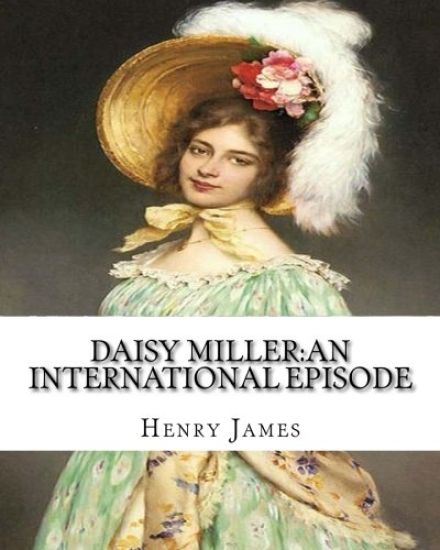
Daisy Miller: an international episode, By Henry James introdutcion By W.D.Howells: William Dean Howells (March 1, 1837 - May 11, 1920)
Daisy Miller is a novella by Henry James that first appeared in Cornhill Magazine in June-July 1878, and in book form the following year. 1] It portrays the courtship of the beautiful American girl Daisy Miller by Winterbourne, a sophisticated compatriot of hers. His pursuit of her is hampered by her own flirtatiousness, which is frowned upon by the other expatriates when they meet in Switzerland and Italy.Plot summary Annie "Daisy" Miller and Frederick Winterbourne first meet in Vevey, Switzerland, in a garden of the grand hotel 2] where Winterbourne is allegedly vacationing from his studies (an attachment to an older lady is rumoured). They are introduced by Randolph Miller, Daisy's 9-year-old brother. Randolph considers their hometown of Schenectady, New York, to be absolutely superior to all of Europe. Daisy, however, is absolutely delighted with the continent, especially the high society she wishes to enter. Winterbourne is at first confused by her attitude, and though greatly impressed by her beauty, he soon determines that she is nothing more than a young flirt. He continues his pursuit of Daisy in spite of the disapproval of his aunt, Mrs. Costello, who spurns any family with so close a relationship to their courier as the Millers have with their Eugenio. She also thinks Daisy is a shameless girl for agreeing to visit the Ch teau de Chillon with Winterbourne after they have known each other for only half an hour. The next day, the two travel to Ch teau de Chillon and although Winterbourne had paid the janitor for privacy, Daisy is not quite impressed. Winterbourne then informs Daisy that he must go to Geneva the next day. Daisy feels disappointment and chaffs him, eventually asking him to visit her in Rome later that year. In Rome, Winterbourne and Daisy meet unexpectedly in the parlor of Mrs. Walker, an American expatriate. Her moral values have adapted to those of Italian society. Rumors about Daisy meeting with young Italian gentlemen make her socially exceptionable under these criteria. Winterbourne learns of Daisy's increasing intimacy with a young Italian of questionable society, Giovanelli, as well as the growing scandal caused by the pair's behavior. Daisy is undeterred by the open disapproval of the other Americans in Rome, and her mother seems quite unaware of the underlying tensions. Winterbourne and Mrs. Walker attempt to persuade Daisy to separate from Giovanelli, but she refuses any help that is offered. One night, Winterbourne takes a walk through the Colosseum and sees a young couple sitting at its center. He realizes that they are Giovanelli and Daisy. Winterbourne, infuriated with Giovanelli, asks him how he could dare to take Daisy to a place where she runs the risk of catching "Roman Fever". Daisy says she does not care and Winterbourne leaves them. Daisy falls ill and dies a few days later.......... Henry James (15 April 1843 - 28 February 1916) was an American-born writer. He is regarded as one of the key figures of 19th-century literary realism. He was the son of Henry James, Sr. and the brother of philosopher and psychologist William James and diarist Alice James. He is best known for a number of novels showing Americans encountering Europe and Europeans. His method of writing from a character's point of view allowed him to explore issues related to consciousness and perception, and his style in later works has been compared to impressionist painting. His imaginative use of point of view, interior monologue and unreliable narrators brought a new depth to narrative fiction....
Annie Kilburn, a novel . By: W.D.Howells: William Dean Howells ( March 1, 1837 - May 11, 1920) was an American realist novelist, literary critic, a
After the death of Judge Kilburn his daughter came back to America. They had been eleven winters in Rome, always meaning to return, but staying on from year to year, as people do who have nothing definite to call them home. Toward the last Miss Kilburn tacitly gave up the expectation of getting her father away, though they both continued to say that they were going to take passage as soon as the weather was settled in the spring. At the date they had talked of for sailing he was lying in the Protestant cemetery, and she was trying to gather herself together, and adjust her life to his loss. This would have been easier with a younger person, for she had been her father's pet so long, and then had taken care of his helplessness with a devotion which was finally so motherly, that it was like losing at once a parent and a child when he died, and she remained with the habit of giving herself when there was no longer any one to receive the sacrifice............ William Dean Howells ( March 1, 1837 - May 11, 1920) was an American realist novelist, literary critic, and playwright, nicknamed "The Dean of American Letters". He was particularly known for his tenure as editor of The Atlantic Monthly, as well as for his own prolific writings, including the Christmas story "Christmas Every Day" and the novels The Rise of Silas Lapham and A Traveler from Altruria. Early life and family: William Dean Howells was born on March 1, 1837 in Martinsville, Ohio (now known as Martins Ferry, Ohio) to William Cooper Howells and Mary Dean Howells, the second of eight children. His father was a newspaper editor and printer who moved frequently around Ohio. In 1840, the family settled in Hamilton, Ohio, where his father oversaw a Whig newspaper and followed Swedenborgianism.Their nine years there were the longest period that they stayed in one place. The family had to live frugally, although the young Howells was encouraged by his parents in his literary interests. He began at an early age to help his father with typesetting and printing work, a job known at the time as a printer's devil. In 1852, his father arranged to have one of his poems published in the Ohio State Journal without telling him. Early career: In 1856, Howells was elected as a clerk in the State House of Representatives. In 1858, he began to work at the Ohio State Journal where he wrote poetry and short stories, and also translated pieces from French, Spanish, and German. He avidly studied German and other languages and was greatly interested in Heinrich Heine. In 1860, he visited Boston and met with writers James Thomas Fields, James Russell Lowell, Oliver Wendell Holmes, Sr., Nathaniel Hawthorne, Henry David Thoreau, and Ralph Waldo Emerson. He became a personal friend to many of them, including Henry Adams, William James, Henry James, and Oliver Wendell Holmes, Jr. In 1860 Howells wrote Abraham Lincoln's campaign biography Life Of Abraham Lincoln and subsequently gained a consulship in Venice. He married Elinor Mead on Christmas Eve 1862 at the American embassy in Paris. She was a sister of sculptor Larkin Goldsmith Mead and architect William Rutherford Mead of the firm McKim, Mead, and White. Among their children was architect John Mead Howells. Editorship and other literary pursuits: The Howells returned to America in 1865 and settled in Cambridge, Massachusetts. He wrote for various magazines, including the Atlantic Monthly and Harper's Magazine. In January 1866, James Fields offered him a position as assistant editor at the Atlantic Monthly; he accepted after successfully negotiating for a higher salary, though he was frustrated by Fields' close supervision....
The coast of Bohemia By: W .D. Howells (Biographical edition): William Dean Howells ( March 1, 1837 - May 11, 1920) was an American realist nov
William Dean Howells ( March 1, 1837 - May 11, 1920) was an American realist novelist, literary critic, and playwright, nicknamed "The Dean of American Letters". He was particularly known for his tenure as editor of The Atlantic Monthly, as well as for his own prolific writings, including the Christmas story "Christmas Every Day" and the novels The Rise of Silas Lapham and A Traveler from Altruria. Early life and family: William Dean Howells was born on March 1, 1837 in Martinsville, Ohio (now known as Martins Ferry, Ohio) to William Cooper Howells and Mary Dean Howells, the second of eight children. His father was a newspaper editor and printer who moved frequently around Ohio. In 1840, the family settled in Hamilton, Ohio, where his father oversaw a Whig newspaper and followed Swedenborgianism.Their nine years there were the longest period that they stayed in one place. The family had to live frugally, although the young Howells was encouraged by his parents in his literary interests. He began at an early age to help his father with typesetting and printing work, a job known at the time as a printer's devil. In 1852, his father arranged to have one of his poems published in the Ohio State Journal without telling him. Early career: In 1856, Howells was elected as a clerk in the State House of Representatives. In 1858, he began to work at the Ohio State Journal where he wrote poetry and short stories, and also translated pieces from French, Spanish, and German. He avidly studied German and other languages and was greatly interested in Heinrich Heine. In 1860, he visited Boston and met with writers James Thomas Fields, James Russell Lowell, Oliver Wendell Holmes, Sr., Nathaniel Hawthorne, Henry David Thoreau, and Ralph Waldo Emerson. He became a personal friend to many of them, including Henry Adams, William James, Henry James, and Oliver Wendell Holmes, Jr. In 1860 Howells wrote Abraham Lincoln's campaign biography Life Of Abraham Lincoln and subsequently gained a consulship in Venice. He married Elinor Mead on Christmas Eve 1862 at the American embassy in Paris. She was a sister of sculptor Larkin Goldsmith Mead and architect William Rutherford Mead of the firm McKim, Mead, and White. Among their children was architect John Mead Howells. Editorship and other literary pursuits: The Howells returned to America in 1865 and settled in Cambridge, Massachusetts. He wrote for various magazines, including the Atlantic Monthly and Harper's Magazine. In January 1866, James Fields offered him a position as assistant editor at the Atlantic Monthly; he accepted after successfully negotiating for a higher salary, though he was frustrated by Fields' close supervision. Howells was made editor in 1871, after five years as assistant editor, and he remained in this position until 1881. In 1869, he met Mark Twain with whom he formed a longtime friendship. But his relationship with journalist Jonathan Baxter Harrison was more important for the development of his literary style and his advocacy of Realism. Harrison wrote a series of articles for the Atlantic Monthly during the 1870s on the lives of ordinary Americans.Howells gave a series of twelve lectures on "Italian Poets of Our Century" for the Lowell Institute during its 1870-71 season. He published his first novel Their Wedding Journey in 1872, but his literary reputation soared with the realist novel A Modern Instance (1882), which described the decay of a marriage. His 1885 novel The Rise of Silas Lapham became his best known work, describing the rise and fall of an American entrepreneur of the paint business. His social views were also strongly represented in the novels Annie Kilburn (1888), A Hazard of New Fortunes (1890), and An Imperative Duty (1891).............
April Hopes (1888). By: W .D. Howells: William Dean Howells ( March 1, 1837 - May 11, 1920) was an American realist novelist, literary critic,
From his place on the floor of the Hemenway Gymnasium Mr. Elbridge G. Mavering looked on at the Class Day gaiety with the advantage which his stature, gave him over most people there. Hundreds of these were pretty girls, in a great variety of charming costumes, such as the eclecticism of modern fashion permits, and all sorts of ingenious compro-mises between walking dress and ball dress. It struck him that the young men on whose arms they hung, in promenading around the long oval within the crowd of stationary spectators, were very much younger than students used to be, whether they wore the dress-coats of the Seniors or the cut-away of the Juniors and Sophomores; and the young girls themselves did not look so old as he remembered them in his day. There was a band playing somewhere, and the galleries were well filled with spectators seated at their ease, and intent on the party-coloured turmoil of the floor, where from time to time the younger promenaders broke away from the ranks into a waltz, and after some turns drifted back, smiling and controlling their quick breath, and resumed their promenade. The place was intensely light, in the candour of a summer day which had no reserves; and the brilliancy was not broken by the simple decorations. Ropes of wild laurel twisted up the pine posts of the aisles, and swung in festoons overhead; masses of tropical plants in pots were set along between the posts on one side of the room; and on the other were the lunch tables, where a great many people were standing about, eating chicken and salmon salads, or strawberries and ice-cream, and drinking claret-cup.................. William Dean Howells ( March 1, 1837 - May 11, 1920) was an American realist novelist, literary critic, and playwright, nicknamed "The Dean of American Letters". He was particularly known for his tenure as editor of The Atlantic Monthly, as well as for his own prolific writings, including the Christmas story "Christmas Every Day" and the novels The Rise of Silas Lapham and A Traveler from Altruria. Early life and family: William Dean Howells was born on March 1, 1837 in Martinsville, Ohio (now known as Martins Ferry, Ohio) to William Cooper Howells and Mary Dean Howells, the second of eight children. His father was a newspaper editor and printer who moved frequently around Ohio. In 1840, the family settled in Hamilton, Ohio, where his father oversaw a Whig newspaper and followed Swedenborgianism.Their nine years there were the longest period that they stayed in one place. The family had to live frugally, although the young Howells was encouraged by his parents in his literary interests. He began at an early age to help his father with typesetting and printing work, a job known at the time as a printer's devil. In 1852, his father arranged to have one of his poems published in the Ohio State Journal without telling him..........................
Criticism and fiction, By: W .D. Howells: William Dean Howells ( March 1, 1837 - May 11, 1920) was an American realist novelist, literary critic,
William Dean Howells ( March 1, 1837 - May 11, 1920) was an American realist novelist, literary critic, and playwright, nicknamed "The Dean of American Letters". He was particularly known for his tenure as editor of The Atlantic Monthly, as well as for his own prolific writings, including the Christmas story "Christmas Every Day" and the novels The Rise of Silas Lapham and A Traveler from Altruria. Early life and family: William Dean Howells was born on March 1, 1837 in Martinsville, Ohio (now known as Martins Ferry, Ohio) to William Cooper Howells and Mary Dean Howells, the second of eight children. His father was a newspaper editor and printer who moved frequently around Ohio. In 1840, the family settled in Hamilton, Ohio, where his father oversaw a Whig newspaper and followed Swedenborgianism.Their nine years there were the longest period that they stayed in one place. The family had to live frugally, although the young Howells was encouraged by his parents in his literary interests. He began at an early age to help his father with typesetting and printing work, a job known at the time as a printer's devil. In 1852, his father arranged to have one of his poems published in the Ohio State Journal without telling him. Early career: In 1856, Howells was elected as a clerk in the State House of Representatives. In 1858, he began to work at the Ohio State Journal where he wrote poetry and short stories, and also translated pieces from French, Spanish, and German. He avidly studied German and other languages and was greatly interested in Heinrich Heine. In 1860, he visited Boston and met with writers James Thomas Fields, James Russell Lowell, Oliver Wendell Holmes, Sr., Nathaniel Hawthorne, Henry David Thoreau, and Ralph Waldo Emerson. He became a personal friend to many of them, including Henry Adams, William James, Henry James, and Oliver Wendell Holmes, Jr. In 1860 Howells wrote Abraham Lincoln's campaign biography Life Of Abraham Lincoln and subsequently gained a consulship in Venice. He married Elinor Mead on Christmas Eve 1862 at the American embassy in Paris. She was a sister of sculptor Larkin Goldsmith Mead and architect William Rutherford Mead of the firm McKim, Mead, and White. Among their children was architect John Mead Howells. Editorship and other literary pursuits: The Howells returned to America in 1865 and settled in Cambridge, Massachusetts. He wrote for various magazines, including the Atlantic Monthly and Harper's Magazine. In January 1866, James Fields offered him a position as assistant editor at the Atlantic Monthly; he accepted after successfully negotiating for a higher salary, though he was frustrated by Fields' close supervision...........
Three villages, By W. D. Howells: William Dean Howells

Three villages, By W. D. Howells: William Dean Howells

W. D. Howells

Createspace Independent Publishing Platform
2016
nidottu
William Dean Howells ( March 1, 1837 - May 11, 1920) was an American realist novelist, literary critic, and playwright. Nicknamed "The Dean of American Letters", he was particularly known for his tenure as editor of The Atlantic Monthly as well as his own prolific writings, including the Christmas story "Christmas Every Day", and the novels The Rise of Silas Lapham and A Traveler from Altruria. Early life and family William Dean Howells was born on March 1, 1837, in Martinsville, Ohio (now known as Martins Ferry, Ohio), to William Cooper, and Mary Dean, Howells.He was the second of eight children. His father was a newspaper editor and printer, who moved frequently around Ohio. In 1840, the family settled in Hamilton, Ohio, where William Cooper Howells oversaw a Whig newspaper and followed Swedenborgianism;their nine years there marked the longest they would stay in one place.Though the family had to live frugally, the young Howells was encouraged by his parents in his literary interests.Howells began to help his father with typesetting and printing work at an early age, a job known at the time as a printer's devil. In 1852, his father arranged to have one of Howells' poems published in the Ohio State Journal without telling him. Early career In 1856, Howells was elected as a clerk in the State House of Representatives. In 1858 he began to work at the Ohio State Journal where he wrote poetry, short stories, and also translated pieces from French, Spanish, and German. He avidly studied German and other languages and was greatly interested in Heinrich Heine. In 1860 he visited Boston and met with other American writers James Thomas Fields, James Russell Lowell, Oliver Wendell Holmes, Sr., Nathaniel Hawthorne, Henry David Thoreau, and Ralph Waldo Emerson, and became a personal friend to many, including Henry Adams, William James, Henry James and Oliver Wendell Holmes, Jr.Said to have been rewarded for an official biographyof Abraham Lincoln used during the election of 1860, he gained a consulship in Venice. On Christmas Eve 1862, at the American embassy in Paris, he married Elinor Mead, a sister of the sculptor Larkin Goldsmith Mead and the architect William Rutherford Mead, the Mead of McKim, Mead, and White. Among their children was the future architect John Mead Howells.
The Shadow of a Dream (1890). By: W .D. Howells: William Dean Howells ( March 1, 1837 - May 11, 1920) was an American realist novelist, literary criti
William Dean Howells ( March 1, 1837 - May 11, 1920) was an American realist novelist, literary critic, and playwright, nicknamed "The Dean of American Letters". He was particularly known for his tenure as editor of The Atlantic Monthly, as well as for his own prolific writings, including the Christmas story "Christmas Every Day" and the novels The Rise of Silas Lapham and A Traveler from Altruria. Early life and family: William Dean Howells was born on March 1, 1837 in Martinsville, Ohio (now known as Martins Ferry, Ohio) to William Cooper Howells and Mary Dean Howells, the second of eight children. His father was a newspaper editor and printer who moved frequently around Ohio. In 1840, the family settled in Hamilton, Ohio, where his father oversaw a Whig newspaper and followed Swedenborgianism.Their nine years there were the longest period that they stayed in one place. The family had to live frugally, although the young Howells was encouraged by his parents in his literary interests. He began at an early age to help his father with typesetting and printing work, a job known at the time as a printer's devil. In 1852, his father arranged to have one of his poems published in the Ohio State Journal without telling him. Early career: In 1856, Howells was elected as a clerk in the State House of Representatives. In 1858, he began to work at the Ohio State Journal where he wrote poetry and short stories, and also translated pieces from French, Spanish, and German. He avidly studied German and other languages and was greatly interested in Heinrich Heine. In 1860, he visited Boston and met with writers James Thomas Fields, James Russell Lowell, Oliver Wendell Holmes, Sr., Nathaniel Hawthorne, Henry David Thoreau, and Ralph Waldo Emerson. He became a personal friend to many of them, including Henry Adams, William James, Henry James, and Oliver Wendell Holmes, Jr. In 1860 Howells wrote Abraham Lincoln's campaign biography Life Of Abraham Lincoln and subsequently gained a consulship in Venice. He married Elinor Mead on Christmas Eve 1862 at the American embassy in Paris. She was a sister of sculptor Larkin Goldsmith Mead and architect William Rutherford Mead of the firm McKim, Mead, and White. Among their children was architect John Mead Howells. Editorship and other literary pursuits: The Howells returned to America in 1865 and settled in Cambridge, Massachusetts. He wrote for various magazines, including the Atlantic Monthly and Harper's Magazine. In January 1866, James Fields offered him a position as assistant editor at the Atlantic Monthly; he accepted after successfully negotiating for a higher salary, though he was frustrated by Fields' close supervision. Howells was made editor in 1871, after five years as assistant editor, and he remained in this position until 1881. In 1869, he met Mark Twain with whom he formed a longtime friendship. But his relationship with journalist Jonathan Baxter Harrison was more important for the development of his literary style and his advocacy of Realism. Harrison wrote a series of articles for the Atlantic Monthly during the 1870s on the lives of ordinary Americans.Howells gave a series of twelve lectures on "Italian Poets of Our Century" for the Lowell Institute during its 1870-71 season. He published his first novel Their Wedding Journey in 1872, but his literary reputation soared with the realist novel A Modern Instance (1882), which described the decay of a marriage. His 1885 novel The Rise of Silas Lapham became his best known work, describing the rise and fall of an American entrepreneur of the paint business. His social views were also strongly represented in the novels Annie Kilburn (1888), A Hazard of New Fortunes (1890), and An Imperative Duty (1891).....
A boy's town, described for "Harper's young people," (1890). By: W .D. Howells (ILLUSTRATED): William Dean Howells ( March 1, 1837 - May 11, 1920) was
Describes the typical adventures of a mid-nineteenth-century boy from his third to eleventh years...... William Dean Howells ( March 1, 1837 - May 11, 1920) was an American realist novelist, literary critic, and playwright, nicknamed "The Dean of American Letters". He was particularly known for his tenure as editor of The Atlantic Monthly, as well as for his own prolific writings, including the Christmas story "Christmas Every Day" and the novels The Rise of Silas Lapham and A Traveler from Altruria. Early life and family: William Dean Howells was born on March 1, 1837 in Martinsville, Ohio (now known as Martins Ferry, Ohio) to William Cooper Howells and Mary Dean Howells, the second of eight children. His father was a newspaper editor and printer who moved frequently around Ohio. In 1840, the family settled in Hamilton, Ohio, where his father oversaw a Whig newspaper and followed Swedenborgianism.Their nine years there were the longest period that they stayed in one place. The family had to live frugally, although the young Howells was encouraged by his parents in his literary interests. He began at an early age to help his father with typesetting and printing work, a job known at the time as a printer's devil. In 1852, his father arranged to have one of his poems published in the Ohio State Journal without telling him. Early career: In 1856, Howells was elected as a clerk in the State House of Representatives. In 1858, he began to work at the Ohio State Journal where he wrote poetry and short stories, and also translated pieces from French, Spanish, and German. He avidly studied German and other languages and was greatly interested in Heinrich Heine. In 1860, he visited Boston and met with writers James Thomas Fields, James Russell Lowell, Oliver Wendell Holmes, Sr., Nathaniel Hawthorne, Henry David Thoreau, and Ralph Waldo Emerson. He became a personal friend to many of them, including Henry Adams, William James, Henry James, and Oliver Wendell Holmes, Jr. In 1860 Howells wrote Abraham Lincoln's campaign biography Life Of Abraham Lincoln and subsequently gained a consulship in Venice. He married Elinor Mead on Christmas Eve 1862 at the American embassy in Paris. She was a sister of sculptor Larkin Goldsmith Mead and architect William Rutherford Mead of the firm McKim, Mead, and White. Among their children was architect John Mead Howells. Editorship and other literary pursuits: The Howells returned to America in 1865 and settled in Cambridge, Massachusetts. He wrote for various magazines, including the Atlantic Monthly and Harper's Magazine. In January 1866, James Fields offered him a position as assistant editor at the Atlantic Monthly; he accepted after successfully negotiating for a higher salary, though he was frustrated by Fields' close supervision.
A traveler from Altruria: romance (1894). By: W .D. Howells: A Traveler from Altruria is a Utopian novel by William Dean Howells.
A Traveler from Altruria is a Utopian novel by William Dean Howells. It was first published in installments in The Cosmopolitan between November 1892 and October 1893, and eventually in book form by Harper & Brothers in 1894. The novel is a critique of unfettered capitalism and its consequences, and of the Gilded Age.Set during the early 1890s in a fashionable summer resort somewhere on the East Coast of the United States, the book is narrated by a Mr Twelvemough, a popular author of light fiction who has been selected to function as host to a visitor from the faraway island of Altruria called Mr Homos. Homos has come all the way to the United States to experience first-hand everyday life in the country which prides itself to represent democracy and equality, to see for himself how the principle that "all men are created equal" is being practiced. However, due to Altruria's secluded existence very little is known about that state, so Twelvemough and his circle of acquaintances, all of whom are staying at the same hotel, are more eager to learn something about Altruria than to explain American life and institutions. To their dismay, it becomes gradually clear to everyone involved in the conversations with Mr Homos-who in the course of the novel becomes less and less reluctant to talk about his own country-that the United States is greatly lagging behind Altruria in practically every aspect of life, be it political, economical, cultural, or moral. Thus, in the novel the island state of Altruria serves as a foil to America, whose citizens, compared to Altrurians, appear selfish, obsessed with money, and emotionally imbalanced. Mainly, A Traveller from Altruria is a critique of unfettered capitalism and its consequences, and of the Gilded Age in particular. In A Traveler from Altruria, Howells acknowledges the history of Utopian literature by having his group of educated characters refer to eminent representatives of that literary tradition such as Campanella (La citt del Sole, 1602) and Francis Bacon (New Atlantis, 1623), but also to quite recent authors like Edward Bellamy (Looking Backward, 1888) and William Morris (News from Nowhere, 1890). "With all those imaginary commonwealths to draw upon, from Plato, through More, Bacon, and Campanella, down to Bellamy and Morris, he has constructed the shakiest effigy ever made of old clothes stuffed with straw," says the professor, one of Homos's discussion partners, to his fellow Americans. "Depend upon it, the man is a humbug. He is not an Altrurian at all."...... William Dean Howells ( March 1, 1837 - May 11, 1920) was an American realist novelist, literary critic, and playwright, nicknamed "The Dean of American Letters".
The landlord at Lion's Head; a novel By: W .D. Howells: The Landlord at Lion's Head is a novel by American writer William Dean Howells.
The Landlord at Lion's Head is a novel by American writer William Dean Howells. The book was first published in 1897 by Harper & Brothers. Plot summary: The Durgin family, owners of a New Hampshire country house near a mountain whose peak resembles the head of a lion, plan to move to California because of a bad crop season and Mr. Durgin's ill health. As the family is packing, Mr. Westover, an artist, arrives. He pays the Durgins to stay in their home while he paints an image of the mountain. Jeff Durgin, the youngest son of the family, caters to Mr. Westover, who scolds him for scaring the nearby Whitwell children, Cynthia and Frank, with his dog. Instead of moving, Mrs. Durgin decides to change their home into a hotel; Mr. Durgin passes away in the winter before the hotel is opened. Five years later, Mr. Westovers pays another visit and is welcomed as a friend. The small country house has been renovated and expanded, and the Inn at Lion's Head is a huge success. The Whitwell family now helps run the inn. Mr. Westover catches a glimpse of Cynthia Whitwell and notices how beautiful she has become. When Jeff brings out a picnic lunch to the boarders of the hotel, Mrs. Marven, an upper class lady, does not allow him to eat with them; when Mrs. Durgin hears of this she kicks Mrs. Marven and her daughter out of the hotel. Jeff studies law at Harvard, but he is shunned by the wealthier upper-class students. He is suspended from school when he is caught with a friend who breaks a streetlight. Instead of going back to Lion's Head, he goes to Europe for the summer, and learns all about the hotels there. Once more, Mr. Westover spends the summer at Lion's head; Jeff arrives back from Europe on the same ship as wealthy Mrs. Vostrand and her daughter Genivieve. Jeff is attracted to Genivieve, but Mrs. Durgin does not allow him to associate with the upper-class boarders and sends Jeff back to Boston.The Vostrands settle in Boston, spending more and more time with Jeff Durgin. Jeff's proposes marriage to Genivieve, but she tells him that she is in love with an Italian. The Vostrands depart for Italy, leaving Jeff heartbroken. He returns to Lion's Head and is soon engaged to Cynthia, who Westover believes is far too fine for a blackguard like Jeff. Jeff tells his mother that he is content with being the Landlord at Lion's Head; she disapproves of both his low ambitions and his engagement to Cynthia. Jackson, Jeff's eldest brother, falls ill and is sent to Egypt for the winter to try to regain his health. Although Jeff no longer has plans to become a lawyer, Cynthia and Mrs. Durgin insist that he return to Harvard for his final year...... William Dean Howells ( March 1, 1837 - May 11, 1920) was an American realist novelist, literary critic, and playwright, nicknamed "The Dean of American Letters". He was particularly known for his tenure as editor of The Atlantic Monthly, as well as for his own prolific writings, including the Christmas story "Christmas Every Day" and the novels The Rise of Silas Lapham and A Traveler from Altruria................
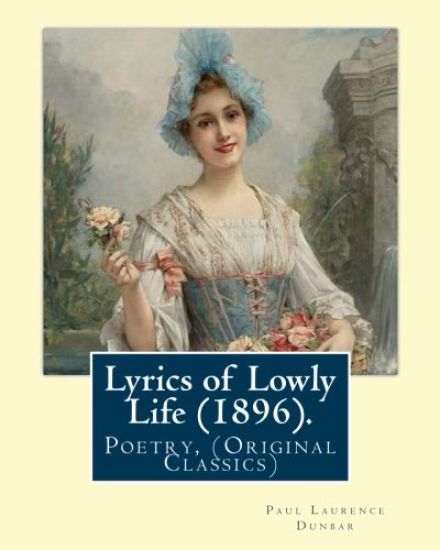
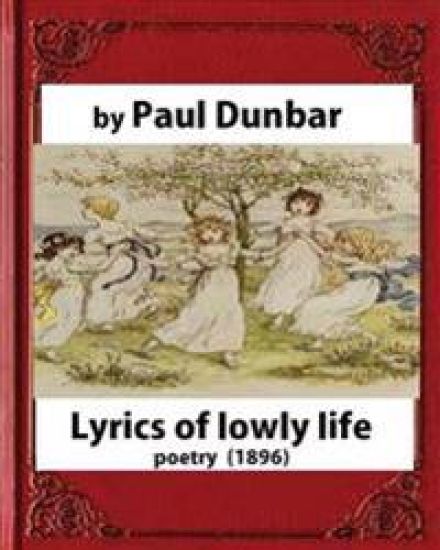
Lyrics of Lowly Life (1896). By: Paul Laurence Dunbar, introduction By: W. D. Howells: William Dean Howells ( March 1, 1837 - May 11, 1920) was an Ame
William Dean Howells (March 1, 1837 - May 11, 1920) was an American realist novelist, literary critic, and playwright, nicknamed "The Dean of American Letters". He was particularly known for his tenure as editor of The Atlantic Monthly, as well as for his own prolific writings, including the Christmas story "Christmas Every Day" and the novels The Rise of Silas Lapham and A Traveler from Altruria..... Paul Laurence Dunbar (June 27, 1872 - February 9, 1906) was an American poet, novelist, and playwright of the late 19th and early 20th centuries. Born in Dayton, Ohio, to parents who had been enslaved in Kentucky before the American Civil War, Dunbar began to write stories and verse when still a child; he was president of his high school's literary society. He published his first poems at the age of 16 in a Dayton newspaper. Much of Dunbar's more popular work in his lifetime was written in the Negro dialect associated with the antebellum South, though he also used the Midwestern regional dialect of James Whitcomb Riley. Dunbar's work was praised by William Dean Howells, a leading editor associated with the Harper's Weekly, and Dunbar was one of the first African-American writers to establish an international reputation. He wrote the lyrics for the musical comedy In Dahomey (1903), the first all-African-American musical produced on Broadway in New York. The musical later toured in the United States and the United Kingdom. Dunbar also wrote in conventional English in other poetry and novels. Since the late 20th century, scholars have become more interested in these other works. Suffering from tuberculosis, which then had no cure, Dunbar died in Dayton at the age of 33. Early life: Paul Laurence Dunbar was born at 311 Howard Street in Dayton, Ohio, on June 27, 1872, to parents who had been enslaved in Kentucky before the American Civil War. After being emancipated, his mother Matilda had moved to Dayton with other family members, including her two sons Robert and William from her first marriage. Dunbar's father Joshua had escaped from slavery in Kentucky before the war ended. He traveled to Massachusetts and volunteered for the 55th Massachusetts Infantry Regiment, one of the first two black units to serve in the war. The senior Dunbar also served in the 5th Massachusetts Cavalry Regiment. Paul Dunbar was born six months after Joshua and Matilda married on Christmas Eve, 1871. The marriage of Dunbar's parents was troubled and Dunbar's mother left Joshua soon after having their second child, a daughter.Joshua died on August 16, 1885; Paul was then 12 years old. Dunbar wrote his first poem at the age of six and gave his first public recital at the age of nine. His mother assisted him in his schooling, having learned to read expressly for that purpose. She often read the Bible with him, and thought he might become a minister in the African Methodist Episcopal Church. It was the first independent black denomination in America, founded in Philadelphia in the early 19th century. Dunbar was the only African-American student during his years at Central High School in Dayton; Orville Wright was a classmate and friend. Well-accepted, he was elected as president of the school's literary society, and became the editor of the school newspaper and a member of the debate club..........
Early Prose Writings of William Dean Howells, 1852–1861
While William Dean Howells is today best remembered as Mark Twain's staunchest defender, Howells was, at his peak, the unrivaled man of letters in America: he had no contemporary equal. The achievements of both Twain and Henry James have since surpassed those of Howells in the literary hierarchy, but the work of Howells still remains an important part of American letters. In The Early Prose Writings of William Dean Howells, 1852–1861, Thomas Wortham provides a chronological assortment of Howells' first prose compositions, beginning with apprentice pieces published before the writer's eighteenth birthday. Born in Martin's Ferry, Ohio, Howells also lived in Hamilton, Dayton, Cincinnati, and Columbus, where Howells' father, a printer and newspaper publisher, would move the family and set up shop. Howells started writing as a newspaperman, and this volume assembles pieces by Howells which appeared in the Ashtabula Sentinel, the Kingsville Academy Casket, and the Ohio Farmer, as well as the complete text of "The Independent Candidate"—his first attempt in print of an extended work of fiction—serialized in the Ashtabula Sentinel in 1854–55. Also included here is Howels' novela, Geoffrey: A Study of American Life, a thoughtful psychological study, which was never published, as well as Howells' letters to the New York World, in which he recorded his impressions and experiences relating to Ohio's early response to the declaration of the War Between the States. Dr. Wortham furnishes extensive source annotations to document quotations and references as well as framing each selection by Howells with background and explanatory glosses. As he points out, "Howells' literary life is not wanting in sufficient documentation," but his apprentice work—"that long foreground which has in his instance been too largely represented by a handful of mediocre poems, has been lost in old files of newspapers, journals, and manuscripts." Thanks to Dr. Wortham's careful scholarship, American literature now has a much more detailed and accurate picture of the young Howells and his early works.
Selected Short Stories of William Dean Howells

Selected Short Stories of William Dean Howells

W. D. Howells

Ohio University Press
1992
sidottu
The short stories of Ohio-born William Dean Howells (1837-1920), the leading figure in American realism, have been largely unknown to the reading public, at least partly because of their general unavailability and because of the difficulties of identifying, among Howells's voluminous short writings, those that are clearly short stories. Selected Short Stories of William Dean Howells includes the full texts of thirteen of Howells's short stories, each preceded by a thorough critical analysis, and an annotated short story list, identifying and discussing all of Howells's short stories. His stories, often in surprisingly comic and fresh ways, explore the slippery nature of perception, the variance between the ethical and the aesthetic points of view, the benefits and hazards of the creative imagination, and the requirements and responsibilities of personal morality. More than his novels or other writings, Howells's late stories reveal his fascination with psychology and his interest in psychic phenomena. These forgotten stories expose a side of Howells unknown even to many Americanists. Conversely, the early stories are invaluable in revealing his development as a writer and his concern, even at an early age, with themes that permeate the entire Howells canon. Taken as a group, this carefully edited selection of short stories provides a complete and manageable overview of the artistic and moral concerns of William Dean Howells and the span and evolution of his contribution to this genre.
Selected Short Stories of William Dean Howells

Selected Short Stories of William Dean Howells

W. D. Howells

Ohio University Press
1992
pokkari
The short stories of Ohio-born William Dean Howells (1837-1920), the leading figure in American realism, have been largely unknown to the reading public, at least partly because of their general unavailability and because of the difficulties of identifying, among Howells's voluminous short writings, those that are clearly short stories. Selected Short Stories of William Dean Howells includes the full texts of thirteen of Howells's short stories, each preceded by a thorough critical analysis, and an annotated short story list, identifying and discussing all of Howells's short stories. His stories, often in surprisingly comic and fresh ways, explore the slippery nature of perception, the variance between the ethical and the aesthetic points of view, the benefits and hazards of the creative imagination, and the requirements and responsibilities of personal morality. More than his novels or other writings, Howells's late stories reveal his fascination with psychology and his interest in psychic phenomena. These forgotten stories expose a side of Howells unknown even to many Americanists. Conversely, the early stories are invaluable in revealing his development as a writer and his concern, even at an early age, with themes that permeate the entire Howells canon. Taken as a group, this carefully edited selection of short stories provides a complete and manageable overview of the artistic and moral concerns of William Dean Howells and the span and evolution of his contribution to this genre.
Lyrics of lowly life(1896), by Paul Laurence Dunbar and W.D.Howells(poetry)

Lyrics of lowly life(1896), by Paul Laurence Dunbar and W.D.Howells(poetry)

William Dean Howells; Paul Laurence Dunbar

Createspace Independent Publishing Platform
2016
nidottu
One of the best-known volumes by a fascinating and complex writer, the first important black poet in the American canon. Popular in the early twentieth century Dunbar is today the subject of revived interest. Paul Laurence Dunbar (June 27, 1872 - February 9, 1906) was an American poet, novelist, and playwright of the late 19th and early 20th centuries. Born in Dayton, Ohio, to parents who had been enslaved in Kentucky before the American Civil War, Dunbar began to write stories and verse when still a child and was president of his high school's literary society. He published his first poems at the age of 16 in a Dayton newspaper. William Dean Howells ( March 1, 1837 - May 11, 1920) was an American realist novelist, literary critic, and playwright. Nicknamed "The Dean of American Letters",