

Kirjahaku
Etsi kirjoja tekijän nimen, kirjan nimen tai ISBN:n perusteella.
1000 tulosta hakusanalla William G. Cook
In this book, William Lycan defends an original theory of mind that he calls "homuncular functionalism." What is consciousness? The answer to this question has been pondered upon, grappled with, and argued about since time immemorial. There has never been an answer that achieved consensus; certainly philosophers have never agreed.In this book, William Lycan defends an original theory of mind that he calls "homuncular functionalism." He argues that human beings are "functionally organized information-processing systems" who have no non-physical parts or properties. However, Lycan also recognizes the subjective phenomenal qualities of mental states and events, and an important sense in which mind is "over and above" mere chemical matter. Along the way, Lycan reviews some diverse philosophical accounts of consciousness-including those of Kripke, Block, Campbell, Sellars, and Castaneda, among others-and demonstrates how what is valuable in each opposing view can be accommodated within his own theory.Consciousness is Lycan's most ambitious book, one that has engaged his attention for years. He handles a fascinating subject in a unique and undoubtedly controversial manner that will make this book a mainstay in the field of philosophy of mind.Consciousness, with these earlier works, is a Bradford Book.
William G. Tierney offers a different way of thinking about the curriculum in post-secondary curriculum than is customary. Through an in-depth analysis of seven ethnographic case studies, the author demonstrates how the curriculum itself is a cultural product which institutions of higher education construct socially. The manner in which the individual institution defines its curriculum, Tierney argues, commits it to certain philosophical and ideological choices, whether these are overtly recognized or not. It is the result of a year's research that included over 250 interviews at seven colleges in universities throughout the U.S. The volume concludes with recommendations administrators and faculty may employ in the effort to advance democracy in their colleges and universities.Organized around the theme of institutional curricula acting as a critical agent for preparing students to participate in the democratic sphere, the book begins by providing a conceptual map for the chapters which follow. Both curricular and cultural theories are reviewed and discussed. The next two sections explore the archaeology of the curriculum at the seven institutions under study. After examining the ways in which participants at the seven colleges and universities view different curricular concepts, the author illustrates how the individuals view one another's actions about the curriculum. As he demonstrates, the curriculum often becomes contested terrain because of the cultural constructions different groups develop about one another and toward the curriculum. Finally, the author offers an interpretation and analysis of the different curricula of the seven institutions, concluding with a discussion of how organizational participants might assume the roles of transformative leaders who create new curricular paths and directions for their organizations.
This book is a unique invitation to rethink some of the most basic assumptions of higher education. The essays demonstrate that researchers have often concentrated on issues of effectiveness and efficiency in academe, rather than on issues of social justice and democracy. Participants in and organizations connected with higher education operate in ongoing patterns of struggle that embody competing conceptions of reality and what counts for knowledge. The essays in this volume make up a chorus of voices shaped by an interaction of dominant and subordinate forms of power. There is a focus on critical theory and the belief that education can be a transformative activity that creates conditions for empowerment.Within the framework of this book, a number of chapters deal with how those in power insert their ideas into academe. Other chapters uncover a politics of hope, and of possibility. The book is not a definitive statement but rather an initial comment to encourage discussion. Those studying curriculum and instruction, as well as all faculty, administrators, and researchers in higher education will find this book a comprehensive resource.
Webster's points are: (1) the principal must teach teachers using an informed vision of the school as an ideal setting for learner growth, (2) teaching the universe of discourse and its skills are the most important activities in schools because discourse is the master switchboard of all teaching and learning, and (3) effective principalship is eclectic and pragmatic. The focus of the book includes educationally sound, legally defensible teacher evaluation that has been developed with other principals who have perfected the science of writing up teachers. Innovations in Webster's method involve approaches to staff development, different portrayals of the authoritative basis of the principalship, and the evaluation of teaching from the point of view of discourse among practiced and inexperienced teachers.

No modern U.S. president inherited a stronger, safer international position than Bill Clinton. In 1992, the Cold War was over, and the nation was at peace and focused on domestic issues. Despite this temporary tranquility, Clinton would soon be faced with a barrage of crises, including flare-ups of unrest in the Middle East, ethnic conflict in Yugoslavia, uneasy relations with Japan and China, persistent trouble in the Persian Gulf, the dissolution of the USSR, and disastrous situations in Somalia and Haiti.In this comprehensive and balanced examination of Clinton's foreign policy—the first such book to cover all the global focal points of his administration to date—William G. Hyland brilliantly shows the effects of combining this confusion with Clinton's unique personality characteristics. His first term was marked, in the author's analysis, by murky policy, unrealistic goals, and the mishandling of several crises. By the end of that term he learned some hard lessons, was able to alter his pattern of response, and reversed himself on some major aspects of foreign policy—all to benefit, in the author's view, the country and the world as a whole.
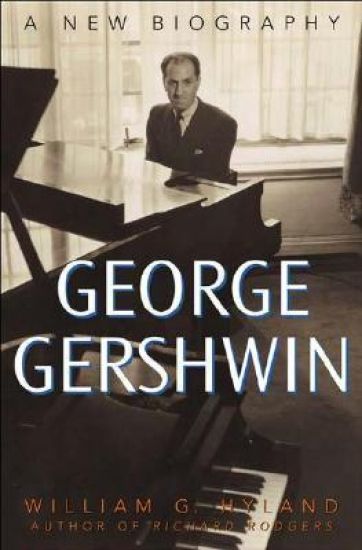
Having retired from a career in government, Hyland has taken to writing about American popular music and here traces the life, personality, and work of composer Gershwin (1898-1937) from his birth in New York City to the impact his music continues to exert. Annotation (c) Book News, Inc., Portland,
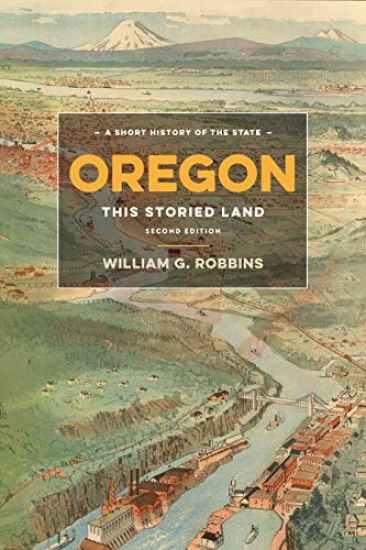
Oregon's landscape boasts brilliant waterfalls, towering volcanoes, productive river valleys, and far-reaching high deserts. People have lived in the region for at least twelve thousand years, during which they established communities; named places; harvested fish, timber, and agricultural products; and made laws and choices that both protected and threatened the land and its inhabitants.William G. Robbins traces the state's history of commodification and conservation, despair and hope, progress and tradition. This revised and updated edition features a new introduction and epilogue with discussion of climate change, racial disparity, immigration, and discrimination. Revealing Oregon's rich social, economic, cultural, and ecological complexities, Robbins upholds the historian's commitment to critical inquiry, approaching the state's past with both open-mindedness and a healthy dose of skepticism about the claims of Oregon's boosters.
Oregon's landscape boasts brilliant waterfalls, towering volcanoes, productive river valleys, and far-reaching high deserts. People have lived in the region for at least twelve thousand years, during which they established communities; named places; harvested fish, timber, and agricultural products; and made laws and choices that both protected and threatened the land and its inhabitants.William G. Robbins traces the state's history of commodification and conservation, despair and hope, progress and tradition. This revised and updated edition features a new introduction and epilogue with discussion of climate change, racial disparity, immigration, and discrimination. Revealing Oregon's rich social, economic, cultural, and ecological complexities, Robbins upholds the historian's commitment to critical inquiry, approaching the state's past with both open-mindedness and a healthy dose of skepticism about the claims of Oregon's boosters.
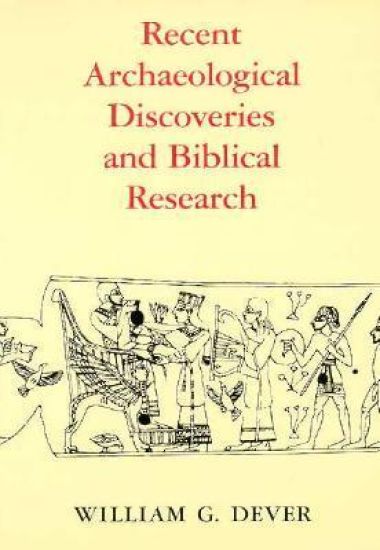
Recent Archaeological Discoveries and Biblical Research
William G. Dever
University of Washington Press
1993
pokkari
Archaeology and Bible--two simple terms, often used together, understood by everybody. But are they understood properly? If so, why are both subject to such controversy? And what can archaeology contribute to our understanding of the Bible? These are the problems addressed by Professor Dever in this book.Dever first looks at the nature and recent development of both archaeology and Biblical studies, and then lays the groundwork for a new a productive relationship between these two disciplines. His "case studies" are three eras in Israelite history: the period of settlement in Canaan, the period of the United Monarchy, and the period of religious development, chiefly during the Divided Monarchy. In each case Dever explores by means of recent discoveries what archaeology, couples with textual study, can contribute to the illumination of the life and times of ancient Israel.Given the flood of new information that has come from recent archaeological discoveries, Dever has chosen to draw evidence largely from excavations and surveys done in Israel in the last ten years--many still unpublished--concerning archaeology and the Old Testament.Dever's work not only brings the reader up to date on recent archaeological discoveries as they pertain to the Hebrew Bible, but indeed goes further in offering an original interpretation of the relationship between the study of the Bible and the uncovering of the material culture of the ancient Near East. Extensive notes, plus the use of much new and/or unpublished data, will make the volume useful to graduate students and professors in the fields of Biblical studies and Syro-Palestinian archaeology, and the seminarians, pastors, rabbis, and others. This book provides stimulating, provocative, and often controversial reading as well as a compendium of valuable insights and marginalia that symbolizes the state of the art of Biblical archaeology today.
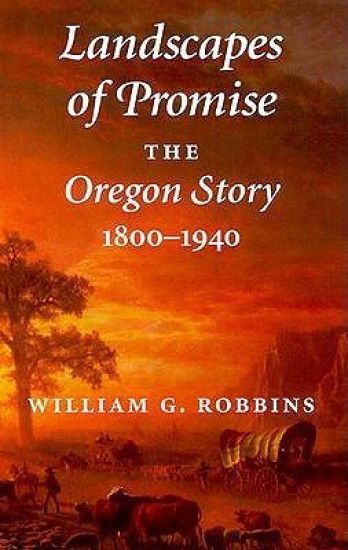
Landscapes of Promise
William G. Robbins; William Cronon
University of Washington Press
1999
pokkari
Landscapes of Promise is the first comprehensive environmental history of the early years of a state that has long been associated with environmental protection. Covering the period from early human habitation to the end of World War II, William Robbins shows that the reality of Oregon's environmental history involves far more than a discussion of timber cutting and land-use planning.Robbins demonstrates that ecological change is not only a creation of modern industrial society. Native Americans altered their environment in a number of ways, including the planned annual burning of grasslands and light-burning of understory forest debris. Early Euro-American settlers who thought they were taming a virgin wilderness were merely imposing a new set of alterations on an already modified landscape.Beginning with the first 18th-century traders on the Pacific Coast, alterations to Oregon's landscape were closely linked to the interests of global market forces. Robbins uses period speeches and publications to document the increasing commodification of the landscape and its products. "Environment melts before the man who is in earnest," wrote one Oregon booster in 1905, reflecting prevailing ways of thinking.In an impressive synthesis of primary sources and historical analysis, Robbins traces the transformation of the Oregon landscape and the evolution of our attitudes toward the natural world.
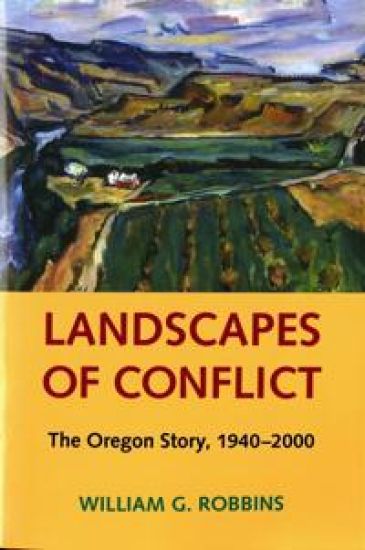
Landscapes of Conflict
William G. Robbins; William Cronon
University of Washington Press
2004
sidottu
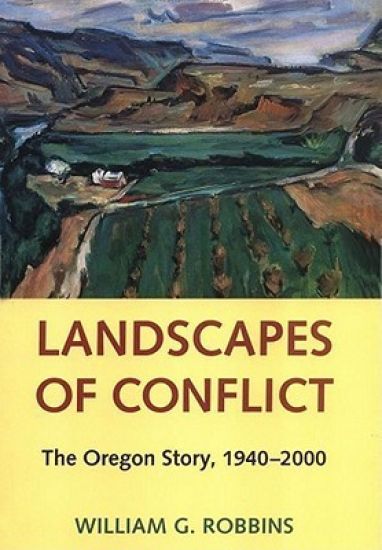
Post-World War II Oregon was a place of optimism and growth, a spectacular natural region from ocean to high desert that seemingly provided opportunity in abundance. With the passing of time, however, Oregon's citizens — rural and urban — would find themselves entangled in issues that they had little experience in resolving. The same trees that provided income to timber corporations, small mill owners, loggers, and many small towns in Oregon, also provided a dramatic landscape and a home to creatures at risk. The rivers whose harnessing created power for industries that helped sustain Oregon's growth — and were dumping grounds for municipal and industrial wastes — also provided passageways to spawning grounds for fish, domestic water sources, and recreational space for everyday Oregonians.The story of Oregon's accommodation to these divergent interests is a divisive story between those interested in economic growth and perceived stability and citizens concerned with exercising good stewardship towards the state's natural resources and preserving the state's livability. In his second volume of Oregon's environmental history, William Robbins addresses efforts by individuals and groups within and outside the state to resolve these conflicts. Among the people who have had roles in this process, journalists and politicians Richard Neuberger and Tom McCall left substantial legacies and demonstrated the ambiguities inherent in the issues they confronted.
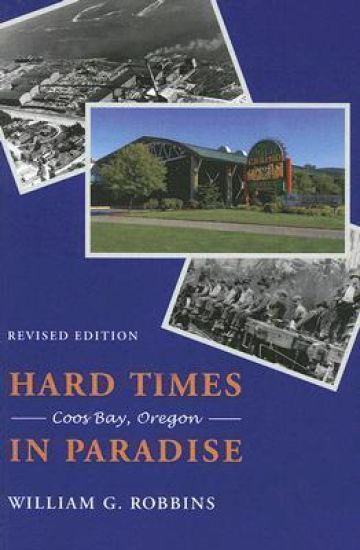
Blessed with vast expanses of virgin timber, a good harbor, and a San Francisco market for its lumber, the Coos Bay area once dubbed itself "a poor man's paradise." A new Prologue and Epilogue by the author bring this story of gyppo loggers, longshoremen, millwrights, and whistle punks into the twenty-first century, describing Coos Bay's transition from timber town to a retirement and tourist community, where the site of a former Weyerhaeuser complex is now home to the Coquille Indian Tribe's The Mill Casino.
Landscapes of Conflict
William G. Robbins; William Cronon
University of Washington Press
2010
pokkari
Post-World War II Oregon was a place of optimism and growth, a spectacular natural region from ocean to high desert that seemingly provided opportunity in abundance. With the passing of time, however, Oregon's citizens — rural and urban — would find themselves entangled in issues that they had little experience in resolving. The same trees that provided income to timber corporations, small mill owners, loggers, and many small towns in Oregon, also provided a dramatic landscape and a home to creatures at risk. The rivers whose harnessing created power for industries that helped sustain Oregon's growth — and were dumping grounds for municipal and industrial wastes — also provided passageways to spawning grounds for fish, domestic water sources, and recreational space for everyday Oregonians.The story of Oregon's accommodation to these divergent interests is a divisive story between those interested in economic growth and perceived stability and citizens concerned with exercising good stewardship towards the state's natural resources and preserving the state's livability. In his second volume of Oregon's environmental history, William Robbins addresses efforts by individuals and groups within and outside the state to resolve these conflicts. Among the people who have had roles in this process, journalists and politicians Richard Neuberger and Tom McCall left substantial legacies and demonstrated the ambiguities inherent in the issues they confronted.

Landscapes of Promise
William G. Robbins; William Cronon
University of Washington Press
2015
sidottu
Landscapes of Promise is the first comprehensive environmental history of the early years of a state that has long been associated with environmental protection. Covering the period from early human habitation to the end of World War II, William Robbins shows that the reality of Oregon's environmental history involves far more than a discussion of timber cutting and land-use planning.Robbins demonstrates that ecological change is not only a creation of modern industrial society. Native Americans altered their environment in a number of ways, including the planned annual burning of grasslands and light-burning of understory forest debris. Early Euro-American settlers who thought they were taming a virgin wilderness were merely imposing a new set of alterations on an already modified landscape.Beginning with the first 18th-century traders on the Pacific Coast, alterations to Oregon's landscape were closely linked to the interests of global market forces. Robbins uses period speeches and publications to document the increasing commodification of the landscape and its products. "Environment melts before the man who is in earnest," wrote one Oregon booster in 1905, reflecting prevailing ways of thinking.In an impressive synthesis of primary sources and historical analysis, Robbins traces the transformation of the Oregon landscape and the evolution of our attitudes toward the natural world.
Richard Rodgers, a musical genius whose Broadway career spanned six successful decades, composed more than a thousand songs for the American stage. Although he reaped wealth, success, and recognition that included two shared Pulitzer Prizes, Rodgers found happiness elusive. In this first comprehensive biography of Rodgers, William G. Hyland tells the full story of the complex man and his incomparable music. Hyland’s portrait of Rodgers (1902-79) begins with his childhood in an affluent Jewish family living in the Harlem neighborhood of Manhattan. During college years at Columbia University and early work on the amateur circuit and Broadway, Rodgers entered into a historic collaboration with the lyricist Lorenz Hart. The team produced a dozen popular shows and such enduring songs as "The Lady Is a Tramp." Rodgers’ next partnership, with Oscar Hammerstein II, led to the creation of the musical play, a new and distinctively American art form. Beginning with Oklahoma! in 1943, this pair dominated Broadway for almost twenty years with a string of hits that remain beloved favorites: Carousel, South Pacific, The King and I, and The Sound of Music. When Hammerstein died in 1960, Rodgers began a new phase in his career, writing the lyrics to his own music, then joining lyricists Stephen Sondheim, Sheldon Harnick, and Martin Charnin. Despite periods of depression, excessive drinking, hypochondria, and devastating illness at different points in his life, Rodgers’ outpouring of music seemed little affected, and he continued to compose until his death at age seventy-seven. An icon of the musical theater, Rodgers left a legacy of timeless songs that audiences return to hear over and again.

Winner of the Mark Lynton Prize in History—the story of the longest and most complex legal challenge to slavery in American history"A rich, roiling history that Thomas recounts with eloquence and skill. . . . The very existence of freedom suits assumed that slavery could only be circumscribed and local; what Thomas shows in his illuminating book is how this view was eventually turned upside down in decisions like Dred Scott. 'Freedom was local,' Thomas writes. 'Slavery was national.'"—Jennifer Szalai, New York Times"Gripping. . . . Profound and prodigiously researched."—Alison L. LaCroix, Washington Post For over seventy years and five generations, the enslaved families of Prince George’s County, Maryland, filed hundreds of suits for their freedom against a powerful circle of slaveholders, taking their cause all the way to the Supreme Court. Between 1787 and 1861, these lawsuits challenged the legitimacy of slavery in American law and put slavery on trial in the nation’s capital. Piecing together evidence once dismissed in court and buried in the archives, William Thomas tells an intricate and intensely human story of the enslaved families (the Butlers, Queens, Mahoneys, and others), their lawyers (among them a young Francis Scott Key), and the slaveholders who fought to defend slavery, beginning with the Jesuit priests who held some of the largest plantations in the nation and founded a college at Georgetown. A Question of Freedom asks us to reckon with the moral problem of slavery and its legacies in the present day.

Winner of the Mark Lynton Prize in History—the story of the longest and most complex legal challenge to slavery in American history"A rich, roiling history that Thomas recounts with eloquence and skill. . . . The very existence of freedom suits assumed that slavery could only be circumscribed and local; what Thomas shows in his illuminating book is how this view was eventually turned upside down in decisions like Dred Scott. 'Freedom was local,' Thomas writes. 'Slavery was national.'"—Jennifer Szalai, New York Times"Gripping. . . . Profound and prodigiously researched."—Alison L. LaCroix, Washington Post For over seventy years and five generations, the enslaved families of Prince George’s County, Maryland, filed hundreds of suits for their freedom against a powerful circle of slaveholders, taking their cause all the way to the Supreme Court. Between 1787 and 1861, these lawsuits challenged the legitimacy of slavery in American law and put slavery on trial in the nation’s capital. Piecing together evidence once dismissed in court and buried in the archives, William Thomas tells an intricate and intensely human story of the enslaved families (the Butlers, Queens, Mahoneys, and others), their lawyers (among them a young Francis Scott Key), and the slaveholders who fought to defend slavery, beginning with the Jesuit priests who held some of the largest plantations in the nation and founded a college at Georgetown. A Question of Freedom asks us to reckon with the moral problem of slavery and its legacies in the present day.
In Defense of Thomas Jefferson: The Sally Hemings Sex Scandal
William G. Hyland Jr
Thomas Dunne Books
2009
sidottu
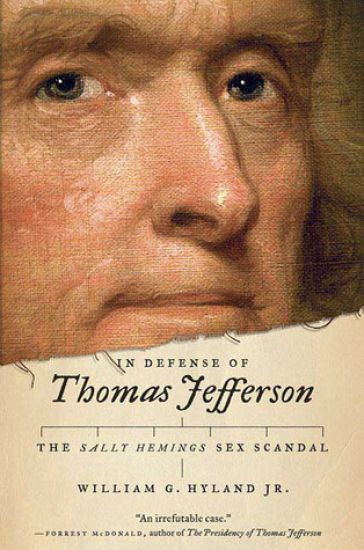
The belief that Thomas Jefferson had an affair and fathered a child (or children) with slave Sally Hemings---and that such an allegation was proven by DNA testing--has become so pervasive in American popular culture that it is not only widely accepted but taught to students as historical fact. But as William G. Hyland Jr. demonstrates, this "fact" is nothing more than the accumulation of salacious rumors and irresponsible scholarship over the years, much of it inspired by political grudges, academic opportunism, and the trend of historical revisionism that seeks to drag the reputation of the Founding Fathers through the mud. In this startling and revelatory argument, Hyland shows not only that the evidence against Jefferson is lacking, but that in fact he is entirely innocent of the charge of having sexual relations with Hemings. Historians have the wrong Jefferson. Hyland, an experienced trial lawyer, presents the most reliable historical evidence while dissecting the unreliable, and in doing so he cuts through centuries of unsubstantiated charges. The author reminds us that the DNA tests identified Eston Hemings, Sally's youngest child, as being merely the descendant of a "Jefferson male." Randolph Jefferson, the president's wayward, younger brother with a reputation for socializing among the Monticello slaves, emerges as the most likely of several possible candidates. Meanwhile, the author traces the evolution of this rumor about Thomas Jefferson back to the allegation made by one James Callendar, a "drunken ruffian" who carried a grudge after unsuccessfully lobbying the president for a postmaster appointment---and who then openly bragged of ruining Jefferson's reputation. Hyland also delves into Hemings family oral histories that go against the popular rumor, as well as the ways in which the Jefferson rumors were advanced by less-than-historical dramas and by flawed scholarly research often shaped by political agendas. Reflecting both a layperson's curiosity and a lawyer's precision, Hyland definitively puts to rest the allegation of the thirty-eight-year liaison between Jefferson and Hemings. In doing so, he reclaims the nation's third president from the arena of Hollywood-style myth and melodrama and gives his readers a unique opportunity to serve as jurors on this enduringly fascinating episode in American history.