Kirjojen hintavertailu. Mukana 11 342 296 kirjaa ja 12 kauppaa.

Kirjahaku

Etsi kirjoja tekijän nimen, kirjan nimen tai ISBN:n perusteella.

1000 tulosta hakusanalla William L Perry

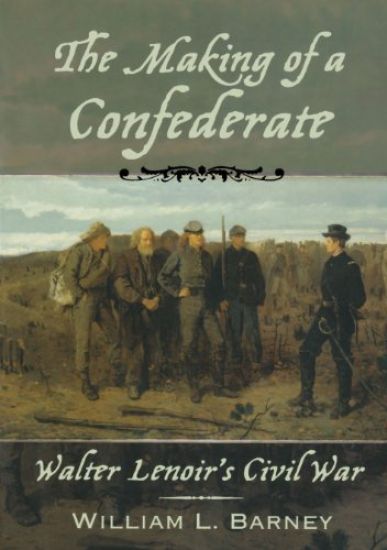
The Making of a Confederate

The Making of a Confederate

William L. Barney

Oxford University Press Inc
2008
nidottu
Despite the advances of the civil rights movement, many white southerners cling to the faded glory of a romanticized Confederate past. In The Making of a Confederate, William L. Barney focuses on the life of one man, Walter Lenoir of North Carolina, to examine the origins of southern white identity alongside its myriad ambiguities and complexities. Born into a wealthy slaveholding family, Lenoir abhorred the institution, opposed secession, and planned to leave his family to move to Minnesota, in the free North. But when the war erupted in 1860, Lenoir found another escape route-he joined the Confederate army, an experience that would radically transform his ideals. After the war, Lenoir, like many others, embraced the cult of the Lost Cause, refashioning his memory and beliefs in an attempt to make sense of the war, its causes, and its consequences. While some Southerners sank into depression, aligned with the victors, or fiercely opposed the new order, Lenoir withdrew to his acreage in the North Carolina mountains. There, he pursued his own vision of the South's future, one that called for greater self-sufficiency and a more efficient use of the land. For Lenoir and many fellow Confederates, the war never really ended. As he tells this compelling story, Barney offers new insights into the ways that (selective) memory informs history; through Lenoir's life, readers learn how individual choices can transform abstract historical processes into concrete actions.
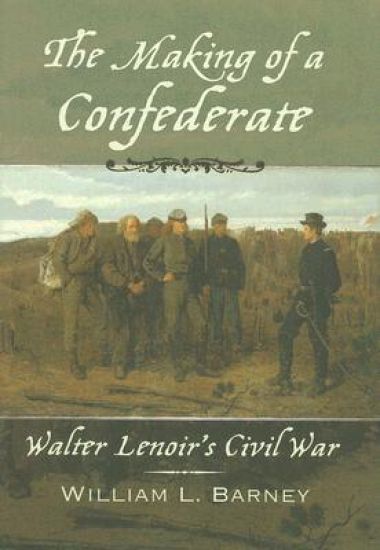
The Making of a Confederate

The Making of a Confederate

William L. Barney

Oxford University Press Inc
2007
sidottu
For all the advances of the civil rights movement, and for all the cultural diversity attending economic prosperity, many white southerners have been unable to relinquish the Confederate past and the idea of a heroic, liberty-loving South crushed by power-hungry Yankees. The Making of a Confederate uses the life of one man--Walter Lenoir of North Carolina--to explore the origins of southern white identity and the myriad ambiguities and complexities embedded in that history. Lenoir's case is particularly fascinating in the way it complicates notions about the sources of rabid devotion to the Confederate cause. Although born into a wealthy slaveholding family, Lenoir acknowledged the institution's evils and intended to divest himself of his inherited slaves. Opposed to secession, he planned in 1860 to move to Minnesota in the free North. With the war's outbreak, however, everything changed. Lenoir joined the Confederate army and fervidly supported its cause to the end. His postwar career reveals how one Confederate coped with bereavement and a crushing sense of loss, as he refashioned his memory of what had caused the war and embraced the cult of the Lost Cause. And while some southerners sank into depression, sought accommodation with the victors, or opposed the new order through various means, Lenoir found a fresh purpose by withdrawing to his acreage in the North Carolina mountains to pursue his own vision of the South's future, one that called for greater self-sufficiency and a more efficient use of the land. For Walter Lenoir and many other Confederates, the war never really ended. In tracing this compelling story, William Barney offers new insight into the uses of memory and how individual choices transform abstract historical processes into concrete actions.
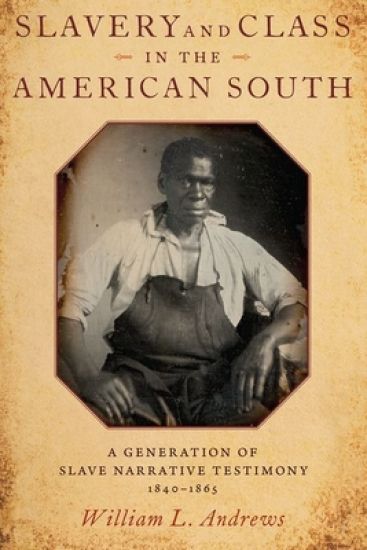
Slavery and Class in the American South

Slavery and Class in the American South

William L. Andrews

Oxford University Press Inc
2020
nidottu
"The distinction among slaves is as marked, as the classes of society are in any aristocratic community. Some refusing to associate with others whom they deem to be beneath them, in point of character, color, condition, or the superior importance of their respective masters." Henry Bibb, fugitive slave, editor, and antislavery activist, stated this in his Narrative of the Life and Adventures of Henry Bibb (1849). In William L. Andrews's magisterial study of an entire generation of slave narrators, more than 60 mid-nineteenth-century narratives reveal how work, family, skills, and connections made for social and economic differences among the enslaved of the South. Slave narrators disclosed class-based reasons for violence that broke out between "impudent," "gentleman," and "lady" slaves and their resentful "mean masters." Andrews's far-reaching book shows that status and class played key roles in the self- and social awareness and in the processes of liberation portrayed in the narratives of the most celebrated fugitives from U.S. slavery, such as Frederick Douglass, Harriet Jacobs, William Wells Brown, and William and Ellen Craft. Slavery and Class in the American South explains why social and economic distinctions developed and how they functioned among the enslaved. Noting that the majority of the slave narrators came from the higher echelons of the enslaved, Andrews also pays close attention to the narratives that have received the least notice from scholars, those from the most exploited class, the "field hands." By examining the lives of the most and least acclaimed heroes and heroines of the slave narrative, Andrews shows how the dividing edge of social class cut two ways, sometimes separating upper and lower strata of slaves to their enslavers' advantage, but at other times fueling pride, aspiration, and a sense of just deserts among some of the enslaved that could be satisfied by nothing less than complete freedom. The culmination of a career spent studying African American literature, this comprehensive study of the antebellum slave narrative offers a ground-breaking consideration of a unique genre of American literature.
American Torture from the Philippines to Iraq

American Torture from the Philippines to Iraq

William L. d'Ambruoso

OXFORD UNIVERSITY PRESS INC
2022
sidottu
What explains the United States' persistent use of torture over the past hundred-plus years? Not only is torture incompatible with liberal values; it is also risky and frequently ineffective as an interrogation method. In American Torture from the Philippines to Iraq, William L. d'Ambruoso argues that the norm against torture has two features that help explain why liberal democracies like the United States have continued to violate it. First, the norm against torture paradoxically contributes to the belief that torture works. In naming certain behaviors as appropriate, norms also define what is inappropriate. Some policymakers and soldiers believe (not always unreasonably) that in the nasty world of international politics, cheaters--those who are willing to break the rules--have an advantage, especially in security matters. "Bad" becomes "good" because it appears effective, and rule-following is perceived as naïve and dangerous. Second, the anti-torture norm is not sufficiently specified to draw a definitive line between norm-compliant behavior and violations. For example, it is impossible to specify exactly how many hours must pass before forced standing becomes torture. As a result of torture's blurry definition, perpetrators can justify their actions by suggesting that the adversary is guilty of worse behavior, by using euphemisms such as "enhanced interrogation," or by flatly denying that an act is torture. In short, lack of specificity leads to justifications and redefinitions, which in turn enable transgressions. Drawing on previously overlooked archival testimony from the Philippine-American War (1899-1902), the Vietnam War, and the post-2001 war on terror, d'Ambruoso shows that the rationale for using torture has remained remarkably consistent throughout the past century.
Can God Be Free?

Can God Be Free?

William L. Rowe

Clarendon Press
2004
sidottu
In the three major religions of the West, God is understood to be a being whose goodness, knowledge, and power is such that it is impossible for any being, including God himself, to have a greater degree of goodness, knowledge, and power. This book focuses on God's freedom and praiseworthiness in relation to his perfect goodness. Given his necessary perfections, if there is a best world for God to create he would have no choice other than to create it. For, as Leibniz tells us, 'to do less good than one could is to be lacking in wisdom or in goodness.' But if God could not do otherwise than create the best world, he created the world of necessity, not freely. And, if that is so, it may be argued that we have no reason to be thankful to God for creating us, since, as parts of the best possible world, God was simply unable to do anything other than create us - he created us of necessity, not freely. Moreover, we are confronted with the difficulty of having to believe that this world, with its Holocaust, and innumerable other evils, is the best that an infinitely powerful, infinitely good being could do in creating a world. Neither of these conclusions, taken by itself, seems at all plausible. Yet each conclusion appears to follow from the conception of God now dominant in the great religions of the West. William Rowe presents a detailed study of this important problem, both historically in the writings of Gottfried Leibniz, Samuel Clarke, Thomas Aquinas, and Jonathan Edwards, as well as in the contemporary philosophical literature devoted to the issue. Rowe argues that this problem is more serious than is commonly thought and may require some significant revision in contemporary thinking about the nature of God.
Political Culture in Contemporary Britain

Political Culture in Contemporary Britain

William L. Miller; Annis May Timpson; Michael Lessnoff

Clarendon Press
1996
sidottu
This is the most authoritative picture to date of what the British people and their politicians really think about the fundamentals of politics. Based on new and revealing survey data, it presents a wide-ranging analysis of British attitudes to civil, political, and social rights. The study uncovers two broad `macro-dimensions' of political principle - liberty and equality - which underlie a large number of more specific principles and shape people's responses to many practical issues. Controversially, it claims that commitments to liberty and equality tend to run together - only the least educated treat them as alternatives; left-wingers support both and right-wingers oppose both. It explores the influence of social background, personal experience, and the institutional setting on attitudes towards political principles, highlighting in particular age and the complex influences of education and religion. And it also shows how arguments and propganda combine with political principles and party loyalties to influence opinion on practical issues. The final chapter presents an overall model and quantifies the relative power of all these different influences. The book will be invaluable reading for all those interested in British politics, political sociology, civil liberties, and public opinion as well as those planning their own social science survey research.
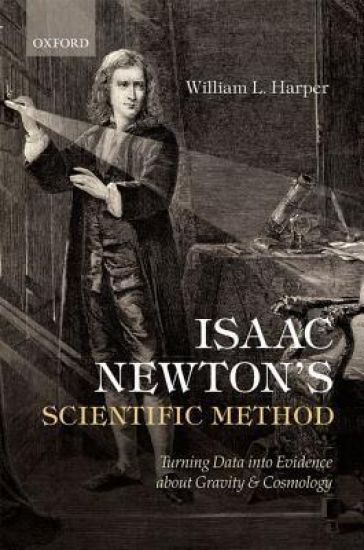
Isaac Newton's Scientific Method

Isaac Newton's Scientific Method

William L. Harper

Oxford University Press
2014
nidottu
Isaac Newton's Scientific Method examines Newton's argument for universal gravity and his application of it to resolve the problem of deciding between geocentric and heliocentric world systems by measuring masses of the sun and planets. William L. Harper suggests that Newton's inferences from phenomena realize an ideal of empirical success that is richer than prediction. Any theory that can achieve this rich sort of empirical success must not only be able to predict the phenomena it purports to explain, but also have those phenomena accurately measure the parameters which explain them. Harper explores the ways in which Newton's method aims to turn theoretical questions into ones which can be answered empirically by measurement from phenomena, and to establish that propositions inferred from phenomena are provisionally accepted as guides to further research. This methodology, guided by its rich ideal of empirical success, supports a conception of scientific progress that does not require construing it as progress toward Laplace's ideal limit of a final theory of everything, and is not threatened by the classic argument against convergent realism. Newton's method endorses the radical theoretical transformation from his theory to Einstein's. Harper argues that it is strikingly realized in the development and application of testing frameworks for relativistic theories of gravity, and very much at work in cosmology today.
Can God Be Free?

Can God Be Free?

William L. Rowe

Clarendon Press
2006
nidottu
In the three major religions of the West, God is understood to be a being whose goodness, knowledge, and power are such that it is impossible for any being, including God himself, to have a greater degree of goodness, knowledge, and power. This book focuses on God's freedom and praiseworthiness in relation to his perfect goodness. Given his necessary perfections, if there is a best world for God to create he would have no choice other than to create it. For, as Leibniz tells us, 'to do less good than one could is to be lacking in wisdom or in goodness'. But if God could not do otherwise than create the best world, he created the world of necessity, not freely. And, if that is so, it may be argued that we have no reason to be thankful to God for creating us, since, as parts of the best possible world, God was simply unable to do anything other than create us---he created us of necessity, not freely. Moreover, we are confronted with the difficulty of having to believe that this world, with its Holocaust, and innumerable other evils, is the best that an infinitely powerful, infinitely good being could do in creating a world. Neither of these conclusions, taken by itself, seems at all plausible. Yet each conclusion appears to follow from the conception of God now dominant in the great religions of the West. William Rowe presents a detailed study of this important problem, both historically in the writings of Gottfried Leibniz, Samuel Clarke, Thomas Aquinas, and Jonathan Edwards, and in the contemporary philosophical literature devoted to the issue. Rowe argues that this problem is more serious than is commonly thought and may require some significant revision in contemporary thinking about the nature of God.
Isaac Newton's Scientific Method

Isaac Newton's Scientific Method

William L. Harper

Oxford University Press
2011
sidottu
Isaac Newton's Scientific Method examines Newton's argument for universal gravity and his application of it to resolve the problem of deciding between geocentric and heliocentric world systems by measuring masses of the sun and planets. William L. Harper suggests that Newton's inferences from phenomena realize an ideal of empirical success that is richer than prediction. Any theory that can achieve this rich sort of empirical success must not only be able to predict the phenomena it purports to explain, but also have those phenomena accurately measure the parameters which explain them. Harper explores the ways in which Newton's method aims to turn theoretical questions into ones which can be answered empirically by measurement from phenomena, and to establish that propositions inferred from phenomena are provisionally accepted as guides to further research. This methodology, guided by its rich ideal of empirical success, supports a conception of scientific progress that does not require construing it as progress toward Laplace's ideal limit of a final theory of everything, and is not threatened by the classic argument against convergent realism. Newton's method endorses the radical theoretical transformation from his theory to Einstein's. Harper argues that it is strikingly realized in the development and application of testing frameworks for relativistic theories of gravity, and very much at work in cosmology today.
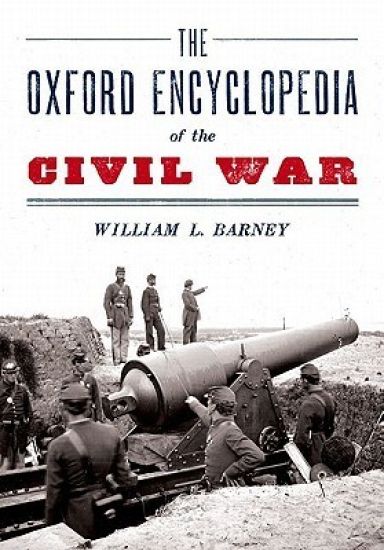
The Oxford Encyclopedia of the Civil War

The Oxford Encyclopedia of the Civil War

William L. Barney

Oxford University Press Inc
2011
nidottu
A gold mine for the historian as well as the Civil War buff, The Oxford Encyclopedia of the Civil War offers a concise, comprehensive overview of the major personalities and pivotal events of the war that redefined the American nation. Drawing upon recent research that has moved beyond battles and military campaigns to address the significant roles played by civilians, women, and African Americans, the 250 entries explore the era in all its complexity and unmistakable human drama. Here of course are the major battles and campaigns, ranging from Gettysburg and Shiloh to Sherman's March to the Sea, as well as biographical entries on everyone from Abraham Lincoln and Robert E. Lee to Frederick Douglass, Clara Barton, and Walt Whitman. But the book also features entries on a wealth of other matters--music, photography, religion, economics, foreign affairs, medicine, prisons, legislative landmarks, military terms and weaponry, political events, social reform, women in the war, and much more. In addition, charts, newly commissioned maps, chronologies, and period photographs provide an appealing visual context. Suggestions for further reading at the end of most entries and a guide to more general sources in an appendix introduce the reader to the literature on a specific topic. A list of Civil War museums and historic sites and a representative sampling of Civil War websites also point to resources that can be tailored to individual interests. A quick, convenient, user-friendly guide to all facets of the Civil War, this new updated edition also serves as an invaluable gateway to the rich historical record now available, perfect for virtually anyone who wants to learn more about this tumultuous period in our history.
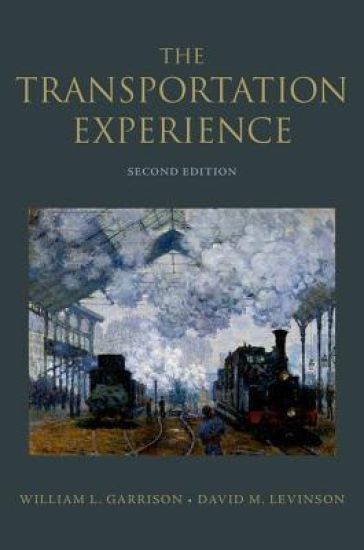
The Transportation Experience

The Transportation Experience

William L. Garrison; David M. Levinson

Oxford University Press Inc
2014
nidottu
While much of the transportation systems in Europe and the United States are mature (if not senescent), the rest of the world is still planning, developing, and deploying new systems. The accomplishments and mistakes of places like the United Kingdom and the United States, then, can teach us lessons that may be applied to places where transportation remains nascent or adolescent. The Transportation Experience seeks to understand the genesis of transportation policy in America and the UK, along with the roles that this policy plays as systems are innovated, deployed, and reach maturity, and how policies might be improved. The second edition updates all data that appeared in the first edition (published in 2005), and features significant revision of approximately half of the book. The book has been reorganized for improved presentation, and smoothly integrates all new material. This second edition also includes two new chapters on safety and security in transportation systems and user interface.
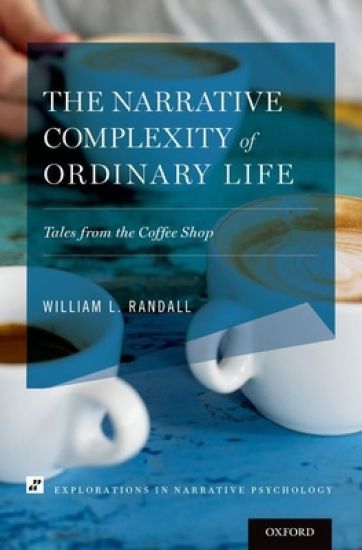
The Narrative Complexity of Ordinary Life

The Narrative Complexity of Ordinary Life

William L. Randall

Oxford University Press Inc
2015
sidottu
Our everyday lives are enmeshed in storytelling: the stories we tell about our memories, the people we know, and the world we inhabit; those we tell about our families and communities; and the narratives we encounter in books, movies, and television. Narrative structures how we view ourselves and everything around us. In The Narrative Complexity of Ordinary Life, William L. Randall shows how concepts central to the study of narrative psychology--such as narrative development and the interrelation between narrative and identity, cognition, and development--are integral to everyday life. He makes the case that all people function as narrative psychologists by continually storying their lives in memory and imagination, as well as speculating on the stories that others may be living, a process that Randall refers to as storyotyping. Relying heavily on narrative, Randall draws from experiences in his own life to illustrate various concepts in narrative psychology. Randall's inquiry also takes him to the topics of gossip, rumor, and the narrative complexity of nostalgia. He contemplates the storied nature of the news, and by extension, history. Randall discusses the nature of spirituality and religion as "master narratives." He also draws upon the work of Dan McAdams to discuss how the stories people internalize and tell to others reveal a great deal about the way in which they interpret and experience the world around them, ultimately arguing that the recurring themes in people's lives shape their personalities.
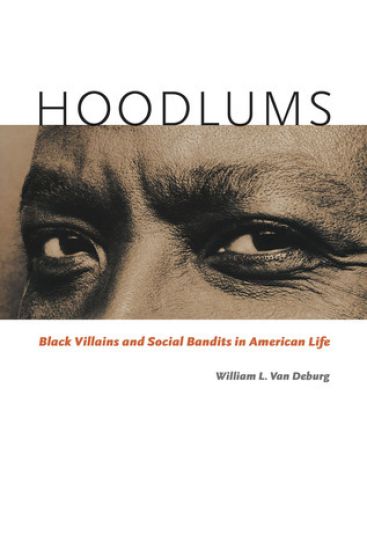
Hoodlums

Hoodlums

William L. Van Deburg

University of Chicago Press
2013
nidottu
Martin Luther King Jr. Malcolm X. Muhammad Ali. When you think of African American history, you think of its heroes - individuals endowed with courage and strength who are celebrated for their bold exploits and nobility of purpose. But what of black villains? Villains, just as much as heroes, have helped define the black experience. Ranging from black slaveholders and frontier outlaws to serial killers and gangsta rappers, Hoodlums examines the pivotal role of black villains in American society and popular culture. Here, William L. Van Deburg offers the most extensive treatment to date of the black badman and the challenges that this figure has posed for race relations in America. He first explores the evolution of this problematic racial stereotype in the literature of the early Republic and then probes antebellum slave laws, minstrel shows, and the works of proslavery polemicists to consider how whites conceptualized blacks as members of an inferior and dangerous race. Turning to key works by blacks themselves, from the writings of Frederick Douglass and W. E. B. Du Bois to classic blaxploitation films like Black Caesar and The Mack, Van Deburg demonstrates how African Americans have combated such negative stereotypes and reconceptualized the idea of the badman through stories of social bandits-controversial individuals vilified by whites for their proclivity toward evil, but revered in the black community as necessarily insurgent and revolutionary.
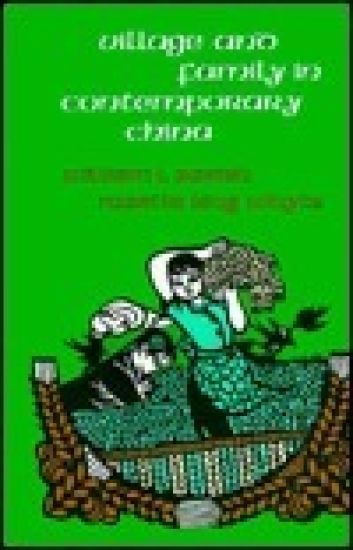
Village and Family in Contemporary China

Village and Family in Contemporary China

William L. Parish; Martin King Whyte

University of Chicago Press
1980
nidottu
After 1949 the Chinese Communists carried out land reform, the collectivization of agriculture, and the formation of people's communes. The new economic and political organizations that emerged have made peasant life more comfortable and secure, but many economic and status differentials and traditional customs remain resistant to change. Focusing on rural Kwangtung province, William L. Parish and Martin King Whyte examine the rural work-incentive system, village equality and inequality, rural health care and education, marriage customs, and the position of women, among other topics, to determine what and how much of the traditional Chinese ways of life is left in Communist China.
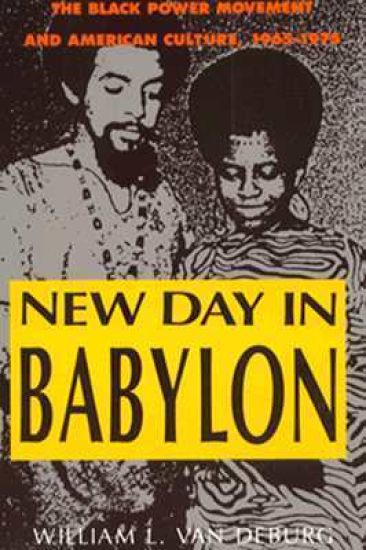
New Day in Babylon

New Day in Babylon

William L. Van Deburg

University of Chicago Press
1993
nidottu
The most comprehensive account available of the rise and fall of the Black Power Movement and of its dramatic transformation of both African-American and larger American culture. With a gift for storytelling and an ear for street talk, William Van Deburg chronicles a decade of deep change, from the armed struggles of the Black Panther party to the cultural nationalism of artists and writers creating a new aesthetic. Van Deburg contends that although its tactical gains were sometimes short-lived, the Black Power movement did succeed in making a revolution—one in culture and consciousness—that has changed the context of race in America."New Day in Babylon is an extremely intelligent synthesis, a densely textured evocation of one of American history's most revolutionary transformations in ethnic group consciousness."—Bob Blauner, New York TimesWinner of the Gustavus Myers Center Outstanding Book Award, 1993
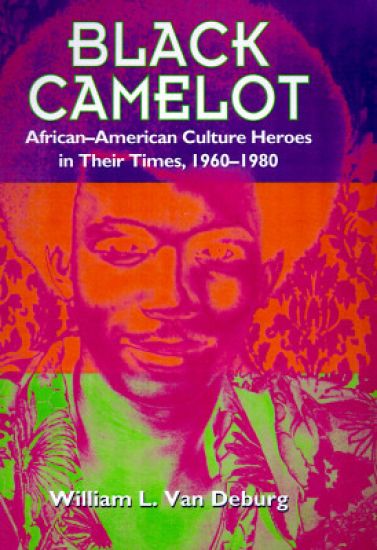
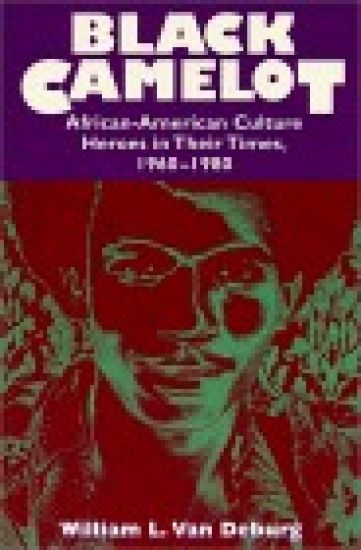
Black Camelot

Black Camelot

William L. Van Deburg

University of Chicago Press
1997
sidottu
Following the Kennedy era, a new kind of ethnic hero emerged in African-American popular culture. Pop icons such as Mohammad Ali, James Brown and Pam Grier projected the values and beliefs of the Civil Rights and Black Power movements, and reflected the possibility and the actuality of a rapidly-changing American landscape. In this book, the author examines the dynamic rise of these new black champions, the social and historical contexts in which they flourished, and their powerful impact on the American scene at large. Coming from all walks of African-American cultural life, these pop heroes, in their very diversity, symbolized both the breadth and the centrality of the Black Power message: sports figures embodied drive, ability, self-assurance and the determination to succeed; creative musicians - blues, jazz and soul artists - challenged convention and celebrated diversity; and, bursting from the pages of pulp fiction or off the big screen, trickster hustlers, black revolutionaries and superstar detectives displayed "street smart" attitudes, worldly wisdom, confidence, competence and commitment. This African-American commitment epitomized a new vision: a multi-racial society in which an individual's intrinsic human worth could be universally recognized and respected together with his unique ethnic identity. The book argues, that, ultimately, the pop medium and its new heroes played for black freedom a vital cultural role, spreading its spirit and substance to a broad audience both within and beyond the African-American community, and offering the principles of liberation, solidarity and pride to those who might otherwise have remained estranged.
Black Camelot

Black Camelot

William L. Van Deburg

University of Chicago Press
1999
nidottu
In the wake of the Kennedy era, a new kind of ethnic hero emerged within African-American popular culture. Uniquely suited to the times, burgeoning pop icons projected the values and beliefs of the Civil Rights and Black Power movements, and reflected both the possibility and the actuality of a rapidly changing American landscape. In this work, William Van Deburg examines the dynamic rise of these new black champions, the social and historical contexts in which they flourished, and their powerful impact on the African-American community.
Hoodlums

Hoodlums

William L. Van Deburg

University of Chicago Press
2004
sidottu
Martin Luther King Jr. Malcolm X. Muhammad Ali. When you think of African American history, you think of its heroes—individuals endowed with courage and strength who are celebrated for their bold exploits and nobility of purpose. But what of black villains? Villains, just as much as heroes, have helped define the black experience.Ranging from black slaveholders and frontier outlaws to serial killers and gangsta rappers, Hoodlums examines the pivotal role of black villains in American society and popular culture. Here, William L. Van Deburg offers the most extensive treatment to date of the black badman and the challenges that this figure has posed for race relations in America. He first explores the evolution of this problematic racial stereotype in the literature of the early Republic—documents in which the enslavement of African Americans was justified through exegetical claims. Van Deburg then probes antebellum slave laws, minstrel shows, and the works of proslavery polemicists to consider how whites conceptualized blacks as members of an inferior and dangerous race. Turning to key works by blacks themselves, from the writings of Frederick Douglass and W. E. B. Du Bois to classic blaxploitation films like Black Caesar and The Mack, Van Deburg demonstrates how African Americans have combated such negative stereotypes and reconceptualized the idea of the badman through stories of social bandits—controversial individuals vilified by whites for their proclivity toward evil, but revered in the black community as necessarily insurgent and revolutionary.Ultimately, Van Deburg brings his story up-to-date with discussions of prison and hip-hop culture, urban rioting, gang warfare, and black-on-black crime. What results is a work of remarkable virtuosity—a nuanced history that calls for both whites and blacks to rethink received wisdom on the nature and prevalence of black villainy.
Time and Complexity in Historical Ecology

Time and Complexity in Historical Ecology

William L. Balée; Clark L. Erickson

Columbia University Press
2006
sidottu
This collection of studies by anthropologists, botanists, ecologists, and biologists is an important contribution to the emerging field of historical ecology. The book combines cutting-edge research with new perspectives to emphasize the close relationship between humans and their natural environment. Contributors examine how alterations in the natural world mirror human cultures, societies, and languages. Treating the landscape like a text, these researchers decipher patterns and meaning in the Ecuadorian Andes, Amazonia, the desert coast of Peru, and other regions in the neotropics. They show how local peoples have changed the landscape over time to fit their needs by managing and modifying species diversity, enhancing landscape heterogeneity, and controlling ecological disturbance. In turn, the environment itself becomes a form of architecture rich with historical and archaeological significance. Time and Complexity in Historical Ecology explores thousands of years of ecological history while also addressing important contemporary issues, such as biodiversity and genetic variation and change. Engagingly written and expertly researched, this book introduces and exemplifies a unique method for better understanding the link between humans and the biosphere.