The book ""Saga Of A Forest Ranger: A Biography Of William R. Kreutzer, Forest Ranger No. 1"" by Len Shoemaker is a detailed account of the life and work of William R. Kreutzer, who was the first forest ranger in the United States. The book provides an in-depth look at Kreutzer's personal and professional life, including his early years, his education, and his career as a forest ranger.The author, Len Shoemaker, has done extensive research on Kreutzer's life and has gathered information from various sources, including interviews with Kreutzer's family members and colleagues. The book is written in a narrative style, which makes it easy to read and understand.The book covers Kreutzer's work in the forest service, including his efforts to protect and preserve the forests of the United States. It also provides insights into the challenges he faced as a forest ranger, including dealing with wildfires, illegal logging, and poaching.In addition to Kreutzer's professional life, the book also explores his personal life, including his family, hobbies, and interests. It provides a well-rounded picture of Kreutzer as a person and a forest ranger.Overall, ""Saga Of A Forest Ranger: A Biography Of William R. Kreutzer, Forest Ranger No. 1"" is an engaging and informative book that will appeal to anyone interested in the history of the forest service and the life of one of its most influential figures.And A Historical Account Of The U. S. Forest Service In Colorado.This scarce antiquarian book is a facsimile reprint of the old original and may contain some imperfections such as library marks and notations. Because we believe this work is culturally important, we have made it available as part of our commitment for protecting, preserving, and promoting the world's literature in affordable, high quality, modern editions, that are true to their original work.
This work has been selected by scholars as being culturally important, and is part of the knowledge base of civilization as we know it. This work was reproduced from the original artifact, and remains as true to the original work as possible. Therefore, you will see the original copyright references, library stamps (as most of these works have been housed in our most important libraries around the world), and other notations in the work.This work is in the public domain in the United States of America, and possibly other nations. Within the United States, you may freely copy and distribute this work, as no entity (individual or corporate) has a copyright on the body of the work.As a reproduction of a historical artifact, this work may contain missing or blurred pages, poor pictures, errant marks, etc. Scholars believe, and we concur, that this work is important enough to be preserved, reproduced, and made generally available to the public. We appreciate your support of the preservation process, and thank you for being an important part of keeping this knowledge alive and relevant.
A man of considerable enthusiasm and energy, Smedberg was in the class of 1926 at the Naval Academy and reported afterward for a year of duty in the USS New Mexico (BB-40). He then spent three years in the destroyer USS Mullany (DD-325) before reporting to the commissioning crew of the heavy cruiser USS Northampton (CA-26). After postgraduate education in communications, he served on the staff of Commander Cruiser Division Three and Commander Cruisers Battle Force, Rear Admiral Harold Stark. Stark took Smedberg as aide when he became CNO in 1939, so this memoir contains a close-up view of Stark in the period just before World War II. During the war, Smedberg was commissioning CO of the destroyers USS Landsdowne (DD-486) and USS Hudson (DD-475), both of which operated in the Solomons. He then served as chief of staff to Rear Admiral A. S. "Tip" Merrill in the Solomons campaign before reporting as intelligence officer to Admiral Ernest J. King's Commander in Chief, U.S. Navy staff. After the war Smedberg was aide to Secretary of the Navy James Forrestal, a destroyer division commander, and a Naval Academy department head. He put the battleship USS Iowa (BB-61) back into commission as skipper during the Korean War and then was chief of staff to Commander Destroyer Force Atlantic Fleet. The second volume begins with a discussion of Smedberg's service in the Politico-Military Division of the OpNav staff. While there, he was selected for rear admiral and moved up to become division director. From 1956 to 1958, he was Superintendent of the Naval Academy, involved in raising funds for a new football stadium and in upgrading both the faculty and methods of instruction. He then spent a few months as Commander Cruiser-Destroyer Force Pacific Fleet and one year as Commander Second Fleet. During the course of the latter command, the fleet was involved in war games against the U.S. Air Force and a NATO exercise. Admiral Smedberg's final tour, as Chief of the Bureau of Naval Personnel, was from 1960 to 1964. His discussion concerns such facets as the introduction of computers to the order-writing process, detailing of flag officers to various billets, interaction between the Navy and political figures, the budgetary process as it concerns naval personnel, and Smedberg's dealings with Admiral Hyman Rickover. Admiral Smedberg's memoir is a particularly interesting one because of his degree of candor.
A man of considerable enthusiasm and energy, Smedberg was in the class of 1926 at the Naval Academy and reported afterward for a year of duty in the USS New Mexico (BB-40). He then spent three years in the destroyer USS Mullany (DD-325) before reporting to the commissioning crew of the heavy cruiser USS Northampton (CA-26). After postgraduate education in communications, he served on the staff of Commander Cruiser Division Three and Commander Cruisers Battle Force, Rear Admiral Harold Stark. Stark took Smedberg as aide when he became CNO in 1939, so this memoir contains a close-up view of Stark in the period just before World War II. During the war, Smedberg was commissioning CO of the destroyers USS Landsdowne (DD-486) and USS Hudson (DD-475), both of which operated in the Solomons. He then served as chief of staff to Rear Admiral A. S. "Tip" Merrill in the Solomons campaign before reporting as intelligence officer to Admiral Ernest J. King's Commander in Chief, U.S. Navy staff. After the war Smedberg was aide to Secretary of the Navy James Forrestal, a destroyer division commander, and a Naval Academy department head. He put the battleship USS Iowa (BB-61) back into commission as skipper during the Korean War and then was chief of staff to Commander Destroyer Force Atlantic Fleet. The second volume begins with a discussion of Smedberg's service in the Politico-Military Division of the OpNav staff. While there, he was selected for rear admiral and moved up to become division director. From 1956 to 1958, he was Superintendent of the Naval Academy, involved in raising funds for a new football stadium and in upgrading both the faculty and methods of instruction. He then spent a few months as Commander Cruiser-Destroyer Force Pacific Fleet and one year as Commander Second Fleet. During the course of the latter command, the fleet was involved in war games against the U.S. Air Force and a NATO exercise. Admiral Smedberg's final tour, as Chief of the Bureau of Naval Personnel, was from 1960 to 1964. His discussion concerns such facets as the introduction of computers to the order-writing process, detailing of flag officers to various billets, interaction between the Navy and political figures, the budgetary process as it concerns naval personnel, and Smedberg's dealings with Admiral Hyman Rickover. Admiral Smedberg's memoir is a particularly interesting one because of his degree of candor.
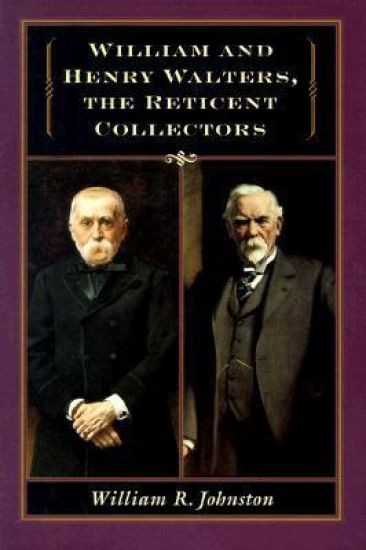
In the mid-nineteenth century, Baltimore businessman William Thompson Walters began to patronize the artists of Maryland. Today, the museum that bears his name-Baltimore's Walters Art Gallery-excels in fields as diverse as Egyptian bronzes, Byzantine silver, illuminated manuscripts, medieval carved ivories, early Renaissance paintings, Sevres porcelains, Islamic metalwork, and Chinese ceramics. Surprisingly, the story of how William Walters and his son Henry created one of the finest privately assembled museums in the United States has not been told. With this new book, William Johnston, the Walters's curator of eighteenth- and nineteenth-century art, restores William and Henry Walters to their rightful place among America's great art collectors. Drawing upon the knowledge of the early museum staff and gathering valuable information from the few other available sources, Johnston has painstakingly recreated the life and world of the Walterses. Though Henry Walters moved easily in Baltimore and New York social circles, Johnston explains, he kept much to himself and generally purchased art away from the public's eye. Despite the Walterses' reticence, they had a significant influence on the development of American tastes and museums-William in his role as the first chairman of the Committee on Works of Art for the Corcoran Gallery in Washington, D.C., and Henry as the second vice-president of the Metropolitan Museum of Art in New York. Their personal collection differs from those of other, more familiar collectors, such as J. P. Morgan and Henry Clay Frick, in that Henry Walters intended from the very first that the collection form a museum to serve the public. When the museum first opened its doors in 1934, Johnston relates, many visitors were surprised by the collection's size and by its comprehensive representation of the history of art from the third millennium b.c. to the early twentieth century. Richly illustrated with black-and-white photographs and sixteen pages of full color, this book will fascinate anyone interested in Baltimore history, the history of museums and art collecting in America, and the art and culture of nineteenth-century America.