The surprising case for liberal nationalismAround the world today, nationalism is back—and it’s often deeply troubling. Populist politicians exploit nationalism for authoritarian, chauvinistic, racist, and xenophobic purposes, reinforcing the view that it is fundamentally reactionary and antidemocratic. But Yael (Yuli) Tamir makes a passionate argument for a very different kind of nationalism—one that revives its participatory, creative, and egalitarian virtues, answers many of the problems caused by neoliberalism and hyperglobalism, and is essential to democracy at its best. In Why Nationalism, she explains why it is more important than ever for the Left to recognize these positive qualities of nationalism, to reclaim it from right-wing extremists, and to redirect its power to progressive ends. Provocative and hopeful, Why Nationalism is a timely and essential rethinking of a defining feature of our politics.
This book focuses on the science fictional dimensions of Rushdie's later novels, Fury, The Ground Beneath Her Feet, Shalimar the Clown and Luka and the Fire of Life, and Rushdie's first unpublished novel, The Antagonist, to show how the author's oeuvre moves towards a more consistent engagement with science fiction as a generic form and an ideological investment. The author demonstrates how Rushdie recreates personal and national histories in a science fictional setting and mode, and contends that the failure of his first novel Grimus may have led Rushdie away from SF for some time, although he returns to it with a much firmer conviction and a much stronger voice in his later novels, showing his commitment to this imaginative form which he describes in Fury as providing "the best popular vehicle ever devised for the novel of ideas and metaphysics."The science fictional mode is the most appropriate vehicle for expressing these thematic and ideological concerns and the organizing feature of Rushdie's oeuvre. The author rereads the later novels in light of recent critical engagement with SF as a vehicle for reimagining national histories and as a potentially subversive tool for social and political engagement in a fictional realm.
Learn intervention strategies to counter the effects of terrorismIn the twenty-first century, terrorism has become an international scourge whose effect devastates individuals, weakens societies, and cripples nations. The Trauma of Terrorism: Sharing Knowledge and Shared Care, An International Handbook and Shared Care provides a comprehensive, penetrating look at the effects of terrorism, at the prevention and treatment of immediate and long-term sequelae, at preparedness for terrorism, and at the range of individual, community, and national responses. International authorities discuss the latest knowledge and research about terror, its root causes, and its psychological impact on individuals, families, societies, and nations, as well as the societal and political responses and services that may help lessen its impact.The Trauma of Terrorism: Sharing Knowledge and Shared Care, An International Handbook analyzes the full scope of terrorism. This compendium explores numerous issues in detail, such as the nature and psychology of terrorism, how to foster a community’s capacity for resilience, the psychosocial consequences of terrorism in children and adults, the centrality of traumatic grief, the need for multicultural understanding in services and treatment, interventions for children and adolescents, training programs for mental health professionals, and proactive community organization in the face of terrorism. Treatment options and services are thoroughly explored and their effectiveness evaluated. Chapters are international in scope, well-referenced, and geared to provide thoroughly reasoned recommendations to lessen the effects of terrorism. Original witness voices from survivors and professionals worldwide give depth to the scientific character of the book. Helpful tables and graphs clearly illustrate data and ideas.The Trauma of Terrorism: Sharing Knowledge and Shared Care, An International Handbook presents in-depth examinations of:The Origins of Terrorism in Modern Society the origin and nature of terrorism terrorism as a strategy of psychological warfare the content and form of terrorism propaganda tactical and strategic terrorism the motivations of suicide bombersThe Psychological Consequences of Terrorism the psychological impact of the September 11, 2001 terrorist attacks the PTSD effects of watching terrorist attacks on television the effects of acute stress symptoms on the general population after a national trauma somatization and bioterrorism the short- and long-term effects of terrorism on an individual the importance of measuring grief in the context of terrorism the psychological burden of bioterrorism the psychological impact of terrorism on children and families post-traumatic distress in adolescents with exposure to ongoing terrorismThe Impact of Terrorism on Individuals, Groups, and Society terrorism’s toll on civil liberties media-oriented terrorism media guidelines for helping reduce individual and national traumatic reactivity to terrorism culture-sensitive interventions in the treatment of terrorism the effects of terrorism on refugeesPsychological First Aid, Acute and Long-Term Treatment Following Terrorist Attacks mental health interventions in hospitals following terrorist attacks treating survivors in an ongoing terrorist situation the treatment of children impacted by the World Trade Center attack traumatic bereavement, and its link to terrorismSchool- and Community-Based Interventions in the Face of Terrorist Attacks the Building Resilience Project-school-based interventions for children community-based interventions like Project Liberty and
Learn intervention strategies to counter the effects of terrorismIn the twenty-first century, terrorism has become an international scourge whose effect devastates individuals, weakens societies, and cripples nations. The Trauma of Terrorism: Sharing Knowledge and Shared Care, An International Handbook and Shared Care provides a comprehensive, penetrating look at the effects of terrorism, at the prevention and treatment of immediate and long-term sequelae, at preparedness for terrorism, and at the range of individual, community, and national responses. International authorities discuss the latest knowledge and research about terror, its root causes, and its psychological impact on individuals, families, societies, and nations, as well as the societal and political responses and services that may help lessen its impact.The Trauma of Terrorism: Sharing Knowledge and Shared Care, An International Handbook analyzes the full scope of terrorism. This compendium explores numerous issues in detail, such as the nature and psychology of terrorism, how to foster a community’s capacity for resilience, the psychosocial consequences of terrorism in children and adults, the centrality of traumatic grief, the need for multicultural understanding in services and treatment, interventions for children and adolescents, training programs for mental health professionals, and proactive community organization in the face of terrorism. Treatment options and services are thoroughly explored and their effectiveness evaluated. Chapters are international in scope, well-referenced, and geared to provide thoroughly reasoned recommendations to lessen the effects of terrorism. Original witness voices from survivors and professionals worldwide give depth to the scientific character of the book. Helpful tables and graphs clearly illustrate data and ideas.The Trauma of Terrorism: Sharing Knowledge and Shared Care, An International Handbook presents in-depth examinations of:The Origins of Terrorism in Modern Society the origin and nature of terrorism terrorism as a strategy of psychological warfare the content and form of terrorism propaganda tactical and strategic terrorism the motivations of suicide bombersThe Psychological Consequences of Terrorism the psychological impact of the September 11, 2001 terrorist attacks the PTSD effects of watching terrorist attacks on television the effects of acute stress symptoms on the general population after a national trauma somatization and bioterrorism the short- and long-term effects of terrorism on an individual the importance of measuring grief in the context of terrorism the psychological burden of bioterrorism the psychological impact of terrorism on children and families post-traumatic distress in adolescents with exposure to ongoing terrorismThe Impact of Terrorism on Individuals, Groups, and Society terrorism’s toll on civil liberties media-oriented terrorism media guidelines for helping reduce individual and national traumatic reactivity to terrorism culture-sensitive interventions in the treatment of terrorism the effects of terrorism on refugeesPsychological First Aid, Acute and Long-Term Treatment Following Terrorist Attacks mental health interventions in hospitals following terrorist attacks treating survivors in an ongoing terrorist situation the treatment of children impacted by the World Trade Center attack traumatic bereavement, and its link to terrorismSchool- and Community-Based Interventions in the Face of Terrorist Attacks the Building Resilience Project-school-based interventions for children community-based interventions like Project Liberty and
A heartfelt collection of extraordinary first-person accounts that delve into every level of the experience of 9/11Out of the infamy of 9/11 and its aftermath people rose up with courage and determination to meet formidable challenges. On the Ground After September 11: Mental Health Responses and Practical Lessons Gained is a stirring compilation of over a hundred personal and professional first-hand accounts of the entire experience, from the moment the first plane slammed into the North Tower of the World Trade Center, to the months mental health professionals worked to ease the pain and trauma of others even while they themselves were traumatized. This remarkable chronicle reveals the breadth and depth of human need and courage along with the practical organizational considerations encountered in the responses to terrorist attacks. The goal of any terrorist act is to instill psychosocial damage to a society to effect change. On the Ground After September 11 provides deep insight into the damage the attack had on our own society, the failures and victories within our response systems, and the path of healing that mental health workers need to travel to be of service to their clients. Personal accounts written by the professionals and public figures involved reveal the broad range of responses to this traumatic event and illuminate how mental health services can most effectively be delivered. Through the benefit of hindsight, recommendations are described for ways to better finance assistance, adapt the training of mental health professionals, and modify organizations’ response to the needs of victims in this type of event. Reading these unique personal accounts of that day and the difficult days that followed provides a thoughtful, moving, rational view of what is truly needed in times of disaster.On the Ground After September 11 includes the first-person experiences and lessons learned from the people of: NYU Downtown Hospital NYC Department of Health and Mental Hygiene NY Metropolitan Transportation Council St. Paul’s Chapel St. Vincent Hospital - Manhattan Safe Horizon LifeNet WTC Incident Command Center at NYC Medical Examiner’s office New Jersey’s Project Phoenix Massachusetts Department of Mental Health the military psychiatric response to the Pentagon attack Connecticut’s Center for Trauma Response, Recovery, and Preparedness the Staten Island Relief Center Barrier Free Living Inc. for people with disabilities the Federal Emergency Management Agency Alianza Dominicana, Inc. Staten Island Mental Health Society the United Airlines Emergency Response Team for Flight 93 The Center for Trauma Response, Recovery, and Preparedness (CTRP) Disaster Mental Health Services (DMHS) at Dulles International Airport the American Red Cross the Respite Center at the Great White Tent HealthCare Chaplaincy The Salvation Army the Islamic Circle of North America The Coalition of Voluntary Mental Health Agencies, Inc. F*E*G*S the Jewish Board of Family and Children's Services (JBFCS) and many, many more On the Ground After September 11: Mental Health Responses and Practical Lessons Gained poignantly illustrates that regardless of profession, culture, religion, or age, every life touched by 9/11 will never be the same. This is essential reading for counselors, psychologists, psychiatrists, social workers, therapists, trauma specialists, educators, and students.
A heartfelt collection of extraordinary first-person accounts that delve into every level of the experience of 9/11Out of the infamy of 9/11 and its aftermath people rose up with courage and determination to meet formidable challenges. On the Ground After September 11: Mental Health Responses and Practical Lessons Gained is a stirring compilation of over a hundred personal and professional first-hand accounts of the entire experience, from the moment the first plane slammed into the North Tower of the World Trade Center, to the months mental health professionals worked to ease the pain and trauma of others even while they themselves were traumatized. This remarkable chronicle reveals the breadth and depth of human need and courage along with the practical organizational considerations encountered in the responses to terrorist attacks. The goal of any terrorist act is to instill psychosocial damage to a society to effect change. On the Ground After September 11 provides deep insight into the damage the attack had on our own society, the failures and victories within our response systems, and the path of healing that mental health workers need to travel to be of service to their clients. Personal accounts written by the professionals and public figures involved reveal the broad range of responses to this traumatic event and illuminate how mental health services can most effectively be delivered. Through the benefit of hindsight, recommendations are described for ways to better finance assistance, adapt the training of mental health professionals, and modify organizations’ response to the needs of victims in this type of event. Reading these unique personal accounts of that day and the difficult days that followed provides a thoughtful, moving, rational view of what is truly needed in times of disaster.On the Ground After September 11 includes the first-person experiences and lessons learned from the people of: NYU Downtown Hospital NYC Department of Health and Mental Hygiene NY Metropolitan Transportation Council St. Paul’s Chapel St. Vincent Hospital - Manhattan Safe Horizon LifeNet WTC Incident Command Center at NYC Medical Examiner’s office New Jersey’s Project Phoenix Massachusetts Department of Mental Health the military psychiatric response to the Pentagon attack Connecticut’s Center for Trauma Response, Recovery, and Preparedness the Staten Island Relief Center Barrier Free Living Inc. for people with disabilities the Federal Emergency Management Agency Alianza Dominicana, Inc. Staten Island Mental Health Society the United Airlines Emergency Response Team for Flight 93 The Center for Trauma Response, Recovery, and Preparedness (CTRP) Disaster Mental Health Services (DMHS) at Dulles International Airport the American Red Cross the Respite Center at the Great White Tent HealthCare Chaplaincy The Salvation Army the Islamic Circle of North America The Coalition of Voluntary Mental Health Agencies, Inc. F*E*G*S the Jewish Board of Family and Children's Services (JBFCS) and many, many more On the Ground After September 11: Mental Health Responses and Practical Lessons Gained poignantly illustrates that regardless of profession, culture, religion, or age, every life touched by 9/11 will never be the same. This is essential reading for counselors, psychologists, psychiatrists, social workers, therapists, trauma specialists, educators, and students.
When people discuss food in Israel, their debates ask politically charged questions: Who has the right to falafel? Whose hummus is better? But Yael Raviv's Falafel Nation moves beyond the simply territorial to divulge the role food plays in the Jewish nation. She ponders the power struggles, moral dilemmas, and religious and ideological affiliations of the different ethnic groups that make up the "Jewish State" and how they relate to the gastronomy of the region. How do we interpret the recent upsurge in the Israeli culinary scene—the transition from ideological asceticism to the current deluge of fine restaurants, gourmet stores, and related publications and media?Focusing on the period between the 1905 immigration wave and the Six-Day War in 1967, Raviv explores foodways from the field, factory, market, and kitchen to the table. She incorporates the role of women, ethnic groups, and different generations into the story of Zionism and offers new assertions from a secular-foodie perspective on the relationship between Jewish religion and Jewish nationalism. A study of the changes in food practices and in attitudes toward food and cooking, Falafel Nation explains how the change in the relationship between Israelis and their food mirrors the search for a definition of modern Jewish nationalism.
Glory and Agony is the first history of the shifting attitudes toward national sacrifice in Hebrew culture over the last century. Its point of departure is Zionism's obsessive preoccupation with its haunting "primal scene" of sacrifice, the near-sacrifice of Isaac, as evidenced in wide-ranging sources from the domains of literature, art, psychology, philosophy, and politics. By placing these sources in conversation with twentieth-century thinking on human sacrifice, violence, and martyrdom, this study draws a complex picture that provides multiple, sometimes contradictory insights into the genesis and gender of national sacrifice. Extending back over two millennia, this study unearths retellings of biblical and classical narratives of sacrifice, both enacted and aborted, voluntary and violent, male and female—Isaac, Ishmael, Jephthah's daughter, Iphigenia, Jesus. Glory and Agony traces the birth of national sacrifice out of the ruins of religious martyrdom, exposing the sacred underside of Western secularism in Israel as elsewhere.
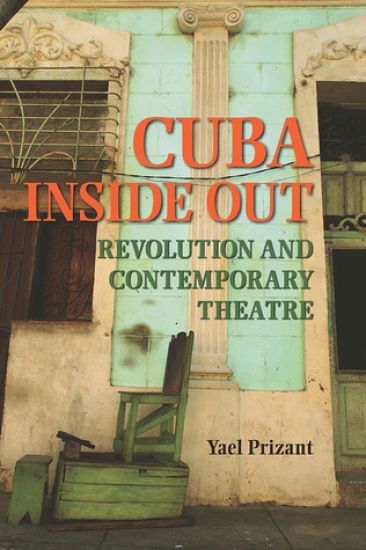
The collapse of the Soviet Union in 1989 drastically altered life in Cuba. Theatre artists were faced with new economic and social realities that changed their day-to-day experiences and ways of looking at the world beyond the island. The Cuban Revolution’s resistance to and intersections with globalization, modernity, emigration and privilege are central to the performances examined in this study.The first book-length study in English of Cuban and Cuban American plays, Cuba Inside Out provides a framework for understanding texts and performances that support, challenge, and transgress boundaries of exile and nationalism. Prizant reveals the intricacies of how revolution is staged theatrically, socially, and politically on the island and in the Cuban diaspora. This close examination of seven plays written since 1985 seeks to alter how U.S. audiences perceive Cuba, its circumstances, and its theatre.
In the late Enlightenment, a new imperative began to inform theories of interpretation: all literary texts should be read in the same way that we read the Bible. However, this assumption concealed a problem-there was no coherent "we" who read the Bible in the same way. In Secularism and Hermeneutics, Yael Almog shows that several prominent thinkers of the era, including Johann Gottfried Herder, Moses Mendelssohn, Immanuel Kant, Georg Wilhelm Friedrich Hegel, and Friedrich Daniel Ernst Schleiermacher, constituted readers as an imaginary "we" around which they could form their theories and practices of interpretation. This conception of interpreters as a universal community, Almog argues, established biblical readers as a coherent collective. In the first part of the book, Almog focuses on the 1760s through the 1780s and examines these writers' works on biblical Hebrew and their reliance on the conception of the Old Testament as a cultural, rather than religious, asset. She reveals how the detachment of textual hermeneutics from confessional affiliation was stimulated by debates on the integration of Jews in Enlightenment Germany. In order for the political community to cohere, she contends, certain religious practices were restricted to the private sphere while textual interpretation, which previously belonged to religious contexts, became the foundation of the public sphere. As interpretive practices were secularized and taken to be universal, they were meant to overcome religious difference. Turning to literature and the early nineteenth century in the second part of the book, Almog demonstrates the ways in which the new literary genres of realism and lyric poetry disrupted these interpretive reading practices. Literary techniques such as irony and intertextuality disturbed the notion of a stable, universal reader's position and highlighted interpretation as grounded in religious belonging. Secularism and Hermeneutics reveals the tension between textual exegesis and confessional belonging and challenges the modern presumption that interpretation is indifferent to religious concerns.
A new translation and interpretation of a seminal fourteenth-century treatise on Tibetan Buddhist meditation Sadhana, which translates as “realization,” is the primary form of meditation in the Tantric Buddhism of Tibet. In this spiritual exercise, practitioners dissolve their ordinary reality—their identity and environment—and in its place visualize an awakened being. Eventually they actually transform into this divine being. In this vital new volume, Yael Bentor offers an invaluable translation of Tsongkhapa Lobzang Drakpa’s famous treatise on this form of meditation. Tsongkhapa was an influential monk, philosopher, and tantric yogi whose activities led to the formation of one of the four main schools of Tibetan Buddhism. His treatise draws fascinating links between tantric practice, cosmogony, and the life cycle of a yogi engaged in the practice. Bentor’s vivid translation, accompanied by her expert introduction and commentary, provides the grounding necessary to properly understand the text, tracing the reception and trajectory of Tsongkhapa’s work through history and evaluating its great relevance up to the present day.
A new translation and interpretation of a seminal fourteenth-century treatise on Tibetan Buddhist meditation Sadhana, which translates as “realization,” is the primary form of meditation in the Tantric Buddhism of Tibet. In this spiritual exercise, practitioners dissolve their ordinary reality—their identity and environment—and in its place visualize an awakened being. Eventually they actually transform into this divine being. In this vital new volume, Yael Bentor offers an invaluable translation of Tsongkhapa Lobzang Drakpa’s famous treatise on this form of meditation. Tsongkhapa was an influential monk, philosopher, and tantric yogi whose activities led to the formation of one of the four main schools of Tibetan Buddhism. His treatise draws fascinating links between tantric practice, cosmogony, and the life cycle of a yogi engaged in the practice. Bentor’s vivid translation, accompanied by her expert introduction and commentary, provides the grounding necessary to properly understand the text, tracing the reception and trajectory of Tsongkhapa’s work through history and evaluating its great relevance up to the present day.
As Zionism took root in Palestine, European Yiddish was employed within a dominant Hebrew context. A complex relationship between cultural politics and Jewish writing ensued that paved the way for modern Israeli culture. This enlightening volume reveals a previously unrecognized, alternative literature that flourished vigorously without legitimacy. Significant examples discussed include ethnically ambiguous fiction of Zalmen Brokhes, minority-oriented works of Avrom Rivess, and culturally pluralistic poetry by Rikuda Potash. The remote locales of these writers, coupled with the exuberant expressiveness of Yiddish, led to unique perceptions of Zionist endeavors in the Yishuv. Using tare archival material and personal interviews, What Must Be Forgotten unearths dimensions largely neglected in mainstream books on Yiddish and/or Hebrew studies.
Tony Soprano, Don Draper, and Walter White ushered in the era of the television antihero, with compelling narratives and complex characters. While critics and academics celebrated these characters, the antiheroines who populatedtelevision screens in the twenty-first century were pushed to the margins and dismissed as "chick TV."In this volume, Yael Levy advances antiheroines to the forefront of television criticism, revealing the varied and subtle ways in which they perform feminist resistance. Offering a retooling of gendered media analyses, Levy finds antiheroism not only in the morally questionable cop and tormented lawyer, but also in the housewife and nurse who inhabit more stereotypical feminine roles. By analyzing Girls, Desperate Housewives, Nurse Jackie, Being Mary Jane, Grey’s Anatomy, Six Feet Under, Sister Wives, and the Real Housewives franchise, Levy explores the narrative complexities of "chick TV" and the radical feminist potential of these shows.
Tony Soprano, Don Draper, and Walter White ushered in the era of the television antihero, with compelling narratives and complex characters. While critics and academics celebrated these characters, the antiheroines who populatedtelevision screens in the twenty-first century were pushed to the margins and dismissed as "chick TV."In this volume, Yael Levy advances antiheroines to the forefront of television criticism, revealing the varied and subtle ways in which they perform feminist resistance. Offering a retooling of gendered media analyses, Levy finds antiheroism not only in the morally questionable cop and tormented lawyer, but also in the housewife and nurse who inhabit more stereotypical feminine roles. By analyzing Girls, Desperate Housewives, Nurse Jackie, Being Mary Jane, Grey’s Anatomy, Six Feet Under, Sister Wives, and the Real Housewives franchise, Levy explores the narrative complexities of "chick TV" and the radical feminist potential of these shows.
The Theatrical Critic as Cultural Agent reconstructs the story of three British playwrights: Harold Pinter, Joe Orton and Tom Stoppard. It traces the process of their acceptance and establishment within the local context of the British theatre, as well as within the larger context of the group of European playwrights associated with the label Theatre of the Absurd . This book focuses on an overlooked link - theatre criticism and reviewing - thereby presenting criticism's role in the process of the formation of a theatrical school . Through an investigation of the practice of criticism in the various cases, this book discloses the mechanisms involved in the process of a new playwright's acceptance - the objectives sought, the repertoire of strategies employed, the subsequent impact on the progress of the playwright's career, and his historical standing in the theatrical canon. Recognizing critical consensus as a driving force in the process that determines a playwright's acceptance into the theatrical canon, this book advances the view that critical acceptance itself determines how history is reconstructed.
The Make-Believe Space is a book of ethnographic and theoretical meditation on the phantasmatic entanglement of materialities in the aftermath of war, displacement, and expropriation. "Northern Cyprus," carved out as a separate space and defined as a distinct (de facto) polity since its invasion by Turkey in 1974, is the subject of this ethnography about postwar politics and social relations. Turkish-Cypriots' sociality in a reforged geography, rid of its former Greek-Cypriot inhabitants after the partition of Cyprus, forms the centerpiece of Yael Navaro-Yashin's conceptual exploration of subjectivity in the context of "ruination" and "abjection." The unrecognized state in Northern Cyprus unfolds through the analytical devices that she develops as she explores this polity's administration and raison d'être via affect theory. Challenging the boundaries between competing theoretical orientations, Navaro-Yashin crafts a methodology for the study of subjectivity and affect, and materiality and the phantasmatic, in tandem. In the process, she creates a subtle and nuanced ethnography of life in the long-term aftermath of war.
The Make-Believe Space is a book of ethnographic and theoretical meditation on the phantasmatic entanglement of materialities in the aftermath of war, displacement, and expropriation. "Northern Cyprus," carved out as a separate space and defined as a distinct (de facto) polity since its invasion by Turkey in 1974, is the subject of this ethnography about postwar politics and social relations. Turkish-Cypriots' sociality in a reforged geography, rid of its former Greek-Cypriot inhabitants after the partition of Cyprus, forms the centerpiece of Yael Navaro-Yashin's conceptual exploration of subjectivity in the context of "ruination" and "abjection." The unrecognized state in Northern Cyprus unfolds through the analytical devices that she develops as she explores this polity's administration and raison d'être via affect theory. Challenging the boundaries between competing theoretical orientations, Navaro-Yashin crafts a methodology for the study of subjectivity and affect, and materiality and the phantasmatic, in tandem. In the process, she creates a subtle and nuanced ethnography of life in the long-term aftermath of war.