Kirjojen hintavertailu. Mukana 11 244 527 kirjaa ja 12 kauppaa.

Kirjahaku

Etsi kirjoja tekijän nimen, kirjan nimen tai ISBN:n perusteella.

1000 tulosta hakusanalla ART WIEDERHOLD

Art of Mindfulness

Art of Mindfulness

Emma Farrarons

Boxtree Ltd
2018
nidottu
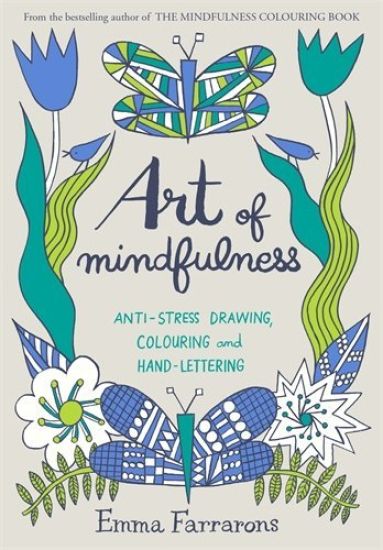
From Emma Farrarons, the bestselling author of The Mindfulness Colouring Book, comes a pocket-sized creative art therapy book to soothe anxiety and eliminate stress.In her trademark chic and sophisticated style, Emma Farrarons offers beautiful templates for you to colour and complete with your own hands. Offering more than colouring in, there are drawings to imitate in perfect symmetry, patterns to create, lettering to copy and pages of guided sketching and doodling. Art of Mindfulness contains everything you can do with a pen and paper to achieve a creative mindful moment during a busy day.Making the most of art as a mindful activity, and small enough to carry around in your bag, Art of Mindfulness is your perfect antidote to the stresses of modern living. So pick up a pen and lose yourself in this pocket-sized book of peace and calm.
Art and Music in the Early Modern Period
The relationship between music and painting in the Early Modern period is the focus of this collection of essays by an international group of distinguished art historians and musicologists. Each writer takes a multidisciplinary approach as he or she explores the interface between music performance and painting, or between music and art theory. The essays reflect a variety and range of approaches and offer methodologies which might usefully be employed in future research in this field. The volume is dedicated to the memory of Franca Trinchieri Camiz, an art historian who worked extensively on topics related to art and music, and who participated in some of the conference panels from which many of these essays originate. Three of Professor Camiz's own essays are included in the final section of this volume, together with a bibliography of her writings in this field. They are preceded by two thematic groups of essays covering aspects of musical imagery in portraits, issues in iconography and theory, and the relationship between music and art in religious imagery.
Art and Memory in the Work of Elizabeth Bishop

Art and Memory in the Work of Elizabeth Bishop

Jonathan Ellis

Ashgate Publishing Limited
2006
sidottu
In Art and Memory in the Work of Elizabeth Bishop, Jonathan Ellis offers evidence for a redirection in Bishop studies toward a more thorough scrutiny of the links between Bishop's art and life. The book is less concerned with the details of what actually happened to Bishop than with the ways in which she refracted key events into writing: both personal, unpublished material as well as stories, poems, and paintings. Thus, Ellis challenges Bishop's reputation as either a strictly impersonal or personal writer and repositions her poetry between the Modernists on the one hand and the Confessionals on the other. Although Elizabeth Bishop was born and died in Massachusetts, she lived a life more bohemian and varied than that of almost all of her contemporaries, a fact masked by the tendency of biographers and critics to focus on Bishop's life in the United States. Drawing on published works and unpublished material overlooked by many critics, Ellis gives equal attention to the influence of Bishop's Canadian upbringing on her art and to the shifts in her aesthetic and personal tastes that took place during Bishop's residence in Brazil during the 1950s and 1960s. By bringing together the whole of Bishop's work, this book opens a welcome new direction in Bishop studies specifically, and in the study of women poets generally.
Art and Identity in Thirteenth-Century Byzantium

Art and Identity in Thirteenth-Century Byzantium

Antony Eastmond

Ashgate Publishing Limited
2004
sidottu
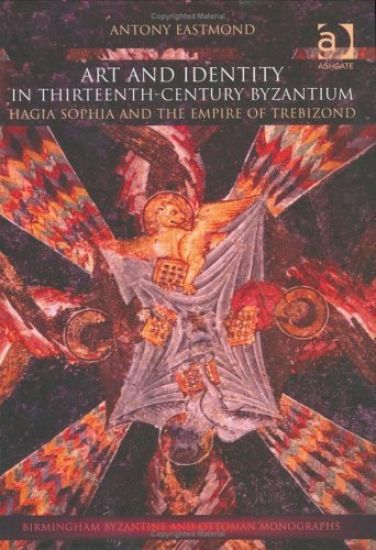
The church of Hagia Sophia in Trebizond, built by the emperor Manuel I Grand Komnenos (1238-63) in the aftermath of the fall of Constantinople to the Fourth Crusade, is the finest surviving Byzantine imperial monument of its period. Art and Identity in Thirteenth-Century Byzantium is the first investigation of the church in more than thirty years, and is extensively illustrated in colour and black-and-white, with many images that have never previously been published. Antony Eastmond examines the architectural, sculptural and painted decorations of the church, placing them in the context of contemporary developments elsewhere in the Byzantine world, in Seljuq Anatolia and among the Caucasian neighbours of Trebizond. Knowledge of this area has been transformed in the last twenty years, following the collapse of the Soviet Union. The new evidence that has emerged enables a radically different interpretation of the church to be reached, and raises questions of cultural interchange on the borders of the Christian and Muslim worlds of eastern Anatolia, the Caucasus and Persia. This study uses the church and its decoration to examine questions of Byzantine identity and imperial ideology in the thirteenth century. This is central to any understanding of the period, as the fall of Constantinople in 1204 divided the Byzantine empire and forced the successor states in Nicaea, Epiros and Trebizond to redefine their concepts of empire in exile. Art is here exploited as significant historical evidence for the nature of imperial power in a contested empire. It is suggested that imperial identity was determined as much by craftsmen and expectations of imperial power as by the emperor's decree; and that this was a credible alternative Byzantine identity to that developed in the empire of Nicaea.
Art and the Transitional Object in Vernon Lee's Supernatural Tales
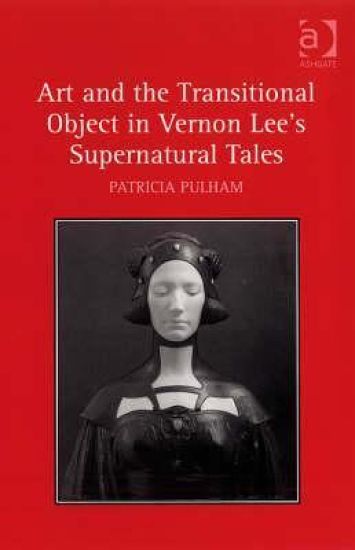
In her persuasively argued study, Patricia Pulham astutely combines psychoanalytic theory with socio-historical criticism to examine a selection of fantastic tales by the female aesthete and intellectual Vernon Lee (Violet Paget, 1856-1935). Lee's own definition of the supernatural in the preface to Hauntings questions the nature of the 'genuine ghost', and argues that this figure is not found in the Society of Psychical Research but in our own psyches, where it functions as a mediator between past and present. Using D.W. Winnicott's 'transitional object' theory, which maintains that adults transfer their childhood engagement with toys to art and cultural artifacts, Pulham argues that the prevalence of the past in Lee's tales signifies not only an historical but a psychic past. Thus the 'ghosts' that haunt Lee's supernatural fiction, as well as her aesthetic, psychological, and historical writings, held complex meanings for her that were fundamental to her intellectual development and allowed her to explore alternative identities that permit the expression of transgressive sexualities.
Art and the Augustinian Order in Early Renaissance Italy

Art and the Augustinian Order in Early Renaissance Italy

Anne Dunlop

Ashgate Publishing Limited
2007
sidottu
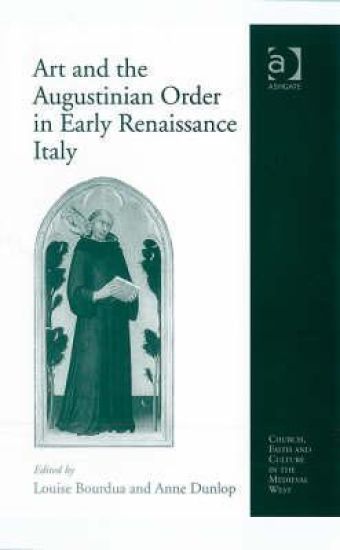
The rise of the mendicant orders in the later Middle Ages coincided with rapid and dramatic shifts in the visual arts. The mendicants were prolific patrons, relying on artworks to instruct and impress their diverse lay congregations. Churches and chapels were built, and new images and iconographies developed to propagate mendicant cults. But how should the two phenomena be related? How much were these orders actively responsible for artistic change, and how much did they simply benefit from it? To explore these questions, Art and the Augustinian Order in Early Renaissance Italy looks at art in the formative period of the Augustinian Hermits, an order with a particularly difficult relation to art. As a first detailed study of visual culture in the Augustinian order, this book will be a basic resource, making available previously inaccessible material, discussing both well-known and more neglected artworks, and engaging with fundamental methodological questions for pre-modern art and church history, from the creation of religious iconographies to the role of gender in art.
Art and Identity in Early Modern Rome

Art and Identity in Early Modern Rome

Ashgate Publishing Limited
2008
sidottu
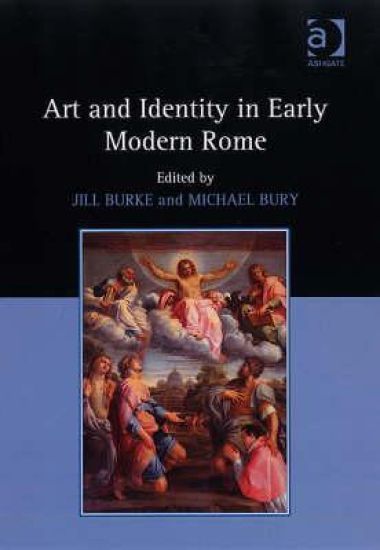
From the late fifteenth to the late seventeenth century, Rome was one of the most vibrant and productive centres for the visual arts in the West. Artists from all over Europe came to the city to see its classical remains and its celebrated contemporary art works, as well as for the opportunity to work for its many wealthy patrons. They contributed to the eclecticism of the Roman artistic scene, and to the diffusion of 'Roman' artistic styles in Europe and beyond. Art and Identity in Early Modern Rome is the first book-length study to consider identity creation and artistic development in Rome during this period. Drawing together an international cast of key scholars in the field of Renaissance studies, the book adroitly demonstrates how the exceptional quality of Roman court and urban culture - with its elected 'monarchy', its large foreign population, and unique sense of civic identity - interacted with developments in the visual arts. With its distinctive chronological span and uniquely interdisciplinary approach, Art and Identity in Early Modern Rome puts forward an alternative history of the visual arts in early modern Rome, one that questions traditional periodisation and stylistic categorisation.
Art, Sex and Eugenics

Art, Sex and Eugenics

Ashgate Publishing Limited
2008
sidottu
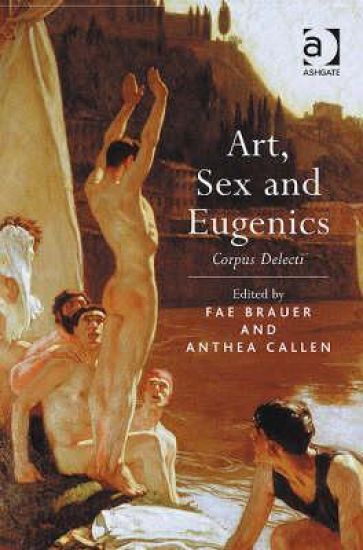
This book reveals how art and sex promoted the desire for the genetically perfect body. Its eight chapters demonstrate that before eugenics was stigmatized by the Holocaust and Western histories were sanitized of its prevalence, a vast array of Western politicians, physicians, eugenic societies, family leagues, health associations, laboratories and museums advocated, through verbal and visual cultures, the breeding of 'the master race'. Each chapter illustrates the uncanny resemblances between models of sexual management and the perfect eugenic body in America, Britain, France, Communist Russia and Nazi Germany both before and after the Second World War. Traced back to the eighteenth-century anatomy lesson, the perfect eugenic body is revealed as athletic, hygienic, 'pure-blooded' and sexually potent. This paradigm is shown to have persisted as much during the Bolshevik sexual revolution, as in democratic nations and fascist regimes. Consistently posed naked, these images were unashamedly exhibitionist and voyeuristic. Despite stringent legislation against obscenity, not only were these images commended for soliciting the spectator's gaze but also for motivating the spectator to act out their desire. An examination of the counter-archives of Maori and African Americans also exposes how biologically racist eugenics could be equally challenged by art. Ultimately this book establishes that art inculcated procreative sex with the Corpus Delecti - the delectable body, healthy, wholesome and sanctioned by eugenicists for improving the Western race.
Art and Communication in the Reign of Henry VIII

Art and Communication in the Reign of Henry VIII

Tatiana C. String

Ashgate Publishing Limited
2008
sidottu
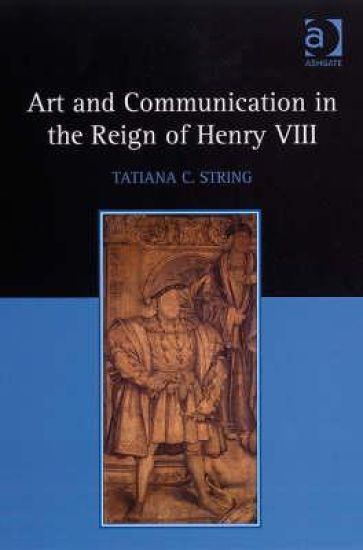
Exploring the intersection between art and political ideology, this innovative study of art in Henrician England sheds new light on the ways in which Henry VIII and his advisers exploited visual images in order to communicate ideas to his subjects. The works analyzed include water triumphs, coronation pageants and funeral processions, printed title pages of vernacular Bibles, coins, portrait miniatures, and murals, as well as panel paintings. With her analysis of these categories of objects, and using communication theory as a starting point, String presents a new model of communication based on the concepts of magnificence, topicality, persuasiveness, and propaganda. Through this model she shows how medium, location, display, and viewership were all considered in the transmission of royal messages. Using the art of Henry VIII's reign as a case study, String enriches our understanding of the fundamental contribution of imagery to communication, and also provides a model for the study of the dissemination of ideas and the patron-artist relationship in other royal courts and historical periods.
Art and Visual Culture on the French Riviera, 1956–1971

Art and Visual Culture on the French Riviera, 1956–1971

Rosemary O'Neill

Ashgate Publishing Limited
2012
sidottu
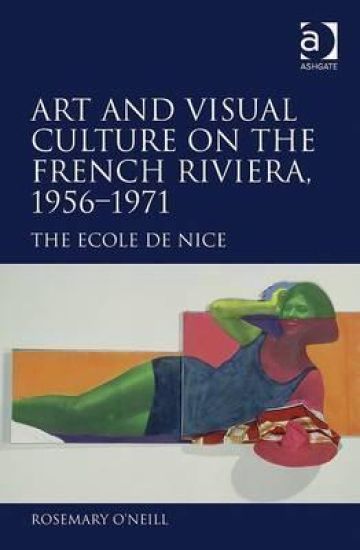
The Riviera in the 1950s and 1960s was culturally rich with modernist icons such as Matisse and Picasso in residence, but also a burgeoning tourist culture, that established the Côte d'Azur as a center of indigenous artists associated with Nouveau Réalisme, Fluxus, and Supports/Surfaces, emerged under the mantle of the "Ecole de Nice." Drawing on the primary sources and little known publications generated during the period from museum archives, collections in the region, and privately owned archives, this study integrates material published in monographic studies of individuals and art movements, to offer the first in-depth study of this important movement in twentieth-century art. The author situates the work of the Ecole de Nice within the broader social currents that are so important in contextualizing this phenomenon within this internal region of France, and underscores why this work was so significant at this historical moment within the context of the broader European art scene, and contemporary American art, with which it shared affinities. Despite their stylistic differences, and associations with groups that are generally considered distinct, O'Neill discloses that these artists shared conceptual affinities”theatrical modes of presentation based on appropriation, use of the ready-made, and a determination to counter style-driven painting associated with the postwar Ecole de Paris. Art and Visual Culture on the Riviera, 1956-1971 suggests that the emergence of an Ecole de Nice internally eroded the dominance of Paris as the national standard at this moment of French decentralization efforts, and that these artists fostered a model of aesthetic pluralism that remained locally distinct yet fully engaged with international vanguard trends of the 1960s.
Art, Imagination and Christian Hope

Art, Imagination and Christian Hope

Gavin Hopps

Ashgate Publishing Limited
2012
sidottu
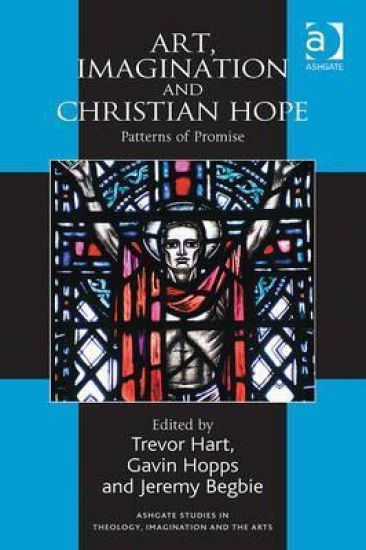
In hope, Christian faith reconfigures the shape of what is familiar in order to pattern the contours of God's promised future. In this process, the present is continuously re-shaped by ventures of hopeful and expectant living. In art, this same poetic interplay between past, present and future takes specific concrete forms, furnishing vital resources for sustaining an imaginative ecology of hope. This volume attends to the contributions that architecture, drama, literature, music and painting can make, as artists trace patterns of promise, resisting the finality of modernity's despairing visions and generating hopeful living in a present which, although marked by sin and death, is grasped imaginatively as already pregnant with future.
Art and the Relic Cult of St. Antoninus in Renaissance Florence

Art and the Relic Cult of St. Antoninus in Renaissance Florence

Sally J. Cornelison

Ashgate Publishing Limited
2012
sidottu
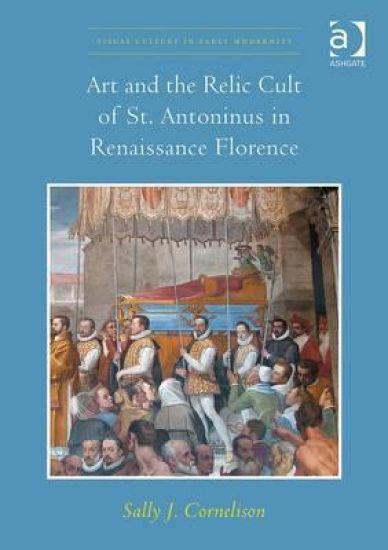
Tracing the history of St. Antoninus' cult and burial from the time of his death in 1459 until his remains were moved to their final resting place in 1589, this interdisciplinary study demonstrates that the saint's relic cult was a key element of Florence's sacred cityscape. The works of art created in his honor, as well as the rituals practiced at his fifteenth- and sixteenth-century places of burial, advertised Antoninus' saintly power and persona to the people who depended upon his intercessory abilities to negotiate life's challenges. Drawing on a rich variety of contemporary visual, literary, and archival sources, this volume explores the ways in which shifting political, familial, and ecclesiastical aims and agendas shaped the ways in which St. Antoninus' holiness was broadcast to those who visited his burial church. Author Sally Cornelison foregrounds the visual splendor of the St. Antoninus Chapel, which was designed, built, and decorated by Medici court artist Giambologna and his collaborators between 1579 and 1591. Her research sheds new light on the artist, whose secular and mythological sculptures have received far more scholarly attention than his religious works. Cornelison draws on social and religious history, patronage and gender studies, and art historical and anthropological inquiries into the functions and meanings of images, relics, and ritual performance, to interpret how they activated St. Antoninus' burial sites and defined them in ways that held multivalent meanings for a broad audience of viewers and devotees. Among the objects for which she provides visual and contextual analyses are a banner from the saint's first tomb, early printed and painted images, and the sculptures, frescoes, panel paintings, and embroidered textiles made for the present St. Antoninus Chapel.
Art as Music, Music as Poetry, Poetry as Art, from Whistler to Stravinsky and Beyond
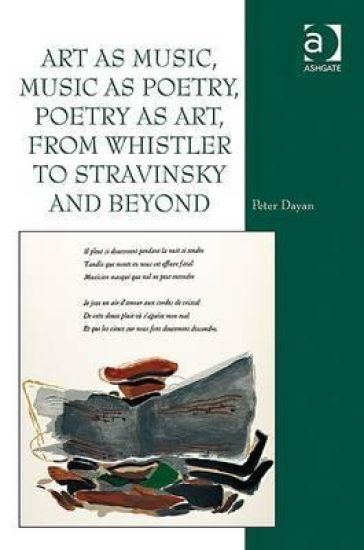
In 1877, Ruskin accused Whistler of ’flinging a pot of paint in the public’s face’. Was he right? After all, Whistler always denied that the true function of art was to represent anything. If a painting does not represent, what is it, other than mere paint, flung in the public’s face? Whistler’s answer was simple: painting is music - or it is poetry. Georges Braque, half a century later, echoed Whistler’s answer. So did Braque’s friends Apollinaire and Ponge. They presented their poetry as music too - and as painting. But meanwhile, composers such as Satie and Stravinsky were presenting their own art - music - as if it transposed the values of painting or of poetry. The fundamental principle of this intermedial aesthetic, which bound together an extraordinary fraternity of artists in all media in Paris, from 1885 to 1945, was this: we must always think about the value of a work of art, not within the logic of its own medium, but as if it transposed the value of art in another medium. Peter Dayan traces the history of this principle: how it created our very notion of ’great art’, why it declined as a vision from the 1960s and how, in the 21st century, it is fighting back.
Art, History and the Senses

Art, History and the Senses

Ashgate Publishing Limited
2010
sidottu
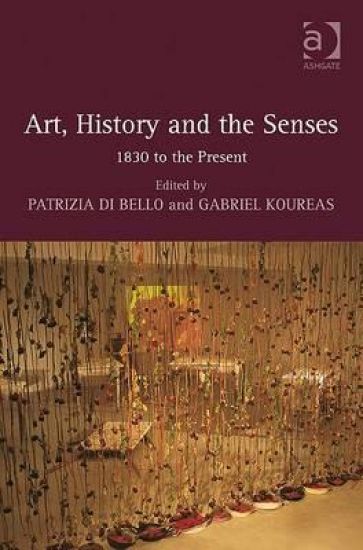
Should sight trump the other four senses when experiencing and evaluating art? Art, History and the Senses: 1830 to the Present questions whether the authority of the visual in 'visual culture' should be deconstructed, and focuses on the roles of touch, taste, smell, and sound in the materiality of works of art. From the nineteenth century onward, notions of synaesthesia and the multi-sensorial were important to a series of art movements from Symbolism to Futurism and Installations. The essays in this collection evaluate works of art at specific moments in their history, and consider how senses other than the visual have (or have not) affected the works' meaning. The result is a re-evaluation of sensory knowledge and experience in the arts, encouraging a new level of engagement with ideas of style and form.
Art, Piety and Destruction in the Christian West, 1500–1700
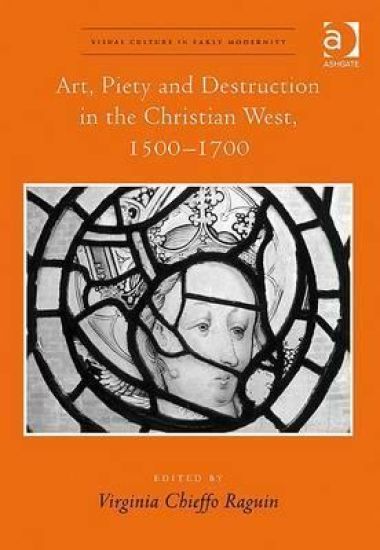
Spanning two centuries and two continents, Art, Piety and Destruction in the Christian West, 1500-1700 addresses the impact of religious tensions on art, design, and architecture in the early modern world. Beyond famous works of art such as Kraft's Eucharistic Tabernacle, the volume examines less-studied objects, including church plate and vestments, stained glass, graffiti, and Mexican images of St. Anne, created throughout the sixteenth and seventeenth centuries. The collection's contributors present religious artworks from Germany, England, Italy, France, Spain, and Mexico; the media include sculpture, oil painting, fresco, metalwork, dress, and architecture. Questions of art's destruction, preservation, and censorship are discussed against the ever-present backdrop of religious conflict and varying degrees of tolerance. New information and original perspectives demonstrate the ways in which art illuminates history, and the close links between the changing values of a society and the images it displays to represent itself.
Art Practice in a Digital Culture

Art Practice in a Digital Culture

Ashgate Publishing Limited
2010
sidottu
Much as art history is in the process of being transformed by new information communication technologies, often in ways that are either disavowed or resisted, art practice is also being changed by those same technologies. One of the most obvious symptoms of this change is the increasing numbers of artists working in universities, and having their work facilitated and supported by the funding and infrastructural resources that such institutions offer. This new paradigm of art as research is likely to have a profound effect on how we understand the role of the artist and of art practice in society. In this unique book, artists, art historians, art theorists and curators of new media reflect on the idea of art as research and how it has changed practice. Intrinsic to the volume is an investigation of the advances in creative practice made possible via artists engaging directly with technology or via collaborative partnerships between practitioners and technological experts, ranging through a broad spectrum of advanced methods from robotics through rapid prototyping to the biological sciences.
Art of Pastry

Art of Pastry

Catherine Atkinson

Lorenz Books
2016
sidottu
This beautiful book provides a complete guide to making delicious pastry, with plenty of tips and illustrated techniques, so that even novice pastry cooks will achieve excellent results. Choose from sweet and savoury recipes from around the world
Art of Palm Reading

Art of Palm Reading

Mendoza Staci

Lorenz Books
2013
sidottu
This is a practical guide to character analysis and divination through the ancient art of palm reading. It is a practical guide to palm and hand analysis with clear photographs and illustrations to help you identify lines, shapes and skin patterns. You can discover the secrets of your destiny and interpret your character, and that of your family and friends, with the ancient and mysterious art of palmistry. It is a fascinating clues to the character types and personality traits, which can be revealed by the palms. It includes step-by-step sequences on how to conduct your own palm reading session. A compelling book, which will give you the power to gain insight into your own life, and those of your friends and family, illustrated throughout in over 200 evocative and practical images. Each of us has a distinct pattern of lines, mounts, whorls and signs on our hands that can change throughout life, giving fascinating insight into the workings of our head, heart, fate and fortune. Co-written by a professional palm reader, this intriguing handbook reveals the secrets of hand and palm reading, giving you a thorough introduction to all the basic aspects of palmistry.The ancient art of palmistry has its roots in the East and dates as far back as 3200bc. The practice was much respected by the Victorians and, today, its mysteries are regaining popular recognition. You can learn how hand shape can determine character type, how lines can give accurate dates for life events, and how skin patterns can even reveal personality traits. After reading this book you will never look at a pair of hands in the same way again.
Art Box - How to Draw and Paint (4-Book Slipcase)
This magnificently illustrated box set explores the four most popular art mediums and techniques. How to Paint with Watercolours discusses brushwork, texturing, line and wash, and masking; How to Paint with Oils & Acrylics deals with mixing paints, knife painting, underpainting and glazing; How to Learn the Art of Drawing explains how to work in monochrome, how to draw with pencils, and the mechanics of drawing; and How to Draw with Pastels shows how to mix pastels, use charcoal, lay a textured ground, and how to create sgraffito effects. Together, the four volumes provide an invaluable practical reference for any amateur artist keen to improve their skills.