Kirjojen hintavertailu. Mukana 11 699 587 kirjaa ja 12 kauppaa.

Kirjahaku

Etsi kirjoja tekijän nimen, kirjan nimen tai ISBN:n perusteella.

1000 tulosta hakusanalla Aaron Allen

Contesting Identities

Contesting Identities

Aaron Baker

University of Illinois Press
2006
nidottu
Analysis of race, class and gender in American sports films Since the earliest days of the silent era, American filmmakers have been drawn to the visual spectacle of sports and their compelling narratives of conflict, triumph, and individual achievement. In Contesting Identities Aaron Baker examines how these cinematic representations of sports and athletes have evolved over time--from The Pinch Hitter and Buster Keaton's College to White Men Can't Jump, Jerry Maguire, and Girlfight. He focuses on how identities have been constructed and transcended in American society since the early twentieth century. Whether depicting team or individual sports, these films return to that most American of themes, the master narrative of self-reliance. Baker shows that even as sports films tackle socially constructed identities like class, race, ethnicity, sexuality, and gender, they ultimately underscore transcendence of these identities through self-reliance. Looking at films from almost every sporting genre--with a particular focus on movies about boxing, baseball, basketball, and football--Contesting Identities maps the complex cultural landscape depicted in American sports films and the ways in which stories about "subaltern" groups winning acceptance by the mainstream majority can serve to reinforce the values of that majority. In addition to discussing the genre's recurring dramatic tropes, from the populist prizefighter to the hot-headed rebel to the "manly" female athlete, Baker also looks at the social and cinematic impacts of real-life sports figures from Jackie Robinson and Babe Didrikson Zaharias to Muhammad Ali and Michael Jordan.
Steven Soderbergh

Steven Soderbergh

Aaron Baker

University of Illinois Press
2011
nidottu
A Hollywood director who blends substance with the mainstream Steven Soderbergh's feature films present a diverse range of subject matter and formal styles: from the self-absorption of his breakthrough hit Sex, Lies, and Videotape to populist social problem films such as Erin Brockovich, and from the modernist discontinuity of Full Frontal and filmed performance art of Gray's Anatomy to a glossy, star-studded action blockbuster such as Ocean's Eleven. Using a combination of realism and expressive stylization of character subjectivity, Soderbergh's films diverge from the contemporary Hollywood mainstream through the statements they offer on issues including political repression, illegal drugs, violence, environmental degradation, the empowering and controlling potential of digital technology, and economic inequality. Arguing that Soderbergh practices an eclectic type of moviemaking indebted both to the European art cinema and the Hollywood genre film, Aaron Baker charts the common thematic and formal patterns present across Soderbergh's oeuvre. Almost every movie centers on an alienated main character, and Soderbergh has repeatedly emphasized place as a major factor in his narratives. Formally, he represents the unconventional thinking of his outsider protagonists through a discontinuous editing style. Including detailed analyses of major films as well as two interviews with the director, this volume illustrates Soderbergh's hybrid flexibility in bringing an independent aesthetic to wide audiences.
Jazz Radio America

Jazz Radio America

Aaron J. Johnson

UNIVERSITY OF ILLINOIS PRESS
2024
nidottu
Once a lively presence on radio, jazz now finds itself relegated to satellite broadcasters and low-watt stations at the edge of the dial. Aaron J. Johnson examines jazz radio from the advent of Black radio in 1948 to its near extinction from the commercial dial after 1980. Even in jazz’s heyday, programmers and DJs excluded many styles and artists, and Johnson delves into how the politics of decision-making and the political uses of the medium shaped jazz radio formats. Johnson shows radio’s role in the contradictory perceptions of jazz as American’s model artistic contribution to the world, as Black classical music, and as the soundtrack of African American rebellion and resistance for much of the twentieth century. An interwoven story of a music and a medium, Jazz Radio America answers perennial questions about why certain kinds of jazz get played and why even that music is played in so few places.
Ftm

Ftm

Aaron Devor; Jamison Green

Indiana University Press
2016
pokkari
In this ground-breaking study, Aaron Devor provides a compassionate, intimate, and incisive look at the life experiences of forty-five trans men. Emerging into 21st-century political and social conversations, questions persist. Who are they? How do they come to know themselves as men? What do they do about it? How do their families respond? Who are their lovers? What does it mean for everyone else? To answer these and other questions, Devor spent years compiling in-depth interviews and researching the lives of transsexual and transgender people. Here, he traces the everyday and significant events that coalesce into trans identities, culminating in gender and sex transformations. Using trans men's own words as illustrations, Devor looks at how childhood, adolescence, and adult experiences with family members, peers, and lovers work to shape and clarify their images of themselves as men. With a new introduction, Devor positions the volume in twenty-first century debates of identity politics and community-building and provides a window into his own self-exploration as a result of his research.
Beyond Coloniality

Beyond Coloniality

Aaron Kamugisha

Indiana University Press
2019
sidottu
Against the lethargy and despair of the contemporary Anglophone Caribbean experience, Aaron Kamugisha gives a powerful argument for advancing Caribbean radical thought as an answer to the conundrums of the present. Beyond Coloniality is an extended meditation on Caribbean thought and freedom at the beginning of the 21st century and a profound rejection of the postindependence social and political organization of the Anglophone Caribbean and its contentment with neocolonial arrangements of power. Kamugisha provides a dazzling reading of two towering figures of the Caribbean intellectual tradition, C. L. R. James and Sylvia Wynter, and their quest for human freedom beyond coloniality. Ultimately, he urges the Caribbean to recall and reconsider the radicalism of its most distinguished 20th-century thinkers in order to imagine a future beyond neocolonialism.
Beyond Coloniality

Beyond Coloniality

Aaron Kamugisha

INDIANA UNIVERSITY PRESS
2022
pokkari
Against the lethargy and despair of the contemporary Anglophone Caribbean experience, Aaron Kamugisha gives a powerful argument for advancing Caribbean radical thought as an answer to the conundrums of the present. Beyond Coloniality is an extended meditation on Caribbean thought and freedom at the beginning of the 21st century and a profound rejection of the postindependence social and political organization of the Anglophone Caribbean and its contentment with neocolonial arrangements of power. Kamugisha provides a dazzling reading of two towering figures of the Caribbean intellectual tradition, C. L. R. James and Sylvia Wynter, and their quest for human freedom beyond coloniality. Ultimately, he urges the Caribbean to recall and reconsider the radicalism of its most distinguished 20th-century thinkers in order to imagine a future beyond neocolonialism.
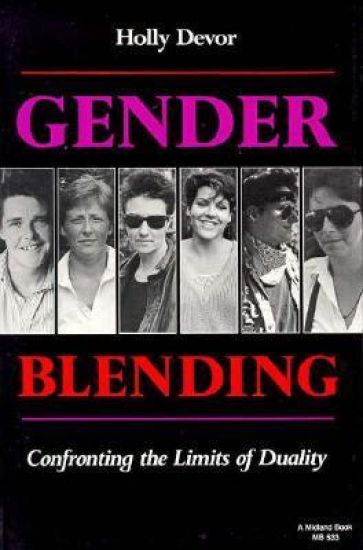
Gender Blending

Gender Blending

Aaron Devor

Indiana University Press
1989
pokkari
Gender Blending examines the social construction of gender and its implications for the lives of gender blending females and for society in general. Aaron Devor constructs a theory which interprets gender as a social distinction related to, but different from, biological sex. Devor defines gender as a status learned by displaying the culturally defined insignia of the gender category with which one identifies. Fifteen women who have to varying degrees rejected traditional femininity, but not their femaleness, discuss their lives with Devor. These women, sometimes mistaken for men, choose to minimize their female vulnerability in a patriarchal world by minimizing their femininity. During childhood, their reaction to their secondary status in society, as potential victims of violence and exploitation, was often to be a tomboy. Now, in adulthood, their gender identity does not fit either of the two roles socially and culturally defined as feminine and masculine. Gender Blending offers a deeper appreciation of the social construction of gender. Any woman who has questioned the value of the concept of femininity will find the experiences of these gender blending females revealing and important to a view of woman's place in the patriarchy.
The Art of Dialogue in Jewish Philosophy

The Art of Dialogue in Jewish Philosophy

Aaron W. Hughes

Indiana University Press
2007
pokkari
Aaron W. Hughes presents the first major study of dialogue as a Jewish philosophical practice. Examining connections between Jewish philosophy, the literary form in which it is expressed, and the culture in which it is produced, Hughes shows how Jews understood and struggled with their social, religious, and intellectual environments. In this innovative and insightful book, Hughes addresses various themes associated with the literary form of dialogue as well as its philosophical reception: Why did various thinkers choose dialogue? What did it allow them to accomplish? How do the literary features of dialogue construct philosophical argument? As a history of philosophical form, context, and practice, this book will interest scholars and students working at the intersections of religious studies, philosophy, and literature.
The Invention of Jewish Identity

The Invention of Jewish Identity

Aaron W. Hughes

Indiana University Press
2010
pokkari
Jews from all ages have translated the Bible for their particular times and needs, but what does the act of translation mean? Aaron W. Hughes believes translation has profound implications for Jewish identity. The Invention of Jewish Identity presents the first sustained analysis of Bible translation and its impact on Jewish philosophy from the medieval period to the 20th century. Hughes examines some of the most important Jewish thinkers—Saadya Gaon, Moses ibn Ezra, Maimonides, Judah Messer Leon, Moses Mendelssohn, Martin Buber, and Franz Rosenzweig—and their work on biblical narrative, to understand how linguistic and conceptual idioms change and develop into ideas about the self. The philosophical issues behind Bible translation, according to Hughes, are inseparable from more universal sets of questions that affect Jewish life and learning.
Boom-Bust Cycles and Financial Liberalization

Boom-Bust Cycles and Financial Liberalization

Aaron Tornell; Frank Westermann

MIT Press
2005
pokkari
Analysis and evidence of how the factors that give rise to boom-bust cycles in fast-growing developing economies also enhance long-run growth.The volatility that has hit many middle-income countries (MICs) after liberalizing their financial markets has prompted critics to call for new policies to stabilize these boom-bust cycles. But, as Aaron Tornell and Frank Westermann point out in this book, over the last two decades most of the developing countries that have experienced lending booms and busts have also exhibited the fastest growth among MICs. Countries with more stable credit growth, by contrast, have exhibited, on average, lower growth rates. Factors that contribute to financial fragility thus appear, paradoxically, to be a source of long-run growth as well. Tornell and Westermann analyze boom-bust cycles in the developing world and discuss how these cycles are generated by credit market imperfections. They explain why the financial liberalization that allows countries to overcome imperfections impeding rapid growth also generates the financial fragility that leads to greater volatility and occasional crises. The conceptual framework they present illustrates this linkage and allows Tornell and Westermann to address normative questions regarding liberalization policies.The authors also characterize key macroeconomic regularities observed across MICs, showing that credit markets play a key role not only in boom-bust episodes but in the strong "credit channel" observed during tranquil times. A theoretical framework is then presented that explains how credit market imperfections can account for these empirical patterns. Finally, Tornell and Westermann provide microeconomic evidence on the credit market imperfections that drive the results of the theoretical framework, finding that asymmetries between tradables and nontradables are key to understanding the patterns in MIC data.
The Trouble with Pleasure

The Trouble with Pleasure

Aaron Schuster

MIT Press
2016
pokkari
An investigation into the strange and troublesome relationship to pleasure that defines the human being, drawing on the disparate perspectives of Deleuze and Lacan.Is pleasure a rotten idea, mired in negativity and lack, which should be abandoned in favor of a new concept of desire? Or is desire itself fundamentally a matter of lack, absence, and loss? This is one of the crucial issues dividing the work of Gilles Deleuze and Jacques Lacan, two of the most formidable figures of postwar French thought. Though the encounter with psychoanalysis deeply marked Deleuze's work, we are yet to have a critical account of the very different postures he adopted toward psychoanalysis, and especially Lacanian theory, throughout his career. In The Trouble with Pleasure, Aaron Schuster tackles this tangled relationship head on. The result is neither a Lacanian reading of Deleuze nor a Deleuzian reading of Lacan but rather a systematic and comparative analysis that identifies concerns common to both thinkers and their ultimately incompatible ways of addressing them. Schuster focuses on drive and desire-the strange, convoluted relationship of human beings to the forces that move them from within-"the trouble with pleasure."Along the way, Schuster offers his own engaging and surprising conceptual analyses and inventive examples. In the "Critique of Pure Complaint" he provides a philosophy of complaining, ranging from Freud's theory of neurosis to Spinoza's intellectual complaint of God and the Deleuzian great complaint. Schuster goes on to elaborate, among other things, a theory of love as "mutually compatible symptoms"; an original philosophical history of pleasure, including a hypothetical Heideggerian treatise and a Platonic theory of true pleasure; and an exploration of the 1920s "literature of the death drive," including Thomas Mann, Italo Svevo, and Blaise Cendrars.
The End of Ownership

The End of Ownership

Aaron Perzanowski; Jason Schultz

MIT Press
2018
pokkari
An argument for retaining the notion of personal property in the products we "buy" in the digital marketplace.If you buy a book at the bookstore, you own it. You can take it home, scribble in the margins, put in on the shelf, lend it to a friend, sell it at a garage sale. But is the same thing true for the ebooks or other digital goods you buy? Retailers and copyright holders argue that you don't own those purchases, you merely license them. That means your ebook vendor can delete the book from your device without warning or explanation-as Amazon deleted Orwell's 1984 from the Kindles of surprised readers several years ago. These readers thought they owned their copies of 1984. Until, it turned out, they didn't. In The End of Ownership, Aaron Perzanowski and Jason Schultz explore how notions of ownership have shifted in the digital marketplace, and make an argument for the benefits of personal property.Of course, ebooks, cloud storage, streaming, and other digital goods offer users convenience and flexibility. But, Perzanowski and Schultz warn, consumers should be aware of the tradeoffs involving user constraints, permanence, and privacy. The rights of private property are clear, but few people manage to read their end user agreements. Perzanowski and Schultz argue that introducing aspects of private property and ownership into the digital marketplace would offer both legal and economic benefits. But, most important, it would affirm our sense of self-direction and autonomy. If we own our purchases, we are free to make whatever lawful use of them we please. Technology need not constrain our freedom; it can also empower us.
How to Research Like a Dog

How to Research Like a Dog

Aaron Schuster

MIT PRESS LTD
2024
nidottu
A provocative book that proposes a new and surprising inspiration for philosophy today the canine thinker from Kafka s story 'Investigations of a Dog.' Written toward the end of Kafka s life, 'Investigations of a Dog' (Forschungen eines Hundes, 1922) is one of the lesser-known and most enigmatic works in the author s oeuvre. Walter Benjamin remarked that it was the one story he never managed to figure out. Kafka s tale of philosophical adventure is that of a lone, maladjusted dog who challenges the dogmatism of established science and pioneers an original research program in pursuit of the mysteries of his self and his world. Schuster revisits this text, using the canine as a guide dog through which to rediscover Kafka s fictional universe, while taking up the cause of this ingenious, possessed, melancholy, comical, and revolutionary thinker. Neither an exercise in literary criticism nor a traditional philosophical commentary, this charming and idiosyncratic book aligns itself with and develops the research program of Kafka s dog. It constructs an 'impossible' system based on the fourfold division of nourishment, music, incantation, and freedom or, stated a bit differently: enjoyment, art, institutions, and freedom. Schuster puts the dog in dialogue with psychoanalytic theory (Freud and Lacan), the history of philosophy (Plato, Diogenes, Descartes, Kierkegaard, German Idealism, Marx, phenomenology), and literature (Gogol, Melville, Flaubert, Cervantes, Lispector). Imagining the 'Unknown University' that Kafka s new science calls for, the book enlists new comrades in the dog s struggle.
Repairing Play

Repairing Play

Aaron Trammell

MIT PRESS LTD
2023
nidottu
A provocative study that reconsiders our notion of play--and how its deceptively wholesome image has harmed and erased people of color. Contemporary theorists present play as something wholly constructive and positive. But this broken definition is drawn from a White European philosophical tradition that ignores the fact that play can, and often does, hurt. In fact, this narrow understanding of play has been complicit in the systemic erasure of Black, Indigenous, and People of Color (BIPOC) from the domain of leisure. In this book, Aaron Trammell proposes a corrective: a radical reconsideration of play that expands its definition to include BIPOC suffering, subjugation, and taboo topics such as torture. As he challenges and decolonizes White European thought, Trammell maps possible ways to reconcile existing theories with the fact that play is often hurtful and toxic. Trammell upends current notions by exploring play's function as a tool in the subjugation of BIPOC. As he shows, the phenomenology of play is a power relationship. Even in innocent play, human beings subtly discipline each other to remain within unspoken rules. Going further, Trammell departs from mainstream theory to insist that torture can be play. Approaching it as such reveals play's role in subjugating people in general and renders visible the long-ignored experiences of BIPOC. Such an inclusive definition of play becomes a form of intellectual reparation, correcting the notion that play must give pleasure while also recasting play in a form that focuses on the deep, painful, and sometimes traumatic depths of living.
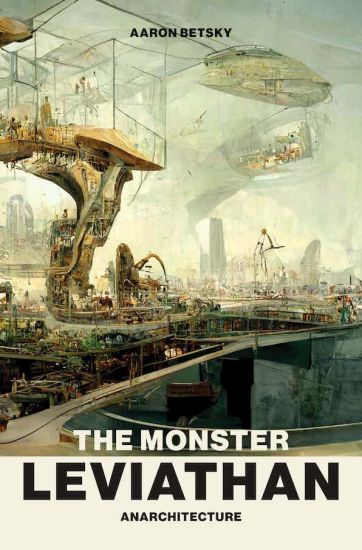
The Monster Leviathan

The Monster Leviathan

Aaron Betsky

MIT PRESS LTD
2024
pokkari
Visionary proposals for a mythic and strange architecture—or anarchitecture—through which we can imagine other and better worlds.Lurking under the surface of our modern world lies an unseen architecture—or anarchitecture. It is a possible architecture, an analogous architecture, an architecture of anarchy, which haunts in the form of monsters that are humans and machines and cities all at once; or takes the form of explosions, veils, queer, playful spaces, or visions from artwork and video games. In The Monster Leviathan, Aaron Betsky traces anarchitecture through texts, design, and art of the twentieth and early twenty-first century, and suggests that these ephemeral evocations are concrete proposals in and of themselves. Neither working models nor suggestions for new forms, they are scenes just believable enough to convince us they exist, or just fantastical enough to open our eyes.The Monster Leviathan gives students and lovers of architecture, as well as those hoping to construct a better, more sustainable, and socially just future, a set of tools through which they can imagine that such other worlds are possible. As Betsky eloquently articulates, anarchitecture already exists and does not exist at all. It is the myth of building, and all we have to do is find it.
Weapons in Space

Weapons in Space

Aaron Bateman

MIT PRESS LTD
2024
nidottu
A new and provocative take on the formerly classified history of accelerating superpower military competition in space in the late Cold War and beyond. In March 1983, President Ronald Reagan shocked the world when he established the Strategic Defense Initiative (SDI), derisively known as "Star Wars," a space-based missile defense program that aimed to protect the US from nuclear attack. In Weapons in Space, Aaron Bateman draws from recently declassified American, European, and Soviet documents to give an insightful account of SDI, situating it within a new phase in the militarization of space after the superpower d tente fell apart in the 1970s. In doing so, Bateman reveals the largely secret role of military space technologies in late-Cold War US defense strategy and foreign relations. In contrast to existing narratives, Weapons in Space shows how tension over the role of military space technologies in American statecraft was a central source of SDI's controversy, even more so than questions of technical feasibility. By detailing the participation of Western European countries in SDI research and development, Bateman reframes space militarization in the 1970s and 1980s as an international phenomenon. He further reveals that even though SDI did not come to fruition, it obstructed diplomatic efforts to create new arms control limits in space. Consequently, Weapons in Space carries the legacy of SDI into the post-Cold War era and shows how this controversial program continues to shape the global discourse about instability in space--and the growing anxieties about a twenty-first-century space arms race.
The Political Thought of David Hume

The Political Thought of David Hume

Aaron Alexander Zubia

UNIVERSITY OF NOTRE DAME PRESS
2024
sidottu
Aaron Alexander Zubia argues that the Epicurean roots of David Hume's philosophy gave rise to liberalism's unrelenting grip on the modern political imagination. Eighteenth-century Scottish philosopher David Hume has had an outsized impact on the political thinkers who came after him, from the nineteenth-century British Utilitarians to modern American social contract theorists. In this thorough and thoughtful new work, Aaron Alexander Zubia examines the forces that shaped Hume's thinking within the broad context of intellectual history, with particular focus on the ancient Greek philosopher Epicurus and the skeptical tradition. Zubia argues that through Hume's influence, Epicureanism—which elevates utility over moral truth—became the foundation of liberal political philosophy, which continues to dominate and limit political discourse today.
The Political Thought of David Hume

The Political Thought of David Hume

Aaron Alexander Zubia

UNIVERSITY OF NOTRE DAME PRESS
2026
nidottu
Aaron Alexander Zubia argues that the Epicurean roots of David Hume's philosophy gave rise to liberalism's unrelenting grip on the modern political imagination. Eighteenth-century Scottish philosopher David Hume has had an outsized impact on the political thinkers who came after him, from the nineteenth-century British Utilitarians to modern American social contract theorists. In this thorough and thoughtful new work, Aaron Alexander Zubia examines the forces that shaped Hume's thinking within the broad context of intellectual history, with particular focus on the ancient Greek philosopher Epicurus and the skeptical tradition. Zubia argues that through Hume's influence, Epicureanism—which elevates utility over moral truth—became the foundation of liberal political philosophy, which continues to dominate and limit political discourse today.
Political Intelligence and the Creation of Modern Mexico, 1938–1954

Political Intelligence and the Creation of Modern Mexico, 1938–1954

Aaron W. Navarro

Pennsylvania State University Press
2010
sidottu
Mexican politics in the twentieth century was dominated by two complementary paradigms: the rhetoric of the Mexican Revolution and the existence of an “official” party. The Mexican Revolution has enjoyed a long and voluminous historiography; the “official” party has not. While the importance of the Revolution as a historical period is self-evident, the development of a party based on the political aspirations of the surviving revolutionary elites has not generally sparked as much historical interest. This book traces the path of the party, founded as the Partido Nacional Revolucionario (PNR), through its reformation as the Partido de la Revolución Mexicana (PRM) in 1938 and then as the Partido Revolucionario Institucional (PRI) in 1946, which finally fell from power in 2000. Aaron Navarro shows how the transformation of the PRM into the PRI, the removal of the military from electoral politics, the resettlement of younger officers in the intelligence services, and the inculcation of a new discipline among political elites all produced the conditions that allowed for the dominance of a single-party structure for decades.
Political Intelligence and the Creation of Modern Mexico, 1938–1954

Political Intelligence and the Creation of Modern Mexico, 1938–1954

Aaron W. Navarro

Pennsylvania State University Press
2012
pokkari
Mexican politics in the twentieth century was dominated by two complementary paradigms: the rhetoric of the Mexican Revolution and the existence of an “official” party. The Mexican Revolution has enjoyed a long and voluminous historiography; the “official” party has not. While the importance of the Revolution as a historical period is self-evident, the development of a party based on the political aspirations of the surviving revolutionary elites has not generally sparked as much historical interest. This book traces the path of the party, founded as the Partido Nacional Revolucionario (PNR), through its reformation as the Partido de la Revolución Mexicana (PRM) in 1938 and then as the Partido Revolucionario Institucional (PRI) in 1946, which finally fell from power in 2000. Aaron Navarro shows how the transformation of the PRM into the PRI, the removal of the military from electoral politics, the resettlement of younger officers in the intelligence services, and the inculcation of a new discipline among political elites all produced the conditions that allowed for the dominance of a single-party structure for decades.