Kirjojen hintavertailu. Mukana 11 417 157 kirjaa ja 12 kauppaa.

Kirjahaku

Etsi kirjoja tekijän nimen, kirjan nimen tai ISBN:n perusteella.

1000 tulosta hakusanalla Adam J Pollack

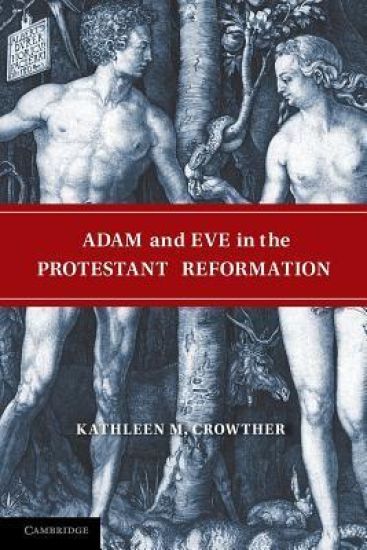
Adam and Eve in the Protestant Reformation

Adam and Eve in the Protestant Reformation

Kathleen M. Crowther

Cambridge University Press
2013
pokkari
The story of Adam and Eve, ubiquitous in the art and literature of the period, played a central role in the religious controversies of sixteenth-century Europe. This is the first book to explore stories about Adam and Eve in German Lutheran areas and to analyze their place in Lutheran culture and identity. Kathleen Crowther examines Lutheran versions of the story of Adam and Eve in bibles, commentaries, devotional tracts, sermons, plays, poems, medical and natural history texts, and woodcut images. Her research identifies how Lutheran storytellers differentiated their unique versions of the story from those of their medieval predecessors and their Catholic and Calvinist contemporaries. She also explores the appeal of the story of Adam and Eve to Lutherans as a means to define, defend and disseminate their distinctive views on human nature, original sin, salvation, marriage, family, gender relations and social order.
Adam Smith

Adam Smith

Fay C. R.

Cambridge University Press
2011
pokkari
The Augustan Age in Scotland was the half-century between the publication of Hume's Treatise on Human Nature and the death of Robert Burns in 1796. In this period Edinburgh was at her height as a cultural centre. This is a 1956 study of eminent Scot Adam Smith - author of The Wealth of Nations - and the Scotland in which he lived and wrote. It also examines the contribution which he and his fellow-countrymen made to the accomplishment of the eighteenth century in many fields. Dr Fay begins with a brief account of Smith's life, and goes on to describe the eighteenth-century Kirkcaldy where he spent his youth, the Glasgow where he matured, and the Edinburgh which gave him fulfilment. We are told of the part Smith played in the development of Political Economy as a science, and the book closes with an account of his relationships with such men as Townshend, Gibbon and Benjamin Franklin.
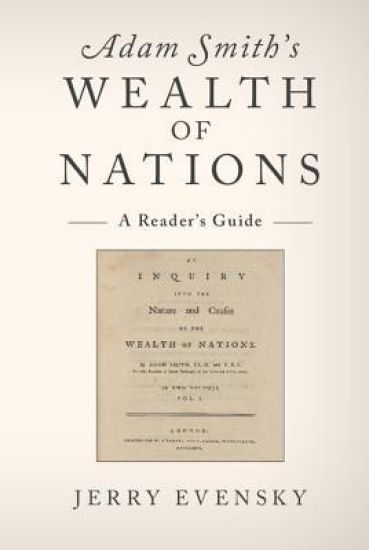
Adam Smith's Wealth of Nations

Adam Smith's Wealth of Nations

Jerry Evensky

Cambridge University Press
2015
pokkari
Adam Smith's The Wealth of Nations is regarded by many as the most important text in the history of economics. Jerry Evensky's analysis of this landmark book walks the reader through the five 'Books' of The Wealth of Nations, analyzing Smith's terms and assumptions and how they are developed into statements about economic processes in Book I, his representation of the dynamics of economics systems in Book II, and his empirical case for his model in Book III. With that framework in place, Evensky examines Smith's critique of alternative models, mercantilism and physiocracy, in Book IV, and Smith's presentation of the policy implications of his analysis presented in Book V. This guide highlights the nexus of Smith's economics and his work on ethics and jurisprudence, and in doing so Evensky sets his examination of The Wealth of Nations into a larger, holistic analysis of Smith's moral philosophy.
Adam Smith’s Equality and the Pursuit of Happiness
This book examines Adam Smith’s main principles in Wealth of Nations as the basis for effective policymaking. Adam Smith wanted to increase happiness through this formula for a good life: equality, liberty, and justice. Free market interpretations of Smith, the book argues, grossly misrepresent his thought, emphasizing only liberty and not also equality and justice. This book suggests policies that combine all three in order for happiness to be maximized.
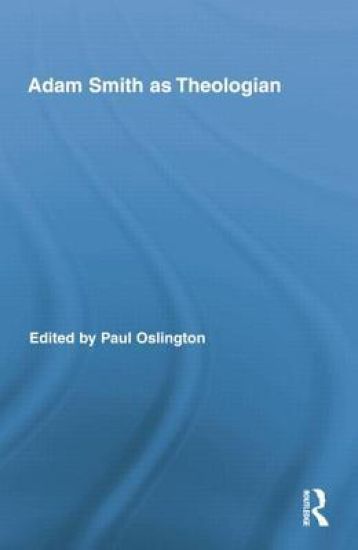
Adam Smith as Theologian
Adam Smith wrote in a Scotland where Calvinism, Continental natural law theory, Stoic philosophy, and the Newtonian tradition of scientific natural theology were key to the intellectual lives of his contemporaries. But what impact did these ideas have on Smith’s system? What was Smith’s understanding of nature, divine providence, and theodicy? How was the new discourse of political economy positioned in relation to moral philosophy and theology? In this volume a team of distinguished contributors consider Smith’s work in relation to its Scottish Enlightenment religious background, and offer stimulating theological interpretations of his account of fallible human nature, his providential account of markets, and his invisible hand metaphor. Adam Smith as Theologian it is a pioneering study which will alter our view of Smith and open up new lines of thinking about contemporary economics.
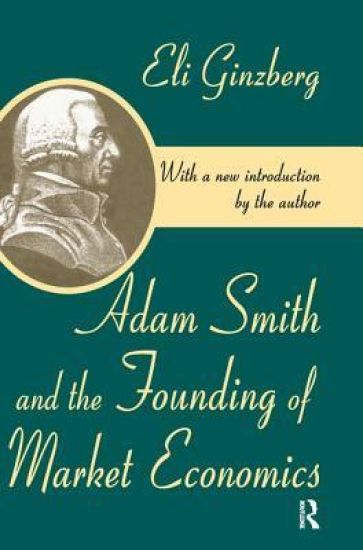
Adam Smith and the Founding of Market Economics
"Business is a necessary evil that the moral leaders of mankind have tolerated but never condoned. At no time did they view with favor the pursuit of material gain. The Old Testament prophets proclaimed against the rapacity of the rich. Jesus scorned the money lenders. Luther had no kind words to say to the wealthy, nor did Calvin indulge the new bourgeoisie." Thus begins this fi rst book-length study of social philosopher and political economist Adam Smith's The Wealth of Nations. Adam Smith (1723-1790) was a Scottish-born thinker who served as both professor of logic and professor of moral philosophy at Glasgow University. While the publication of his philosophic treatise The Theory of Moral Sentiments at age thirty-six gave Smith fame, The Wealth of Nations, published in 1776, has established his lasting reputation. Recognized in its own day as an important and compassionate examination of economics, the book was praised by Thomas Jefferson for its contribution to the fi eld of economics. Smith wrote The Wealth of Nations for several reasons: he was disgusted with the business methods practiced by merchants and manufacturers, and he was concerned with improving the well-being of society. Refl ecting his own concerns about the contribution economics could make to the betterment of society, Eli Ginzberg published this study of Smith's humanitarian views on commerce, industrialism, and labor. Written for his doctoral degree at Columbia University, and originally published as The House of Adam Smith, the book is divided into two parts. The fi rst part reconstructs and interprets Smith's classic The Wealth of Nations, while the second part examines Smith as the patron saint and prophet of the successes of nineteenthcentury capitalism. Adam Smith and the Founding of Market Economics is a fascinating study, and contributes signifi cantly to our understanding of capitalism, free trade, the division of management and labor, and the history of world economics in the nineteenth century. Its republication, with a new introduction by the author, will be valued by economists, political historians, students of philosophy, and policymakers.
Adam Ferguson: Philosophy, Politics and Society
Unique among the leading figures of the Scottish Enlightenment, Ferguson saw two eighteenth-century revolutions, the American and the French. This monograph contains a set of essays that analyse Ferguson's philosophical, political and sociological writings and the discourse which they prompted between Ferguson and other important figures.
Adam Ferguson: History, Progress and Human Nature
Unique among the leading figures of the Scottish Enlightenment, Ferguson saw two eighteenth-century revolutions, the American and the French. This monograph contains essays that range across all of Ferguson's works to investigate his engagement with contemporary events and his contributions to our understanding of history and human action.