

Kirjahaku
Etsi kirjoja tekijän nimen, kirjan nimen tai ISBN:n perusteella.
1000 tulosta hakusanalla Alan G Greer
Figure conception and figure characterisation in Alan Ayckbourn's "Things we do for love"
Sabrina Triml
Grin Publishing
2008
pokkari

Internet Arama Motorlari ve Kamusal Alan
Turkiye Alim Kitaplar
2015
pokkari

L'injustice raciale dans le livre d'Alan Paton "Cry, the Beloved Country".
Mateso Bashingwa
Editions Notre Savoir
2022
nidottu
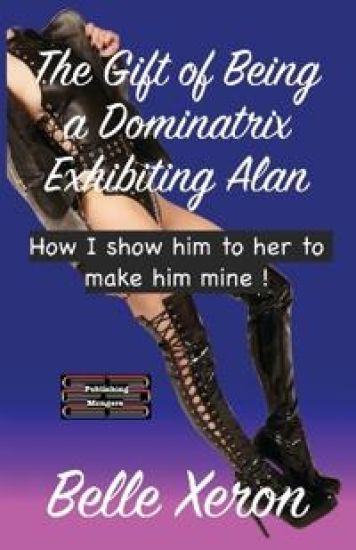
Welcome to another session with me wherein I take in a new couple as clients. A particular session where it is upto you to decide who is the actual client, but there is no doubt as to who is the slave. Having clients, or rather slaves who are not there on their own free will, and are awaiting a surprise make the experience overtly riveting. Usually, it is about the needs of the slave, but when the client is not the slave, it becomes more about the client's needs rather than the slave's, and an apology is long overdue. My slaves come in all shapes and sizes, with different kinks and fetishes, but there rarely are those who have their session decided by someone else. This one is about Alan and Rita, and their unorthodox definition of punishment, and it really is a captivating one. My slaves make my job the best job in the world and this is my gift - THE GIFT OF BEING A DOMINATRIX.
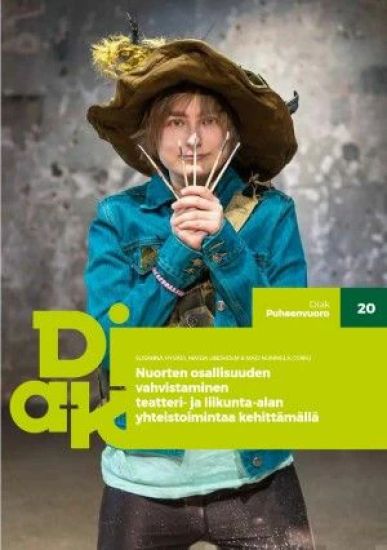
Nuorten osallisuuden vahvistaminen teatteri- ja liikunta-alan yhteistoimintaa kehittämällä
Diakonia-ammattikorkeakoulu
2019
nidottu
Kokemus osallisuudesta ja elämän merkityksellisyydestä syntyy vuorovaikutuksessa muiden ihmisten kanssa. Yhteisöllisyys ja tunne ryhmään kuulumisesta vahvistavat myös muita elämän osa-alueita. Nuorille suunnatun Osallistava ja liikunnallinen teatteri -hankkeen harrastusryhmissä yhdistettiin kulttuuria ja liikuntaa rennolla tavalla. Tässä teoksessa kuvataan, kuinka nuoret löysivät itsestään uusia puolia ja vahvuuksia sekä heittäytyivät mukaan ryhmätoimintaan. Nuorten parissa työskenteli teatteri- ja liikunta-alan ammattilaisia, ja ryhmätoiminnan keskiössä oli toiminnallisuus, itseilmaisu sekä toisen kohtaaminen. Julkaisu on suunnattu etenkin nuorisoalan ammattilaisille, mutta myös kaikille nuorten osallisuuden tukemisesta kiinnostuneille. Teos sisältää myös toiminnallisia harjoituksia, jotka sopivat nuorten kanssa työskentelyyn esimerkiksi ryhmäytymistilanteissa tai improvisaatioharjoituksissa sekä tunteiden tutkimisen tueksi. Teos on Osallistava ja liikunnallinen teatteri -hankkeen loppujulkaisu. Vuosina 2016-2019 toiminutta hanketta koordinoi Diakonia-ammattikorkeakoulu, ja osatoteuttajina olivat Kainuun Liikunta ry, Kajaanin kaupunginteatteri, Loisto setlementti ry, Q-teatteri ry ja WAU ry. Hanke sai rahoitusta Euroopan sosiaalirahastolta.
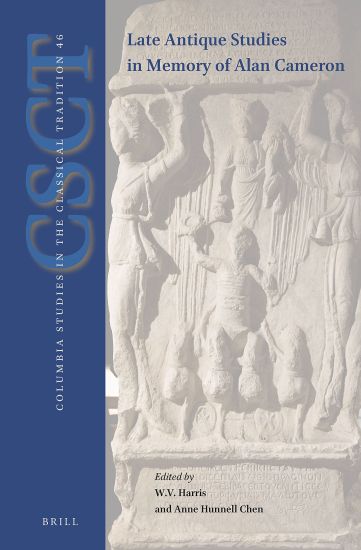
Late-Antique Studies in Memory of Alan Cameron
BRILL
2021
sidottu
The classicist and historian Alan Cameron (1938-2017) was, among other achievements, one of the scholars who most contributed to the refoundation of late-antique studies. In this tribute W. V. Harris and Anne Hunnell Chen have brought together fourteen contributions that cover a broad range of historical, literary, and art-historical topics, running from the first century AD to the ninth. Some contributions concern Cameron’s own favourite themes (the Greek Anthology, the Historia Augusta, circus factions, the transmission of texts), while others seek to assess his work and its impact. Other papers branch out from his concerns to discuss slavery, simony, and hospitals. Fourth- and fifth-century writers are often to the fore and the volume includes a new text by the poet Dioscoros of Aphrodite.


The Hobbit & the Lord of the Rings Illustrated by Alan Lee Box Set: Illustrated by Alan Lee
J. R. R. Tolkien
William Morrow Company
2025
sidottu

Heterocyclic Chemistry in the 21st Century: A Tribute to Alan Katritzky
Academic Press Inc
2017
sidottu
Advances in Heterocyclic Chemistry: Heterocyclic Chemistry in the 21st Century: A Tribute to Alan Katritzky is the definitive series in the field—one of great importance to organic chemists, polymer chemists, and many biological scientists. Because biology and organic chemistry increasingly intersect, the associated nomenclature is used more frequently in explanations. Written by established, global authorities in the field, this comprehensive review combines descriptive synthetic chemistry and mechanistic insights to yield an understanding on how chemistry drives the preparation and useful properties of heterocyclic compounds.
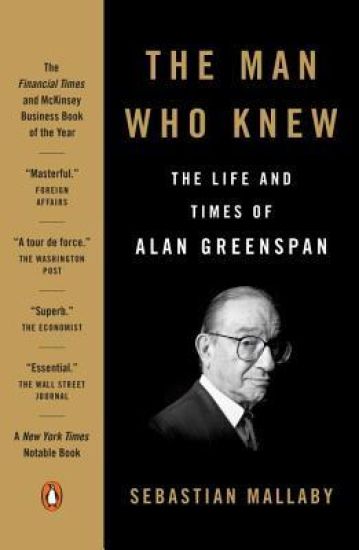
The Man Who Knew: The Life and Times of Alan Greenspan
Sebastian Mallaby
Penguin Publishing Group
2017
nidottu
"Exceptional . . . Deeply researched and elegantly written . . . As a description of the politics and pressures under which modern independent central banking has to operate, the book is incomparable." --Financial Times The definitive biography of the most important economic statesman of our time, from the bestselling author of The Power Law and More Money Than God Sebastian Mallaby's magisterial biography of Alan Greenspan, the product of over five years of research based on untrammeled access to his subject and his closest professional and personal intimates, brings into vivid focus the mysterious point where the government and the economy meet. To understand Greenspan's story is to see the economic and political landscape of our time--and the presidency from Reagan to George W. Bush--in a whole new light. As the most influential economic statesman of his age, Greenspan spent a lifetime grappling with a momentous shift: the transformation of finance from the fixed and regulated system of the post-war era to the free-for-all of the past quarter century. The story of Greenspan is also the story of the making of modern finance, for good and for ill. Greenspan's life is a quintessential American success story: raised by a single mother in the Jewish migr community of Washington Heights, he was a math prodigy who found a niche as a stats-crunching consultant. A master at explaining the economic weather to captains of industry, he translated that skill into advising Richard Nixon in his 1968 campaign. This led to a perch on the White House Council of Economic Advisers, and then to a dazzling array of business and government roles, from which the path to the Fed was relatively clear. A fire-breathing libertarian and disciple of Ayn Rand in his youth who once called the Fed's creation a historic mistake, Mallaby shows how Greenspan reinvented himself as a pragmatist once in power. In his analysis, and in his core mission of keeping inflation in check, he was a maestro indeed, and hailed as such. At his retirement in 2006, he was lauded as the age's necessary man, the veritable God in the machine, the global economy's avatar. His memoirs sold for record sums to publishers around the world. But then came 2008. Mallaby's story lands with both feet on the great crash which did so much to damage Alan Greenspan's reputation. Mallaby argues that the conventional wisdom is off base: Greenspan wasn't a na ve ideologue who believed greater regulation was unnecessary. He had pressed for greater regulation of some key areas of finance over the years, and had gotten nowhere. To argue that he didn't know the risks in irrational markets is to miss the point. He knew more than almost anyone; the question is why he didn't act, and whether anyone else could or would have. A close reading of Greenspan's life provides fascinating answers to these questions, answers whose lessons we would do well to heed. Because perhaps Mallaby's greatest lesson is that economic statesmanship, like political statesmanship, is the art of the possible. The Man Who Knew is a searching reckoning with what exactly comprised the art, and the possible, in the career of Alan Greenspan.

Song After All: The Letters of Reginald Shepherd and Alan Contreras
Reginald Shepherd; Robert Philen; Evan Eisenberg
Cranedance Pub
2013
nidottu
The Mayor of Folsom Street: The Auto/Biography of "Daddy Alan" Selby aka Mr. S
Jordy Jones
Fair Page Media, LLC
2017
nidottu
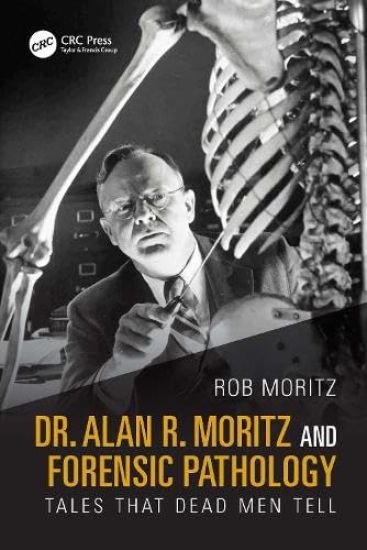
Forensic science has become a mainstay of popular culture on television, in movies, books, and podcasts. Dr. Alan R. Moritz (1899-1986) was a highly influential figure in the development of the field of forensic science as we know it today.Dr. Alan R. Moritz and Forensic Pathology: Tales that Dead Men Tell, written by Dr. Moritz’s journalist grandson Rob Moritz, recounts his life and career from personal papers and correspondence, interviews, newspaper accounts and other sources, including archived materials from Harvard Medical School, the Rockefeller Foundation, Case Western Reserve University and the University Hospitals of Cleveland. Chapters chronicle more than a half-century of ground-breaking research and high-profile investigations, including some of the 20th century’s most infamous cases. This includes the assassination of President John F. Kennedy, the Sam Shepherd case, the Cocoanut Grove nightclub fire, the Attica prison riots and the Texas Tower sniper, as well as his contributions to the well-known Nutshell Studies of Unexplained Death. Dr. Moritz, the inspiration for the first on-screen forensic scientist, is credited with being one of the most prominent pioneers of the last century, helping to move forensic medicine from the political jurisdiction of untrained local coroners to a respected scientific discipline that fascinates the public.The book also details Dr. Moritz’s travels, during which he experienced some of society’s darkest chapters. This includes an infamous lynching during the “Red Summer” of 1919, the rise of Nazi Germany and the degradation of apartheid in South Africa, all of which influenced and shaped his worldview. Highlights of Dr. Moritz’s work, recounted in detail, include career stops at Case Western Reserve University in Cleveland and Harvard Medical School in Boston. Coverage details his most salient and well-known research—as well as insightful anecdotes and stories that demonstrate Dr. Moritz’s character and the development and evolution of his scientific views over the years.This book:Profiles the life of a well-known and impactful figure in the advancement of forensic pathology’s public perception and practices in the United States.Provides background on Dr. Moritz’s seminal work, the article Classical Mistakes in Forensic Pathology Is of interest to medical practitioners, history of science buffs, and forensic practitioners interested in the early history and development of forensic pathology as a disciplineDr. Alan R. Moritz and Forensic Pathology fills in a missing chapter on the life, research, and lasting legacy of Dr. Moritz, providing insight into the development of modern forensic pathology practice by examining the momentous contributions and character of one of its true pioneers.
Forensic science has become a mainstay of popular culture on television, in movies, books, and podcasts. Dr. Alan R. Moritz (1899-1986) was a highly influential figure in the development of the field of forensic science as we know it today.Dr. Alan R. Moritz and Forensic Pathology: Tales that Dead Men Tell, written by Dr. Moritz’s journalist grandson Rob Moritz, recounts his life and career from personal papers and correspondence, interviews, newspaper accounts and other sources, including archived materials from Harvard Medical School, the Rockefeller Foundation, Case Western Reserve University and the University Hospitals of Cleveland. Chapters chronicle more than a half-century of ground-breaking research and high-profile investigations, including some of the 20th century’s most infamous cases. This includes the assassination of President John F. Kennedy, the Sam Shepherd case, the Cocoanut Grove nightclub fire, the Attica prison riots and the Texas Tower sniper, as well as his contributions to the well-known Nutshell Studies of Unexplained Death. Dr. Moritz, the inspiration for the first on-screen forensic scientist, is credited with being one of the most prominent pioneers of the last century, helping to move forensic medicine from the political jurisdiction of untrained local coroners to a respected scientific discipline that fascinates the public.The book also details Dr. Moritz’s travels, during which he experienced some of society’s darkest chapters. This includes an infamous lynching during the “Red Summer” of 1919, the rise of Nazi Germany and the degradation of apartheid in South Africa, all of which influenced and shaped his worldview. Highlights of Dr. Moritz’s work, recounted in detail, include career stops at Case Western Reserve University in Cleveland and Harvard Medical School in Boston. Coverage details his most salient and well-known research—as well as insightful anecdotes and stories that demonstrate Dr. Moritz’s character and the development and evolution of his scientific views over the years.This book:Profiles the life of a well-known and impactful figure in the advancement of forensic pathology’s public perception and practices in the United States.Provides background on Dr. Moritz’s seminal work, the article Classical Mistakes in Forensic Pathology Is of interest to medical practitioners, history of science buffs, and forensic practitioners interested in the early history and development of forensic pathology as a disciplineDr. Alan R. Moritz and Forensic Pathology fills in a missing chapter on the life, research, and lasting legacy of Dr. Moritz, providing insight into the development of modern forensic pathology practice by examining the momentous contributions and character of one of its true pioneers.

Fall of Man in Wilmslow: A Novel of Alan Turing
David Lagercrantz
Vintage Crime/Black Lizard
2017
nidottu
From the author of the #1 best seller The Girl in the Spider's Web--an electrifying thriller that begins with Alan Turing's suicide and plunges into a post-war Britain of immeasurable repression, conformity and fear On June 8, 1954, Alan Turing is found dead in his home in the sleepy suburb of Wilmslow--an apparent suicide. Investigators assumed he purposely ate a cyanide-laced apple because he was unable to cope with the humiliation of his criminal conviction for gross indecency. But Leonard Corell, a young detective constable who once dreamed of a career in higher mathematics, suspects greater forces are involved. In the face of opposition from his superiors and in the paranoid atmosphere of the Cold War, he inches closer to the truth and to one of the most closely guarded secrets of the Second World War--what was going on at Bletchley Park. With state secrets swirling in his mind and a growing fear that he is under surveillance, Corell realizes that he has much to learn about the dangers of forbidden knowledge.
Light This Candle: The Life and Times of Alan Shepard
Neal Thompson
Crown Publishing Group (NY)
2005
nidottu
The definitive biography of Alan Shepard, America's first man in space, with a new Foreword by Chris Kraft "One of the finest books ever written about the space program."--Homer Hickan, author of Rocket Boys "A wonderful and gripping biography . . . meticulously reported in the best tradition of David Halberstam."--Buzz Bissinger, New York Times bestselling author of Friday Night Lights Alan Shepard was the brashest, cockiest, and most flamboyant of America's original Mercury Seven, but he was also regarded as the best. Intense, colorful, and dramatic, he was among the most private of America's public figures and, until his death in 1998, he guarded the story of his life zealously. Light This Candle, based on Neal Thompson's exclusive access to private papers and interviews with Shepard's family and closest friends--including John Glenn, Wally Schirra, and Gordon Cooper--offers a riveting, action-packed account of Shepard's life.
Wondering at the Natural Fecundity of Things: Essays in Honor of Alan Prince
Junko Ito; John J. McCarthy; Eric Bakovic
Booksurge Publishing
2006
nidottu

The Right to Privacy: with 2010 Foreword by Steven Alan Childress
Louis D. Brandeis; Samuel D. Warren
Createspace Independent Publishing Platform
2010
nidottu
Warren and Brandeis's "The Right to Privacy," with 2010 Foreword by Steven Alan Childress, J.D., Ph.D., a senior law professor at Tulane University. Includes photos and rare news clippings. Part of the Legal Legends Series by Quid Pro Books. The most influential piece of legal scholarship, many scholars say, is this 1890 Harvard Law Review article by two Boston lawyers (one of whom later became a legendary Supreme Court Justice). Warren and Brandeis created -- by cleverly weaving strands of precedent, policy, and logic -- the legal concept of privacy and the power of legal protection for that right. Their clear and effective prose stands the test of time, and influenced such modern notions as "inviolate personality" and law's "elasticity." They saw the threat of new technology. Most of all, they asserted the fundamental "right to be let alone," and its implications to modern law are profound. Their privacy concept has grown over the decades, now raising issues about abortion, drug testing, surveillance, sexual orientation, free speech, the "right to die," and medical confidentiality. All these spinoffs trace their origins to this master work. It is simply one of the most significant parts of the modern canon of law, politics, and sociology. The extensive new Foreword by Professor Childress shares not only this import and effect, but also the fascinating backstory behind the article. Its origins are found in Warren's own prickly experiences with the press and the paparazzi of the day, famously after their reports about and photos of his family weddings.