Kirjojen hintavertailu. Mukana 11 627 373 kirjaa ja 12 kauppaa.

Kirjahaku

Etsi kirjoja tekijän nimen, kirjan nimen tai ISBN:n perusteella.

1000 tulosta hakusanalla Alan Vowles

Oxford Reading Tree TreeTops Fiction: Level 13: The Personality Potion
In The Personality Potion Danny is scared to audition for a part in the school play. His Uncle Hal gives him a magic potion, it is green and fizzy and full of stars and it works wonders. Or does it? TreeTops Fiction contains a wide range of quality stories enabling children to explore and develop their own reading tastes and interests. It contains stories from a variety of genres including humour, sci-fi, adventure, mystery and historical fiction. These exciting stories are ideal for introducing children to a wide selection of authors and illustrators. There is huge variety to ensure every reader finds books they will enjoy and can read. Books contain inside cover notes to support children in their reading. Help with children's reading development also available at www.oxfordowl.co.uk. The books are finely levelled, making it easy to match every child to the right book.
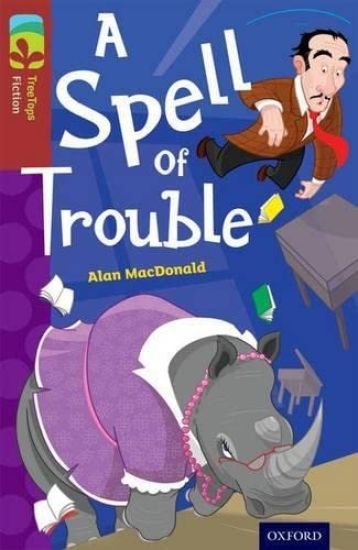
Oxford Reading Tree TreeTops Fiction: Level 15: A Spell of Trouble
Everyone picks on Franklin Hobbs in A Spell of Trouble. When he finds a book of magic spells he sees his chance for revenge. But things don't quite go to plan. Flying class-mates and a rhino loose in the school are just the start. Franklin is in big trouble. TreeTops Fiction contains a wide range of quality stories enabling children to explore and develop their own reading tastes and interests. It contains stories from a variety of genres including humour, sci-fi, adventure, mystery and historical fiction. These exciting stories are ideal for introducing children to a wide selection of authors and illustrators. There is huge variety to ensure every reader finds books they will enjoy and can read. Books contain inside cover notes to support children in their reading. Help with children's reading development also available at www.oxfordowl.co.uk. The books are finely levelled, making it easy to match every child to the right book.

Oxford Reading Tree TreeTops Fiction: Level 15: The Worst Team in the World
Reject Rovers are just one game away from making history in The Worst Team in the World. If they lose one more game they'll claim the record as the worst football team of all time. Can Kevin 'Panic' Taylor transform the team before Saturday? TreeTops Fiction contains a wide range of quality stories enabling children to explore and develop their own reading tastes and interests. It contains stories from a variety of genres including humour, sci-fi, adventure, mystery and historical fiction. These exciting stories are ideal for introducing children to a wide selection of authors and illustrators. There is huge variety to ensure every reader finds books they will enjoy and can read. Books contain inside cover notes to support children in their reading. Help with children's reading development also available at www.oxfordowl.co.uk. The books are finely levelled, making it easy to match every child to the right book.
Aquatic Environmental Chemistry

Aquatic Environmental Chemistry

Alan G. Howard

Oxford University Press
1998
nidottu
Equilibrium inorganic chemistry underlies the composition and properties of the aquatic environment and provides a sound basis for understanding both natural geochemical processes and the behaviour of inorganic pollutants in the environment. Designed for readers having basic chemical and mathematical knowledge, this book includes material and examples suitable for undergraduate students in the early stages of chemistry, environmental science, geology, irrigation science and oceanography courses. Aquatic Environmental Chemistry covers the composition and underlying properties of both freshwater and marine systems and, within this framework, explains the effects of acidity, complexation, oxidation and reduction processes, and sedimentation. The format adopted for the book consists of two parallel columns. The inner column is the main body of the book and can be read on its own. The outer column is a source of useful secondary material where comments on the main text, explanations of unusual terms and guidance through mathematical steps are to be found. A wide range of examples to explain the behaviour of inorganic species in freshwater and marine systems are used throughout, making this clear and progressive text an invaluable introduction to equilibrium chemistry in solution.
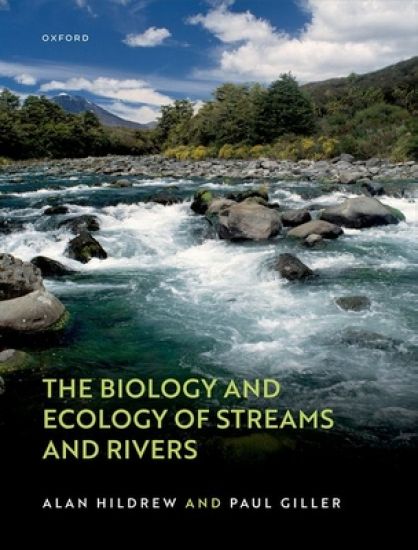
The Biology and Ecology of Streams and Rivers

The Biology and Ecology of Streams and Rivers

Alan Hildrew; Paul Giller

Oxford University Press
2023
sidottu
The challenges that the world's running water systems now face have never been more numerous or acute; at the same time, these complex habitats remain absolutely crucial to human wellbeing and future survival. If rivers can ever be anything like sustainable, ecology needs to take its place as an equal among the physical sciences such as hydrology and geomorphology. A real understanding of the natural history and ecology of running waters must now be brought even more prominently into river management. The primary purpose of this textbook is to provide the up-to-date overview that students and practitioners will require to achieve this aim. The book's unifying focus is on rivers and streams as ecosystems in which the particular identity of organisms is not the main emphasis but rather the processes in which they are involved - specifically energy flow and the cycling of materials. It builds on the physicochemical foundations of the habitat templet and explores the diversity and adaptations of the biota, progressing from the population and community ecology of organisms and linking them to ecosystem processes and services in the wider biosphere via the complexities of species interactions and food webs. These include water quality and patterns of river discharge, as well as aesthetics, waste disposal, and environmental health. While the book is not primarily focused on application per se, each chapter addresses how humans affect rivers and, in turn, are affected by them. A final, future-oriented chapter identifies key strategic areas and sets a roadmap for integrating knowledge of natural history and ecology into policy and management. The Biology and Ecology of Streams and Rivers is an accessible text suitable for both senior undergraduate and graduate students taking courses in both lotic and general ecology as well as more established researchers, practitioners, managers, and conservationists requiring a concise and contemporary overview of running waters.
The Biology and Ecology of Streams and Rivers

The Biology and Ecology of Streams and Rivers

Alan Hildrew; Paul Giller

Oxford University Press
2023
nidottu
The challenges that the world's running water systems now face have never been more numerous or acute; at the same time, these complex habitats remain absolutely crucial to human wellbeing and future survival. If rivers can ever be anything like sustainable, ecology needs to take its place as an equal among the physical sciences such as hydrology and geomorphology. A real understanding of the natural history and ecology of running waters must now be brought even more prominently into river management. The primary purpose of this textbook is to provide the up-to-date overview that students and practitioners will require to achieve this aim. The book's unifying focus is on rivers and streams as ecosystems in which the particular identity of organisms is not the main emphasis but rather the processes in which they are involved - specifically energy flow and the cycling of materials. It builds on the physicochemical foundations of the habitat templet and explores the diversity and adaptations of the biota, progressing from the population and community ecology of organisms and linking them to ecosystem processes and services in the wider biosphere via the complexities of species interactions and food webs. These include water quality and patterns of river discharge, as well as aesthetics, waste disposal, and environmental health. While the book is not primarily focused on application per se, each chapter addresses how humans affect rivers and, in turn, are affected by them. A final, future-oriented chapter identifies key strategic areas and sets a roadmap for integrating knowledge of natural history and ecology into policy and management. The Biology and Ecology of Streams and Rivers is an accessible text suitable for both senior undergraduate and graduate students taking courses in both lotic and general ecology as well as more established researchers, practitioners, managers, and conservationists requiring a concise and contemporary overview of running waters.
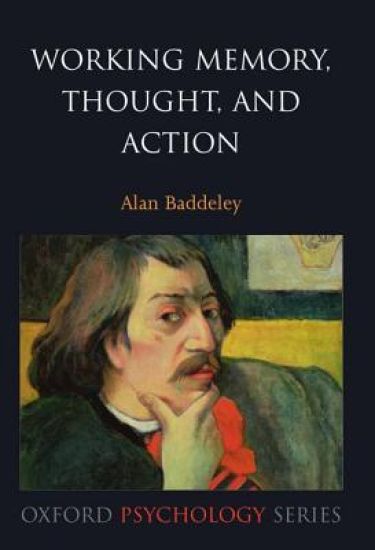
Working Memory, Thought, and Action

Working Memory, Thought, and Action

Alan Baddeley

Oxford University Press
2007
sidottu
'Working Memory, Thought, and Action' is the magnum opus of one of the most influential cognitive psychologists of the past 50 years. This new volume on the model he created (with Graham Hitch) discusses the developments that have occurred within the model in the past twenty years, and places it within a broader context. Working memory is a temporary storage system that underpins our capacity for coherent thought. Some 30 years ago, Baddeley and Hitch proposed a way of thinking about working memory that has proved to be both valuable and influential in its application to practical problems. This book updates the theory, discussing both the evidence in its favour, and alternative approaches. In addition, it discusses the implications of the model for understanding social and emotional behaviour, concluding with an attempt to place working memory in a broader biological and philosophical context. Inside are chapters on the phonological loop, the visuo-spatial sketchpad, the central executive and the episodic buffer. There are also chapters on the relevance to working memory of studies of the recency effect, of work based on individual differences, and of neuroimaging research. The broader implications of the concept of working memory are discussed in the chapters on social psychology, anxiety, depression, consciousness and on the control of action. Finally, Baddeley discusses the relevance of a concept of working memory to the classic problems of consciousness and free will. This new volume from one of the pioneers in memory research will doubtless emulate the success of its predecessor, and be a major publication within the psychological literature.
Working Memory, Thought, and Action

Working Memory, Thought, and Action

Alan Baddeley

Oxford University Press
2007
nidottu
'Working Memory, Thought, and Action' is the magnum opus of one of the most influential cognitive psychologists of the past 50 years. This new volume on the model he created (with Graham Hitch) discusses the developments that have occurred within the model in the past twenty years, and places it within a broader context. Working memory is a temporary storage system that underpins our capacity for coherent thought. Some 30 years ago, Baddeley and Hitch proposed a way of thinking about working memory that has proved to be both valuable and influential in its application to practical problems. This book updates the theory, discussing both the evidence in its favour, and alternative approaches. In addition, it discusses the implications of the model for understanding social and emotional behaviour, concluding with an attempt to place working memory in a broader biological and philosophical context. Inside are chapters on the phonological loop, the visuo-spatial sketchpad, the central executive and the episodic buffer. There are also chapters on the relevance to working memory of studies of the recency effect, of work based on individual differences, and of neuroimaging research. The broader implications of the concept of working memory are discussed in the chapters on social psychology, anxiety, depression, consciousness and on the control of action. Finally, Baddeley discusses the relevance of a concept of working memory to the classic problems of consciousness and free will. This new volume from one of the pioneers in memory research will doubtless emulate the success of its predecessor, and be a major publication within the psychological literature.
Semiconducting and Metallic Polymers

Semiconducting and Metallic Polymers

Alan J. Heeger; Niyazi Serdar Sariciftci; Ebinazar B. Namdas

Oxford University Press
2010
sidottu
Conducting and semiconducting (conjugated) polymers have a unique set of properties, combining the electronic properties of metals and semiconductors with the processing advantages and mechanical properties of polymers. Now, thirty-five years after their discovery, metallic conducting polymers have been demonstrated in the laboratory to have electrical conductivities approaching that of copper, and mechanical strengths exceeding that of steel, a remarkable achievement. A wide variety of electrical and optical devices have been demonstrated using semiconducting polymers. Light-emitting devices have been made which are as bright as fluorescent lamps at applied voltages of only a few volts; photovoltaic solar energy conversion using conjugated polymer composites is in industrial production; conjugated polymer transistors, circuits and chips have been demonstrated. Indeed, semiconducting and metallic polymers can be thought of as electronic 'inks'. The advances in printing technology (ink-jet printing, off-set printing, etc) combined with the science and technology of conducting polymers will revolutionize the way in which electronic devices are manufactured. In addition, semiconducting and metallic polymers can be used in applications which require special mechanical properties such as flexibility. The field of semiconducting and conducting polymers has become one of the most attractive areas of interdisciplinary materials science and technology. Ranging from physics, chemistry, electrical and electronic engineering to the optical sciences, this field covers a wide range of competences and interdisciplinary knowledge.
Inorganic Spectroscopic Methods

Inorganic Spectroscopic Methods

Alan K. Brisdon

Oxford University Press
1998
nidottu
An understanding of spectroscopic methods is a pre-requisite for students in chemistry and related disciplines from the undergraduate level onwards. Inorganic Spectroscopic Methods provides a firm introduction to common spectroscopic techniques and interpretation of spectra, and their application to inorganic-based systems.The approach taken is unashamedly aimed at the application of the techniques and interpretation of the spectra obtained. Worked examples, illustrative diagrams and references for a theoretical approach are provided throughout the book. Beginning with a introductory description of electromagnetic radiation and its interaction with matter, each subsequent chapter covers the physical basis of related spectroscopic methods (vibrational, resonance, UV-visible spectroscopy, mass spectrometry) and their applications typical in inorganic compounds. Each chapter ends with a number of set problems and short questions in the margin are given throughout the chapters to test the basic concepts. The final chapter offers an integrated approach to the identification of unknown materials - putting together the techniques discussed. This essential text for all undergraduate chemists will also benefit postgraduates in chemistry, and undergraduate and postgraduate students of biochemistry and the biomedical sciences.
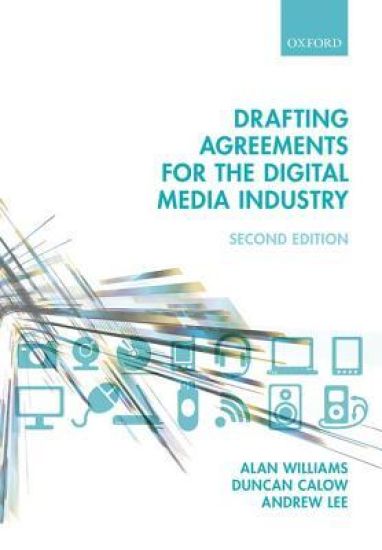
Drafting Agreements for the Digital Media Industry

Drafting Agreements for the Digital Media Industry

Alan Williams; Duncan Calow; Andrew Lee

Oxford University Press
2016
nidottu
Now in its second edition, this work contains a collection of sample agreements, presenting annotated contracts from the digital media sector in typical formats used by the industry. It includes agreements for wireless apps, digital downloads, user generated content, social networks, and cloud content. The work goes beyond traditional precedents by giving practical, business-minded commentary and background information to assist both readers intending to draft their own documents and those looking for hands-on guidance when reviewing standard form documents received from other parties. Its commercially-grounded approach will be of value to business affairs teams, entrepreneurs and start-ups in the digital media space as well as legal professionals working in private practice or in-house. Its primary jurisdictional focus is the UK but its scope is international with extensive comparative law comments and practical cross-border guidance for our connected online world. This sector-specialist guide is now supported by an accompanying website with agreements available to download and edit, as well as additional supporting material in the text itself .
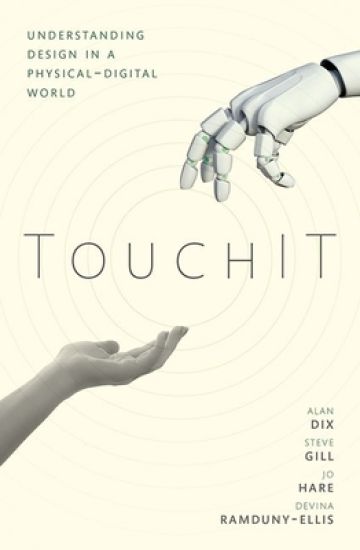
TouchIT

TouchIT

Alan Dix; Steve Gill; Devina Ramduny-Ellis; Jo Hare

Oxford University Press
2022
sidottu
Digital technology is fundamentally altering the world we live in, but can only be truly understood in relation to the physical world we all inhabit. The most successful future products and policies will be those that take this rich digital/physical ecology seriously. The physical world is increasingly filled with digital products to the extent that the boundaries of digital and physical reality become blurred. From mundane devices such as mobile phones and washing machines, to esoteric research including tangible computation and body implants, we continually bridge two worlds literally touching buttons and dials and simultaneously interacting with the digital systems that lie behind them. The connection between pure thought and abstract information is through solid keyboard and mouse; but likewise the material world of buildings, cars and running shoes is suffused with computation through sensors, displays and flashing LEDs. How do people understand this world and how can designers create usable hybrid physical-digital products? TouchIT brings together insights from human-computer interaction and industrial design, exploring these themes under four main headings: human body and mind; objects and things; space; and information and computation. In considering each, the authors look into the underlying physical processes, our human understanding of them, and then the way these inform and are informed by digital design. The end draws together the theoretical and practical implications of this for design, including practical advice, potential tools, and philosophical underpinnings.
HIV & AIDS

HIV & AIDS

Alan Whiteside

Oxford University Press
2016
nidottu
In 2008 it was believed that HIV/AIDS was without doubt the worst epidemic to hit humankind since the Black Death. The first case was identified in 1981; by 2004 it was estimated that about 40 million people were living with the disease, and about 20 million had died. Yet the outlook today is a little brighter. Although HIV/ AIDS continues to be a pressing public health issue the epidemic has stabilised globally, and it has become evident it is not, nor will it be, a global issue. The worst affected regions are southern and eastern Africa. Elsewhere, HIV is found in specific, usually, marginalised populations, for example intravenous drug users in Russia. Although there still remains no cure for HIV, there have been unprecedented breakthroughs in understanding the disease and developing drugs. Access to treatment over the last ten years has turned AIDS into a chronic disease, although it is still a challenge to make antiviral treatment available to all that require it. We also have new evidence that treatment greatly reduces infectivity, and this has led to the movement of 'Treatment as Prevention'. In this Very Short Introduction Alan Whiteside provides an introduction to AIDS, tackling the science, the international and local politics, the demographics, and the devastating consequences of the disease. He looks at the problems a developing international 'AIDS fatigue' poses to funding for sufferers, but also shows how domestic resources are increasingly being mobilised, despite the stabilisation of international funding. Finally Whiteside considers how the need to understand and change our behaviour has caused us to reassess what it means to be human and how we should operate in the globalizing world. ABOUT THE SERIES: The Very Short Introductions series from Oxford University Press contains hundreds of titles in almost every subject area. These pocket-sized books are the perfect way to get ahead in a new subject quickly. Our expert authors combine facts, analysis, perspective, new ideas, and enthusiasm to make interesting and challenging topics highly readable.
Antitrust and Patent Law

Antitrust and Patent Law

Alan Devlin

Oxford University Press
2016
sidottu
Patents lie at the heart of modern competition policy. In the new economy, firms use them variously to protect their R&D, to bolster their market positions, and to exclude rivals. Antitrust enforcers thus scrutinize patentees to ensure that they do not use their intellectual-property rights to suppress competition. Today's antitrust lawyers must therefore navigate intellectual-property issues and advise clients on the procurement and assertion of patents. It is no easy task. In granting exclusive rights, patents have an uneasy relationship with competition law, which struggles in turn to apply policies developed in bricks and mortar industries to the world of technology. This book explores the acquisition and use of patents under the law of the world's two most important antitrust regimes: the United States and the European Union. It examines antitrust rules governing technology transfer, standard-essential technologies, patent aggregation, open and closed systems, coercive licensing terms that amount to misuse, evergreening tactics in the pharmaceutical industry like 'paying for delay', and patentee immunity in suing for infringement. To contextualize that analysis, the book explores the theoretical relationship between patents and competition law, addresses the U.S. 'patent crisis', the move towards unitary patents in Europe, and differences between the US and EU competition regimes. Further, the book explores idiosyncrasies governing the core antitrust questions of market definition, market power, and anticompetitive conduct in the patent setting. In doing so, the book allows those who practice, enforce, teach, or study competition law to understand the subtleties of this fascinating subject.
The Mexican Revolution

The Mexican Revolution

Alan Knight

Oxford University Press
2016
nidottu
The Mexican Revolution defined the sociopolitical experience of those living in Mexico in the twentieth century. Its subsequent legacy has provoked debate between those who interpret the ongoing myth of the Revolution and those who adopt the more middle-of-the-road reality of the regime after 1940. Taking account of these divergent interpretations, this Very Short Introduction offers a succinct narrative and analysis of the Revolution. Using carefully considered sources, Alan Knight addresses the causes of the upheaval, before outlining the armed conflict between 1910 and 1920, explaining how a durable regime was consolidated in the 1920s, and summing up the social reforms of the Revolution, which culminated in the radical years of the 1930s. Along the way, Knight places the conflict alongside other 'great' revolutions, and compares Mexico with the Latin American countries that avoided the violent upheaval. ABOUT THE SERIES: The Very Short Introductions series from Oxford University Press contains hundreds of titles in almost every subject area. These pocket-sized books are the perfect way to get ahead in a new subject quickly. Our expert authors combine facts, analysis, perspective, new ideas, and enthusiasm to make interesting and challenging topics highly readable.
Navigating the New Retail Landscape

Navigating the New Retail Landscape

Alan Treadgold; Jonathan Reynolds

Oxford University Press
2016
sidottu
The retail industry globally is in the early stages of an era of profound, perhaps unprecedented, change. This book is intended to serve as a robust and practical guide to leaders of enterprises tasked with both understanding and delivering success in the new landscape of retailing. The book firstly describes the major directions and drivers of change that define the new global landscape of retailing (Part 1). Accelerating technology change, the rise to prominence globally of internet enabled shoppers and the rapid emergence of entirely new retail enterprises and business models are combining to re-shape the very fundamentals of the retail industry. No longer are shops needed to be in the business of retailing. No longer is choice for the shopper limited to the neighbourhood, town or even country in which they live. No longer is the act of retailing solely the preserve of traditional retail enterprises as internet-enabled businesses, technology, logistics, suppliers and financial services enterprises all seek direct relationships with the shopper. The new landscape of retailing is an unforgiving one. Success can be achieved more quickly than has ever been possible before but failure is equally rapid. The opportunities in the new landscape of retailing are profound, but so too are the challenges. Part 2 of this book discusses the structures, skills and capabilities retail enterprises will need if they are to be successful in this new landscape and the skills and perspectives that will be required of the leaders of retail enterprises. Case studies of innovative and successful enterprises are presented throughout the book to illustrate the themes discussed. Frameworks are presented to provide practical guidance for enterprise leaders to understand and contextualise the nature of change that is re-shaping retail landscapes globally. Clear guidance is given of the capabilities, skills and perspectives that will be needed at both an enterprise and a personal leadership level to deliver success in the new landscape of retailing.
Knowing by Perceiving

Knowing by Perceiving

Alan Millar

Oxford University Press
2019
sidottu
Epistemological discussions of perception usually focus on something other than knowledge. They consider how beliefs arising from perception can be justified. With the retreat from knowledge to justified belief there is also a retreat from perception to the sensory experiences implicated by perception. On the most widely held approach, perception drops out of the picture other than as the means by which we are furnished with the experiences that are supposed to be the real source of justification-experiences that are conceived to be no different in kind from those we could have had if we had been perfectly hallucinating. In this book a radically different perspective is developed, one that explicates perceptual knowledge in terms of recognitional abilities and perceptual justification in terms of perceptually known truths as to what we perceive to be so. Contrary to mainstream epistemological tradition, justified belief is regarded as belief founded on known truths. The treatment of perceptual knowledge is situated within a broader conception of epistemology and philosophical method. Attention is paid to contested conceptions of perceptual experience, to knowledge from perceived indicators, and to the standing of background presuppositions and knowledge that inform our thinking. Throughout, the discussion is sensitive to ways in which key concepts figure in ordinary thinking while remaining resolutely focused on what knowledge is, and not just on how we think of it.
Philosophy and the Novel

Philosophy and the Novel

Alan H. Goldman

Oxford University Press
2016
nidottu
Alan H. Goldman presents an original and lucid account of the relationship between philosophy and the novel. In the first part, on philosophy of novels, he defends theories of literary value and interpretation. Literary value, the value of literary works as such, is a species of aesthetic value. Goldman argues that works have aesthetic value when they simultaneously engage all our mental capacities: perceptual, cognitive, imaginative, and emotional. This view contrasts with now prevalent narrower formalist views of literary value. According to it, cognitive engagement with novels includes appreciation of their broad themes and the theses these imply, often moral and hence philosophical theses, which are therefore part of the novels' literary value. Interpretation explains elements of works so as to allow readers maximum appreciation, so as to maximize the literary value of the texts as written. Once more, Goldman's view contrasts with narrower views of literary interpretation, especially those which limit it to uncovering what authors intended. One implication of Goldman's broader view is the possibility of incompatible but equally acceptable interpretations, which he explores through a discussion of rival interpretations of Ernest Hemingway's The Sun Also Rises. Goldman goes on to test the theory of value by explaining the immense appeal of good mystery novels in its terms. The second part of the book, on philosophy in novels, explores themes relating to moral agency--moral development, motivation, and disintegration--in Jane Austen's Pride and Prejudice, Mark Twain's Huckleberry Finn, John Irving's The Cider House Rules, and Joseph Conrad's Nostromo. By narrating the course of characters' lives, including their inner lives, over extended periods, these novels allow us to vicariously experience the characters' moral progressions, positive and negative, to learn in a more focused way moral truths, as we do from real life experiences.
Political Parties and Party Systems

Political Parties and Party Systems

Alan Ware

Oxford University Press
1995
nidottu
This is an introduction to the study of political parties and party systems. It focuses primarily on liberal deocracies and the approach is a comparative one. The book's aim is to explain to students of politics how and why parties and party systems differ from one country to another. However, it also seeks to provide a more detailed understanding of party politics in five particular countries. Most of the chapters are divided into two sections. In the first section general themes and arguments about a topic are introduced, and examples from a large number of countries are discussed in relation to it. In the second section, particular attention is paid to five of the largest liberal democracies - Britain, France, Germany, Japan, and the United States.
Ammianus' Julian

Ammianus' Julian

Alan J. Ross

Oxford University Press
2016
sidottu
Ammianus Marcellinus' Res Gestae holds a prominent position in modern studies of the emperor Julian as the fullest extant narrative of the reign of the last 'pagan' emperor. Ammianus' Julian: Narrative and Genre in the Res Gestae offers a major reinterpretation of the work, which is one of the main narrative sources for the political history of the later Roman Empire, and argues for a re-examination of Ammianus' agenda and methods in narrating the reign of Julian. Building on recent developments in the application of literary approaches and critical theories to historical texts, Ammianus' presentation of Julian is evaluated by considering the Res Gestae within three interrelated contexts: as a work of Latin historiography, which consciously sets itself within a classical and classicizing generic tradition; in a more immediate literary and political context, as the final contribution by a member of an 'eyewitness' generation to a quarter century of intense debate over Julian's legacy by several authors who had lived through his reign and had been in varying degrees of proximity to Julian himself; and as a narrative text, in which narratorial authority is closely associated with the persona of the narrator, both as an external narrating agent and an occasional participant in the events he relates. This is complemented by a literary survey and a re-analysis of Ammianus' depiction of several key moments in Julian's reign, such as his appointment as Caesar, the battle of Strasbourg in 357AD, his acclamation as Augustus, and the disastrous invasion of Persia in 363AD. It suggests that the Res Gestae presents a Latin-speaking, western audience with an idiosyncratic and 'Romanized' depiction of the philhellene emperor and that, consciously exploiting his position as a Greek writing in Latin and as a contemporary of Julian, Ammianus wished his work to be considered a culminating and definitive account of the man and his life.