Kirjahaku
Etsi kirjoja tekijän nimen, kirjan nimen tai ISBN:n perusteella.
1000 tulosta hakusanalla Alberto Cuboni
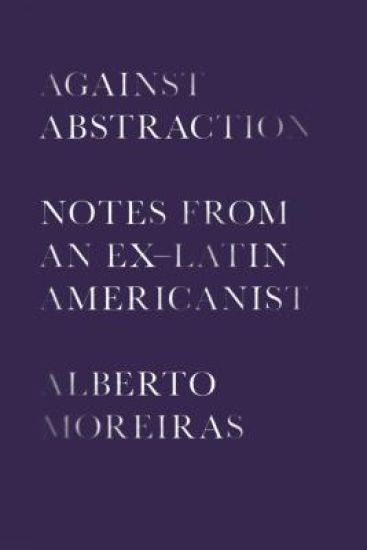
In 2015, members of the philosophy department at the University of Madrid conducted an interview with Alberto Moreiras for the university’s digital archive. The resulting dialogues and the Spanish edition of this work, Marranismo e inscripción, o el abandono de la conciencia desdichada, are the basis for Against Abstraction, supplemented with an interview conducted for the Chilean journal Papel máquina. In these landmark conversations, Moreiras describes how, though he was initially committed to Latin American literary studies, he eventually transitioned to become an eminent scholar of critical theory, existential philosophy, and ultimately infrapolitics and posthegemony.Blending intellectual autobiography with a survey of Hispanism as practiced in universities in the United States (including the schisms in Latin American subaltern studies that eventually led to Moreiras’s departure from Duke University), these narratives read like a picaresque and a polemic on the symbolic power of scholars. Drawing on the concept of marranism (originally a term for Iberian Jews and Muslims forced to convert to Christianity during the Middle Ages) to consider the situations and allegiances he has navigated over the years, Moreiras has produced a multifaceted self-portrait that will surely spark further discourse.
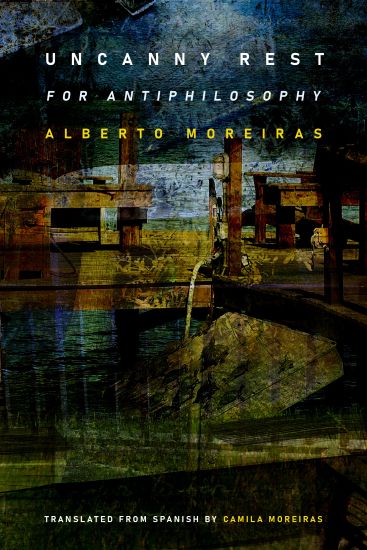
In Uncanny Rest Alberto Moreiras offers a meditation on intellectual life under the suspension of time and conditions of isolation. Focusing on his personal day-to-day experiences of the “shelter-in-place” period during the first months of the coronavirus pandemic, Moreiras engages with the limits and possibilities of critical thought in the realm of the infrapolitical-the conditions of existence that exceed average understandings of politics and philosophy. In each dated entry he works through the process of formulating a life’s worth of thought and writing while attempting to locate the nature of thought once the coordinates of everyday life have changed. Offering nothing less than a phenomenology of thinking, Moreiras shows how thought happens in and out of a life, at a certain crossroads where memories collide, where conversations with interlocutors both living and dead evolve and thinking during a suspended state becomes provisional and uncertain.
In Uncanny Rest Alberto Moreiras offers a meditation on intellectual life under the suspension of time and conditions of isolation. Focusing on his personal day-to-day experiences of the “shelter-in-place” period during the first months of the coronavirus pandemic, Moreiras engages with the limits and possibilities of critical thought in the realm of the infrapolitical-the conditions of existence that exceed average understandings of politics and philosophy. In each dated entry he works through the process of formulating a life’s worth of thought and writing while attempting to locate the nature of thought once the coordinates of everyday life have changed. Offering nothing less than a phenomenology of thinking, Moreiras shows how thought happens in and out of a life, at a certain crossroads where memories collide, where conversations with interlocutors both living and dead evolve and thinking during a suspended state becomes provisional and uncertain.




Novelle Racconti Grotteschi
Alberto Cantoni
Createspace Independent Publishing Platform
2012
nidottu

Pietro e Paola con seguito di bei tipi
Alberto Cantoni
Createspace Independent Publishing Platform
2012
nidottu

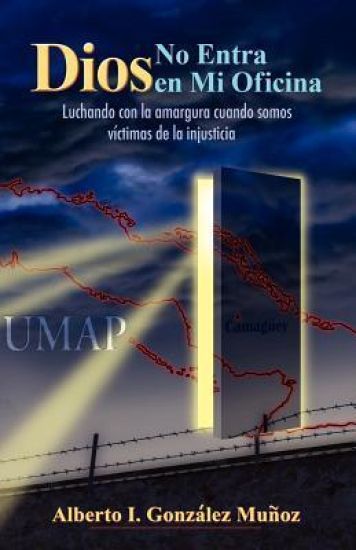
Dios No Entra en mi Oficina
Alberto I. Gonzalez Munoz
Createspace Independent Publishing Platform
2012
nidottu
La historia que narra este libro sorprender a lectores y lectoras. Trata de hechos ignorados por la mayor a y sobre los cuales solo en los ltimos tiempos han aparecido algunas explicaciones, comentarios y juicios en varias publicaciones del pa s. DIOS NO ENTRA EN MI OFICINA narra en detalle y con objetividad una historia que atrapa a los lectores desde las primeras p ginas. Tiene en sus manos uno de esos libros de los que no podr desprenderse hasta llegar al final. En noviembre de 1965 miles de j venes considerados no aptos pol tica y socialmente para ser llamados a las unidades militares regulares fueron llevados sorpresivamente y sin ning n tipo de explicaci n a campamentos para servir a la patria bajo disciplina militar, pero dedicados exclusivamente a la producci n agr cola. El autor nos permite conocer los detalles de su inclusi n y la de otros j venes cristianos en esas unidades compartiendo su propia crisis de fe, en un relato conmovedor y repleto de ense anzas. Conocer de la vida en esos campamentos y todos los matices que suelen aparecer en la conducta humana, donde tanto la virtud como la degradaci n forman una experiencia com n que puede alcanzar a todos, con independencia de su formaci n o su ideolog a. Todo ello entretejido con una historia de amor que sent las bases para lograr un matrimonio de m s de 40 a os y crear una familia dedicada al servicio de Dios en Cuba.
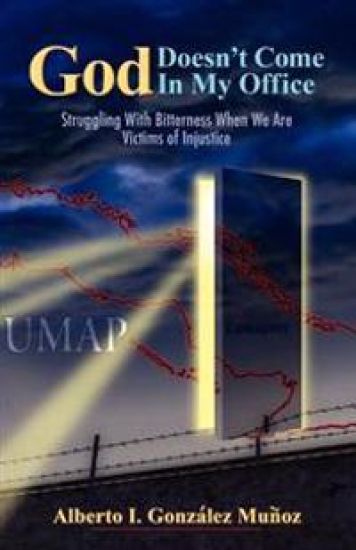
God Doesn't Come In My Office
Alberto I. Gonzalez Munoz
Createspace Independent Publishing Platform
2012
nidottu
Why does God allow his children to undergo persecution? Can any good come from being forced to live in unspeakable circumstances? And what about the man: what shall he do with his anger and bitterness over the injustices done to him? How can he endure when the trial does not end? Alberto Gonz lez Mu oz was a 22 year-old Baptist seminary student in Havana in 1965, when he and his classmates were labeled "social scum" and sent to a UMAP labor camp in the Cuban countryside for "re-education." He tells his story with candor and sensitivity, but also with the heart of a pastor who has been through the fiery trial and can offer hope, instruction, and understanding to suffering Christians. His message is one of dealing with bitterness, arrogance, loss of faith, and coming to see that the biggest danger to a Christian is not found in the actions of other people, but the sin within our own hearts. Intertwined in the distress and shame of UMAP is a love story. Alberto insists that his wife, Miriam, is the heroine of this story, and through this very difficult circumstance, they learned to hold tightly to the things that matter most, and managed to lay a foundation for a marriage and family dedicated to serving God in Cuba. Today from Havana, Alberto continues to speak, write, and to teach his fellow Cubans to maintain an eternal perspective on their lives, keeping in view the reward that God has promised to those who love Him.

Uncovers the long history of how Latino manhood was integral to the formation of Latino identity In the first ever book-length study of Latino manhood before the Civil Rights Movement, Before Chicano examines Mexican American print culture to explore how conceptions of citizenship and manhood developed in the nineteenth and twentieth centuries. The year 1848 saw both the signing of the Treaty of Guadalupe Hidalgo that ended the U.S. Mexican War and the year of the Seneca Falls Convention, the first organized conference on women's rights in the United States. These concurrent events signaled new ways of thinking about U.S. citizenship, and placing these historical moments into conversation with the archive of Mexican American print culture, Varon offers an expanded temporal frame for Mexican Americans as long-standing participants in U.S. national projects. Pulling from a wide-variety of familiar and lesser-known works—from fiction and newspapers to government documents, images, and travelogues—Varon illustrates how Mexican Americans during this period envisioned themselves as U.S. citizens through cultural depictions of manhood. Before Chicano reveals how manhood offered a strategy to disparate Latino communities across the nation to imagine themselves as a cohesive whole—as Mexican Americans—and as political agents in the U.S. Though the Civil Rights Movement is typically recognized as the origin point for the study of Latino culture, Varon pushes us to consider an intellectual history that far predates the late twentieth century, one that is both national and transnational. He expands our framework for imagining Latinos' relationship to the U.S. and to a past that is often left behind.
Uncovers the long history of how Latino manhood was integral to the formation of Latino identity In the first ever book-length study of Latino manhood before the Civil Rights Movement, Before Chicano examines Mexican American print culture to explore how conceptions of citizenship and manhood developed in the nineteenth and twentieth centuries. The year 1848 saw both the signing of the Treaty of Guadalupe Hidalgo that ended the U.S. Mexican War and the year of the Seneca Falls Convention, the first organized conference on women's rights in the United States. These concurrent events signaled new ways of thinking about U.S. citizenship, and placing these historical moments into conversation with the archive of Mexican American print culture, Varon offers an expanded temporal frame for Mexican Americans as long-standing participants in U.S. national projects. Pulling from a wide-variety of familiar and lesser-known works—from fiction and newspapers to government documents, images, and travelogues—Varon illustrates how Mexican Americans during this period envisioned themselves as U.S. citizens through cultural depictions of manhood. Before Chicano reveals how manhood offered a strategy to disparate Latino communities across the nation to imagine themselves as a cohesive whole—as Mexican Americans—and as political agents in the U.S. Though the Civil Rights Movement is typically recognized as the origin point for the study of Latino culture, Varon pushes us to consider an intellectual history that far predates the late twentieth century, one that is both national and transnational. He expands our framework for imagining Latinos' relationship to the U.S. and to a past that is often left behind.


The Power of Your Story: 40 Short and Real-Life Stories Filled With Lessons
Alberto Sardinas
Createspace Independent Publishing Platform
2012
nidottu
Each night, syndicated radio host Alberto Sardi as takes phone calls from listeners who look to him as a friend with whom to share their personal stories of uncertainty, sorrow, happiness, and hope. His faithful listeners are confident they will receive the words of encouragement they need to carry on, and the advice they would get from a true friend. In "The Power of Your Story", the author shares 40 of the most compelling, real-life short stories told to him by his listeners as well as intimate experiences of his own. Discover the twists and turns these captivating narratives take you on, from stories like "Seven Years of Marriage and Six Years Without Sex" to "Proud to Be the Mistress". Or find out how Sardi as made the biggest embarrassment of his life in front of a mere 15,000 people. Relationships and infidelity, health and family issues are some of the topics featured. Each chapter is followed by a conclusion that emphasizes the lesson and offers a space for reflection - under "Find the Power of Your Story" - that helps people face their life's everyday challenges. "There is nothing more powerful that brings us together than the unforgettable experiences we all have in common," says Sardi as.
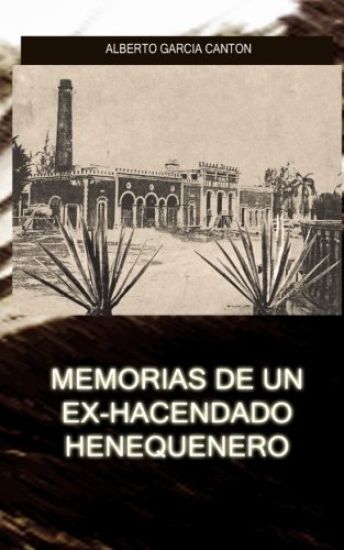
Memorias de un ex-hacendado henequenero: Y artículos para la prensa
Alberto Garcia Canton
Createspace Independent Publishing Platform
2012
nidottu
NACIO EN MERIDA YUCATAN UN 6 DE NOVIEMBRE. SUS PRIMEROS ESTUDIOS LOS REALIZO EN LA ESCUELA MODELO Y LA PREPARATORIA EN EL INSTITUTO LITERARIO DEL ESTADO. SE GRADUO EN LA CARRERA DE COMERCIO EN NUEVA YORK A SU REGRESO SE DEDICO A LA ADMINISTRACION Y DIRECCION DE LAS HACIENDAS SANTA ROSA Y SIHO. FUE PRESIDENTE DEL CLUB ROTARIO DE MERIDA Y REPRESENTANTE DEL MISMO PARA LA REPUBLICA MEXICANA, POR SUS MERITOS ROTARY INTERNACIONAL LO DESIGNA DIRECTOR PARA AMERICA LATINA. FUNDO EN CUBA LA PREVISORA LATINOAMERICANA Y EN MERIDA EL BANCO FAMILIAR DE AHORRO DEL SURESTE S.A. DEL QUE FUE DIRECTOR GENERAL HASTA SU FALLECIMIENTO.FUE COLABORADOR DEL "DIARIO DE YUCATAN" ESCRIBIO TAMBIEN LOS LIBROS "MEMORIAS DE VIAJE vol. I, II y III". CONTRAJO MATRIMONIO CON DOLORES BOLIO MENDEZ CON LA CUAL PROCREO CUATRO HIJOS ANA MARIA, BEATRIZ, ALBERTO Y MARTHA.