Kirjojen hintavertailu. Mukana 11 244 527 kirjaa ja 12 kauppaa.

Kirjahaku

Etsi kirjoja tekijän nimen, kirjan nimen tai ISBN:n perusteella.

1000 tulosta hakusanalla Alexander Hamilton
Alexander H. Stephens of Georgia

Alexander H. Stephens of Georgia

Thomas E. Schott

Louisiana State University Press
1996
nidottu
Winner Of The Jefferson Davis Award Rising from humble origins in the middle Georgia cotton belt, Alexander H. Stephens (1812-1883) became one of the South's leading politicians and lawyers. Thomas E. Schott has written the first scholarly biography that analyses the interplay between the public and private Stephens and between state and national politics during his contradictory career. Stephens was a celebrated Whig, turned Democrat, who served as congressman from 1843 to 1859 and an antisecessionist who became vice-president of the Confederacy. Ignored by the Davis administration once in office, he eventually opposed most of its wartime policies. Schott argues that Stephens' devotion to the southern cause was as genuine as his devotion to civil liberties and states' rights. After the war, he became an elder statesman for Georgia, serving nine more years as a congress-man and the last five months of his life as governor.
Alexander Girard, Architect

Alexander Girard, Architect

Deborah Lubera Kawsky; Ruth Adler Schnee

Wayne State University Press
2018
sidottu
Showcases the bold, innovative, and colorful architectural designs of Alexander Girard.During the midcentury period, Michigan attracted visionary architects, designers, and theorists, including Alexander Girard. While much has been written about Girard’s vibrantly colored and patterned textiles for Herman Miller, the story of his Detroit period (1937-53)—encompassing interior and industrial design, exhibition curation, and residential architecture—has not been told. Alexander Girard, Architect: Creating Midcentury Modern Masterpieces by Deborah Lubera Kawsky is the first comprehensive study of Girard’s exceptional architectural projects, specifi ally those concentrated in the ultra-traditional Detroit suburb of Grosse Pointe.One exciting element of the book is the rediscovery of another Girard masterpiece - the only surviving house designed entirely by Girard, and former residence to Mr. and Mrs. John McLucas. Restored in consultation with iconic midcentury designer Ruth Adler Schnee, the McLucas house represents the culmination of Girard’s Detroit design work at midcentury. Stunning color photographs capture the unique design elements—including the boldly colored glazd brick walls of the atrium—reminiscent of Girard’s role as color consultant for the GM Tech Center. Original Girard drawings for the building plan, interior spaces, and custom-designed furniture document the mind of a modernist master at work and are made available to the public for the first time in this beautiful book.Alexander Girard, Architect is a beautiful, informative book suited for enthusiasts of Alexander Girard, the midcentury modern aesthetic, and Detroit history, art, and architecture.
Alexander Plays

Alexander Plays

Kennedy Adrienne

UNIVERSITY OF MINNESOTA PRESS
1992
sidottu
Continues the series of American dramatist Kennedy's one-act plays. Includes She Talks to Beethoven, The Ohio State Murders, The Film Club (a monologue), and The Dramatic Circle. A foreword is the only scholarly apparatus. Annotation copyright Book News, Inc. Portland, Or.
Alexander the Great

Alexander the Great

Nikos Kazantzakis

Ohio University Press
1982
pokkari
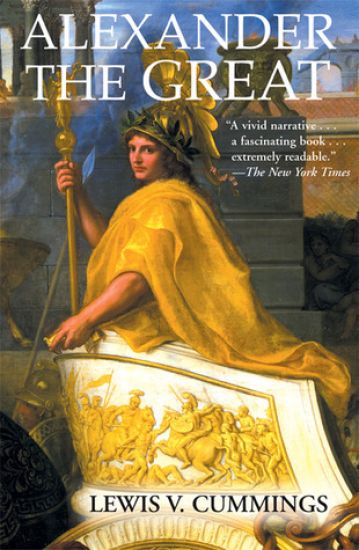
Nikos Kazantzakis is no stranger to the heroes of Greek antiquity. In this historical novel based on the life of Alexander the Great, Kazantzakis has drawn on both the rich tradition of Greek legend and the documented manuscripts from historical archives to recreate an Alexander in all his many-faceted images: Alexander the god; Alexander the descendant of Heracles performing the twelve labors; Alexander the mystic, the daring visionary destined to carry out a divine mission; Alexander the flesh-and-blood mortal who, on occasion, is not above the common soldier’s brawling and drinking. The novel, which resists the temptation to portray Alexander in the mantle of purely romantic legend, covers his life from age fifteen to his death at age thirty-two. It opens with Alexander’s first exploit, the taming of the horse, Bucephalus, and is seen in great part through the eyes of his young neighbor who eventually becomes an officer in his army and follows him on his campaign to conquer the world. The book, which was written primarily as an educational adjunct for young readers, is intended for the adult mind as well, and like the legends of old, is entertaining as well as instructive for readers of all ages. It was originally published in Greece in serial form in 1940, and was republished in a complete volume in 1979.
Alexander Robey Shepherd

Alexander Robey Shepherd

John P. Richardson

Ohio University Press
2016
sidottu
With Alexander Robey Shepherd, John P. Richardson gives us the first full-length biography of his subject, who as Washington, D.C.'s, public works czar (1871–74) built the infrastructure of the nation's capital in a few frenetic years after the Civil War. The story of Shepherd is also the story of his hometown after that cataclysm, which left the city with churned-up streets, stripped of its trees, and exhausted. An intrepid businessman, Shepherd became president of Washington's lower house of delegates at twenty-seven. Garrulous and politically astute, he used every lever to persuade Congress to realize Peter L'Enfant's vision for the capital. His tenure produced paved and graded streets, sewer systems, trees, and gaslights, and transformed the fetid Washington Canal into one of the city's most stately avenues. After bankrupting the city, a chastened Shepherd left in 1880 to develop silver mines in western Mexico, where he lived out his remaining twenty-two years. In Washington, Shepherd worked at the confluence of race, party, region, and urban development, in a microcosm of the United States. Determined to succeed at all costs, he helped force Congress to accept its responsibility for maintenance of its stepchild, the nation's capital city.
Alexander Robey Shepherd

Alexander Robey Shepherd

John P. Richardson

Ohio University Press
2016
pokkari
With Alexander Robey Shepherd, John P. Richardson gives us the first full-length biography of his subject, who as Washington, D.C.'s, public works czar (1871–74) built the infrastructure of the nation's capital in a few frenetic years after the Civil War. The story of Shepherd is also the story of his hometown after that cataclysm, which left the city with churned-up streets, stripped of its trees, and exhausted. An intrepid businessman, Shepherd became president of Washington's lower house of delegates at twenty-seven. Garrulous and politically astute, he used every lever to persuade Congress to realize Peter L'Enfant's vision for the capital. His tenure produced paved and graded streets, sewer systems, trees, and gaslights, and transformed the fetid Washington Canal into one of the city's most stately avenues. After bankrupting the city, a chastened Shepherd left in 1880 to develop silver mines in western Mexico, where he lived out his remaining twenty-two years. In Washington, Shepherd worked at the confluence of race, party, region, and urban development, in a microcosm of the United States. Determined to succeed at all costs, he helped force Congress to accept its responsibility for maintenance of its stepchild, the nation's capital city.
Alexander the Great

Alexander the Great

Nikos Kazantzakis

OHIO UNIVERSITY PRESS
2025
pokkari
Newly translated, this classic novel is sure to delight readers of all ages as it explores the legendary conqueror’s life, ambitions, and humanity. Nikos Kazantzakis’s Alexander the Great is a biographical novel about one of antiquity’s greatest political and military leaders. In Kazantzakis’s story, Alexander of Macedonia does not conquer for conquest’s sake; instead, he seeks to spread the light of Hellenism to the known world, unite humanity through Greek ideals and culture, and bring together East and West. The story begins in Pella, the lavish capital of Macedonia, in the fourth century BCE. A teenager named Stefanos rushes to the royal stadium for a remarkable event that has drawn every male citizen of this capital city: the taming of a wild and uniquely powerful horse named Bucephalus. Relying on raw strength and force, even seasoned generals fail to subdue Bucephalus; but through skill, kindness, and insight, the fifteen-year-old Alexander is able to befriend the beast. Alexander’s symbolic taming of chaos foretells his rise to power and demonstrates the qualities he will carry with him throughout his lifelong campaign of conquest. Through the eyes of Stefanos, who becomes Alexander’s personal attendant and most trusted companion, Kazantzakis follows the Macedonian army through triumphant campaigns across Persia, Egypt, and India, greatly expanding the boundaries of the ancient Hellenic world. Kazantzakis presents Alexander not only as an ingenious military strategist but also as a reflective human being. Alexander oscillates between the human and the divine but will ultimately be betrayed by the former. Kazantzakis narrates Alexander’s struggles and conquests all the way to Babylon, where he meets his untimely death at just thirty-three years of age. This iconic novel also explores Alexander’s profound relationship with his mentor, Aristotle, who instills in him a lifelong thirst for knowledge. Alexander the Great offers a compelling blend of history, myth, and philosophy and will appeal to readers fascinated by ancient Greece, epic heroes, and humanity’s timeless quest for the meaning of life.
Alexander the Great Failure

Alexander the Great Failure

John D Grainger

Continuum International Publishing Group Ltd.
2009
nidottu
In this authoritative book John Grainger explores the foundations of Alexander's empire and why it did not survive after his untimely death in 323 BC. Alexander the Great's empire stretched across three continents and his achievements changed the nature of the ancient world. But for all his military prowess and success as a conqueror, John Grainger argues that he was one of history's great failures. Alexander's arrogance was largely responsible for his own premature death and he was personally culpable for the failure of his imperial enterprise. For Alexander was king of a society where the ruler was absolutely central to the well-being of society as a whole. When the king failed, the Macedonian kingdom imploded, something which had happened every generation for two centuries before him and happened again when he died. For the good of his people, Alexander needed an adult successor, but he refused to provide one while also killing any man who could be seen as one. The consequence was fifty years of warfare after his death and the destruction of his empire. The work of Philip II, Alexander's father, in extending and developing the kingdom of the Macedonians was the foundation for Alexander's career of conquest. Philip's murder in 336 BC brought Alexander to the kingship in the first undisputed royal succession on record.
Alexander Dalrymple

Alexander Dalrymple

Andrew S. Cook

Ashgate Publishing Limited
2023
sidottu
Alexander Dalrymple was hydrographer to the East India Company (1779-1808) and to the Admiralty (1795-1808) and during his career published over nine hundred sea charts and over one hundred and fifty letterpress publications on subjects ranging from oriental antiquities to geographical exploration. His work formed the basis of British pre-eminence in nautical publication in the nineteenth century. This book, which includes the first comprehensive catalogue of Dalrymple's publications (both engraved and letterpress), describes Dalrymple's chart compilation and publishing practices and his relations with jobbing printers and engravers in London.
Alexander the Great

Alexander the Great

Daniel Ogden

University of Exeter Press
2011
nidottu
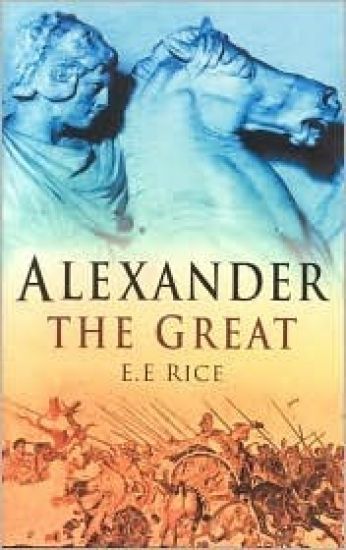
What are ancient texts saying to us when they describe Alexander the Great’s romantic relationship with his wife Barsine, or comment on his homosexual relationship with Hephaestion? What did it mean when the ancient writers told that Alexander had been sired by a thunderbolt or by a gigantic snake? What did it mean when they represented his mother Olympias as a witch? These questions and others are addressed in Alexander the Great: Myth and Sexuality. In this book, Daniel Ogden discusses the mythologizing of procreation and sex in the ancient traditions surrounding Alexander. From the author's Introduction: 'A quick review of [...] chapter titles will suggest that the first half [...] answers the title's promise of 'myth' and the second half that of 'sexuality', but in fact the entire volume is devoted to what may be termed 'myth' of one sort or another. Its central and unifying subject is the mythologizing of procreation and sex in the traditions surrounding the figure of Alexander the Great: accordingly, it comprises both treatments of the narratives spun around his own siring and birth on the one hand, and treatments of the narratives spun around the king's own procreative and sexual career on the other. A significant amount of this mythologizing [...] took root in Alexander's own age. The remainder of it is the product of subsequent tradition, a tradition that was evidently in vigorous development already within a few years of Alexander's death.'
Life and Letters of Alexander Wilson: Memoirs, American Philosophical Society (Vol. 154)
Alexander Wilson, expatriate Scotsman, poet, & reformer, has been called "the Father of American Ornithology." This collection of his letters, many of them new & many complete for the first time, captures a splendid & stimulating time in American history. Wilson was a confidant of William Bartram, a correspondent of Thomas Jefferson, a sensitive personality who set out as he said to make "a collection of all our finest birds." In pursuit of this goal he traveled through much of the eastern part of the U.S., often on foot. His letters well document the joy he felt at each new discovery as well as the terrible physical harships he endured. Though later overshadowed by J.J. Audubon, Wilson deserves much credit for being one of the pioneers in American ornithology. Includes an intro. by Clark Hunter, ed. of the letters.
Alexander Campbell, Volume 2

Alexander Campbell, Volume 2

Eva Jean Wrather

Texas Christian University Press,U.S.
2007
sidottu
Eva Jean Wrather devoted seventy years to writing an 800,000-word biography of Alexander Campbell, founder of the Christian Church (Disciples of Christ), a monumental literary biography described by D. Duane Cummins as ""a creative and skillful blend of history and superb literary writing skills."" In the early 1990s, Cummins was asked to assist Ms. Wrather in revising her manuscript. Their work together makes up Volume One of Campbell's biography (TCU Press, 2005). Volume Two follows Campbell's life from 1823-1830, years filled with the storm of opinions in the pages of his successful magazine, ""The Christian Baptist"", which won mixed hostility and support in Baptist and Presbyterian communities. Wrather records Campbell's experience as a politician and delegate to the Virginia Constitutional Convention in 1829, where Campbell brushed shoulders with some of America's most famous politicians and rhetoricians. Wrather believed these years were a crucial chapter in Campbell's life, confirming his power as a thinker, speaker and writer.
Alexander Campbell, Volume One

Alexander Campbell, Volume One

TCU Press

Texas Christian University Press,U.S.
2009
nidottu
A biography of Christian Church (Disciples of Christ) founder Alexander Campbell that deals with the leader's early manhood, from his schooling to his turning from the Calvinistic doctrine of his youth and his arrival in America.
Alexander Campbell, Volume Three

Alexander Campbell, Volume Three

TCU Press

Texas Christian University Press,U.S.
2009
sidottu
Eva Jean Wrather (1908-2001) spent most of her adult lifetime writing a biography of Alexander Campbell, founder of the Christian Church (Disciples of Christ), the only Protestant denomination to spring from American soil. Shortly before Wrather's death, the manuscript totaled 800,000 words or 3,254 pages. Historian D. Duane Cummins worked with her until her death and then afterwards to craft a three-volume work comprising Campbell's lifetime of theological doctrine and literary writing. Volume three of this work bears Cummins' organization and structure, along with some of his own research, preserving as much as possible Wrather's inimitable writing style.