Kirjojen hintavertailu. Mukana 11 244 527 kirjaa ja 12 kauppaa.

Kirjahaku

Etsi kirjoja tekijän nimen, kirjan nimen tai ISBN:n perusteella.

1000 tulosta hakusanalla Alexandra Parma Cook; Noble David Cook

In Praise of Litigation

In Praise of Litigation

Alexandra Lahav

Oxford University Press Inc
2017
sidottu
While the right to have one's day in court is a cherished feature of the American democratic system, alarms that the United States is hopelessly litigious and awash in frivolous claims have become so commonplace that they are now a fixture in the popular imagination. According to this view, litigation wastes precious resources, stifles innovation and productivity, and corrodes our social fabric and the national character. Calls for reform have sought, often successfully, to limit people's access to the court system, most often by imposing technical barriers to bringing suit. Alexandra Lahav's In Praise of Litigation provides a much needed corrective to this flawed perspective, reminding us of the irreplaceable role of litigation in a well-functioning democracy and debunking many of the myths that cloud our understanding of this role. For example, the vast majority of lawsuits in the United States are based on contract claims, the median value of lawsuits is on a downward trend, and, on a per capita basis, many fewer lawsuits are filed today than were filed in the 19th century. Exploring cases involving freedom of speech, foodborne illness, defective cars, business competition, and more, the book shows that despite its inevitable limitations, litigation empowers citizens to challenge the most powerful public and private interests and hold them accountable for their actions. Lawsuits change behavior, provide information to consumers and citizens, promote deliberation, and express society's views on equality and its most treasured values. In Praise of Litigation shows how our court system protects our liberties and enables civil society to flourish, and serves as a powerful reminder of why we need to protect people's ability to use it.
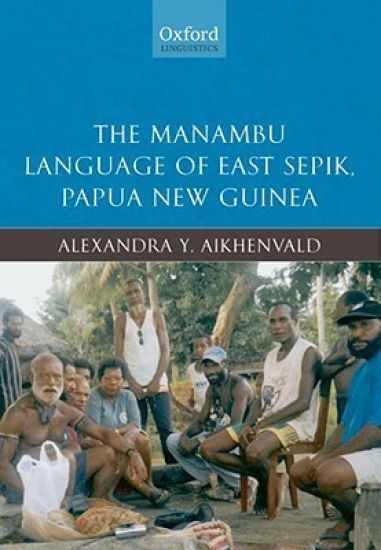
The Manambu Language of East Sepik, Papua New Guinea

The Manambu Language of East Sepik, Papua New Guinea

Alexandra Aikhenvald

Oxford University Press
2008
sidottu
This book presents the first comprehensive description of the Manambu language of Papua New Guinea. Manambu belongs to the Ndu language family, and is spoken by about 2,500 people in five villages: Avatip, Yawabak, Malu, Apa:n, and Yambon (Yuanab) in East Sepik Province, Ambunti district. About 200-400 speakers live in the cities of Port Moresby, Wewak, Lae, and Madang; and a few live in Kokopo and Mount Hagen. The book is based entirely on the author's fieldwork. After an introductory account of the language and its speakers, Professor Aikhenvald devotes chapters to phonology, grammatical relations, word classes, gender, semantics, number, case, possession, derivation and compounding, pronouns, morphology, verbs, mood and modality, negation, clauses, pragmatics, discourse, semantics, the lexicon, current directions of change, and genetic relationship to other languages. The description is presented in a clear style in a framework that will be comprehensible to all linguists and linguistic anthropologists.
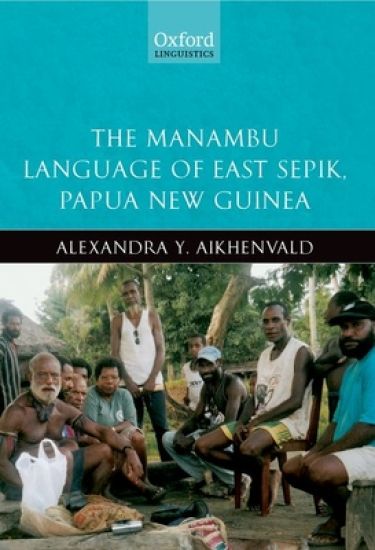
The Manambu Language of East Sepik, Papua New Guinea

The Manambu Language of East Sepik, Papua New Guinea

Alexandra Aikhenvald

Oxford University Press
2010
nidottu
This book is the first comprehensive description of the Manambu language of Papua New Guinea and is based entirely on the author's immersion fieldwork. Manambu belongs to the Ndu language family, and is spoken by about 2,500 people in five villages: Avatip, Yawabak, Malu, Apa:n, and Yambon (Yuanab) in East Sepik Province, Ambunti district. Manambu can be considered an endangered language. The Manambu language has many unusual properties. Every noun is considered masculine or feminine. Feminine gender - which is unmarked - is associated with small size and round shape, and masculine gender with elongated shape, large size, and importance. The Manambu culture is centered on ownership of personal names, and is similar to that of the Iatmul, described by Gregory Bateson. After an introductory account of the language and its speakers, Professor Aikhenvald devotes chapters to phonology, grammatical relations, word classes, gender, semantics, number, case, possession, derivation and compounding, pronouns, morphohology, verbs, mood and modality, negation, clause structure, pragmatics, discourse, semantics, the lexicon, current directions of change, and genetic relationship to other languages. The description is presented in a clear style in a framework that will be comprehensible to all linguists and linguistically oriented anthropologists.
Language Contact in Amazonia

Language Contact in Amazonia

Alexandra Aikhenvald

Oxford University Press
2010
nidottu
This book considers how and why forms and meanings of different languages at different times may resemble one another. The author explains the relationship between a real diffusion and the genetic development of languages, and reveals the means of distinguishing what may cause one language to share the characteristics of another. Professor Aikhenvald uses the example of Arawak and Tucanoan languages spoken in the large area of the Vaupés river basin in northwest Amazonia, which spans Colombia and Brazil. In this region language is seen as a badge of identity: language mixing, interaction, and influence are resisted for ideological reasons. The book considers which grammatical categories are most and least likely to be borrowed in a situation of prolonged language contact where lexical borrowing is reduced to a minimum. The author provides a genetic analysis of the languages of the region and considers their historical relationships with languages of the same family outside it. She also examines changes brought about by recent contact with European languages and culture, and the linguistic and cultural effects of being part of a group that is aware of the threat to its language and identity. The book is presented in relatively nontechnical language and will interest linguists and anthropologists.
The Languages of the Amazon

The Languages of the Amazon

Alexandra Y. Aikhenvald

Oxford University Press
2012
sidottu
This is the first guide and introduction to the extraordinary range of languages in Amazonia, which include some of the most the most fascinating in the world and many of which are now teetering on the edge of extinction. Alexandra Aikhenvald, one of the world's leading experts on the region, provides an account of the more than 300 languages, comparing their common and unique features, setting out their main characteristics, and describing the histories and cultures of the people who speak them. The languages abound in rare features and in most cases have been in contact with each other for generations, giving rise to complex patterns of linguistic influence. The author draws on her own extensive field research to tease out and analyse the patterns of their genetic and structural diversity. In the process she shows how they reflect the interrelations of language and culture: different kinship systems, for example, produce different linguistic outcomes. She also explains the roles and workings of their unusual features including evidentials, tones and whistles, and elaborate positional verbs. The book ends with a glossary of terms, and a comprehensive list of references for those interested in following up a language or linguistic phenomenon. Alexandra Aikhenvald's fascinating book is aimed at a wide readership, including linguists and anthropologists. It is unburdened by esoteric terminology, written in her characteristically straightforward style, and brought vividly to life with numerous anaecdotes of her experience in the region. It may be used as reference for research and as an introduction for courses in Latin American studies, Amazonian studies, linguistic typology, and general linguistics.
Accounting for Oneself

Accounting for Oneself

Alexandra Shepard

Oxford University Press
2015
sidottu
Accounting for Oneself is a major new study of the social order in early modern England, as viewed and articulated from the bottom up. Engaging with how people from across the social spectrum placed themselves within the social order, it pieces together the language of self-description deployed by over 13,500 witnesses in English courts when answering questions designed to assess their creditworthiness. Spanning the period between 1550 and 1728, and with a broad geographical coverage, this study explores how men and women accounted for their 'worth' and described what they did for a living at differing points in the life-cycle. A corrective to top-down, male-centric accounts of the social order penned by elite observers, the perspective from below testifies to an intricate hierarchy based on sophisticated forms of social reckoning that were articulated throughout the social scale. A culture of appraisal was central to the competitive processes whereby people judged their own and others' social positions. For the majority it was not land that was the yardstick of status but moveable property-the goods and chattels in people's possession ranging from livestock to linens, tools to trading goods, tables to tubs, clothes to cushions. Such items were repositories of wealth and the security for the credit on which the bulk of early modern exchange depended. Accounting for Oneself also sheds new light on women's relationship to property, on gendered divisions of labour, and on early modern understandings of work which were linked as much to having as to getting a living. The view from below was not unchanging, but bears witness to the profound impact of widening social inequality that opened up a chasm between the middle ranks and the labouring poor between the mid-sixteenth and mid-seventeenth centuries. As a result, not only was the social hierarchy distorted beyond recognition, from the later-seventeenth century there was also a gradual yet fundamental reworking of the criteria informing the calculus of esteem.
Reforming Printing

Reforming Printing

Alexandra da Costa

Oxford University Press
2012
sidottu
This book investigates how Syon Abbey responded to the religious turbulence of the 1520s and 1530s. It examines the eleven books three brothers - William Bonde, John Fewterer and Richard Whitford - had printed during this period and argues that the Bridgettines used vernacular printing to engage with religious and political developments that threatened their understanding of orthodox faith. Through these works - and their some twenty-six editions - the Abbey presented itself as part of the vanguard of the Church, fighting heterodoxy with a three-fold commitment to reformed spiritual leadership, vernacular theology and the spiritual education of the laity. It used its printed books to to augment inferior parochial instruction; bolster orthodox faith and contradict evangelical argument; resist Henry VIII's desire for ecclesiastical supremacy; and defend the monastic way of life. The book has three principal aims. First, to continue the debate about the nature of late medieval Catholicism by directing attention to one community that publicly proclaimed a very specific Catholic identity. Second, to highlight the shifting nature of that identity, which developed continuously in response to evangelicalism. Third, to emphasise the importance and impact of conservative vernacular theology in this period. Reforming Printing makes a strong contribution to our understanding of the Bridgettine community of Syon Abbey, and more generally the monastic and Catholic response to the developments that culminated in Henry VIII's break with Rome. It sheds new light upon the religious climate of the 1520s and 30s and will be of considerable interest to literary scholars and historians of the English Reformation, especially those working on early modern religious writing.
The Reformation of the Landscape

The Reformation of the Landscape

Alexandra Walsham

Oxford University Press
2012
nidottu
The Reformation of the Landscape is a richly detailed and original study of the relationship between the landscape of Britain and Ireland and the tumultuous religious changes of the sixteenth and seventeenth centuries. It explores how the profound theological and liturgical transformations that marked the era between 1500 and 1750 both shaped, and were in turn shaped by, the places and spaces within the physical environment in which they occurred. Moving beyond churches, cathedrals, and monasteries, it investigates how the Protestant and Catholic Reformations affected perceptions and practices associated with trees, woods, springs, rocks, mountain peaks, prehistoric monuments, and other distinctive topographical features of the British Isles. Drawing on extensive research and embracing insights from a range of disciplines, Alexandra Walsham examines the origins, immediate consequences, and later repercussions of these movements of religious renewal, together with the complex but decisive modifications of belief and behaviour to which they gave rise. It demonstrates how ecclesiastical developments intersected with other intellectual and cultural trends, including the growth of antiquarianism and the spread of the artistic and architectural Renaissance, the emergence of empirical science and shifting fashions within the spheres of medicine and healing. Set within a chronological framework that stretches backwards towards the early Middle Ages and forwards into the nineteenth century, the book assesses the critical part played by the landscape in forging confessional identities and in reconfiguring collective and social memory. It illuminates the ways in which the visible world was understood and employed by the diverse religious communities that occupied the British Isles, and shows how it became a battleground in which bitter struggles about the significance of the Christian and pagan past were waged.
Imperatives and Commands

Imperatives and Commands

Alexandra Y. Aikhenvald

Oxford University Press
2012
nidottu
This is the first cross-linguistic study of imperatives, and commands of other kinds, across the world's languages. It makes a significant and original contribution to the understanding of their morphological, syntactic, semantic, and pragmatic characteristics. The author discusses the role imperatives and commands play in human cognition and how they are deployed in different cultures, and in doing so offers fresh insights on patterns of human interaction and communication. Alexandra Aikhenvald examines the ways of framing commands, or command strategies, in languages that do not have special imperative forms. She analyses the grammatical and semantic properties of positive and negative imperatives and shows how these correlate with categories such as tense, information source, and politeness. She looks at the relation of command pragmatics to cultural practices, assessing, for example, the basis for Margaret Mead's assumption that the harsher the people the more frequently they use imperatives. Professor Aikhenvald covers a wide range of language families, including many relatively neglected examples from North America, Amazonia, and New Guinea. The book is accompanied by illustrations of some conventional command signs. Written and presented with the author's characteristic clarity, this book will be welcomed by linguists of all theoretical persuasions. It will appeal to social and cultural anthropologists and cognitive and behavioural scientists.
The Art of Grammar

The Art of Grammar

Alexandra Y. Aikhenvald

Oxford University Press
2014
sidottu
This book introduces the principles and practice of writing a comprehensive reference grammar. Several thousand distinct languages are currently spoken across the globe, each with its own grammatical system and its own selection of diverse grammatical structures. Comprehensive reference grammars offer a basis for understanding linguistic diversity and can provide a unique perspective into the structure and social and cognitive underpinnings of different languages. Alexandra Aikhenvald describes the means of collecting, analysing, and organizing data for use in this type of grammar, and discusses the typological parameters that can be used to explore relationships with other languages. She considers how a grammar can made to reflect and bring to life the society of its speakers through background explanation and the judicious choice of examples, as well as by showing how its language, history, and culture are intertwined. She ends with a full glossary of terms and guidance for those wanting to explore a particular linguistic phenomenon or language family. The Art of Grammar is the ideal resource for students and teachers of linguistics, language studies, and inductively-oriented linguistic, cultural, and social anthropology.
The Art of Grammar

The Art of Grammar

Alexandra Y. Aikhenvald

Oxford University Press
2014
nidottu
This book introduces the principles and practice of writing a comprehensive reference grammar. Several thousand distinct languages are currently spoken across the globe, each with its own grammatical system and its own selection of diverse grammatical structures. Comprehensive reference grammars offer a basis for understanding linguistic diversity and can provide a unique perspective into the structure and social and cognitive underpinnings of different languages. Alexandra Aikhenvald describes the means of collecting, analysing, and organizing data for use in this type of grammar, and discusses the typological parameters that can be used to explore relationships with other languages. She considers how a grammar can made to reflect and bring to life the society of its speakers through background explanation and the judicious choice of examples, as well as by showing how its language, history, and culture are intertwined. She ends with a full glossary of terms and guidance for those wanting to explore a particular linguistic phenomenon or language family. The Art of Grammar is the ideal resource for students and teachers of linguistics, language studies, and inductively-oriented linguistic, cultural, and social anthropology.
The Earl of Essex and Late Elizabethan Political Culture

The Earl of Essex and Late Elizabethan Political Culture

Alexandra Gajda

Oxford University Press
2012
sidottu
In sixteenth-century England Robert Devereux, 2nd earl of Essex, enjoyed great domestic and international renown as a favourite of Elizabeth I. He was a soldier and a statesman of exceptionally powerful ambition. After his disastrous uprising in 1601 Essex fell from the heights of fame and favour, and ended his life as a traitor on the scaffold. This interdisciplinary account of the political culture of late Elizabethan England explores the ideological contexts of Essex's extraordinary career and fall from grace, and the intricate relationship between thought and action in Elizabethan England. By the late sixteenth century, fundamental political models and vocabularies that were employed to legitimise the Elizabethan polity were undermined by the strains of war, the ambivalence that many felt towards the church, continued uncertainty over the succession, and the perceived weaknesses of the rule of the aging Elizabeth. Essex's career and revolt threw all of these strains into relief. Alexandra Gajda examines the attitude of the earl and his followers to war, religion, the structures of the Elizabethan polity, and Essex's role within it. She also explores the classical and historical scholarship prized by Essex and his associates that gave shape and meaning to the earl's increasingly fractured relationship with the Queen and regime. She addresses contemporary responses to the earl, both positive and negative, and the earl's wider impact on political culture. Political and religious ideas in late sixteenth-century England had an important impact on political events in early modern England, and played a vital role in shaping the rise and fall of Essex's career.
Dickinson Unbound

Dickinson Unbound

Alexandra Socarides

Oxford University Press Inc
2012
sidottu
In Dickinson Unbound, Alexandra Socarides takes readers on a journey through the actual steps and stages of Emily Dickinson's creative process. In chapters that deftly balance attention to manuscripts, readings of poems, and a consideration of literary and material culture, Socarides takes up each of the five major stages of Dickinson's writing career: copying poems onto folded sheets of stationery; inserting and embedding poems into correspondence; sewing sheets together to make fascicles; scattering loose sheets; and copying lines on often torn and discarded pieces of household paper. In so doing, Socarides reveals a Dickinsonian poetics starkly different from those regularly narrated by literary history. Here, Dickinson is transformed from an elusive poetic genius whose poems we have interpreted in a vacuum into an author who employed surprising (and, at times, surprisingly conventional) methods to wholly new effect. Dickinson Unbound gives us a Dickinson at once more accessible and more complex than previously imagined. As the first authoritative study of Dickinson's material and compositional methods, this book not only transforms our ways of reading Dickinson, but advocates for a critical methodology that insists on the study of manuscripts, composition, and material culture for poetry of the nineteenth century and thereafter.
Stance

Stance

Alexandra Jaffe

Oxford University Press Inc
2012
nidottu
All communication involves acts of stance, in which speakers take up positions vis-a-vis the expressive, referential, interactional and social implications of their speech. This book brings together contributions in a new and dynamic current of academic explorations of stancetaking as a sociolinguistic phenomenon. Drawing on data from such diverse contexts as advertising, tourism, historical texts, naturally occurring conversation, classroom interaction and interviews, leading authors in the field of sociolinguistics in this volume explore how linguistic stancetaking is implicated in the representation of self, personal style and acts of stylization, and self- and other-positioning. The analyses also focus on how speakers deploy and take up stances vis-a-vis sociolinguistic variables and the critical role of stance in the processes of indexicalization: how linguistic forms come to be associated with social categories and meanings. In doing so, many of the authors address critical issues of power and social reproduction, examining how stance is implicated in the production, reproduction and potential change of social and linguistic hierarchies and ideologies. This volume maps out the terrain of existing sociolinguistic and linguistic anthropological research on stance, synthesizes how it relates to existing theoretical orientations, and identifies a framework for future research.
Hyperbole and a Half

Hyperbole and a Half

Alexandra Brosh

Vintage
2013
pokkari
Hilarious stories about life's mishaps from the creator of the immensely popular blog 'Hyperbole and a Half'. Fully illustrated with over 50% new material. Hyperbole and A Half is a blog and webcomic written by a 20-something American girl called Allie Brosh.
Assassin of Youth

Assassin of Youth

Alexandra Chasin

University of Chicago Press
2016
sidottu
Commissioner of the Federal Bureau of Narcotics from its establishment in 1930 until his retirement in 1962, Harry J. Anslinger is the United States' little known first drug czar. Anslinger was a profligate propagandist with a flair for demonizing racial and immigrant groups and perhaps best known for his zealous pursuit of harsh drug penalties and his particular animus for marijuana users. But what made Anslinger who he was, and what cultural trends did he amplify and institutionalize? Having just passed the hundredth anniversary of the Harrison Act which consolidated prohibitionist drug policy and led to the carceral state we have today and even as public doubts about the drug war continue to grow, now is the perfect time to evaluate Anslinger's social, cultural, and political legacy. In Assassin of Youth, Alexandra Chasin gives us a lyrical, digressive, funny, and ultimately riveting quasi-biography of Anslinger. Her treatment of the man, his times, and the world that arose around and through him is part cultural history, part kaleidoscopic meditation. Each of the short chapters is anchored in a historical document the court decision in Webb v. US (1925), a 1935 map of East Harlem, FBN training materials from the 1950s, a personal letter from the Treasury Department in 1985 each of which opens onto Anslinger and his context. From the Pharmacopeia of 1820 to death of Sandra Bland in 2015, from the Pennsylvania Railroad to the last passenger pigeon, and with forays into gangster lives, CIA operatives, and popular detective stories, Chasin covers impressive ground. Assassin of Youth is as riotous and loose a history of drug laws as can be imagined and yet it culminates in an arresting and precise revision of the emergence of drug prohibition. Today, even as marijuana is slowly being legalized, we still have not fully reckoned with the racist and xenophobic foundations of our cultural appetite for the severe punishment of drug offenders. In Assassin of Youth, Chasin shows us the deep, twisted roots of both our love and our hatred for drug prohibition.
Race, Rights, and Rifles

Race, Rights, and Rifles

Alexandra Filindra

THE UNIVERSITY OF CHICAGO PRESS
2023
sidottu
An eye-opening examination of the ties between American gun culture and white male supremacy from the American Revolution to today. One-third of American adults—approximately 86 million people—own firearms. This is not just for protection or hunting. Although many associate gun-centric ideology with individualist and libertarian traditions in American political culture, Race, Rights, and Rifles shows that it rests on an equally old but different foundation. Instead, Alexandra Filindra shows that American gun culture can be traced back to the American Revolution when republican notions of civic duty were fused with a belief in white male supremacy and a commitment to maintaining racial and gender hierarchies. Drawing on wide-ranging historical and contemporary evidence, Race, Rights, and Rifles traces how this ideology emerged during the Revolution and became embedded in America’s institutions, from state militias to the National Rifle Association (NRA). Utilizing original survey data, Filindra reveals how many White Americans —including those outside of the NRA’s direct orbit—embrace these beliefs, and as a result, they are more likely than other Americans to value gun rights over voting rights, embrace antidemocratic norms, and justify political violence.
Race, Rights, and Rifles

Race, Rights, and Rifles

Alexandra Filindra

THE UNIVERSITY OF CHICAGO PRESS
2023
nidottu
An eye-opening examination of the ties between American gun culture and white male supremacy from the American Revolution to today. One-third of American adults—approximately 86 million people—own firearms. This is not just for protection or hunting. Although many associate gun-centric ideology with individualist and libertarian traditions in American political culture, Race, Rights, and Rifles shows that it rests on an equally old but different foundation. Instead, Alexandra Filindra shows that American gun culture can be traced back to the American Revolution when republican notions of civic duty were fused with a belief in white male supremacy and a commitment to maintaining racial and gender hierarchies. Drawing on wide-ranging historical and contemporary evidence, Race, Rights, and Rifles traces how this ideology emerged during the Revolution and became embedded in America’s institutions, from state militias to the National Rifle Association (NRA). Utilizing original survey data, Filindra reveals how many White Americans —including those outside of the NRA’s direct orbit—embrace these beliefs, and as a result, they are more likely than other Americans to value gun rights over voting rights, embrace antidemocratic norms, and justify political violence.