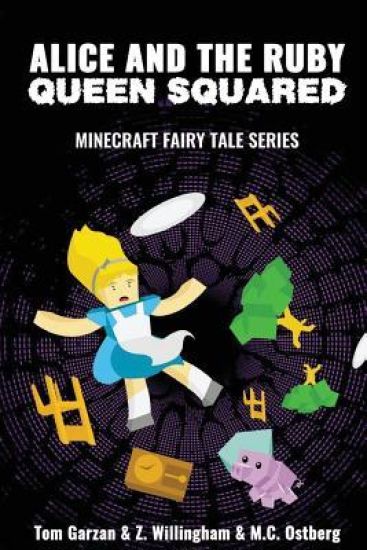
Alice l'Exploratrice parcourt le monde la recherche de tr sors disparus. Dans une for t inconnue, Alice l'Exploratrice va faire sa plus grande d couverte...D couvrez les Histoires modeler, des histoires tendres et dr les illustr es en p te modeler, lire avant de dormir.Offrez le bonheur de lire votre enfant avec Les Aventures de mon pr nom, des livres personnalis s son pr nom, illustr s en p te modeler, lire avant de dormir.Choisissez parmi les 14 th mes des Aventures de mon pr nom (pirate, astronaute, cowboy, ballerine...). Vous pouvez personnaliser le livre au pr nom de votre enfant sur le site lesaventuresdemonprenom.comEn quelques jours, votre livre sera disponible la commande sur Amazon
Alice was published in 1865, three years after Charles Lutwidge Dodgson and the Reverend Robinson Duckworth rowed in a boat on 4 July 1862 (this popular date of the "golden afternoon" might be a confusion or even another Alice-tale, for that particular day was cool, cloudy, and rainy) up the Isis with the three young daughters of Henry Liddell (the Vice-Chancellor of Oxford University and Dean of Christ Church): Lorina Charlotte Liddell (aged 13, born 1849, "Prima" in the book's prefatory verse); Alice Pleasance Liddell (aged 10, born 1852, "Secunda" in the prefatory verse); Edith Mary Liddell (aged 8, born 1853, "Tertia" in the prefatory verse). The journey began at Folly Bridge near Oxford and ended five miles away in the village of Godstow. During the trip, Dodgson told the girls a story that featured a bored little girl named Alice who goes looking for an adventure. The girls loved it, and Alice Liddell asked Dodgson to write it down for her. He began writing the manuscript of the story the next day, although that earliest version no longer exists. The girls and Dodgson took another boat trip a month later when he elaborated the plot to the story of Alice, and in November he began working on the manuscript in earnest. To add the finishing touches, he researched natural history for the animals presented in the book, and then had the book examined by other children-particularly the children of George MacDonald. He added his own illustrations but approached John Tenniel to illustrate the book for publication, telling him that the story had been well liked by children. On 26 November 1864, he gave Alice the handwritten manuscript of Alice's Adventures Under Ground, with illustrations by Dodgson himself, dedicating it as "A Christmas Gift to a Dear Child in Memory of a Summer's Day". Some, including Martin Gardner, speculate that there was an earlier version that was destroyed later by Dodgson when he wrote a more elaborate copy by hand. But before Alice received her copy, Dodgson was already preparing it for publication and expanding the 15,500-word original to 27,500 words, most notably adding the episodes about the Cheshire Cat and the Mad Tea-Party.
Alice was published in 1865, three years after Charles Lutwidge Dodgson and the Reverend Robinson Duckworth rowed in a boat on 4 July 1862 (this popular date of the "golden afternoon" might be a confusion or even another Alice-tale, for that particular day was cool, cloudy, and rainy) up the Isis with the three young daughters of Henry Liddell (the Vice-Chancellor of Oxford University and Dean of Christ Church): Lorina Charlotte Liddell (aged 13, born 1849, "Prima" in the book's prefatory verse); Alice Pleasance Liddell (aged 10, born 1852, "Secunda" in the prefatory verse); Edith Mary Liddell (aged 8, born 1853, "Tertia" in the prefatory verse). The journey began at Folly Bridge near Oxford and ended five miles away in the village of Godstow. During the trip, Dodgson told the girls a story that featured a bored little girl named Alice who goes looking for an adventure. The girls loved it, and Alice Liddell asked Dodgson to write it down for her. He began writing the manuscript of the story the next day, although that earliest version no longer exists. The girls and Dodgson took another boat trip a month later when he elaborated the plot to the story of Alice, and in November he began working on the manuscript in earnest. To add the finishing touches, he researched natural history for the animals presented in the book, and then had the book examined by other children-particularly the children of George MacDonald. He added his own illustrations but approached John Tenniel to illustrate the book for publication, telling him that the story had been well liked by children. On 26 November 1864, he gave Alice the handwritten manuscript of Alice's Adventures Under Ground, with illustrations by Dodgson himself, dedicating it as "A Christmas Gift to a Dear Child in Memory of a Summer's Day". Some, including Martin Gardner, speculate that there was an earlier version that was destroyed later by Dodgson when he wrote a more elaborate copy by hand. But before Alice received her copy, Dodgson was already preparing it for publication and expanding the 15,500-word original to 27,500 words, most notably adding the episodes about the Cheshire Cat and the Mad Tea-Party.
Alice was published in 1865, three years after Charles Lutwidge Dodgson and the Reverend Robinson Duckworth rowed in a boat on 4 July 1862 (this popular date of the "golden afternoon" might be a confusion or even another Alice-tale, for that particular day was cool, cloudy, and rainy) up the Isis with the three young daughters of Henry Liddell (the Vice-Chancellor of Oxford University and Dean of Christ Church): Lorina Charlotte Liddell (aged 13, born 1849, "Prima" in the book's prefatory verse); Alice Pleasance Liddell (aged 10, born 1852, "Secunda" in the prefatory verse); Edith Mary Liddell (aged 8, born 1853, "Tertia" in the prefatory verse). The journey began at Folly Bridge near Oxford and ended five miles away in the village of Godstow. During the trip, Dodgson told the girls a story that featured a bored little girl named Alice who goes looking for an adventure. The girls loved it, and Alice Liddell asked Dodgson to write it down for her. He began writing the manuscript of the story the next day, although that earliest version no longer exists. The girls and Dodgson took another boat trip a month later when he elaborated the plot to the story of Alice, and in November he began working on the manuscript in earnes Alice is playing with a white kitten (whom she calls "Snowdrop") and a black kitten (whom she calls "Kitty")-the offspring of Dinah, Alice's cat in Alice's Adventures in Wonderland-when she ponders what the world is like on the other side of a mirror's reflection. Climbing up on the fireplace mantel, she pokes at the wall-hung mirror behind the fireplace and discovers, to her surprise, that she is able to step through it to an alternative world. In this reflected version of her own house, she finds a book with looking-glass poetry, "Jabberwocky", whose reversed printing she can read only by holding it up to the mirror. She also observes that the chess pieces have come to life, though they remain small enough for her to pick up. Upon leaving the house (where it had been a cold, snowy night), she enters a sunny spring garden where the flowers have the power of human speech; they perceive Alice as being a "flower that can move about." Elsewhere in the garden, Alice meets the Red Queen, who is now human-sized, and who impresses Alice with her ability to run at breathtaking speeds. This is a reference to the chess rule that queens are able to move any number of vacant squares at once, in any direction, which makes them the most "agile" of pieces. The Red Queen reveals to Alice that the entire countryside is laid out in squares, like a gigantic chessboard, and offers to make Alice a queen if she can move all the way to the eighth rank/row in a chess match. This is a reference to the chess rule of Promotion. Alice is placed in the second rank as one of the White Queen's pawns, and begins her journey across the chessboard by boarding a train that literally jumps over the third row and directly into the fourth rank, thus acting on the rule that pawns can advance two spaces on their first move. Tenniel illustration of Tweedledum (centre) and Tweedledee (right) and Alice (left). 1871) Red King snoring, by John Tenniel She then meets the fat twin brothers Tweedledum and Tweedledee, whom she knows from the famous nursery rhyme. After reciting the long poem "The Walrus and the Carpenter", the Tweedles draw Alice's attention to the Red King-loudly snoring away under a nearby tree-and maliciously provoke her with idle philosophical banter that she exists only as an imaginary figure in the Red King's dreams (thereby implying that she will cease to exist the instant he wakes up). Finally, the brothers begin acting out their nursery-rhyme by suiting up for battle, only to be frightened away by an enormous crow, as the nursery rhyme about them predicts. Alice next meets the White Queen, who is very absent-minded but boasts of (and demonstrates) her ability to remember future events before they have happened.