Kirjahaku
Etsi kirjoja tekijän nimen, kirjan nimen tai ISBN:n perusteella.
1000 tulosta hakusanalla Andrew Turnbull
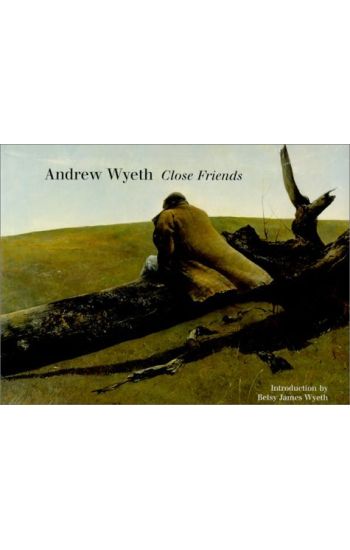
Generally regarded as "America's Painter," realist Andrew Wyeth is perhaps the most well know of the artistic Wyeth family dynasty which includes his father N. C. Wyeth, sister Henriette Hurd, and son Jamie Wyeth. Although most recent explorations of this artist have focused on his family and on the Helga pictures, this unique publication chronicles seven decades of an under-appreciated yet historically relevant aspect of his relationship to home and community. "Andrew Wyeth: Close Friends" is the first critical look at a significant body of paintings and works on paper depicting Wyeth's African-American friends and neighbours in Chadds Ford, Pennsylvania, a quaint village on the Brandywine River where he has lived since birth. Beginning in the 1930s, many of Wyeth's African-American neighbours served as his models both in and out of the studio. Images of over 20 individuals are included, as well as depictions of their homes, farms, and meeting places. Wyeth's own words annotate the reproductions of his paintings and drawings and offer a rare glimpse into the mind of this truly individual artist. In her brief introduction, the artist's wife and collaborator, Betsy James Wyeth, recounts her arrival in Chadds Ford as a young bride and her immediate connection to the community she found there. "Andrew Wyeth: Close Friends" includes over 100 colour reproductions of major tempera and watercolour paintings and numerous black and white images of graphite drawings. Works reproduced are drawn from public and private collections, with a large number from the personal collection of the Wyeths. In addition to a foreword by museum director R. Andrew Maass, the book includes family photographs and facsimiles of personal correspondence. Betsy James Wyeth came to Chadds Ford, Pennsylvania in 1940 as the new bride of painter Andrew Wyeth. She has collaborated with her husband on several exhibitions and publications. The Wyeth's divide their time between Chadds Ford and Midcoast, Maine.

Das Geheimnis der Fürbitte - Der Gebetsklassiker von Andrew Murray (Deutsch)
Andrew Murray
Cosmic Jive Publishing
2026
pokkari
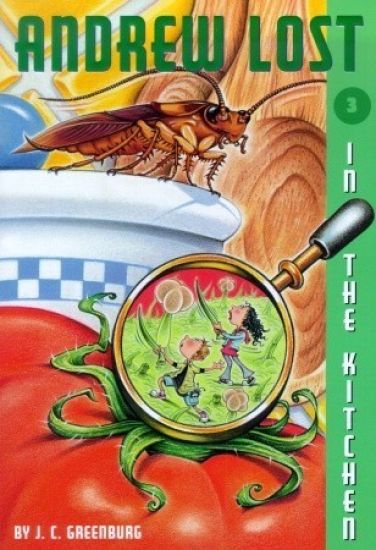
Andrew, his cousin Judy, and super-smart robot Thudd escape the bathtub only to get flushed down the toilet Now they have to find their way through a maze of pipes to the kitchen sink. But the kitchen is no place to be when you re the size of a flea. Monster cockroaches scurry across the counter while flies patrol the skies. Will the kids survive the kitchen? Or will they end up frozen in the fridge? Time is running out "
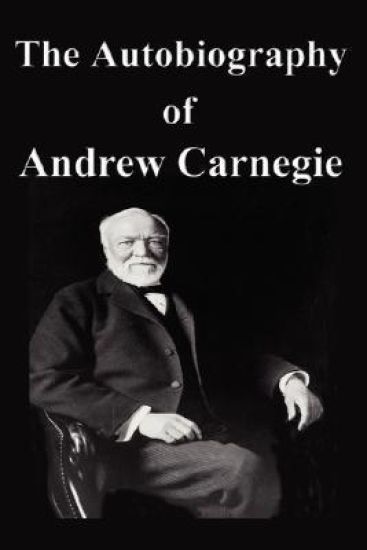

Autobiography of Andrew Dickson White Vol. I presents a reflective narrative of personal growth, education, and the pursuit of intellectual purpose. Through detailed recollections of early life in Central New York, the author explores how family, community, and education shaped a lifelong devotion to learning and public service. The work portrays a childhood filled with moral instruction, curiosity, and an awareness of the broader cultural and political currents of the time. White's reflections on his academic journey from local schools to Yale and later Europe reveal the evolution of an individual determined to challenge traditional barriers to knowledge. His accounts of family expectations, early reading, and exposure to differing worldviews highlight the tension between conformity and ambition. The narrative weaves together memory and reflection to illustrate how environment and education foster intellectual independence. It stands as a meditation on personal development, civic responsibility, and the enduring value of scholarship in shaping one's character and contributions to society.

Autobiography of Andrew Dickson White Vol. II offers an insightful account of a diplomat's reflections on political life, international relations, and the moral complexities of public service. The work presents a vivid portrayal of the author's tenure as United States Minister to Russia, capturing his encounters with statesmen, rulers, and intellectuals during a period of social and political transformation. Through his detailed observations, he examines the dynamics of governance, the challenges of diplomacy, and the tension between personal conviction and political responsibility. The narrative provides glimpses into his meetings with Russian leaders and his thoughts on the nation's administrative structure, religious tensions, and treatment of minority communities. Beyond political commentary, the autobiography conveys the author's intellectual curiosity and commitment to dialogue and progress. His reflections reveal both the burdens and the rewards of serving one's country with integrity. Blending historical insight with personal experience, the volume becomes a meditation on leadership, duty, and the search for understanding across cultural and political boundaries.

Absolute Hingabe - Der christliche Klassiker von Andrew Murray auf Deutsch
Andrew Murray
Cosmic Jive Publishing
2026
pokkari

Das Tiefere Christliche Leben - Der christliche Klassiker von Andrew Murray auf Deutsch
Andrew Murray
Cosmic Jive Publishing
2026
pokkari

Das Gebetsleben - Der christliche Klassiker von Andrew Murray auf Deutsch
Andrew Murray
Cosmic Jive Publishing
2026
pokkari

Mit Christus in der Schule des Gebets - Der christliche Klassiker von Andrew Murray auf Deutsch
Andrew Murray
Cosmic Jive Publishing
2026
pokkari
Das Geheimnis des Kreuzes - Der christliche Klassiker von Andrew Murray auf Deutsch
Andrew Murray
Cosmic Jive Publishing
2026
pokkari

Imagining Andrew Marvell at 400
Oxford University Press
2022
sidottu
Augustine, Pertile and Zwicker celebrate the work of Andrew Marvell (1621-1678) in the quatercentenary year of his birth, combining the best historical scholarship with a varied and ambitious programme of cognitive, affective, and aesthetic inquiry. The essays have been specially commissioned for the quatercentenary and include the work of a range of scholars from Britain and North America. Acknowledged masterpieces such as the 'Horatian Ode', 'The Garden', and 'Upon Appleton House' are here read in light of historical and material evidence that has emerged in recent decades. At the same time, the volume offers many fresh points of entry into Marvell's work, with particular attention to the poet's lyric economies, Marvell's engagement with popular print, and, not least, the polyglot and transnational dimensions of his writing. The quatercentenary also represents an important anniversary for Marvell studies, marking one hundred years since T. S. Eliot's appreciation of the poet inaugurated modern Marvell criticism. As Imagining Andrew Marvell at 400 reassesses Marvell's writings it also reflects on the profession of English literature, taking stock of the discipline itself, where it has been and where it might be going as scholars continue to map the pleasures and challenges of reading and re-reading Andrew Marvell.
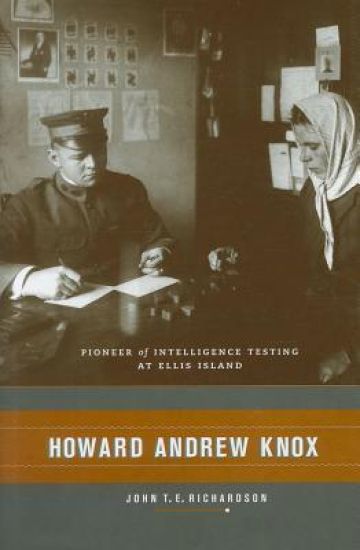
Howard Andrew Knox (1885-1949) served as assistant surgeon at Ellis Island during the 1910s, administering a range of verbal and nonverbal tests to determine the mental capacity of potential immigrants. An early proponent of nonverbal intelligence testing (largely through the use of formboards and picture puzzles), Knox developed an evaluative approach that today informs the techniques of practitioners and researchers. Whether adapted to measure intelligence and performance in children, military recruits, neurological and psychiatric patients, or the average job applicant, Knox's pioneering methods are part of contemporary psychological practice and deserve in-depth investigation. Completing the first biography of this unjustly overlooked figure, John T. E. Richardson, former president of the International Society for the History of the Neurosciences, takes stock of Knox's understanding of intelligence and his legacy beyond Ellis Island. Consulting published and unpublished sources, Richardson establishes a chronology of Knox's life, including details of his medical training and his time as a physician for the U.S. Army. He describes the conditions that gave rise to intelligence testing, including the public's concern that the United States was opening its doors to the mentally unfit. He then recounts the development of intelligence tests by Knox and his colleagues and the widely-discussed publication of their research. Their work presents a useful and extremely human portrait of psychological testing and its limits, particularly the predicament of the people examined at Ellis Island. Richardson concludes with the development of Knox's work in later decades and its changing application in conjunction with modern psychological theory.
Lopeman examines the impact advocacy of intentional judicial activism by a justice of a state supreme court can have on establishing the court as a policy maker. He examines the attitudinal model and the judicial role model of decision making and concludes that, while the attitudinal model might describe the decision-making process in the U.S. Supreme Court, the judicial role model better describes decision making in state supreme courts. This judicial role model allows the activist to transform a court into a policy maker.The traditions, recent history, and biographies of recent justices of the Indiana, West Virginia, and Ohio courts are examined to establish a significant relationship between the presence of an activist advocate justice and active policy making by the courts. These courts' decisions in cases with policy making potential are contrasted with decisions in similar cases of three state supreme courts that did not have an advocate justice. Lopeman argues that the presence of an activist advocate explains a court's transformation to active policy making, and that other apparent explanations are insufficient. He emphasizes that the motives of an activist advocate are likely to determine the permanence of policy making in the court. This volume is an important resource for political scientists, legal scholars, and other researchers involved with judicial decision making, state politics, and state constitutional law.
Hurricane Andrew
Routledge
1997
sidottu
This book explores how social, economic and political factors set the stage for Hurricane Andrew by influencing who was prepared, who was hit the hardest, and who was most likely to recover. Employing unique research data the authors analyze the consequences of conflict and competition on disaster preparation, response and recovery, especially where associated with race, ethnicity and gender.
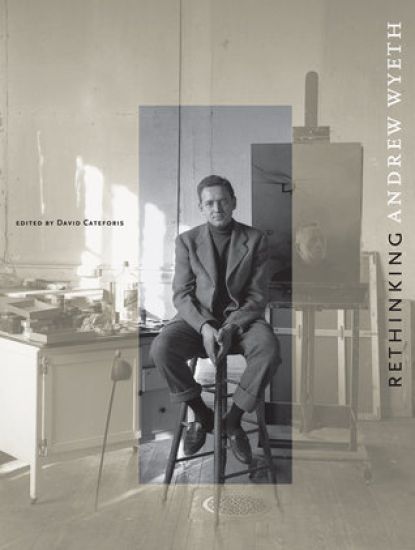
Rethinking Andrew Wyeth
University of California Press
2014
sidottu
Andrew Wyeth is one of the best loved and most widely recognized artists in American history, yet for much of his career he was reviled by the art world's critical elite. Rethinking Andrew Wyeth reevaluates Wyeth and his place in American art, trying to reconcile these two opposing images of the man and his work. In addition to surveying the American critical reception of Wyeth's art over the seven decades of his career, David Cateforis brings together a collection of essays featuring new critical and scholarly responses to the artist. Donald Kuspit's compelling psycho-philosophical interpretation of Wyeth exemplifies the possibility of new approaches to understanding his work that move beyond the Wyeth "curse," as do those of the other contributors to this volume - from the close analysis of Wyeth's technical means offered by Joyce Hill Stoner, to the adventuresome interpretive readings of individual Wyeth paintings advanced by Alexander Nemerov and Randall C. Griffin, the considerations of Wyeth's critical reception in historical context offered by Wanda M. Corn and Katie Robinson Edwards, and the connections of Wyeth to other canonical artists such as Francine Weiss' comparison of him to Robert Frost and Patricia Junker's linkage of Wyeth and Marcel Duchamp. Rethinking Andrew Wyeth includes an appendix with data from visitor surveys conducted at the Wyeth retrospectives in San Francisco in 1973 and Philadelphia in 2006. Illustrated throughout with both iconic and lesser-known examples of Wyeth's work, this book will appeal to academic, museum, and popular audiences seeking a deeper understanding and appreciation of Andrew Wyeth's art through its critical reception and interpretation. Edited by David Cateforis, with essays by David Cateforis, Wanda M. Corn, Katie Robinson Edwards, Randall C. Griffin, Patricia Junker, Donald Kuspit, Alexander Nemerov, Joyce Hill Stoner, and Francine Weiss. This volume's release coincides with an exhibition at the National Gallery of Art in Washington, D.C. in 2014, Andrew Wyeth: Looking Out, Looking In.